
All Insights
Articles
How to Handle Call Overflow and Cut Handle Time with AI
How an AI voice agent catches call overflow and where it changes handle time: routing, talk, hold and wrap-up, the evidence, and the limits.





Last updated 13 November 2026. Product facts checked against Brilo documentation and brilo.ai/pricing on 9 October 2026.
An AI voice agent handles call overflow by answering the calls your team cannot reach, resolving routine ones and passing the rest back with context. It changes handle time in three places: hold, talk and after-call work. Measure it yourself: published AHT gains are mostly vendor claims.
This page covers the overflow job and what it does to handle time. For how AI fits the rest of your operation, see the AI call centre guide, or see how Brilo works as an AI call center voice agent for BPOs and contact centers. To measure whether the AI is solving calls rather than just keeping them, see containment vs resolution; to see where an AI agent fits next to your phone menu, see AI voice agent vs IVR.
Who has overflow and handle-time pressure, and what it costs today
Any inbound team whose callers wait or give up at busy times has this job, from in-house contact centres measured on cost per contact to outsourced BPOs whose overflow and after-hours volume was never staffed in the contract. The usual answers are a longer hold queue, voicemail or more staff.
Staff time is the cost that is easy to price. The median hourly wage for US customer service representatives was $21.53 in May 2025 (BLS Occupational Outlook Handbook, read 9 Oct 2026). Every minute a person spends on a call, on hold with a caller or writing notes afterwards is paid at a rate like that.
The cost of the calls that wait or abandon is harder to price, but the size of the problem is measurable. ContactBabel's 2025 US benchmark reported a 99-second mean speed to answer and an 8.9% mean abandonment rate, as reported by Stealth Agents (read 13 Nov 2026). In the UK, a 2025-26 survey of 300 contact centre leaders found a 4.1% average inbound abandonment rate and a 17.4-second average speed of answer (IT Brief UK, read 13 Nov 2026). Gartner publishes no abandonment benchmark of its own, so treat any "Gartner abandonment rate" you see quoted as unsourced. NOT FOUND: a primary-source industry-average handle time.
Overflow and handle time are the same problem seen from two ends
Average handle time (AHT) is usually counted as talk time, plus hold time, plus the after-call work an agent does once the caller hangs up.
Overflow happens when calls arrive faster than your people can finish them. The longer each call takes, the longer each agent is tied up, and the sooner the queue backs up. So there are two ways to relieve it: fewer calls that need a person, or shorter work on each call a person takes.
An AI voice agent works on both. It takes some calls off the human queue entirely, and it can hand the rest over in a state that takes less time to finish.
How overflow calls reach the AI
Brilo's documentation describes no queue-depth setting inside Brilo. Overflow is set up where your calls already arrive, at the phone provider. Brilo's documentation describes three arrangements:
Forward on no answer. Your provider forwards to Brilo when nobody picks up after a few rings, "so your team gets first refusal and nothing is ever missed" (Business hours and after hours, read 9 Oct 2026).
A queue rule. On RingCentral, use "a call queue rule to send only the calls nobody answers" to the Brilo number (Connect Brilo to RingCentral, read 9 Oct 2026).
The AI answers first. Every call goes to the agent, which resolves or routes it. That job is covered in AI inbound call handling.
Forwarding works with any provider that can forward a number. Importing a number works only with Twilio, Telnyx and Plivo (Use your existing number, read 9 Oct 2026). See AI call centre infrastructure for the wider picture.
What the AI does with an overflow call
An overflow call reaches the agent because your people are busy, so the first aim is to finish it without them. The agent answers questions from your knowledge, runs the actions you have switched on, such as booking, and takes a message with a name, a number and what the caller wanted (Set up an AI answering service, read 9 Oct 2026).
Transfers need care. The team that could not answer is probably still busy. If a transfer goes unanswered, "your agent tries the fallback number, and if that also fails it returns to the caller and follows your instructions" (Pass the call to a person, read 9 Oct 2026). Write that instruction. A callback is the natural fallback when a transfer fails (Schedule a callback, read 9 Oct 2026).
A colleague "cannot silently join a call in progress". The only route from the agent to a person is a transfer (What your agent can do, read 9 Oct 2026).
Where an AI agent changes handle time: hold, talk and after-call work
Each part of AHT has a different lever. Brilo publishes no figure for any of them.
AHT part | What changes | Brilo feature | Measured effect |
|---|---|---|---|
Hold | Overflow callers are answered rather than queued, up to your plan's limit | Several calls at once on one number (Limits) | NOT FOUND |
Talk (human) | The caller does not repeat themselves after a transfer | Warm transfer with a contextual summary: "Your colleague picks up already knowing who is on the line and what they want" | NOT FOUND |
After-call work | Calls the agent finishes need no notes from your team | Automatic summary, a personalised summary focus, extraction fields, CRM updates, post-call webhook | NOT FOUND |
AI call length | A stuck call cannot run on | Call cap of 1 to 30 minutes (Limit how long a call runs) | Not applicable |
Feature sources, read 9 Oct 2026: Personalised call summaries, extraction fields, Update your CRM (Pro plan or above for the app store), and Send data to your systems. See how a warm transfer from an AI phone agent works.
Brilo is a voice agent, not agent assist, so it does not shorten calls your people take from the start.
Put an AI agent in front of your busiest hours. Brilo answers the calls your team cannot reach, resolves the routine ones and hands the rest over with a summary. See Brilo AI call centre software
Why your human team's AHT can go up
When the AI finishes the routine calls, the ones that reach your people are the harder ones: the complaints, the unusual cases and the calls that needed a transfer. Their average handle time can rise even while the operation as a whole gets faster.
That is not a failure, but it breaks any staffing plan built on the old AHT. Track two figures separately from the start:
Human-only AHT, on calls your team handles.
Blended handle time, across every call, including those the AI finished.
Judge the project on blended time, abandonment and hold time, not on human AHT alone. For how this changes forecasting and headcount, see AI workforce management and diallers.
What the evidence says about AI and handle time
The strongest independent evidence comes from a study of AI assisting people, not replacing them. Brynjolfsson, Li and Raymond studied a generative-AI chat assistant that gave real-time suggestions to 5,172 customer-support agents at one firm. The published version (Quarterly Journal of Economics, 2025; verified 9 Oct 2026) reports:
Issues resolved per hour rose 15% on average.
Less experienced and lower-skilled workers resolved 30% more issues per hour. The most experienced and highest-skilled workers saw small gains in speed and small declines in quality.
The earlier 2023 NBER working paper version (w31161, revised November 2023) reports the handle-time figure: average chat duration fell by 3.8 minutes, a 9% decline from the baseline.
Three caveats belong with those numbers. It was text chat, not voice. The AI assisted human agents rather than handling calls itself. And it was one firm, using 2023-era tooling. For more on that model, see AI agent assist.
Search results for AI voice agents and AHT are mostly vendor case studies and vendor-commissioned reports. None is independent, so this page does not quote their figures.
Worked example: what an overflow pilot should measure
Brilo has not published a named overflow customer result, and we found no Brilo figures for handle time, hold time or abandonment. Rather than borrow a vendor's number, run a pilot and record a month of baseline before you switch overflow on. Then track:
Overflow calls reaching the AI, by hour and day.
How each one ended: resolved, message, callback or transfer.
Transfers answered, against those that fell back.
Human-only AHT and blended handle time, before and after.
Hold time and abandonment on the human queue, before and after.
Minutes used, against your plan's allowance.
Pulse Score for overflow calls, plus any Hallucination or Off-Script Behavior flags (Pulse Score, read 9 Oct 2026).
Read a sample of calls weekly; see AI call centre quality assurance.
Before and after: a hold queue vs an AI overflow layer
Hold queue | AI overflow layer (Brilo) | |
|---|---|---|
What the caller hears at peak | Hold music, or a voicemail prompt | An agent that answers, within plan limits |
Where the call goes at capacity | Waits for the next free person | To the agent, set by forwarding at your provider |
What a person gets on transfer | A caller starting from scratch | A contextual summary of the call |
After-call notes | Written by the agent | A summary and fields on the call record |
Capacity | Number of people on shift | 15 calls at once per workspace on paid self-serve plans |
Cost basis | Paid by the hour (BLS median $21.53) | Plan minutes |
Capacity limits to plan around
Brilo's simultaneous-call limit is 2 on Free and 15 on every paid self-serve plan, with Custom agreed separately. It is set per workspace, so extra numbers or agents do not raise it (Limits, read 9 Oct 2026).
At the limit, the documentation describes no queue: "a caller who arrives when you are at your limit does not reach your agent" (How many calls at once, read 9 Oct 2026). Two more rules matter for overflow:
Inbound and outbound share the same pool. Do not run a campaign into your own busy window.
Minutes can run out. When they do, the agent stops taking calls unless extra usage is switched on, and it is off by default.
To size concurrency from your own call data, see how to scale call centre capacity for seasonal peaks.
What you need to get started
Admin access at your phone provider, to set forward-on-no-answer or a queue rule.
Your top overflow intents, from recent call logs.
Transfer destinations, each with a fallback number.
A baseline month of AHT, hold time and abandonment.
A plan with enough minutes for your busiest periods.
On the brilo.ai pricing page (read 9 Oct 2026), Pro is $149 a month with 600 minutes and Growth is $499 a month with 2,500 minutes, with extra minutes at 16 cents and 14 cents. Custom covers more than 5,000 minutes. Free's 10 minutes a month are for testing.
Related jobs: after-hours and vendors
After-hours: covering the line when you are closed rather than busy; see after-hours call cover.
Vendors: to compare AI voice agents on handle time, see AI voice agents for reducing AHT.
Call overflow and AHT FAQ
Can AI handle overflow calls and cut staffing costs without losing call quality?
It can take overflow calls your team would otherwise leave waiting, and finish the routine ones without a person. Whether that cuts staffing cost depends on how many calls it resolves on your lines, which Brilo does not publish. Protect quality by reviewing calls weekly and transferring on the first request for a person.
Which AI call center software reduces average handle time the most?
There is no independent head-to-head answer. The published AHT figures for AI voice agents are vendor case studies. The best independent study, by Brynjolfsson, Li and Raymond, measured 9% shorter chats in its 2023 NBER working paper version, with an AI assisting human agents in text chat at one firm. Pilot on your own calls against a baseline.
Does the AI queue callers when it is busy?
Not according to Brilo's documentation: a caller beyond your simultaneous-call limit does not reach the agent. Size the limit for your busiest window.
Can the AI take only overflow calls?
Yes. Set your phone provider to forward to Brilo on no answer, or use a queue rule, so your team answers first.
Hand your overflow to an AI agent. Forward the calls your team cannot reach, write the rules and measure the results on your own lines. See Brilo AI call centre software
All Insights
Articles
How to Handle Call Overflow and Cut Handle Time with AI
How an AI voice agent catches call overflow and where it changes handle time: routing, talk, hold and wrap-up, the evidence, and the limits.
Last updated 13 November 2026. Product facts checked against Brilo documentation and brilo.ai/pricing on 9 October 2026.
An AI voice agent handles call overflow by answering the calls your team cannot reach, resolving routine ones and passing the rest back with context. It changes handle time in three places: hold, talk and after-call work. Measure it yourself: published AHT gains are mostly vendor claims.
This page covers the overflow job and what it does to handle time. For how AI fits the rest of your operation, see the AI call centre guide, or see how Brilo works as an AI call center voice agent for BPOs and contact centers. To measure whether the AI is solving calls rather than just keeping them, see containment vs resolution; to see where an AI agent fits next to your phone menu, see AI voice agent vs IVR.
Who has overflow and handle-time pressure, and what it costs today
Any inbound team whose callers wait or give up at busy times has this job, from in-house contact centres measured on cost per contact to outsourced BPOs whose overflow and after-hours volume was never staffed in the contract. The usual answers are a longer hold queue, voicemail or more staff.
Staff time is the cost that is easy to price. The median hourly wage for US customer service representatives was $21.53 in May 2025 (BLS Occupational Outlook Handbook, read 9 Oct 2026). Every minute a person spends on a call, on hold with a caller or writing notes afterwards is paid at a rate like that.
The cost of the calls that wait or abandon is harder to price, but the size of the problem is measurable. ContactBabel's 2025 US benchmark reported a 99-second mean speed to answer and an 8.9% mean abandonment rate, as reported by Stealth Agents (read 13 Nov 2026). In the UK, a 2025-26 survey of 300 contact centre leaders found a 4.1% average inbound abandonment rate and a 17.4-second average speed of answer (IT Brief UK, read 13 Nov 2026). Gartner publishes no abandonment benchmark of its own, so treat any "Gartner abandonment rate" you see quoted as unsourced. NOT FOUND: a primary-source industry-average handle time.
Overflow and handle time are the same problem seen from two ends
Average handle time (AHT) is usually counted as talk time, plus hold time, plus the after-call work an agent does once the caller hangs up.
Overflow happens when calls arrive faster than your people can finish them. The longer each call takes, the longer each agent is tied up, and the sooner the queue backs up. So there are two ways to relieve it: fewer calls that need a person, or shorter work on each call a person takes.
An AI voice agent works on both. It takes some calls off the human queue entirely, and it can hand the rest over in a state that takes less time to finish.
How overflow calls reach the AI
Brilo's documentation describes no queue-depth setting inside Brilo. Overflow is set up where your calls already arrive, at the phone provider. Brilo's documentation describes three arrangements:
Forward on no answer. Your provider forwards to Brilo when nobody picks up after a few rings, "so your team gets first refusal and nothing is ever missed" (Business hours and after hours, read 9 Oct 2026).
A queue rule. On RingCentral, use "a call queue rule to send only the calls nobody answers" to the Brilo number (Connect Brilo to RingCentral, read 9 Oct 2026).
The AI answers first. Every call goes to the agent, which resolves or routes it. That job is covered in AI inbound call handling.
Forwarding works with any provider that can forward a number. Importing a number works only with Twilio, Telnyx and Plivo (Use your existing number, read 9 Oct 2026). See AI call centre infrastructure for the wider picture.
What the AI does with an overflow call
An overflow call reaches the agent because your people are busy, so the first aim is to finish it without them. The agent answers questions from your knowledge, runs the actions you have switched on, such as booking, and takes a message with a name, a number and what the caller wanted (Set up an AI answering service, read 9 Oct 2026).
Transfers need care. The team that could not answer is probably still busy. If a transfer goes unanswered, "your agent tries the fallback number, and if that also fails it returns to the caller and follows your instructions" (Pass the call to a person, read 9 Oct 2026). Write that instruction. A callback is the natural fallback when a transfer fails (Schedule a callback, read 9 Oct 2026).
A colleague "cannot silently join a call in progress". The only route from the agent to a person is a transfer (What your agent can do, read 9 Oct 2026).
Where an AI agent changes handle time: hold, talk and after-call work
Each part of AHT has a different lever. Brilo publishes no figure for any of them.
AHT part | What changes | Brilo feature | Measured effect |
|---|---|---|---|
Hold | Overflow callers are answered rather than queued, up to your plan's limit | Several calls at once on one number (Limits) | NOT FOUND |
Talk (human) | The caller does not repeat themselves after a transfer | Warm transfer with a contextual summary: "Your colleague picks up already knowing who is on the line and what they want" | NOT FOUND |
After-call work | Calls the agent finishes need no notes from your team | Automatic summary, a personalised summary focus, extraction fields, CRM updates, post-call webhook | NOT FOUND |
AI call length | A stuck call cannot run on | Call cap of 1 to 30 minutes (Limit how long a call runs) | Not applicable |
Feature sources, read 9 Oct 2026: Personalised call summaries, extraction fields, Update your CRM (Pro plan or above for the app store), and Send data to your systems. See how a warm transfer from an AI phone agent works.
Brilo is a voice agent, not agent assist, so it does not shorten calls your people take from the start.
Put an AI agent in front of your busiest hours. Brilo answers the calls your team cannot reach, resolves the routine ones and hands the rest over with a summary. See Brilo AI call centre software
Why your human team's AHT can go up
When the AI finishes the routine calls, the ones that reach your people are the harder ones: the complaints, the unusual cases and the calls that needed a transfer. Their average handle time can rise even while the operation as a whole gets faster.
That is not a failure, but it breaks any staffing plan built on the old AHT. Track two figures separately from the start:
Human-only AHT, on calls your team handles.
Blended handle time, across every call, including those the AI finished.
Judge the project on blended time, abandonment and hold time, not on human AHT alone. For how this changes forecasting and headcount, see AI workforce management and diallers.
What the evidence says about AI and handle time
The strongest independent evidence comes from a study of AI assisting people, not replacing them. Brynjolfsson, Li and Raymond studied a generative-AI chat assistant that gave real-time suggestions to 5,172 customer-support agents at one firm. The published version (Quarterly Journal of Economics, 2025; verified 9 Oct 2026) reports:
Issues resolved per hour rose 15% on average.
Less experienced and lower-skilled workers resolved 30% more issues per hour. The most experienced and highest-skilled workers saw small gains in speed and small declines in quality.
The earlier 2023 NBER working paper version (w31161, revised November 2023) reports the handle-time figure: average chat duration fell by 3.8 minutes, a 9% decline from the baseline.
Three caveats belong with those numbers. It was text chat, not voice. The AI assisted human agents rather than handling calls itself. And it was one firm, using 2023-era tooling. For more on that model, see AI agent assist.
Search results for AI voice agents and AHT are mostly vendor case studies and vendor-commissioned reports. None is independent, so this page does not quote their figures.
Worked example: what an overflow pilot should measure
Brilo has not published a named overflow customer result, and we found no Brilo figures for handle time, hold time or abandonment. Rather than borrow a vendor's number, run a pilot and record a month of baseline before you switch overflow on. Then track:
Overflow calls reaching the AI, by hour and day.
How each one ended: resolved, message, callback or transfer.
Transfers answered, against those that fell back.
Human-only AHT and blended handle time, before and after.
Hold time and abandonment on the human queue, before and after.
Minutes used, against your plan's allowance.
Pulse Score for overflow calls, plus any Hallucination or Off-Script Behavior flags (Pulse Score, read 9 Oct 2026).
Read a sample of calls weekly; see AI call centre quality assurance.
Before and after: a hold queue vs an AI overflow layer
Hold queue | AI overflow layer (Brilo) | |
|---|---|---|
What the caller hears at peak | Hold music, or a voicemail prompt | An agent that answers, within plan limits |
Where the call goes at capacity | Waits for the next free person | To the agent, set by forwarding at your provider |
What a person gets on transfer | A caller starting from scratch | A contextual summary of the call |
After-call notes | Written by the agent | A summary and fields on the call record |
Capacity | Number of people on shift | 15 calls at once per workspace on paid self-serve plans |
Cost basis | Paid by the hour (BLS median $21.53) | Plan minutes |
Capacity limits to plan around
Brilo's simultaneous-call limit is 2 on Free and 15 on every paid self-serve plan, with Custom agreed separately. It is set per workspace, so extra numbers or agents do not raise it (Limits, read 9 Oct 2026).
At the limit, the documentation describes no queue: "a caller who arrives when you are at your limit does not reach your agent" (How many calls at once, read 9 Oct 2026). Two more rules matter for overflow:
Inbound and outbound share the same pool. Do not run a campaign into your own busy window.
Minutes can run out. When they do, the agent stops taking calls unless extra usage is switched on, and it is off by default.
To size concurrency from your own call data, see how to scale call centre capacity for seasonal peaks.
What you need to get started
Admin access at your phone provider, to set forward-on-no-answer or a queue rule.
Your top overflow intents, from recent call logs.
Transfer destinations, each with a fallback number.
A baseline month of AHT, hold time and abandonment.
A plan with enough minutes for your busiest periods.
On the brilo.ai pricing page (read 9 Oct 2026), Pro is $149 a month with 600 minutes and Growth is $499 a month with 2,500 minutes, with extra minutes at 16 cents and 14 cents. Custom covers more than 5,000 minutes. Free's 10 minutes a month are for testing.
Related jobs: after-hours and vendors
After-hours: covering the line when you are closed rather than busy; see after-hours call cover.
Vendors: to compare AI voice agents on handle time, see AI voice agents for reducing AHT.
Call overflow and AHT FAQ
Can AI handle overflow calls and cut staffing costs without losing call quality?
It can take overflow calls your team would otherwise leave waiting, and finish the routine ones without a person. Whether that cuts staffing cost depends on how many calls it resolves on your lines, which Brilo does not publish. Protect quality by reviewing calls weekly and transferring on the first request for a person.
Which AI call center software reduces average handle time the most?
There is no independent head-to-head answer. The published AHT figures for AI voice agents are vendor case studies. The best independent study, by Brynjolfsson, Li and Raymond, measured 9% shorter chats in its 2023 NBER working paper version, with an AI assisting human agents in text chat at one firm. Pilot on your own calls against a baseline.
Does the AI queue callers when it is busy?
Not according to Brilo's documentation: a caller beyond your simultaneous-call limit does not reach the agent. Size the limit for your busiest window.
Can the AI take only overflow calls?
Yes. Set your phone provider to forward to Brilo on no answer, or use a queue rule, so your team answers first.
Hand your overflow to an AI agent. Forward the calls your team cannot reach, write the rules and measure the results on your own lines. See Brilo AI call centre software
Latest Insights
All Resources
Articles
Case Studies
Tutorials
Articles
RingCentral Alternatives With AI Call Handling
We tested 10 RingCentral alternatives — real pricing, hidden fees exposed, setup times, and AI quality compared. Find the right fit for your team in 2026.
Articles
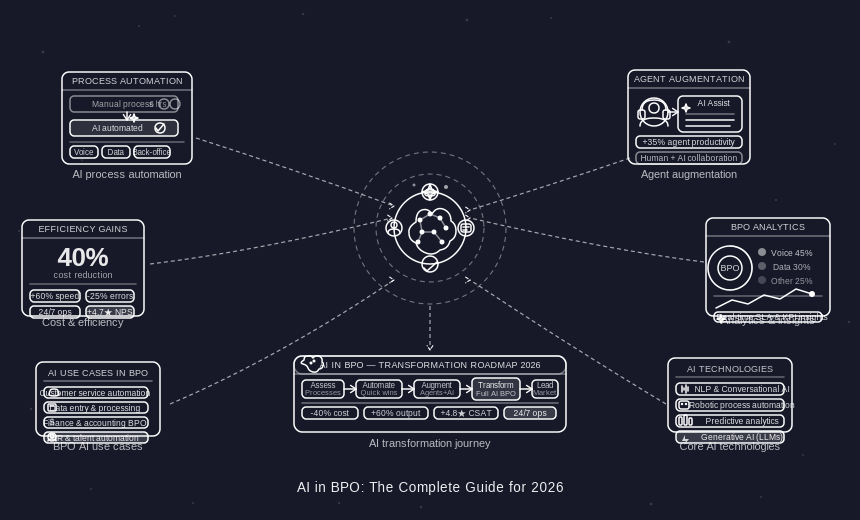
AI in BPO: The Complete Guide for 2026 (Tested & Reviewed)
AI is transforming BPO in 2026. We tested 10 platforms — autonomous voice agents, agent assist, QA automation, and real pricing. Find the right AI for your BPO operation.
Load More
Latest Insights
All Resources
Articles
Case Studies
Tutorials
Articles
RingCentral Alternatives With AI Call Handling
We tested 10 RingCentral alternatives — real pricing, hidden fees exposed, setup times, and AI quality compared. Find the right fit for your team in 2026.
Articles
AI in BPO: The Complete Guide for 2026 (Tested & Reviewed)
AI is transforming BPO in 2026. We tested 10 platforms — autonomous voice agents, agent assist, QA automation, and real pricing. Find the right AI for your BPO operation.
Load More

Automate your business with AI phone Agents
Automate your business with AI phone Agents
Automate your business with AI phone Agents
Automate your business with AI phone Agents
Call automation for healthcare, real estate, logistics, financial services & small businesses.
Call automation for healthcare, real estate, logistics, financial services & small businesses.

Join Discord
Connect with our community, ask questions, and stay updated on product news.

Book a Call
Schedule a quick call with our team to explore solutions for your needs.
Get started
Industries
Usecases
Integrations
Legal & Community

Join Discord
Connect with our community, ask questions, and stay updated on product news.
Book a Call
Schedule a quick call with our team to explore solutions for your needs.
Get started
Industries
Usecases
Integrations
Legal & Community
Join Discord
Connect with our community, ask questions, and stay updated on product news.
Book a Call
Schedule a quick call with our team to explore solutions for your needs.
Get started
Industries
Usecases
Integrations
Legal & Community
Join Discord
Connect with our community, ask questions, and stay updated on product news.
Book a Call
Schedule a quick call with our team to explore solutions for your needs.
Get started
Industries
Usecases
Integrations
Legal & Community