
All Insights
Articles
Medical Answering Service in Houston: How Practices Should Choose in 2026
Comparing a medical answering service in Houston? See live and AI options, published prices, Texas recording and AI disclosure rules, and what to test first.





It is 9 pm on the night a storm has closed your office. A patient with a fever rings the number on your website, and so do forty others who want to know whether tomorrow's appointments are still on. A medical answering service in Houston has to handle that night as well as an ordinary Tuesday: the same calls, in English and Spanish, from callers on five different area codes, under Texas rules most vendor pages never mention. This guide compares the main live and AI options using what each one publishes on its own site, sets out the Texas rules worth knowing, and ends with a test plan you can run before you commit.
Sources: each service is described from its own website, as read on 15 October 2026, and gaps are marked "not published". Texas law is quoted from the Legislature's own text. Last updated: [publish date].
Key takeaways
Of the live-operator services that rank for Houston, only Direct Line Answers publishes a starting price ($115 a month). The AI options publish theirs, from per-minute to flat monthly.
Texas has two 2026 rules a phone vendor should be able to talk about: a health-care AI disclosure duty and a requirement that electronic health records stay in the US.
Close to half of Houston residents speak a language other than English at home, so test the Spanish experience, not just the English one.
Hurricane cover is a phone-routing question first. Know how your calls reach the service when the office has no power.
In this article: What a medical answering service in Houston actually does · Why Houston patient calls are harder to answer · Texas rules that change how your phones should be answered · Houston medical answering services compared · Live operators or an AI agent: which fits your practice · How Brilo works as a doctors answering service in Houston · What a Houston answering service costs: published prices · Common mistakes Houston practices make · Pro tips: a storm-season test plan before you commit · FAQ · Choosing a medical answering service in Houston
What a medical answering service in Houston actually does
A medical answering service in Houston is a third party that answers a practice's phone calls when staff can't, by forwarding the practice number to live operators or to an AI voice agent. It takes messages, answers routine questions, passes urgent calls to the on-call clinician, and in some setups books appointments, covering overflow during clinic hours, nights and weekends, and closures such as storm days.
The two models differ in who picks up. A live service puts a trained operator on the line, reading from scripts your practice approves. An AI voice agent is software that holds the conversation itself, answers from the material you give it, and hands over to a person when the call needs one. Most Houston practices end up comparing both, because the price models are so different.
Why Houston patient calls are harder to answer
Houston's call problems are less about volume than about mix.
Language. The US Census Bureau's QuickFacts puts the share of residents aged five and over who speak a language other than English at home at 47.1% in the city of Houston and 45.0% across Harris County (American Community Survey, 2020-2024). A front desk that can only take messages in English is turning away a large share of first calls.
Self-pay questions. The same table shows 26.4% of Houston residents under 65 without health insurance. Those patients ask about cash prices and payment before they book, and they ask by phone. An answering service that can't say what a visit costs, or can't take a clean message about it, loses those callers to the next search result.
Competition next door. The Texas Medical Center describes itself as the largest medical complex in the world and reports 10 million patient encounters a year. For an independent practice in Bellaire or Sugar Land, that is the backdrop: a patient who hits voicemail has plenty of other places to call.
Weather. On 8 July 2024, the day Hurricane Beryl made landfall in Texas, CenterPoint Energy reported outages for more than 2.26 million electric customers at the storm's peak. A practice whose phones run through a system in the office loses them when the office loses power, which is exactly when patients call most.
Did you know? Houston now has five area codes on one overlay. The Public Utility Commission of Texas confirmed that from 23 January 2025, new lines in the 281, 346, 713 and 832 region may be issued a 621 number. Some vendor pages still list four codes. If your service screens or routes calls by area code, make sure 621 callers are treated as local.
Texas rules that change how your phones should be answered
Four pieces of Texas law shape what an answering service should do for a Houston practice, on top of federal HIPAA.
Recording a call. Texas is a one-party consent state. Under Texas Penal Code section 16.02, it is a defence to the interception offence where a party to the call, or someone with a party's prior consent, does the recording. Your patients don't all live in Texas, though, and some states require every party's consent. Announcing the recording in the greeting covers both cases.
Texas privacy law reaches the vendor. Chapter 181 of the Texas Health and Safety Code, the Texas Medical Records Privacy Act expanded by HB 300, defines a "covered entity" more widely than HIPAA does: it includes anyone who collects, stores or transmits protected health information, plus their employees, agents and contractors. Section 181.101 requires training on state and federal privacy law within 90 days of hire, with a signed completion statement kept for six years.
Disclosing AI. The Texas Responsible Artificial Intelligence Governance Act (HB 149), in force since 1 January 2026, adds section 552.051 to the Business and Commerce Code. Where an AI system "is used in relation to health care service or treatment", the provider must disclose it to the patient no later than the date the service is first provided, in clear, plain language, and as soon as reasonably possible in an emergency. Whether that reaches an AI agent answering your phones is a question for your counsel. Saying so in the greeting costs you about four seconds.
Where records live. SB 1188 added Chapter 183 to the Health and Safety Code. From 1 January 2026, covered entities must keep electronic health records physically in the United States or a US territory, including records held by cloud or third-party providers. The law doesn't say whether a call recording or transcript counts as an electronic health record. Ask every vendor where recordings and transcripts are stored, in writing.
The federal layer. HIPAA lets a practice share patient information with a vendor only under a business associate agreement (BAA). The HHS business associate guidance lists a third-party AI chatbot on a provider's patient portal, handling tasks such as appointment scheduling, as an example of a business associate.
This is a plain-language summary, not legal advice. Check what applies to your practice with a Texas health-care attorney.
Houston medical answering services compared
These are the services that rank for Houston medical searches, plus Brilo. Each column uses only the vendor's own page, checked 15 October 2026.
Service | Type | Based (own page) | Languages (own page) | Published price | BAA (their words) | Setup (their words) |
|---|---|---|---|---|---|---|
Live operators | Houston, since 1974 | English, Spanish | Not published | Not stated on medical page | Not stated | |
Live operators | National, since 1991 | Not stated | Not published | Signs one "with every client" | 24-48 hours after paperwork | |
Live operators | National | Bilingual centre listed | From $115 a month | Not stated | Not stated | |
Live operators | Horsham, PA | English, Spanish, French | Not published | Not stated | Not stated | |
AI voice platform | Not stated | 55+ | $0.07-$0.31 a minute | Signed, self-service portal | Not stated | |
AI receptionist | Not stated | English, Spanish | $299 or $599 a month | "BAA included" | "Live within 24 hours" | |
AI receptionist, managed | Not stated | Multilingual | $495 to $1,495 a month | "Signed BAA" | EHR links 1-6 weeks | |
Brilo | AI voice agent | Not stated | 21, one per agent | From $149 a month; Custom by quote | HIPAA support on Custom only | Call forwarding in minutes |
Extension 19 is the one long-standing local name. Its about page says it was founded in Houston in 1974, it lists a 281 number, and its medical page describes natural-gas generator and battery backup, insurance verification, and delivery by warm transfer, text, email or fax.
MedConnectUSA is a national service with a dedicated Houston page. It says it signs a BAA with every client, offers disaster-recovery routing from "multiple redundant U.S. facilities", and says most clients are month to month. Price is set per practice.
Direct Line Answers is the only live service here with a published floor: plans start at $115 a month. You choose when calls forward, such as after hours, during meetings or at weekends, and its site lists a bilingual answering centre.
AnswerNet says its agents speak English, Spanish and French, backed by an interpreting service, and mentions "EMR integrations" without naming a system.
Retell AI is a developer platform priced by the minute, with $10 of free credit and no contract. Its Houston page lists four area codes and connects an existing line over SIP trunking.
FrontDesk publishes two plans, $299 a month with 500 AI minutes and $599 with 1,150, and says it connects to your PMS and EHR without naming one on its Houston page.
MedReception AI is the most EHR-specific of the AI options. It names athenahealth, eClinicalWorks, Epic and others, and says athenahealth and eClinicalWorks links often take one to three weeks. After-hours cover on its Essential plan is a $99 monthly add-on.
Live operators or an AI agent: which fits your practice
The honest answer depends on the shape of your calls more than the size of your practice.
Solo or two-provider family medicine. Most calls are routine: hours, directions, refills, "can I be seen today". An AI agent answering from your own material, with messages sent to staff, often covers this at a lower monthly cost than per-call operator billing. Start with after-hours and overflow only.
Multi-provider primary care. Volume comes in bursts, Monday mornings and storm days especially. Concurrency and transfer rules matter more than price. Ask each vendor how many calls it answers at once and what the next caller hears.
Specialty groups with an on-call rota. Escalation logic carries the risk. Live services have years of on-call scripts; AI agents need your urgent-call definitions written out in your patients' words. Either can work. Test the escalation, not the greeting.
Expert insight. Based on working with primary care and specialty practices over the past year, I've consistently seen that the deciding factor is rarely the voice on the line. It's what happens to the message. Practices that pick a service whose messages land somewhere staff already look, a text to the on-call phone or an email to the front desk, keep using it. Practices whose messages sit in a separate portal drift back to voicemail within a month, whatever the service costs.
How Brilo works as a doctors answering service in Houston
Brilo is an AI voice agent. As a doctors answering service in Houston, it picks up whenever a call is forwarded to it, day or night, answers questions from the documents you upload, takes structured messages, and passes urgent callers to a person.
Your number stays yours. You keep the number patients already dial and forward it to Brilo, from any provider that can forward, or import it if it sits with Twilio, Telnyx or Plivo. You can also search for a local number by area code.
Transfers with a fallback. A warm handoff to the on-call phone, with a backup number if nobody answers, can include a spoken summary for the on-call clinician, and you can limit the hours when transfers are allowed.
Bursts. Each workspace on a paid self-serve plan can hold 15 calls at the same time, and Brilo asks to hear before a known spike such as a seasonal peak.
Booking. Brilo books into Google Calendar during the call. For any other scheduling system, the route is a custom action, which Brilo's docs put at roughly an hour of a developer's work. See what Brilo connects to today.
What Brilo does not do, stated plainly. It does not book into an EHR or practice management system natively. Outside India, each agent speaks one language, so serving English and Spanish callers means two agents on two numbers, not one agent that switches mid-call. HIPAA support is on Custom plans only, and Brilo's docs ask clinics to request the current paperwork before any patient information goes through. Brilo does not publish where recordings and transcripts are stored, so ask before you sign, given SB 1188.
What a Houston answering service costs: published prices
Most live services in Houston quote per practice. These are the figures vendors publish:
Service | Published price |
|---|---|
Direct Line Answers | From $115 a month |
Retell AI | $0.07 to $0.31 a minute |
FrontDesk | $299 a month (500 AI minutes); $599 (1,150) |
MedReception AI | $495 a month (500 minutes); $995 (1,000); $1,495 (2,000) |
Brilo | Pro $149 a month (600 minutes); Growth $499 (2,500); Custom by quote |
Extension 19, MedConnectUSA, AnswerNet | Not published |
Brilo pricing adds 16 cents a minute beyond Pro's allowance and 14 cents beyond Growth's. Brilo's own worked monthly cost example shows 200 calls of about three minutes using roughly 600 minutes. One caution for clinics: because HIPAA support sits on Custom plans only, a line that carries patient information is a Custom conversation, not a Pro checkout.
Common mistakes Houston practices make
Taking "Houston-based" on trust. A Houston landing page is not a Houston team. Read the footer address and ask where operators or servers sit.
One language for a bilingual patient base. If close to half your callers may open in Spanish, an English-only line is a voicemail box with better manners.
No storm script. The closure message gets written the morning of the storm, badly. Write it now.
Reading a HIPAA badge as a contract. A badge on a website is not a signed BAA. Ask for the agreement itself.
Forgetting 621. Area-code screening and caller-ID rules written before 2025 can treat new Houston numbers as out of town.
Recording without saying so. Texas allows one-party recording, but your out-of-state callers' states may not.
Pro tips: a storm-season test plan before you commit
Forward overflow first. Send only unanswered calls to the new service for two weeks, using the after-hours cover pattern, before you move the main line.
Call at 9 pm and on a Sunday. Test at the hours it will actually run, and test your agent yourself with real patient wording.
Test in Spanish. Open the call in Spanish, ask about a cash price, and read the message that comes out. With Brilo, set the agent's language on a dedicated Spanish line.
Break the transfer. Let the on-call phone ring out and confirm the warm transfer with a fallback number works.
Write closures down. An AI agent knows only the closures you give it. Load closure notices into its knowledge and set business hours, holidays and after hours before storm season, and plan for a storm-week surge with your vendor.
Set a retention period. Keep recordings as long as you need them and no longer, using the recording and retention settings.
Read a week of transcripts. It is the fastest way to see what patients really ask. Here is how to tell whether an AI agent is working.
FAQ
How much does a medical answering service cost in Houston?
Published prices run from $115 a month (Direct Line Answers' starting plan) to $1,495 a month (MedReception AI's top managed plan), with per-minute AI options from $0.07. Extension 19, MedConnectUSA and AnswerNet quote per practice. Brilo's Pro plan is $149 a month for 600 minutes; clinics that need HIPAA support need a Custom plan, priced by quote.
Is it legal to record patient calls in Texas?
Texas allows recording when one party to the call consents (Penal Code section 16.02), so a practice can record its own calls. Callers in states that require every party's consent are a different matter, which is why most practices announce recording in the greeting. This is not legal advice.
Do Texas practices have to tell patients they are talking to an AI?
Since 1 January 2026, Business and Commerce Code section 552.051 requires providers to disclose AI used "in relation to health care service or treatment" to the patient. Whether it covers an AI answering your phones is for your counsel, but disclosing in the greeting is simple. Brilo's answering-service recipe tells the agent never to say it is a person if a caller asks directly. This is not legal advice.
Can a doctors answering service in Houston answer in Spanish?
Several can. Extension 19 and AnswerNet list Spanish, Direct Line lists a bilingual centre, and FrontDesk and MedReception AI describe Spanish or multilingual AI. Brilo speaks Spanish, one language per agent, so a bilingual practice runs a Spanish agent on its own number.
Can I keep my 713 or 281 number?
Yes, with every option in this guide that works by forwarding. With Brilo, you forward your existing number from your current provider, or import it if it sits with Twilio, Telnyx or Plivo. The number stays with your provider either way.
What happens to patient calls during a hurricane or power outage?
That depends on where the forwarding happens. A cloud service keeps answering while your office is dark, but only if calls reach it, so set forwarding at your carrier rather than on an office phone system that loses power. Brilo answers whenever a call arrives. Load your closure wording into its knowledge so it gives patients the right message.
Does a medical answering service need to sign a BAA?
If it handles patient information for your practice, it is generally a business associate under HIPAA, and HHS guidance says the practice needs a BAA with it before sharing that information. MedConnectUSA, Retell AI, FrontDesk and MedReception AI all say they sign one. Brilo offers HIPAA support only on its Custom plans. Ask for the current paperwork before routing patient calls.
Choosing a medical answering service in Houston
The right medical answering service in Houston is the one that still works on the worst night of the year: it answers in your patients' language, gets urgent calls to whoever is on call, keeps patient information where Texas wants it, and tells callers what they are talking to. Shortlist two or three, forward your overflow to them, and judge them on a week of real calls.
Want to test it on one line first? See Brilo pricing, and talk to us about a Custom plan if your calls carry patient information.
All Insights
Articles
Medical Answering Service in Houston: How Practices Should Choose in 2026
Comparing a medical answering service in Houston? See live and AI options, published prices, Texas recording and AI disclosure rules, and what to test first.
It is 9 pm on the night a storm has closed your office. A patient with a fever rings the number on your website, and so do forty others who want to know whether tomorrow's appointments are still on. A medical answering service in Houston has to handle that night as well as an ordinary Tuesday: the same calls, in English and Spanish, from callers on five different area codes, under Texas rules most vendor pages never mention. This guide compares the main live and AI options using what each one publishes on its own site, sets out the Texas rules worth knowing, and ends with a test plan you can run before you commit.
Sources: each service is described from its own website, as read on 15 October 2026, and gaps are marked "not published". Texas law is quoted from the Legislature's own text. Last updated: [publish date].
Key takeaways
Of the live-operator services that rank for Houston, only Direct Line Answers publishes a starting price ($115 a month). The AI options publish theirs, from per-minute to flat monthly.
Texas has two 2026 rules a phone vendor should be able to talk about: a health-care AI disclosure duty and a requirement that electronic health records stay in the US.
Close to half of Houston residents speak a language other than English at home, so test the Spanish experience, not just the English one.
Hurricane cover is a phone-routing question first. Know how your calls reach the service when the office has no power.
In this article: What a medical answering service in Houston actually does · Why Houston patient calls are harder to answer · Texas rules that change how your phones should be answered · Houston medical answering services compared · Live operators or an AI agent: which fits your practice · How Brilo works as a doctors answering service in Houston · What a Houston answering service costs: published prices · Common mistakes Houston practices make · Pro tips: a storm-season test plan before you commit · FAQ · Choosing a medical answering service in Houston
What a medical answering service in Houston actually does
A medical answering service in Houston is a third party that answers a practice's phone calls when staff can't, by forwarding the practice number to live operators or to an AI voice agent. It takes messages, answers routine questions, passes urgent calls to the on-call clinician, and in some setups books appointments, covering overflow during clinic hours, nights and weekends, and closures such as storm days.
The two models differ in who picks up. A live service puts a trained operator on the line, reading from scripts your practice approves. An AI voice agent is software that holds the conversation itself, answers from the material you give it, and hands over to a person when the call needs one. Most Houston practices end up comparing both, because the price models are so different.
Why Houston patient calls are harder to answer
Houston's call problems are less about volume than about mix.
Language. The US Census Bureau's QuickFacts puts the share of residents aged five and over who speak a language other than English at home at 47.1% in the city of Houston and 45.0% across Harris County (American Community Survey, 2020-2024). A front desk that can only take messages in English is turning away a large share of first calls.
Self-pay questions. The same table shows 26.4% of Houston residents under 65 without health insurance. Those patients ask about cash prices and payment before they book, and they ask by phone. An answering service that can't say what a visit costs, or can't take a clean message about it, loses those callers to the next search result.
Competition next door. The Texas Medical Center describes itself as the largest medical complex in the world and reports 10 million patient encounters a year. For an independent practice in Bellaire or Sugar Land, that is the backdrop: a patient who hits voicemail has plenty of other places to call.
Weather. On 8 July 2024, the day Hurricane Beryl made landfall in Texas, CenterPoint Energy reported outages for more than 2.26 million electric customers at the storm's peak. A practice whose phones run through a system in the office loses them when the office loses power, which is exactly when patients call most.
Did you know? Houston now has five area codes on one overlay. The Public Utility Commission of Texas confirmed that from 23 January 2025, new lines in the 281, 346, 713 and 832 region may be issued a 621 number. Some vendor pages still list four codes. If your service screens or routes calls by area code, make sure 621 callers are treated as local.
Texas rules that change how your phones should be answered
Four pieces of Texas law shape what an answering service should do for a Houston practice, on top of federal HIPAA.
Recording a call. Texas is a one-party consent state. Under Texas Penal Code section 16.02, it is a defence to the interception offence where a party to the call, or someone with a party's prior consent, does the recording. Your patients don't all live in Texas, though, and some states require every party's consent. Announcing the recording in the greeting covers both cases.
Texas privacy law reaches the vendor. Chapter 181 of the Texas Health and Safety Code, the Texas Medical Records Privacy Act expanded by HB 300, defines a "covered entity" more widely than HIPAA does: it includes anyone who collects, stores or transmits protected health information, plus their employees, agents and contractors. Section 181.101 requires training on state and federal privacy law within 90 days of hire, with a signed completion statement kept for six years.
Disclosing AI. The Texas Responsible Artificial Intelligence Governance Act (HB 149), in force since 1 January 2026, adds section 552.051 to the Business and Commerce Code. Where an AI system "is used in relation to health care service or treatment", the provider must disclose it to the patient no later than the date the service is first provided, in clear, plain language, and as soon as reasonably possible in an emergency. Whether that reaches an AI agent answering your phones is a question for your counsel. Saying so in the greeting costs you about four seconds.
Where records live. SB 1188 added Chapter 183 to the Health and Safety Code. From 1 January 2026, covered entities must keep electronic health records physically in the United States or a US territory, including records held by cloud or third-party providers. The law doesn't say whether a call recording or transcript counts as an electronic health record. Ask every vendor where recordings and transcripts are stored, in writing.
The federal layer. HIPAA lets a practice share patient information with a vendor only under a business associate agreement (BAA). The HHS business associate guidance lists a third-party AI chatbot on a provider's patient portal, handling tasks such as appointment scheduling, as an example of a business associate.
This is a plain-language summary, not legal advice. Check what applies to your practice with a Texas health-care attorney.
Houston medical answering services compared
These are the services that rank for Houston medical searches, plus Brilo. Each column uses only the vendor's own page, checked 15 October 2026.
Service | Type | Based (own page) | Languages (own page) | Published price | BAA (their words) | Setup (their words) |
|---|---|---|---|---|---|---|
Live operators | Houston, since 1974 | English, Spanish | Not published | Not stated on medical page | Not stated | |
Live operators | National, since 1991 | Not stated | Not published | Signs one "with every client" | 24-48 hours after paperwork | |
Live operators | National | Bilingual centre listed | From $115 a month | Not stated | Not stated | |
Live operators | Horsham, PA | English, Spanish, French | Not published | Not stated | Not stated | |
AI voice platform | Not stated | 55+ | $0.07-$0.31 a minute | Signed, self-service portal | Not stated | |
AI receptionist | Not stated | English, Spanish | $299 or $599 a month | "BAA included" | "Live within 24 hours" | |
AI receptionist, managed | Not stated | Multilingual | $495 to $1,495 a month | "Signed BAA" | EHR links 1-6 weeks | |
Brilo | AI voice agent | Not stated | 21, one per agent | From $149 a month; Custom by quote | HIPAA support on Custom only | Call forwarding in minutes |
Extension 19 is the one long-standing local name. Its about page says it was founded in Houston in 1974, it lists a 281 number, and its medical page describes natural-gas generator and battery backup, insurance verification, and delivery by warm transfer, text, email or fax.
MedConnectUSA is a national service with a dedicated Houston page. It says it signs a BAA with every client, offers disaster-recovery routing from "multiple redundant U.S. facilities", and says most clients are month to month. Price is set per practice.
Direct Line Answers is the only live service here with a published floor: plans start at $115 a month. You choose when calls forward, such as after hours, during meetings or at weekends, and its site lists a bilingual answering centre.
AnswerNet says its agents speak English, Spanish and French, backed by an interpreting service, and mentions "EMR integrations" without naming a system.
Retell AI is a developer platform priced by the minute, with $10 of free credit and no contract. Its Houston page lists four area codes and connects an existing line over SIP trunking.
FrontDesk publishes two plans, $299 a month with 500 AI minutes and $599 with 1,150, and says it connects to your PMS and EHR without naming one on its Houston page.
MedReception AI is the most EHR-specific of the AI options. It names athenahealth, eClinicalWorks, Epic and others, and says athenahealth and eClinicalWorks links often take one to three weeks. After-hours cover on its Essential plan is a $99 monthly add-on.
Live operators or an AI agent: which fits your practice
The honest answer depends on the shape of your calls more than the size of your practice.
Solo or two-provider family medicine. Most calls are routine: hours, directions, refills, "can I be seen today". An AI agent answering from your own material, with messages sent to staff, often covers this at a lower monthly cost than per-call operator billing. Start with after-hours and overflow only.
Multi-provider primary care. Volume comes in bursts, Monday mornings and storm days especially. Concurrency and transfer rules matter more than price. Ask each vendor how many calls it answers at once and what the next caller hears.
Specialty groups with an on-call rota. Escalation logic carries the risk. Live services have years of on-call scripts; AI agents need your urgent-call definitions written out in your patients' words. Either can work. Test the escalation, not the greeting.
Expert insight. Based on working with primary care and specialty practices over the past year, I've consistently seen that the deciding factor is rarely the voice on the line. It's what happens to the message. Practices that pick a service whose messages land somewhere staff already look, a text to the on-call phone or an email to the front desk, keep using it. Practices whose messages sit in a separate portal drift back to voicemail within a month, whatever the service costs.
How Brilo works as a doctors answering service in Houston
Brilo is an AI voice agent. As a doctors answering service in Houston, it picks up whenever a call is forwarded to it, day or night, answers questions from the documents you upload, takes structured messages, and passes urgent callers to a person.
Your number stays yours. You keep the number patients already dial and forward it to Brilo, from any provider that can forward, or import it if it sits with Twilio, Telnyx or Plivo. You can also search for a local number by area code.
Transfers with a fallback. A warm handoff to the on-call phone, with a backup number if nobody answers, can include a spoken summary for the on-call clinician, and you can limit the hours when transfers are allowed.
Bursts. Each workspace on a paid self-serve plan can hold 15 calls at the same time, and Brilo asks to hear before a known spike such as a seasonal peak.
Booking. Brilo books into Google Calendar during the call. For any other scheduling system, the route is a custom action, which Brilo's docs put at roughly an hour of a developer's work. See what Brilo connects to today.
What Brilo does not do, stated plainly. It does not book into an EHR or practice management system natively. Outside India, each agent speaks one language, so serving English and Spanish callers means two agents on two numbers, not one agent that switches mid-call. HIPAA support is on Custom plans only, and Brilo's docs ask clinics to request the current paperwork before any patient information goes through. Brilo does not publish where recordings and transcripts are stored, so ask before you sign, given SB 1188.
What a Houston answering service costs: published prices
Most live services in Houston quote per practice. These are the figures vendors publish:
Service | Published price |
|---|---|
Direct Line Answers | From $115 a month |
Retell AI | $0.07 to $0.31 a minute |
FrontDesk | $299 a month (500 AI minutes); $599 (1,150) |
MedReception AI | $495 a month (500 minutes); $995 (1,000); $1,495 (2,000) |
Brilo | Pro $149 a month (600 minutes); Growth $499 (2,500); Custom by quote |
Extension 19, MedConnectUSA, AnswerNet | Not published |
Brilo pricing adds 16 cents a minute beyond Pro's allowance and 14 cents beyond Growth's. Brilo's own worked monthly cost example shows 200 calls of about three minutes using roughly 600 minutes. One caution for clinics: because HIPAA support sits on Custom plans only, a line that carries patient information is a Custom conversation, not a Pro checkout.
Common mistakes Houston practices make
Taking "Houston-based" on trust. A Houston landing page is not a Houston team. Read the footer address and ask where operators or servers sit.
One language for a bilingual patient base. If close to half your callers may open in Spanish, an English-only line is a voicemail box with better manners.
No storm script. The closure message gets written the morning of the storm, badly. Write it now.
Reading a HIPAA badge as a contract. A badge on a website is not a signed BAA. Ask for the agreement itself.
Forgetting 621. Area-code screening and caller-ID rules written before 2025 can treat new Houston numbers as out of town.
Recording without saying so. Texas allows one-party recording, but your out-of-state callers' states may not.
Pro tips: a storm-season test plan before you commit
Forward overflow first. Send only unanswered calls to the new service for two weeks, using the after-hours cover pattern, before you move the main line.
Call at 9 pm and on a Sunday. Test at the hours it will actually run, and test your agent yourself with real patient wording.
Test in Spanish. Open the call in Spanish, ask about a cash price, and read the message that comes out. With Brilo, set the agent's language on a dedicated Spanish line.
Break the transfer. Let the on-call phone ring out and confirm the warm transfer with a fallback number works.
Write closures down. An AI agent knows only the closures you give it. Load closure notices into its knowledge and set business hours, holidays and after hours before storm season, and plan for a storm-week surge with your vendor.
Set a retention period. Keep recordings as long as you need them and no longer, using the recording and retention settings.
Read a week of transcripts. It is the fastest way to see what patients really ask. Here is how to tell whether an AI agent is working.
FAQ
How much does a medical answering service cost in Houston?
Published prices run from $115 a month (Direct Line Answers' starting plan) to $1,495 a month (MedReception AI's top managed plan), with per-minute AI options from $0.07. Extension 19, MedConnectUSA and AnswerNet quote per practice. Brilo's Pro plan is $149 a month for 600 minutes; clinics that need HIPAA support need a Custom plan, priced by quote.
Is it legal to record patient calls in Texas?
Texas allows recording when one party to the call consents (Penal Code section 16.02), so a practice can record its own calls. Callers in states that require every party's consent are a different matter, which is why most practices announce recording in the greeting. This is not legal advice.
Do Texas practices have to tell patients they are talking to an AI?
Since 1 January 2026, Business and Commerce Code section 552.051 requires providers to disclose AI used "in relation to health care service or treatment" to the patient. Whether it covers an AI answering your phones is for your counsel, but disclosing in the greeting is simple. Brilo's answering-service recipe tells the agent never to say it is a person if a caller asks directly. This is not legal advice.
Can a doctors answering service in Houston answer in Spanish?
Several can. Extension 19 and AnswerNet list Spanish, Direct Line lists a bilingual centre, and FrontDesk and MedReception AI describe Spanish or multilingual AI. Brilo speaks Spanish, one language per agent, so a bilingual practice runs a Spanish agent on its own number.
Can I keep my 713 or 281 number?
Yes, with every option in this guide that works by forwarding. With Brilo, you forward your existing number from your current provider, or import it if it sits with Twilio, Telnyx or Plivo. The number stays with your provider either way.
What happens to patient calls during a hurricane or power outage?
That depends on where the forwarding happens. A cloud service keeps answering while your office is dark, but only if calls reach it, so set forwarding at your carrier rather than on an office phone system that loses power. Brilo answers whenever a call arrives. Load your closure wording into its knowledge so it gives patients the right message.
Does a medical answering service need to sign a BAA?
If it handles patient information for your practice, it is generally a business associate under HIPAA, and HHS guidance says the practice needs a BAA with it before sharing that information. MedConnectUSA, Retell AI, FrontDesk and MedReception AI all say they sign one. Brilo offers HIPAA support only on its Custom plans. Ask for the current paperwork before routing patient calls.
Choosing a medical answering service in Houston
The right medical answering service in Houston is the one that still works on the worst night of the year: it answers in your patients' language, gets urgent calls to whoever is on call, keeps patient information where Texas wants it, and tells callers what they are talking to. Shortlist two or three, forward your overflow to them, and judge them on a week of real calls.
Want to test it on one line first? See Brilo pricing, and talk to us about a Custom plan if your calls carry patient information.
Latest Insights
All Resources
Articles
Case Studies
Tutorials
Articles
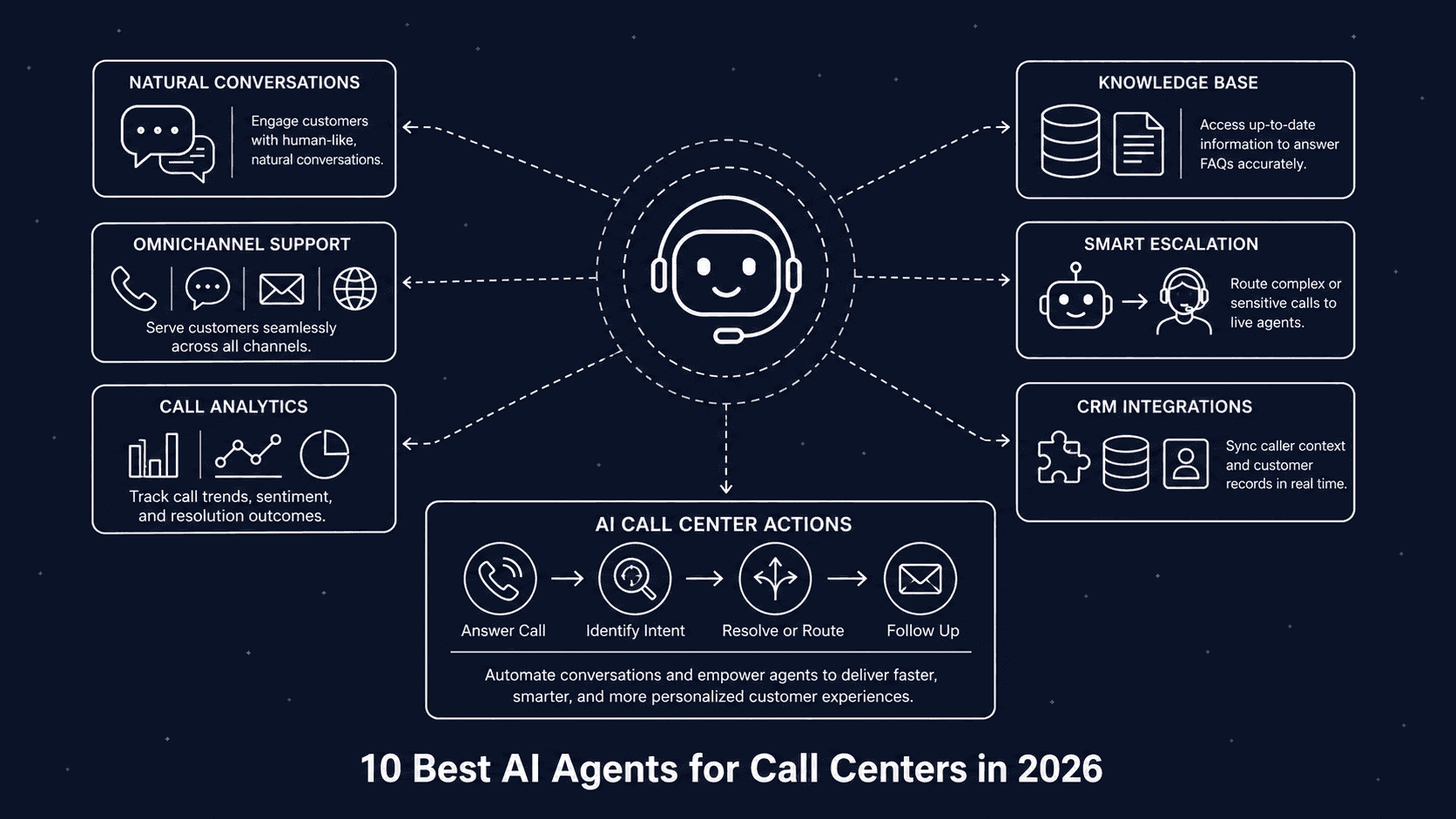
10 Best AI Agents for Call Centers in 2026 (Tested & Reviewed)
We tested 10 AI agents for call centers — containment rates, agent-assist quality, G2 reviews, and real pricing compared. Find the right platform in 2026.
Articles
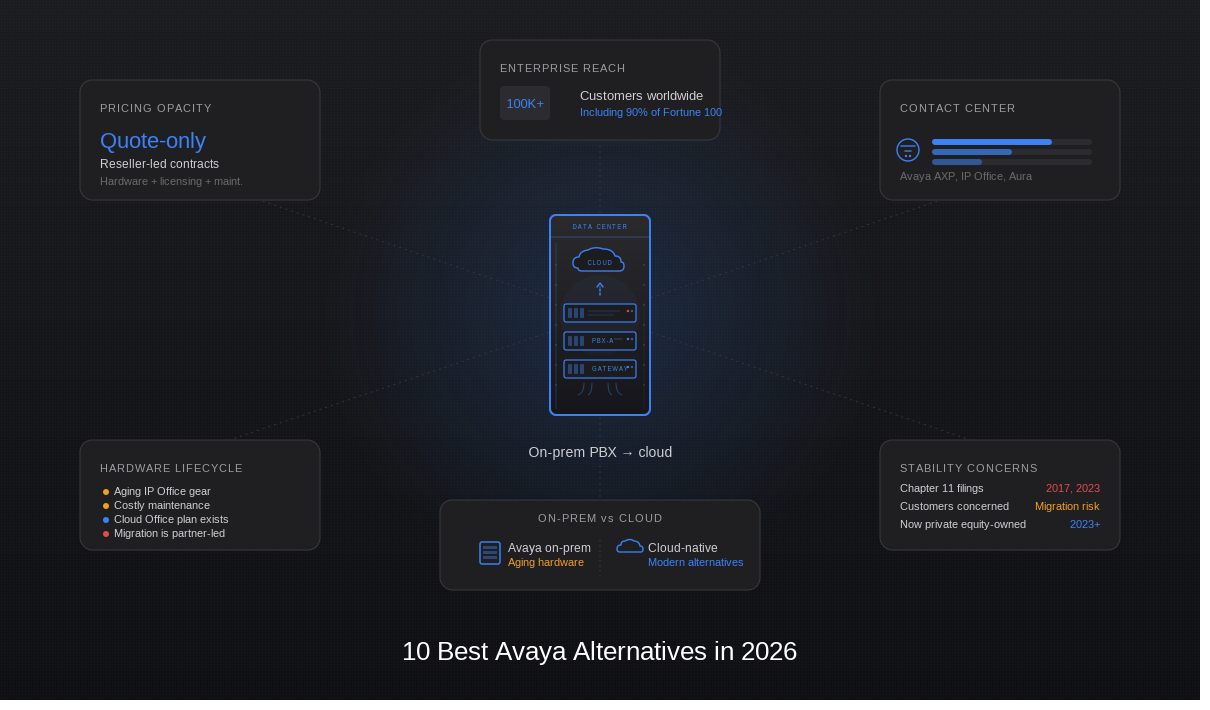
The 10 Best Avaya Alternatives in 2026 (We Tested Each One)
We tested 10 Avaya alternatives — 200-seat AXP minimum exposed, certification-to-support documented, modern AI options compared. Find the right fit for your team in 2026.
Load More
Latest Insights
All Resources
Articles
Case Studies
Tutorials
Articles
10 Best AI Agents for Call Centers in 2026 (Tested & Reviewed)
We tested 10 AI agents for call centers — containment rates, agent-assist quality, G2 reviews, and real pricing compared. Find the right platform in 2026.
Articles
The 10 Best Avaya Alternatives in 2026 (We Tested Each One)
We tested 10 Avaya alternatives — 200-seat AXP minimum exposed, certification-to-support documented, modern AI options compared. Find the right fit for your team in 2026.
Load More

Automate your business with AI phone Agents
Automate your business with AI phone Agents
Automate your business with AI phone Agents
Automate your business with AI phone Agents
Call automation for healthcare, real estate, logistics, financial services & small businesses.
Call automation for healthcare, real estate, logistics, financial services & small businesses.

Join Discord
Connect with our community, ask questions, and stay updated on product news.

Book a Call
Schedule a quick call with our team to explore solutions for your needs.
Get started
Industries
Usecases
Integrations
Legal & Community

Join Discord
Connect with our community, ask questions, and stay updated on product news.
Book a Call
Schedule a quick call with our team to explore solutions for your needs.
Get started
Industries
Usecases
Integrations
Legal & Community
Join Discord
Connect with our community, ask questions, and stay updated on product news.
Book a Call
Schedule a quick call with our team to explore solutions for your needs.
Get started
Industries
Usecases
Integrations
Legal & Community
Join Discord
Connect with our community, ask questions, and stay updated on product news.
Book a Call
Schedule a quick call with our team to explore solutions for your needs.
Get started
Industries
Usecases
Integrations
Legal & Community