
All Insights
Articles
Virtual Medical Receptionist Australia: A Four-Shift Setup Guide
Virtual medical receptionist Australia guide: set up an AI phone line shift by shift for the Privacy Act, APP 8, state recording laws and Do Not Call rules.





In 2024-25, 36.3% of Australians who needed an after-hours GP delayed seeing one or went without, according to the Australian Bureau of Statistics. Of those who did see a GP for urgent care, 47.0% waited 24 hours or more. For most patients that wait starts with a phone call to the clinic. A virtual medical receptionist Australia patients will accept has to work at every hour the phone rings, and the rules change with the hour: privacy and recording all day, triage and referral after hours, and the Do Not Call Register when the clinic rings out. This guide sets up the line one shift at a time.
Last updated: [publish date]. Legal sources (the Commonwealth Privacy Act, NSW, Victorian and Queensland recording laws, and outbound calling rules) were read on 17 October 2026. Vendor wording comes from their websites as read that day. Nothing here is legal advice; for your own clinic, ask a privacy lawyer or your medical defence organisation.
Key takeaways
Every GP clinic is covered by the Privacy Act, and everything a patient says to the front desk counts as health information.
If your AI vendor holds call data outside Australia, APP 8 applies and you stay accountable for what the vendor does with it.
Recording rules differ between states, so open each call by naming both the recording and the AI.
Appointment reminders are not telemarketing, but adding a promotion to one can make it telemarketing.
In this article: Virtual medical receptionist Australia: the short answer · The rules under every shift: the Privacy Act and the APPs · Where the call data goes: APP 8 and offshore vendors · Recording the call: Commonwealth and state rules · Shift 1: when the doors open · Shift 2: in-hours overflow and hand-offs · Shift 3: after hours · Shift 4: recalls, reminders and the Do Not Call Register · AI medical receptionist Australia options compared · Brilo for an Australian clinic: what the docs show · What it costs · Common mistakes · Pro tips: a four-shift test week · FAQ · Choosing a virtual medical receptionist Australia patients trust
Virtual medical receptionist Australia: the short answer
Quick answer: A virtual medical receptionist in Australia can be a human team or an AI agent. Either way, the clinic remains responsible under the Privacy Act. Check where call data is stored, announce recording and AI use at the start, send after-hours callers to 000, healthdirect or a Medicare Urgent Care Clinic, and keep reminder calls free of sales content.
The rules under every shift: the Privacy Act and the APPs
Most small businesses with turnover of $3 million or less sit outside the Privacy Act. Health service providers do not. The OAIC's small business guidance lists them among the businesses covered "regardless of turnover", and its list of health service providers starts with "a general practitioner or a medical practitioner".
The category is wider than most practice managers expect. The OAIC's guide to health privacy says "all personal information collected in the course of providing a health service is considered health information", including a patient's name, address, billing details and Medicare number. Health information is sensitive information, so the stricter rules in the Australian Privacy Principles apply:
APP 3.3: collecting sensitive information needs consent, unless an exception such as a permitted health situation applies.
APP 5: tell callers who is collecting their details and why, at or before the time of collection.
APP 6.2: any secondary use of sensitive information must be "directly related" to the reason it was collected.
APP 11: take reasonable steps to protect the information, and destroy or de-identify it once it is no longer needed.
The OAIC has also written guidance on commercially available AI products. Its top takeaways ask businesses to do due diligence before adopting a product, to build in human oversight, and to make sure public-facing AI tools are "clearly identified as such". It warns that due diligence "should not amount to a 'set and forget' approach."
If something goes wrong, the Notifiable Data Breaches scheme requires you to notify affected patients and the OAIC when a breach is likely to result in serious harm.
Did you know? Health service providers made more data breach notifications than any other sector in 2025: 225 out of a record 1,205, according to the OAIC's July 2026 release. Most notifications across all sectors came from malicious or criminal attacks.
Where the call data goes: APP 8 and offshore vendors
An AI receptionist hears names, dates of birth, symptoms and Medicare numbers. Where that audio and its transcript end up matters more in Australia than in most markets, because of APP 8.
Under APP 8.1, before you disclose personal information to an overseas recipient you must take reasonable steps to make sure the recipient does not breach the APPs. Section 16C then makes you accountable for any act of that recipient that would breach them. The OAIC's APP 8 guidelines say that when you engage an overseas contractor to perform services for you, "in most circumstances, the provision of personal information to that contractor is a disclosure." APP 1.4 also requires your privacy policy to say whether you are likely to disclose information overseas, and to which countries.
Several Australian vendors make onshore hosting a selling point. Terva says its "main application and database are hosted in Australia." MayaAI says "platform data, call recordings and transcripts are stored in Australia." AI Healthcare advertises "Australian data residency." Those are their claims; ask for the contract clause that backs them.
Brilo does not publish where call data is stored. Until a vendor tells you in writing, our reading is that you should plan as if the data leaves Australia: name the countries in your privacy policy, get contractual promises on handling and deletion, and keep a record of the steps you took.
Recording the call: Commonwealth and state rules
Australian recording law comes in layers. Under section 6 of the Commonwealth Telecommunications (Interception and Access) Act 1979, interception means listening to or recording a call as it passes over the network "without the knowledge of the person making the communication." A caller who has been told about the recording knows.
State listening-device laws add their own conditions:
State | Can a party to the call record it? | Sharing the recording |
|---|---|---|
New South Wales | Only with consent of all principal parties, or with one party's consent where recording is reasonably necessary to protect that party's lawful interests (Surveillance Devices Act 2007 s 7(3)) | Covered by the same section and Part 2 offences |
Victoria | Yes. Section 6(1) targets recording a conversation "to which the person is not a party" (Surveillance Devices Act 1999) | Section 11 needs the consent of each party, unless an exception applies |
Queensland | Yes. Section 43(2)(a) excludes a person who "is a party to the private conversation" (Invasion of Privacy Act 1971) | Section 45 limits passing the record to others without everyone's consent |
Other states and territories | Not covered here | Check your own state or territory's Act |
Treat the table as a summary only, not advice. The practical answer is the same in every state: say up front that you record and for what purpose, and give them a way to continue without it. Whether sending a recording to a vendor or reviewer counts as "communicating" it under the Victorian or Queensland sections is our open question, not a settled point.
Brilo puts Audio Recording and Retention Period in each agent's settings. Turning recording off still leaves a written summary of each call. Terva takes another approach: "Calls aren't recorded; your dashboard keeps the transcript and summary."
Shift 1: when the doors open
The first hour is when the queue builds, and for urgent requests a slow answer often becomes a next-day appointment. ABS found that 41.6% of people who saw a GP for urgent care were seen within four hours, and nearly half waited a day or more.
In this shift the virtual receptionist takes the overflow, not the whole line. Most phone providers can forward only the calls nobody picks up, and Brilo's guide to using your existing number covers both full and unanswered-call forwarding. A paid Brilo plan handles 15 calls at the same time, per its limits page, and outbound campaigns draw on the same pool.
The opening line does three jobs at once. A sample we wrote for this page:
"Good morning, you've reached Riverside Family Practice. You're speaking with our AI assistant, and we record calls to keep our notes accurate. If you'd rather not be recorded, say 'staff' and I'll put you through. If this is an emergency, hang up and call triple zero."
Brilo lets you write that as the greeting. One rule for this shift: the agent should never promise "the doctor will call you back today" unless your team has agreed it can keep that promise.
Shift 2: in-hours overflow and hand-offs
Mid-morning to late afternoon, the useful skill is knowing when to stop. Anything clinical, distressed or unclear should reach a person. Brilo's transfer action can pass a call cold, with a short note to staff, or with a summary of the conversation, and has a fallback when nobody answers. It can also recognise returning callers, which saves repeated identity questions but needs a policy if family members share a phone.
A newer rule arrives on 10 December 2026. The Privacy and Other Legislation Amendment Act 2024 added APP 1.7 to 1.9, and the OAIC has published transparency resources for it. If a computer program makes a decision, or does something "substantially and directly related" to one, and that decision could significantly affect a person's rights or interests, your privacy policy must describe the kinds of information used and the kinds of decisions involved. The OAIC's flowchart says third-party programs you configure or rely on can be in scope. Our reading is that an AI deciding which callers get a same-day slot is the likeliest trigger at a GP clinic; taking a message is not.
Shift 3: after hours
The ABS figure in the opening was about this shift: more than a third of people who needed an after-hours GP delayed or went without. An after-hours agent should not try to fill that gap with advice. Its job is to route callers to the right public service quickly:
Emergencies: triple zero (000).
Nurse advice: the healthdirect helpline on 1800 022 222, open 24 hours, known as NURSE-ON-CALL in Victoria. Its nurses may offer a call back or video call from a GP. In Queensland, 13 HEALTH on 13 43 25 84.
Urgent but not life-threatening: a Medicare Urgent Care Clinic. All 137 have been open since 17 June 2026, with no appointment and no out-of-pocket cost, and the government's release says one in four visits came after 5pm on weekdays.
Access: TIS National on 131 450 for an interpreter, and the National Relay Service on 1800 555 677.
Brilo's after-hours cover recipe points out that an agent answers whenever a call arrives, so you either tell it your hours or forward calls to it only when you are closed. Emergencies go through to whoever is on call, and after-hours transfer limits stop a doctor's mobile ringing at 3am for a repeat script.
Expert insight. Before anything else, I ask the practice manager to ring the clinic's own number at five past six on a Friday evening and write down exactly what happens. Usually it is a recorded message that lists four numbers far too quickly, and a patient with a feverish child has to remember all four. The fix is not clever software. It is one sentence in plain language that names the right service for the caller's situation, offered slowly, with the choice to hear it again. Get that sentence right and the rest of the after-hours setup follows.
Shift 4: recalls, reminders and the Do Not Call Register
Calls going out bring in a different set of rules. The register's guidance for callers says calls about an "appointment reminder" or "appointment rescheduling" are not telemarketing, so they can go to numbers on the register. It also warns that a commercial purpose, "even if it is not the primary or sole purpose", turns a call into telemarketing. A recall that ends with a pitch for a skin check package has changed category.
Other points from the register's industry FAQs:
If you outsource calls, both the caller and your business must comply.
The rules apply to calls from overseas, and the ACMA "will pursue the Australian company linked to that telemarketer."
Express consent given without an end date lapses after three months.
Where a call is telemarketing, the industry standard allows weekdays 9am to 8pm and Saturdays 9am to 5pm, needs calling line identification, and requires the caller's name and purpose at the start. Reminder texts and emails fall under the Spam Act instead: keep them factual, or get consent and include a working unsubscribe, per the ACMA's rules on avoiding spam.
Brilo's campaigns call between 9am and 8pm in each contact's local time by default, and a calling window can only narrow that. The docs do not say whether weekends are excluded. Local time is "worked out from their area code". In Australia that is unreliable: the 08 code covers South Australia, Western Australia and the Northern Territory, three different time zones, and mobile numbers carry no area at all, so they fall back to the default hours. Set a tight window by hand, and keep promotional calls off weekends. Opt-outs are handled through unsubscribe settings.
AI medical receptionist Australia options compared
The field mixes human teams and AI agents. Every detail below is the vendor's own wording, checked on 17 October 2026.
Option | Type | Data location (their words) | Booking (their words) | Recording | Printed price |
|---|---|---|---|---|---|
Human team | "Australian-based Remote Reception team" | Bookings "directly into your practice software" | After-hours message recording | Not published; "five days per week" | |
Human team | Not stated | Appointment scheduling, diary management | Not stated | From $25 to $49 a month by plan, with a footnote; 24/7 optional | |
AI | "hosted in Australia" | Booking requests confirmed by staff; integration "available" for Best Practice, MedicalDirector, Zedmed | "Calls aren't recorded" | Free for 30 minutes; A$200 a month with 100 minutes, then 80c a minute | |
AI | "stored in Australia" | "live Cliniko, Halaxy and Best Practice integrations" | Recorded, with greeting templates and privacy notices | "AUD + GST"; figures not shown on the page we read; one-month free trial | |
AI | "Australian data residency" | Cliniko, Best Practice, Medical Director and others | Not stated | $499 or $999 a month; no lock-in | |
Brilo | AI | Not published | Google Calendar; other systems by custom action | Per-agent setting | US dollars; see below |
Treat any "Privacy Act compliant" badge as the vendor's description of itself. Your obligations stay with the clinic.
Brilo for an Australian clinic: what the docs show
Brilo is a general AI phone agent, not an Australian medical product. These are the documented facts that matter here:
Numbers. The number purchase screen has a country picker, but the docs do not list which countries are offered, and we found no confirmation that Australian numbers can be bought. Importing an existing number is documented: the Twilio import guide names "AU +61" numbers, which need a Regulatory Bundle, and recommends Twilio's Sydney endpoint to avoid extra delay. Any provider that can forward calls can also send them to a Brilo number.
Voice and time. English voices include an Australian accent, and each agent has its own time zone.
Booking. Brilo books into Google Calendar. It has no Best Practice, MedicalDirector, Zedmed or HotDoc connection; a developer could try a custom action, with no guarantee it fits.
Limits. It cannot take card details, and the docs do not say where call data is stored.
For a clinic that wants overflow and after-hours answering and is willing to do the APP 8 paperwork, that can work. For a clinic that needs onshore hosting in writing or live booking into its practice software, a local vendor that documents both is the better starting point.
What it costs
The Australian vendors that print prices quote them in Australian dollars: Terva at A$200 a month with 100 minutes, AI Healthcare at $499 or $999, and OfficeHQ's human plans from $25 a month with a footnote. MayaAI says its prices are in "AUD + GST" but the figures were not on the page we read. Avant does not publish a price.
Brilo prices in US dollars, so your cost moves with the exchange rate. Published plans: Free (10 minutes), Pro at US$149 a month including 600 minutes, Growth at US$499 including 2,500 minutes, and Custom by quote. Overage is charged per minute: US$0.16 on Pro, US$0.14 on Growth. The docs walk through a worked monthly cost, and the current figures are on Brilo's pricing page. How GST applies to an Australian clinic is not stated in Brilo's docs.
Common mistakes
Common mistakes
Treating a vendor's compliance badge as your own compliance. The Privacy Act duties stay with the clinic.
Assuming the data stays onshore without a contract clause that says so.
Putting the recording notice after a long menu, where half the callers never hear it.
Adding a promotion to a reminder text or recall call, which can turn it into marketing.
Running outbound calls on Saturday evenings or Sundays because the software allows it.
Trusting area codes for time zones in a country where one code covers three zones.
Pro tips: a four-shift test week
Pro tips
Monday, opening: ring at 8am from a mobile while staff are busy, and check the greeting, the AI disclosure and the recording notice.
Tuesday, overflow: ask for something clinical and confirm the call reaches a person with a useful summary. More test scenarios: Brilo's self-test checklist.
Friday, after hours: ring after closing and listen for 000, healthdirect or 13 HEALTH, and the nearest Urgent Care Clinic, said slowly.
Saturday, outbound: send one reminder to a staff mobile and check it is factual, timed correctly and easy to opt out of.
Afterwards: update your privacy policy with overseas countries, if any, and add the automated-decision wording before 10 December 2026.
FAQ
Is an AI medical receptionist in Australia legal for a GP clinic?
Yes, provided the clinic meets its Privacy Act duties: consent and notice for health information, security, overseas disclosure rules, and breach notification. State recording laws also apply, and your medical defence organisation can advise on specifics.
Must callers hear that the call is recorded and that an AI is answering?
Telling callers about the recording keeps it outside the Commonwealth definition of interception and helps meet state rules. The OAIC also says public-facing AI tools should be clearly identified. Say both in the first sentence.
Can patient call data be stored overseas?
It can, but APP 8 requires reasonable steps before you disclose it, and section 16C makes you accountable for the overseas recipient. Your privacy policy must say which countries are likely to be involved.
Are appointment reminder calls covered by the Do Not Call Register?
Not usually. The register says appointment reminders and rescheduling calls are not telemarketing. Adding a commercial offer, even as a secondary purpose, changes that.
What should an AI receptionist tell after-hours callers?
Call triple zero for an emergency. For nurse advice, healthdirect is on 1800 022 222 (NURSE-ON-CALL in Victoria), and Queensland has 13 HEALTH. For urgent but not life-threatening problems, a Medicare Urgent Care Clinic sees patients without an appointment.
Does Brilo offer Australian phone numbers and AUD pricing?
Its plans are billed in US dollars. Buying a new +61 number is not confirmed anywhere in the docs. An existing Australian number can be imported through Twilio, or calls can be forwarded from any provider.
Can it book straight into Best Practice or MedicalDirector?
Brilo cannot; it books into Google Calendar, and linking anything else means a developer writing a custom action. Some Australian vendors say they connect to Best Practice or MedicalDirector, so ask them to demonstrate it.
Choosing a virtual medical receptionist Australia patients trust
Choosing a virtual medical receptionist Australia patients trust comes down to the four shifts. Write the opening sentence, the hand-off rule, the after-hours referral and the reminder wording before you compare vendors, then ask each one where the data sits and who is accountable for it. When you are ready to price the overflow and after-hours lines, compare Brilo's plans.
All Insights
Articles
Virtual Medical Receptionist Australia: A Four-Shift Setup Guide
Virtual medical receptionist Australia guide: set up an AI phone line shift by shift for the Privacy Act, APP 8, state recording laws and Do Not Call rules.
In 2024-25, 36.3% of Australians who needed an after-hours GP delayed seeing one or went without, according to the Australian Bureau of Statistics. Of those who did see a GP for urgent care, 47.0% waited 24 hours or more. For most patients that wait starts with a phone call to the clinic. A virtual medical receptionist Australia patients will accept has to work at every hour the phone rings, and the rules change with the hour: privacy and recording all day, triage and referral after hours, and the Do Not Call Register when the clinic rings out. This guide sets up the line one shift at a time.
Last updated: [publish date]. Legal sources (the Commonwealth Privacy Act, NSW, Victorian and Queensland recording laws, and outbound calling rules) were read on 17 October 2026. Vendor wording comes from their websites as read that day. Nothing here is legal advice; for your own clinic, ask a privacy lawyer or your medical defence organisation.
Key takeaways
Every GP clinic is covered by the Privacy Act, and everything a patient says to the front desk counts as health information.
If your AI vendor holds call data outside Australia, APP 8 applies and you stay accountable for what the vendor does with it.
Recording rules differ between states, so open each call by naming both the recording and the AI.
Appointment reminders are not telemarketing, but adding a promotion to one can make it telemarketing.
In this article: Virtual medical receptionist Australia: the short answer · The rules under every shift: the Privacy Act and the APPs · Where the call data goes: APP 8 and offshore vendors · Recording the call: Commonwealth and state rules · Shift 1: when the doors open · Shift 2: in-hours overflow and hand-offs · Shift 3: after hours · Shift 4: recalls, reminders and the Do Not Call Register · AI medical receptionist Australia options compared · Brilo for an Australian clinic: what the docs show · What it costs · Common mistakes · Pro tips: a four-shift test week · FAQ · Choosing a virtual medical receptionist Australia patients trust
Virtual medical receptionist Australia: the short answer
Quick answer: A virtual medical receptionist in Australia can be a human team or an AI agent. Either way, the clinic remains responsible under the Privacy Act. Check where call data is stored, announce recording and AI use at the start, send after-hours callers to 000, healthdirect or a Medicare Urgent Care Clinic, and keep reminder calls free of sales content.
The rules under every shift: the Privacy Act and the APPs
Most small businesses with turnover of $3 million or less sit outside the Privacy Act. Health service providers do not. The OAIC's small business guidance lists them among the businesses covered "regardless of turnover", and its list of health service providers starts with "a general practitioner or a medical practitioner".
The category is wider than most practice managers expect. The OAIC's guide to health privacy says "all personal information collected in the course of providing a health service is considered health information", including a patient's name, address, billing details and Medicare number. Health information is sensitive information, so the stricter rules in the Australian Privacy Principles apply:
APP 3.3: collecting sensitive information needs consent, unless an exception such as a permitted health situation applies.
APP 5: tell callers who is collecting their details and why, at or before the time of collection.
APP 6.2: any secondary use of sensitive information must be "directly related" to the reason it was collected.
APP 11: take reasonable steps to protect the information, and destroy or de-identify it once it is no longer needed.
The OAIC has also written guidance on commercially available AI products. Its top takeaways ask businesses to do due diligence before adopting a product, to build in human oversight, and to make sure public-facing AI tools are "clearly identified as such". It warns that due diligence "should not amount to a 'set and forget' approach."
If something goes wrong, the Notifiable Data Breaches scheme requires you to notify affected patients and the OAIC when a breach is likely to result in serious harm.
Did you know? Health service providers made more data breach notifications than any other sector in 2025: 225 out of a record 1,205, according to the OAIC's July 2026 release. Most notifications across all sectors came from malicious or criminal attacks.
Where the call data goes: APP 8 and offshore vendors
An AI receptionist hears names, dates of birth, symptoms and Medicare numbers. Where that audio and its transcript end up matters more in Australia than in most markets, because of APP 8.
Under APP 8.1, before you disclose personal information to an overseas recipient you must take reasonable steps to make sure the recipient does not breach the APPs. Section 16C then makes you accountable for any act of that recipient that would breach them. The OAIC's APP 8 guidelines say that when you engage an overseas contractor to perform services for you, "in most circumstances, the provision of personal information to that contractor is a disclosure." APP 1.4 also requires your privacy policy to say whether you are likely to disclose information overseas, and to which countries.
Several Australian vendors make onshore hosting a selling point. Terva says its "main application and database are hosted in Australia." MayaAI says "platform data, call recordings and transcripts are stored in Australia." AI Healthcare advertises "Australian data residency." Those are their claims; ask for the contract clause that backs them.
Brilo does not publish where call data is stored. Until a vendor tells you in writing, our reading is that you should plan as if the data leaves Australia: name the countries in your privacy policy, get contractual promises on handling and deletion, and keep a record of the steps you took.
Recording the call: Commonwealth and state rules
Australian recording law comes in layers. Under section 6 of the Commonwealth Telecommunications (Interception and Access) Act 1979, interception means listening to or recording a call as it passes over the network "without the knowledge of the person making the communication." A caller who has been told about the recording knows.
State listening-device laws add their own conditions:
State | Can a party to the call record it? | Sharing the recording |
|---|---|---|
New South Wales | Only with consent of all principal parties, or with one party's consent where recording is reasonably necessary to protect that party's lawful interests (Surveillance Devices Act 2007 s 7(3)) | Covered by the same section and Part 2 offences |
Victoria | Yes. Section 6(1) targets recording a conversation "to which the person is not a party" (Surveillance Devices Act 1999) | Section 11 needs the consent of each party, unless an exception applies |
Queensland | Yes. Section 43(2)(a) excludes a person who "is a party to the private conversation" (Invasion of Privacy Act 1971) | Section 45 limits passing the record to others without everyone's consent |
Other states and territories | Not covered here | Check your own state or territory's Act |
Treat the table as a summary only, not advice. The practical answer is the same in every state: say up front that you record and for what purpose, and give them a way to continue without it. Whether sending a recording to a vendor or reviewer counts as "communicating" it under the Victorian or Queensland sections is our open question, not a settled point.
Brilo puts Audio Recording and Retention Period in each agent's settings. Turning recording off still leaves a written summary of each call. Terva takes another approach: "Calls aren't recorded; your dashboard keeps the transcript and summary."
Shift 1: when the doors open
The first hour is when the queue builds, and for urgent requests a slow answer often becomes a next-day appointment. ABS found that 41.6% of people who saw a GP for urgent care were seen within four hours, and nearly half waited a day or more.
In this shift the virtual receptionist takes the overflow, not the whole line. Most phone providers can forward only the calls nobody picks up, and Brilo's guide to using your existing number covers both full and unanswered-call forwarding. A paid Brilo plan handles 15 calls at the same time, per its limits page, and outbound campaigns draw on the same pool.
The opening line does three jobs at once. A sample we wrote for this page:
"Good morning, you've reached Riverside Family Practice. You're speaking with our AI assistant, and we record calls to keep our notes accurate. If you'd rather not be recorded, say 'staff' and I'll put you through. If this is an emergency, hang up and call triple zero."
Brilo lets you write that as the greeting. One rule for this shift: the agent should never promise "the doctor will call you back today" unless your team has agreed it can keep that promise.
Shift 2: in-hours overflow and hand-offs
Mid-morning to late afternoon, the useful skill is knowing when to stop. Anything clinical, distressed or unclear should reach a person. Brilo's transfer action can pass a call cold, with a short note to staff, or with a summary of the conversation, and has a fallback when nobody answers. It can also recognise returning callers, which saves repeated identity questions but needs a policy if family members share a phone.
A newer rule arrives on 10 December 2026. The Privacy and Other Legislation Amendment Act 2024 added APP 1.7 to 1.9, and the OAIC has published transparency resources for it. If a computer program makes a decision, or does something "substantially and directly related" to one, and that decision could significantly affect a person's rights or interests, your privacy policy must describe the kinds of information used and the kinds of decisions involved. The OAIC's flowchart says third-party programs you configure or rely on can be in scope. Our reading is that an AI deciding which callers get a same-day slot is the likeliest trigger at a GP clinic; taking a message is not.
Shift 3: after hours
The ABS figure in the opening was about this shift: more than a third of people who needed an after-hours GP delayed or went without. An after-hours agent should not try to fill that gap with advice. Its job is to route callers to the right public service quickly:
Emergencies: triple zero (000).
Nurse advice: the healthdirect helpline on 1800 022 222, open 24 hours, known as NURSE-ON-CALL in Victoria. Its nurses may offer a call back or video call from a GP. In Queensland, 13 HEALTH on 13 43 25 84.
Urgent but not life-threatening: a Medicare Urgent Care Clinic. All 137 have been open since 17 June 2026, with no appointment and no out-of-pocket cost, and the government's release says one in four visits came after 5pm on weekdays.
Access: TIS National on 131 450 for an interpreter, and the National Relay Service on 1800 555 677.
Brilo's after-hours cover recipe points out that an agent answers whenever a call arrives, so you either tell it your hours or forward calls to it only when you are closed. Emergencies go through to whoever is on call, and after-hours transfer limits stop a doctor's mobile ringing at 3am for a repeat script.
Expert insight. Before anything else, I ask the practice manager to ring the clinic's own number at five past six on a Friday evening and write down exactly what happens. Usually it is a recorded message that lists four numbers far too quickly, and a patient with a feverish child has to remember all four. The fix is not clever software. It is one sentence in plain language that names the right service for the caller's situation, offered slowly, with the choice to hear it again. Get that sentence right and the rest of the after-hours setup follows.
Shift 4: recalls, reminders and the Do Not Call Register
Calls going out bring in a different set of rules. The register's guidance for callers says calls about an "appointment reminder" or "appointment rescheduling" are not telemarketing, so they can go to numbers on the register. It also warns that a commercial purpose, "even if it is not the primary or sole purpose", turns a call into telemarketing. A recall that ends with a pitch for a skin check package has changed category.
Other points from the register's industry FAQs:
If you outsource calls, both the caller and your business must comply.
The rules apply to calls from overseas, and the ACMA "will pursue the Australian company linked to that telemarketer."
Express consent given without an end date lapses after three months.
Where a call is telemarketing, the industry standard allows weekdays 9am to 8pm and Saturdays 9am to 5pm, needs calling line identification, and requires the caller's name and purpose at the start. Reminder texts and emails fall under the Spam Act instead: keep them factual, or get consent and include a working unsubscribe, per the ACMA's rules on avoiding spam.
Brilo's campaigns call between 9am and 8pm in each contact's local time by default, and a calling window can only narrow that. The docs do not say whether weekends are excluded. Local time is "worked out from their area code". In Australia that is unreliable: the 08 code covers South Australia, Western Australia and the Northern Territory, three different time zones, and mobile numbers carry no area at all, so they fall back to the default hours. Set a tight window by hand, and keep promotional calls off weekends. Opt-outs are handled through unsubscribe settings.
AI medical receptionist Australia options compared
The field mixes human teams and AI agents. Every detail below is the vendor's own wording, checked on 17 October 2026.
Option | Type | Data location (their words) | Booking (their words) | Recording | Printed price |
|---|---|---|---|---|---|
Human team | "Australian-based Remote Reception team" | Bookings "directly into your practice software" | After-hours message recording | Not published; "five days per week" | |
Human team | Not stated | Appointment scheduling, diary management | Not stated | From $25 to $49 a month by plan, with a footnote; 24/7 optional | |
AI | "hosted in Australia" | Booking requests confirmed by staff; integration "available" for Best Practice, MedicalDirector, Zedmed | "Calls aren't recorded" | Free for 30 minutes; A$200 a month with 100 minutes, then 80c a minute | |
AI | "stored in Australia" | "live Cliniko, Halaxy and Best Practice integrations" | Recorded, with greeting templates and privacy notices | "AUD + GST"; figures not shown on the page we read; one-month free trial | |
AI | "Australian data residency" | Cliniko, Best Practice, Medical Director and others | Not stated | $499 or $999 a month; no lock-in | |
Brilo | AI | Not published | Google Calendar; other systems by custom action | Per-agent setting | US dollars; see below |
Treat any "Privacy Act compliant" badge as the vendor's description of itself. Your obligations stay with the clinic.
Brilo for an Australian clinic: what the docs show
Brilo is a general AI phone agent, not an Australian medical product. These are the documented facts that matter here:
Numbers. The number purchase screen has a country picker, but the docs do not list which countries are offered, and we found no confirmation that Australian numbers can be bought. Importing an existing number is documented: the Twilio import guide names "AU +61" numbers, which need a Regulatory Bundle, and recommends Twilio's Sydney endpoint to avoid extra delay. Any provider that can forward calls can also send them to a Brilo number.
Voice and time. English voices include an Australian accent, and each agent has its own time zone.
Booking. Brilo books into Google Calendar. It has no Best Practice, MedicalDirector, Zedmed or HotDoc connection; a developer could try a custom action, with no guarantee it fits.
Limits. It cannot take card details, and the docs do not say where call data is stored.
For a clinic that wants overflow and after-hours answering and is willing to do the APP 8 paperwork, that can work. For a clinic that needs onshore hosting in writing or live booking into its practice software, a local vendor that documents both is the better starting point.
What it costs
The Australian vendors that print prices quote them in Australian dollars: Terva at A$200 a month with 100 minutes, AI Healthcare at $499 or $999, and OfficeHQ's human plans from $25 a month with a footnote. MayaAI says its prices are in "AUD + GST" but the figures were not on the page we read. Avant does not publish a price.
Brilo prices in US dollars, so your cost moves with the exchange rate. Published plans: Free (10 minutes), Pro at US$149 a month including 600 minutes, Growth at US$499 including 2,500 minutes, and Custom by quote. Overage is charged per minute: US$0.16 on Pro, US$0.14 on Growth. The docs walk through a worked monthly cost, and the current figures are on Brilo's pricing page. How GST applies to an Australian clinic is not stated in Brilo's docs.
Common mistakes
Common mistakes
Treating a vendor's compliance badge as your own compliance. The Privacy Act duties stay with the clinic.
Assuming the data stays onshore without a contract clause that says so.
Putting the recording notice after a long menu, where half the callers never hear it.
Adding a promotion to a reminder text or recall call, which can turn it into marketing.
Running outbound calls on Saturday evenings or Sundays because the software allows it.
Trusting area codes for time zones in a country where one code covers three zones.
Pro tips: a four-shift test week
Pro tips
Monday, opening: ring at 8am from a mobile while staff are busy, and check the greeting, the AI disclosure and the recording notice.
Tuesday, overflow: ask for something clinical and confirm the call reaches a person with a useful summary. More test scenarios: Brilo's self-test checklist.
Friday, after hours: ring after closing and listen for 000, healthdirect or 13 HEALTH, and the nearest Urgent Care Clinic, said slowly.
Saturday, outbound: send one reminder to a staff mobile and check it is factual, timed correctly and easy to opt out of.
Afterwards: update your privacy policy with overseas countries, if any, and add the automated-decision wording before 10 December 2026.
FAQ
Is an AI medical receptionist in Australia legal for a GP clinic?
Yes, provided the clinic meets its Privacy Act duties: consent and notice for health information, security, overseas disclosure rules, and breach notification. State recording laws also apply, and your medical defence organisation can advise on specifics.
Must callers hear that the call is recorded and that an AI is answering?
Telling callers about the recording keeps it outside the Commonwealth definition of interception and helps meet state rules. The OAIC also says public-facing AI tools should be clearly identified. Say both in the first sentence.
Can patient call data be stored overseas?
It can, but APP 8 requires reasonable steps before you disclose it, and section 16C makes you accountable for the overseas recipient. Your privacy policy must say which countries are likely to be involved.
Are appointment reminder calls covered by the Do Not Call Register?
Not usually. The register says appointment reminders and rescheduling calls are not telemarketing. Adding a commercial offer, even as a secondary purpose, changes that.
What should an AI receptionist tell after-hours callers?
Call triple zero for an emergency. For nurse advice, healthdirect is on 1800 022 222 (NURSE-ON-CALL in Victoria), and Queensland has 13 HEALTH. For urgent but not life-threatening problems, a Medicare Urgent Care Clinic sees patients without an appointment.
Does Brilo offer Australian phone numbers and AUD pricing?
Its plans are billed in US dollars. Buying a new +61 number is not confirmed anywhere in the docs. An existing Australian number can be imported through Twilio, or calls can be forwarded from any provider.
Can it book straight into Best Practice or MedicalDirector?
Brilo cannot; it books into Google Calendar, and linking anything else means a developer writing a custom action. Some Australian vendors say they connect to Best Practice or MedicalDirector, so ask them to demonstrate it.
Choosing a virtual medical receptionist Australia patients trust
Choosing a virtual medical receptionist Australia patients trust comes down to the four shifts. Write the opening sentence, the hand-off rule, the after-hours referral and the reminder wording before you compare vendors, then ask each one where the data sits and who is accountable for it. When you are ready to price the overflow and after-hours lines, compare Brilo's plans.
Latest Insights
All Resources
Articles
Case Studies
Tutorials
Articles
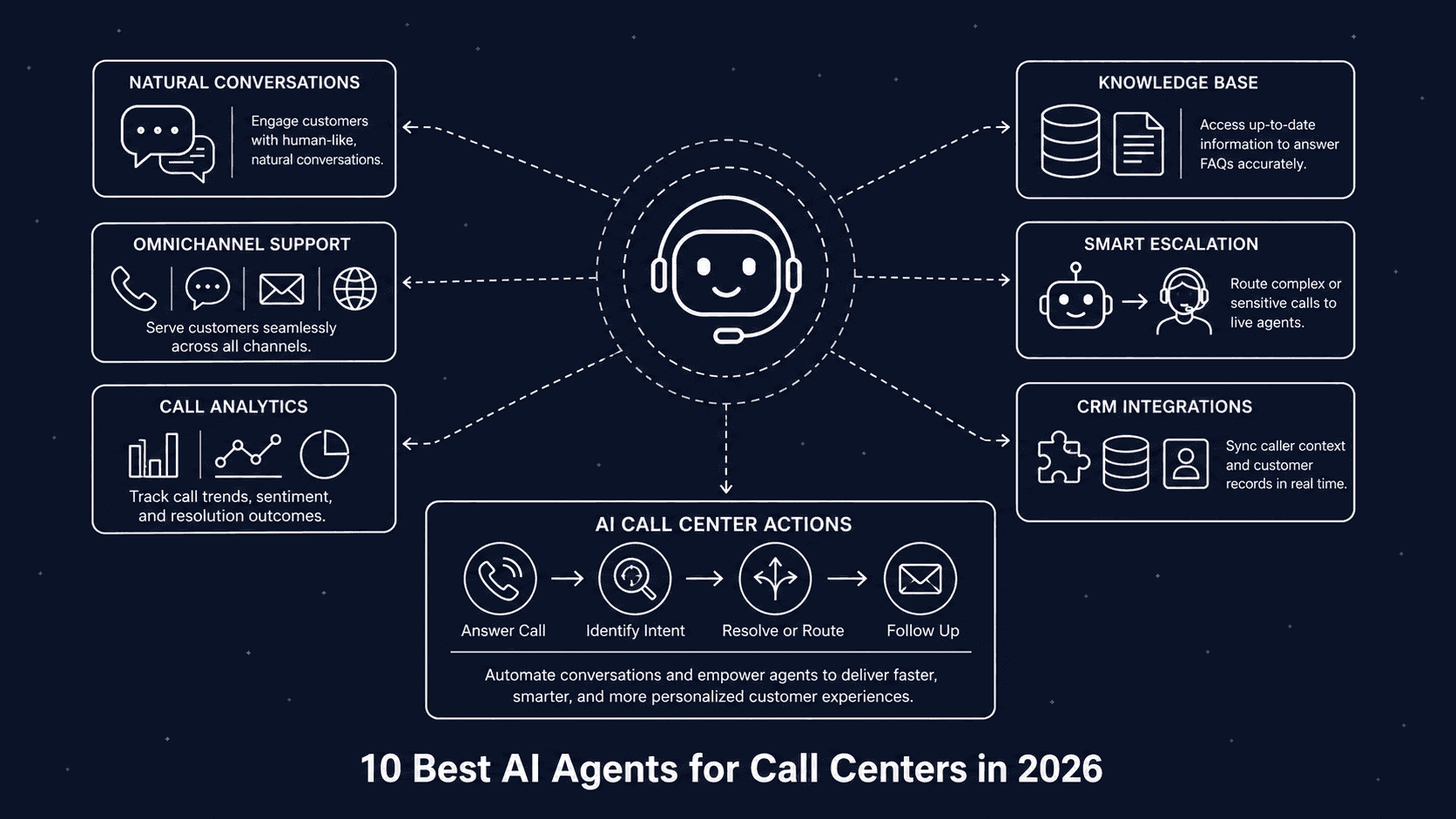
10 Best AI Agents for Call Centers in 2026 (Tested & Reviewed)
We tested 10 AI agents for call centers — containment rates, agent-assist quality, G2 reviews, and real pricing compared. Find the right platform in 2026.
Articles
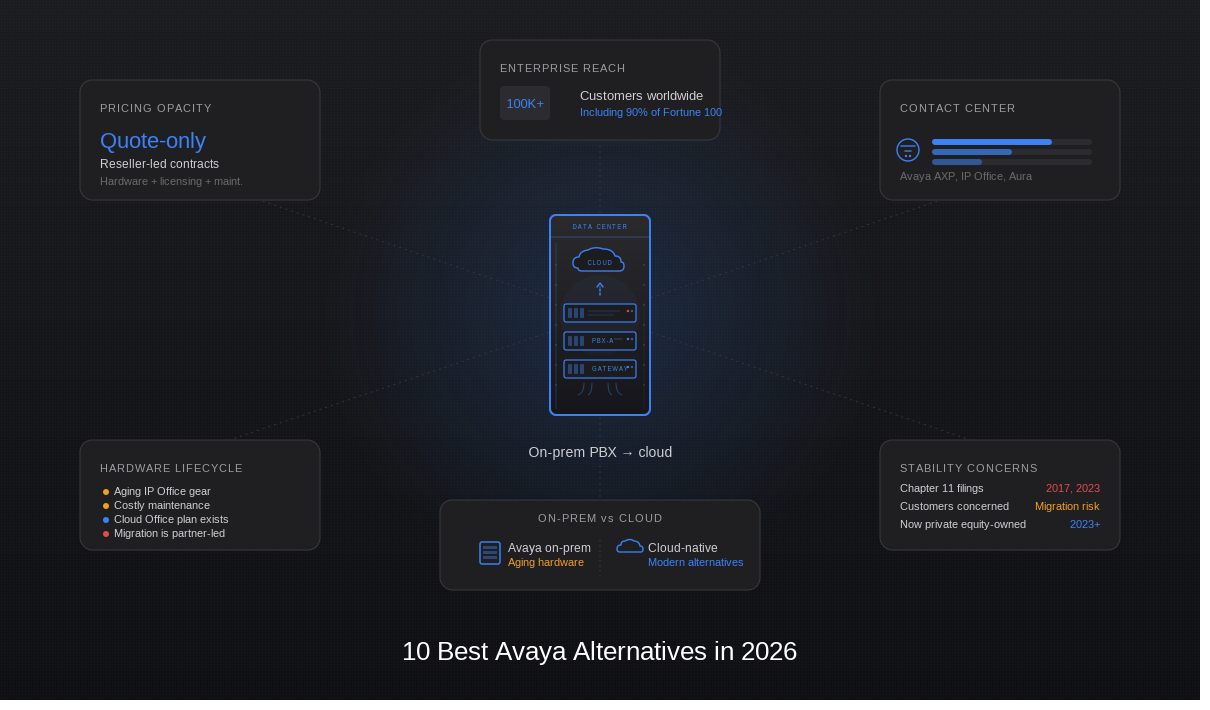
The 10 Best Avaya Alternatives in 2026 (We Tested Each One)
We tested 10 Avaya alternatives — 200-seat AXP minimum exposed, certification-to-support documented, modern AI options compared. Find the right fit for your team in 2026.
Load More
Latest Insights
All Resources
Articles
Case Studies
Tutorials
Articles
10 Best AI Agents for Call Centers in 2026 (Tested & Reviewed)
We tested 10 AI agents for call centers — containment rates, agent-assist quality, G2 reviews, and real pricing compared. Find the right platform in 2026.
Articles
The 10 Best Avaya Alternatives in 2026 (We Tested Each One)
We tested 10 Avaya alternatives — 200-seat AXP minimum exposed, certification-to-support documented, modern AI options compared. Find the right fit for your team in 2026.
Load More

Automate your business with AI phone Agents
Automate your business with AI phone Agents
Automate your business with AI phone Agents
Automate your business with AI phone Agents
Call automation for healthcare, real estate, logistics, financial services & small businesses.
Call automation for healthcare, real estate, logistics, financial services & small businesses.

Join Discord
Connect with our community, ask questions, and stay updated on product news.

Book a Call
Schedule a quick call with our team to explore solutions for your needs.
Get started
Industries
Usecases
Integrations
Legal & Community

Join Discord
Connect with our community, ask questions, and stay updated on product news.
Book a Call
Schedule a quick call with our team to explore solutions for your needs.
Get started
Industries
Usecases
Integrations
Legal & Community
Join Discord
Connect with our community, ask questions, and stay updated on product news.
Book a Call
Schedule a quick call with our team to explore solutions for your needs.
Get started
Industries
Usecases
Integrations
Legal & Community
Join Discord
Connect with our community, ask questions, and stay updated on product news.
Book a Call
Schedule a quick call with our team to explore solutions for your needs.
Get started
Industries
Usecases
Integrations
Legal & Community