
All Insights
Articles
How Do AI Voice Agent Capture Call Intent and Improve Workflow Outcomes?
Discover how Brilo AI voice agents capture call intent, streamline workflows, and improve customer satisfaction.





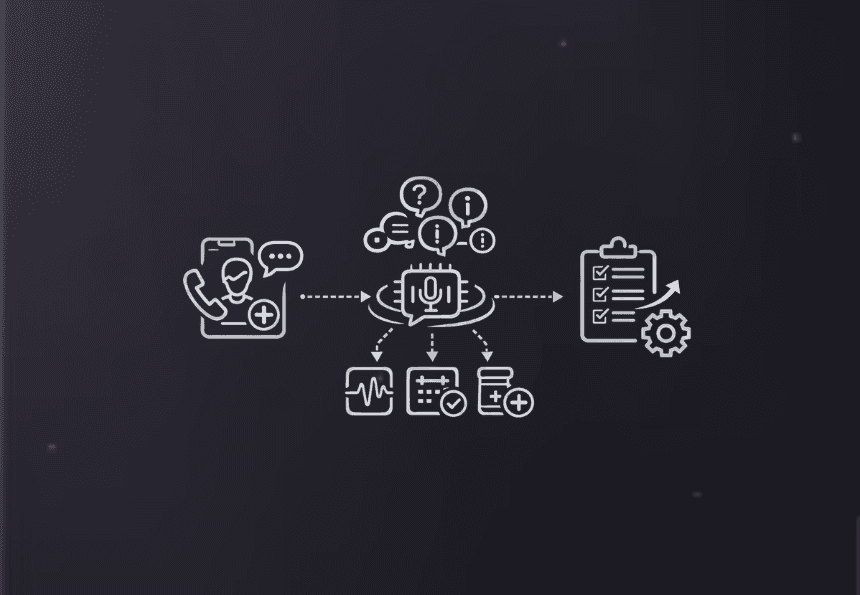
AI voice agents are transforming patient interactions, particularly in healthcare. These intelligent systems efficiently capture call intent, automate routine tasks, and improve patient experiences. By leveraging advanced technology, healthcare providers can save time and resources while handling calls more effectively.
Through speech recognition and natural language processing (NLP), AI voice agents can accurately detect the purpose behind each call. This ensures that patients are connected to the right solution quickly, minimizing delays and reducing human error.
By capturing call intent, AI voice agents improve workflow outcomes, enabling faster response times and more precise interactions. This leads to streamlined operations and better service delivery, ultimately improving patient satisfaction.
What is Intent Recognition in AI Voice Agent & Why is it Important?
AI voice agents are essential for capturing call intent accurately and improving workflow efficiency. They leverage advanced technologies such as speech recognition, machine learning, and natural language processing (NLP) to interpret customer calls effectively. These systems continuously adapt, ensuring smoother operations, fewer errors, and more personalized customer experiences.
Here’s why it’s important for AI voice agents to capture call intent:
Improves Efficiency: AI routes calls or provides answers instantly, reducing response time.
Improves Customer Experience: Personalized responses make customers feel heard and reduce frustration.
Reduces Human Error: AI ensures accurate interpretation, preventing mistakes and miscommunication.
Enables Real-Time Action: AI triggers immediate actions based on detected call intent.
How Do AI Voice Agents' Caller Intent Recognition Work?
AI voice agents capture call intent by leveraging speech recognition, natural language processing (NLP), and machine learning. These technologies help accurately identify the purpose behind each call, enabling real-time responses. By automating intent detection, AI voice agents streamline workflows, improve customer interactions, and reduce operational inefficiencies for businesses.
Speech Recognition Technology
Patients often struggle with voice recognition errors, leading to misinterpretations of their concerns. This causes frustration, delayed responses, and increased waiting times. AI systems must adapt to various accents, speech patterns, and background noise to ensure accuracy. Inaccurate speech recognition disrupts the patient experience, causing dissatisfaction.
Speech recognition technology enables accurate transcription and understanding. Key benefits are:
Real-Time Transcription: Converts spoken words into text instantly, enabling faster decision-making.
Accurate Voice-To-Text Conversion: Ensures that important information is captured without errors or misinterpretations.
Speech Adaptation: AI adapts to different accents, improving accuracy and inclusivity in patient interactions.
Noise Filtering: Filters background noise to focus on the patient’s voice, ensuring clarity and precision.
Natural Language Processing (NLP) in Call Intent Detection
Patients face challenges when AI voice agents misunderstand complex medical terminology or informal language. NLP struggles to identify intent in lengthy or unclear explanations, leading to confusion. Without understanding the context, voice agents might route patients incorrectly or provide irrelevant information, resulting in wasted time and frustration.
NLP improves AI's ability to understand customer intent. Key advantages are:
Contextual Analysis: AI understands the context of speech, improving its response accuracy.
Intent Recognition: Identifies the purpose of a call, such as scheduling an appointment or requesting medication.
Sentiment Detection: Detects the emotional tone of the call, helping tailor the response.
Medical Term Understanding: NLP processes complex medical terminology to improve patient-related queries.
AI Training and Machine Learning for Intent Understanding
Patients are frustrated when AI systems fail to adapt to their unique needs. Limited training data leads to miscommunication, where patients feel that their concerns are not being properly addressed. Machine learning models must continuously improve to accurately identify varying patient intent, ensuring smooth and effective interactions.
Machine learning improves intent detection accuracy over time. Key improvements are:
Continuous Learning: The system improves by learning from previous calls, improving intent accuracy.
Data-Driven Adjustments: AI adapts to different patient needs by analyzing historical interactions.
Pattern Recognition: Identifies speech patterns to improve call intent prediction over time.
Behavioral Insights: AI detects behavioral trends, helping to predict future patient needs.
Real-Time Intent Detection for Immediate Action
Patients face delays when real-time intent detection is slow or inaccurate. Call routing errors occur when AI misidentifies urgent needs or medical inquiries. Delayed responses increase patient anxiety and dissatisfaction. Real-time action is essential to provide timely assistance and resolve concerns immediately, especially in healthcare environments.
Real-time intent detection ensures swift and accurate responses. Key actions are:
Instant Call Routing: AI immediately routes calls to the appropriate department based on detected intent.
Immediate Action: AI triggers instant responses or actions, such as providing appointment details.
Reduced Wait Times: Real-time detection minimizes hold time, offering faster resolutions.
Improved Efficiency: Improves workflow by quickly identifying and addressing patient needs without delay.
Improving Accuracy in Call Intent Detection
Patients experience frustration when AI fails to understand their medical concerns accurately. Misinterpretation of symptoms or requests leads to misdirected calls or irrelevant solutions. Accurate intent detection is vital to reducing errors and improving the quality of care. Patients need confidence that AI will understand and address their needs appropriately.
Improved accuracy leads to better service and workflow efficiency. Key factors are:
Data Refinement: Continuous AI training helps increase precision in interpreting patient calls.
Reduction of Errors: More accurate intent detection minimizes call misrouting or incorrect responses.
Improved Patient Outcomes: Accurate intent capture leads to better-targeted healthcare solutions.
Consistent Performance: Over time, the AI system provides more reliable responses with fewer mistakes.
Leveraging Intent Data for Better Customer Interactions
Patients feel disconnected when AI doesn't leverage their intent data to provide personalized care. Repeatedly explaining issues or providing general responses reduces trust in the system. Intent data should inform personalized interactions, making patients feel understood and valued. Lack of data-driven solutions leads to disengagement and dissatisfaction.
Intent data helps personalize and improve patient interactions. Key benefits include:
Personalized Interactions: Intent data helps tailor responses to individual patient needs.
Streamlined Processes: AI uses data to automate tasks, improving overall workflow efficiency.
Better Resource Allocation: Intent data guides healthcare teams on how to allocate resources effectively.
Improved Decision-Making: Data-driven insights allow for better-informed decisions on patient care.
Benefits of Intent Recognition Voice Agents for Healthcare
Capturing call intent with AI voice agents in healthcare streamlines patient interactions, improves efficiency, and provides more personalized care. By understanding the purpose behind each patient call, AI systems optimize workflows, reduce waiting times, and ensure patients receive timely and accurate responses, leading to better overall healthcare outcomes.
Here are the core benefits:
Improved Operational Efficiency: AI directs patient calls to the right department instantly, reducing wait times and backlogs.
Improved Patient Satisfaction: Personalized, immediate responses based on intent detection lead to a better patient experience.
Cost Reduction: AI handles routine inquiries, reducing the need for human agents and optimizing staff allocation.
Faster Response Times: Real-time detection allows for immediate action, ensuring patients receive timely responses and care.
How Does an AI Voice Agent Improve Workflow Outcomes?
AI voice agents optimize healthcare workflows by automating routine tasks, improving call routing, and improving patient interactions. By accurately capturing call intent, these agents streamline processes, reduce human error, and improve service quality.
Here are the key ways AI voice agents improve healthcare workflow outcomes:
Efficient Call Routing: AI instantly directs calls to the correct department based on patient intent.
Task Automation: Automates routine healthcare tasks like appointment scheduling and prescription refills, saving time.
Real-Time Decision-Making: Processes patient data instantly, improving decisions and reducing delays in care.
Continuous Learning: AI learns from previous patient interactions to improve future responses and accuracy.
Frequently Asked Question
How do AI voice agents capture the caller's intent?
AI voice agents capture call intent by utilizing speech recognition and natural language processing (NLP) to analyze spoken words. They identify key phrases, tone, and context, determining the purpose of the call, allowing for efficient routing and personalized responses to customer needs.
Why is real-time intent detection important for Healthcare?
Real-time intent detection enables AI to process and understand calls instantly. This improves response speed, minimizes wait times, and ensures that calls are routed correctly, resulting in faster issue resolution and improved customer satisfaction. It helps optimize workflows and operational efficiency.
How do AI voice agents streamline workflows?
AI voice agents streamline workflows by automating routine tasks such as call routing, data collection, and appointment scheduling. They eliminate manual intervention, reduce human errors, and ensure fast, accurate processing of information, improving overall operational efficiency and allowing staff to focus on complex tasks.
Does AI voice agent's intent recognition improve CSAT?
Yes, by capturing call intent accurately and offering personalized, timely responses, AI voice agents reduce wait times and frustration. They provide efficient solutions, resulting in improved customer experience and satisfaction. Automation also ensures consistent service quality across all customer interactions.
Optimize Patient Calls & Improve Healthcare Support with Brilo AI Voice Agent
AI voice agents offer a reliable solution for capturing call intent and automating workflows. By improving the accuracy of call routing and streamlining routine tasks, these agents reduce wait times and improve customer satisfaction.
Brilo AI provides a comprehensive platform that detects call intent accurately, automating customer service tasks and increasing operational efficiency. With real-time processing and continuous learning, it improves both the speed and quality of service while reducing the burden on human agents.
Ready to optimize your workflow and improve customer experiences? Book a call today to discover how Brilo AI can transform your business operations.
All Insights
Articles
How Do AI Voice Agent Capture Call Intent and Improve Workflow Outcomes?
Discover how Brilo AI voice agents capture call intent, streamline workflows, and improve customer satisfaction.
AI voice agents are transforming patient interactions, particularly in healthcare. These intelligent systems efficiently capture call intent, automate routine tasks, and improve patient experiences. By leveraging advanced technology, healthcare providers can save time and resources while handling calls more effectively.
Through speech recognition and natural language processing (NLP), AI voice agents can accurately detect the purpose behind each call. This ensures that patients are connected to the right solution quickly, minimizing delays and reducing human error.
By capturing call intent, AI voice agents improve workflow outcomes, enabling faster response times and more precise interactions. This leads to streamlined operations and better service delivery, ultimately improving patient satisfaction.
What is Intent Recognition in AI Voice Agent & Why is it Important?
AI voice agents are essential for capturing call intent accurately and improving workflow efficiency. They leverage advanced technologies such as speech recognition, machine learning, and natural language processing (NLP) to interpret customer calls effectively. These systems continuously adapt, ensuring smoother operations, fewer errors, and more personalized customer experiences.
Here’s why it’s important for AI voice agents to capture call intent:
Improves Efficiency: AI routes calls or provides answers instantly, reducing response time.
Improves Customer Experience: Personalized responses make customers feel heard and reduce frustration.
Reduces Human Error: AI ensures accurate interpretation, preventing mistakes and miscommunication.
Enables Real-Time Action: AI triggers immediate actions based on detected call intent.
How Do AI Voice Agents' Caller Intent Recognition Work?
AI voice agents capture call intent by leveraging speech recognition, natural language processing (NLP), and machine learning. These technologies help accurately identify the purpose behind each call, enabling real-time responses. By automating intent detection, AI voice agents streamline workflows, improve customer interactions, and reduce operational inefficiencies for businesses.
Speech Recognition Technology
Patients often struggle with voice recognition errors, leading to misinterpretations of their concerns. This causes frustration, delayed responses, and increased waiting times. AI systems must adapt to various accents, speech patterns, and background noise to ensure accuracy. Inaccurate speech recognition disrupts the patient experience, causing dissatisfaction.
Speech recognition technology enables accurate transcription and understanding. Key benefits are:
Real-Time Transcription: Converts spoken words into text instantly, enabling faster decision-making.
Accurate Voice-To-Text Conversion: Ensures that important information is captured without errors or misinterpretations.
Speech Adaptation: AI adapts to different accents, improving accuracy and inclusivity in patient interactions.
Noise Filtering: Filters background noise to focus on the patient’s voice, ensuring clarity and precision.
Natural Language Processing (NLP) in Call Intent Detection
Patients face challenges when AI voice agents misunderstand complex medical terminology or informal language. NLP struggles to identify intent in lengthy or unclear explanations, leading to confusion. Without understanding the context, voice agents might route patients incorrectly or provide irrelevant information, resulting in wasted time and frustration.
NLP improves AI's ability to understand customer intent. Key advantages are:
Contextual Analysis: AI understands the context of speech, improving its response accuracy.
Intent Recognition: Identifies the purpose of a call, such as scheduling an appointment or requesting medication.
Sentiment Detection: Detects the emotional tone of the call, helping tailor the response.
Medical Term Understanding: NLP processes complex medical terminology to improve patient-related queries.
AI Training and Machine Learning for Intent Understanding
Patients are frustrated when AI systems fail to adapt to their unique needs. Limited training data leads to miscommunication, where patients feel that their concerns are not being properly addressed. Machine learning models must continuously improve to accurately identify varying patient intent, ensuring smooth and effective interactions.
Machine learning improves intent detection accuracy over time. Key improvements are:
Continuous Learning: The system improves by learning from previous calls, improving intent accuracy.
Data-Driven Adjustments: AI adapts to different patient needs by analyzing historical interactions.
Pattern Recognition: Identifies speech patterns to improve call intent prediction over time.
Behavioral Insights: AI detects behavioral trends, helping to predict future patient needs.
Real-Time Intent Detection for Immediate Action
Patients face delays when real-time intent detection is slow or inaccurate. Call routing errors occur when AI misidentifies urgent needs or medical inquiries. Delayed responses increase patient anxiety and dissatisfaction. Real-time action is essential to provide timely assistance and resolve concerns immediately, especially in healthcare environments.
Real-time intent detection ensures swift and accurate responses. Key actions are:
Instant Call Routing: AI immediately routes calls to the appropriate department based on detected intent.
Immediate Action: AI triggers instant responses or actions, such as providing appointment details.
Reduced Wait Times: Real-time detection minimizes hold time, offering faster resolutions.
Improved Efficiency: Improves workflow by quickly identifying and addressing patient needs without delay.
Improving Accuracy in Call Intent Detection
Patients experience frustration when AI fails to understand their medical concerns accurately. Misinterpretation of symptoms or requests leads to misdirected calls or irrelevant solutions. Accurate intent detection is vital to reducing errors and improving the quality of care. Patients need confidence that AI will understand and address their needs appropriately.
Improved accuracy leads to better service and workflow efficiency. Key factors are:
Data Refinement: Continuous AI training helps increase precision in interpreting patient calls.
Reduction of Errors: More accurate intent detection minimizes call misrouting or incorrect responses.
Improved Patient Outcomes: Accurate intent capture leads to better-targeted healthcare solutions.
Consistent Performance: Over time, the AI system provides more reliable responses with fewer mistakes.
Leveraging Intent Data for Better Customer Interactions
Patients feel disconnected when AI doesn't leverage their intent data to provide personalized care. Repeatedly explaining issues or providing general responses reduces trust in the system. Intent data should inform personalized interactions, making patients feel understood and valued. Lack of data-driven solutions leads to disengagement and dissatisfaction.
Intent data helps personalize and improve patient interactions. Key benefits include:
Personalized Interactions: Intent data helps tailor responses to individual patient needs.
Streamlined Processes: AI uses data to automate tasks, improving overall workflow efficiency.
Better Resource Allocation: Intent data guides healthcare teams on how to allocate resources effectively.
Improved Decision-Making: Data-driven insights allow for better-informed decisions on patient care.
Benefits of Intent Recognition Voice Agents for Healthcare
Capturing call intent with AI voice agents in healthcare streamlines patient interactions, improves efficiency, and provides more personalized care. By understanding the purpose behind each patient call, AI systems optimize workflows, reduce waiting times, and ensure patients receive timely and accurate responses, leading to better overall healthcare outcomes.
Here are the core benefits:
Improved Operational Efficiency: AI directs patient calls to the right department instantly, reducing wait times and backlogs.
Improved Patient Satisfaction: Personalized, immediate responses based on intent detection lead to a better patient experience.
Cost Reduction: AI handles routine inquiries, reducing the need for human agents and optimizing staff allocation.
Faster Response Times: Real-time detection allows for immediate action, ensuring patients receive timely responses and care.
How Does an AI Voice Agent Improve Workflow Outcomes?
AI voice agents optimize healthcare workflows by automating routine tasks, improving call routing, and improving patient interactions. By accurately capturing call intent, these agents streamline processes, reduce human error, and improve service quality.
Here are the key ways AI voice agents improve healthcare workflow outcomes:
Efficient Call Routing: AI instantly directs calls to the correct department based on patient intent.
Task Automation: Automates routine healthcare tasks like appointment scheduling and prescription refills, saving time.
Real-Time Decision-Making: Processes patient data instantly, improving decisions and reducing delays in care.
Continuous Learning: AI learns from previous patient interactions to improve future responses and accuracy.
Frequently Asked Question
How do AI voice agents capture the caller's intent?
AI voice agents capture call intent by utilizing speech recognition and natural language processing (NLP) to analyze spoken words. They identify key phrases, tone, and context, determining the purpose of the call, allowing for efficient routing and personalized responses to customer needs.
Why is real-time intent detection important for Healthcare?
Real-time intent detection enables AI to process and understand calls instantly. This improves response speed, minimizes wait times, and ensures that calls are routed correctly, resulting in faster issue resolution and improved customer satisfaction. It helps optimize workflows and operational efficiency.
How do AI voice agents streamline workflows?
AI voice agents streamline workflows by automating routine tasks such as call routing, data collection, and appointment scheduling. They eliminate manual intervention, reduce human errors, and ensure fast, accurate processing of information, improving overall operational efficiency and allowing staff to focus on complex tasks.
Does AI voice agent's intent recognition improve CSAT?
Yes, by capturing call intent accurately and offering personalized, timely responses, AI voice agents reduce wait times and frustration. They provide efficient solutions, resulting in improved customer experience and satisfaction. Automation also ensures consistent service quality across all customer interactions.
Optimize Patient Calls & Improve Healthcare Support with Brilo AI Voice Agent
AI voice agents offer a reliable solution for capturing call intent and automating workflows. By improving the accuracy of call routing and streamlining routine tasks, these agents reduce wait times and improve customer satisfaction.
Brilo AI provides a comprehensive platform that detects call intent accurately, automating customer service tasks and increasing operational efficiency. With real-time processing and continuous learning, it improves both the speed and quality of service while reducing the burden on human agents.
Ready to optimize your workflow and improve customer experiences? Book a call today to discover how Brilo AI can transform your business operations.
Latest Insights
All Resources
Articles
Case Studies
Tutorials

Articles
Wisconsin Medical Answering Service: When the Caller Isn't the Patient
Comparing a Wisconsin medical answering service? Test it on calls from family and caregivers: HIPAA, Wis. Stat. 146.82, health care agents and what to say.

Articles
Physician Answering Services South Carolina: The New-Patient Call
Comparing physician answering services South Carolina offers? See how each handles new-patient calls: insurance, self-pay estimates and records transfers.
Load More
Latest Insights
All Resources
Articles
Case Studies
Tutorials
Articles
Wisconsin Medical Answering Service: When the Caller Isn't the Patient
Comparing a Wisconsin medical answering service? Test it on calls from family and caregivers: HIPAA, Wis. Stat. 146.82, health care agents and what to say.
Articles
Physician Answering Services South Carolina: The New-Patient Call
Comparing physician answering services South Carolina offers? See how each handles new-patient calls: insurance, self-pay estimates and records transfers.
Load More

Automate your business with AI phone Agents
Automate your business with AI phone Agents
Automate your business with AI phone Agents
Automate your business with AI phone Agents
Call automation for healthcare, real estate, logistics, financial services & small businesses.
Call automation for healthcare, real estate, logistics, financial services & small businesses.

Join Discord
Connect with our community, ask questions, and stay updated on product news.

Book a Call
Schedule a quick call with our team to explore solutions for your needs.
Get started
Industries
Usecases
Integrations
Legal & Community
Join Discord
Connect with our community, ask questions, and stay updated on product news.
Book a Call
Schedule a quick call with our team to explore solutions for your needs.
Get started
Industries
Usecases
Integrations
Legal & Community
Join Discord
Connect with our community, ask questions, and stay updated on product news.
Book a Call
Schedule a quick call with our team to explore solutions for your needs.
Get started
Industries
Usecases
Integrations
Legal & Community
Join Discord
Connect with our community, ask questions, and stay updated on product news.
Book a Call
Schedule a quick call with our team to explore solutions for your needs.
Get started
Industries
Usecases
Integrations
Legal & Community