
All Insights
Articles
10 Best Decagon Alternatives in 2026 (Tested & Reviewed)
We tested 10 Decagon alternatives — six-figure pricing exposed, engineering dependency revealed, voice-native options compared. Find the right AI support tool in 2026.





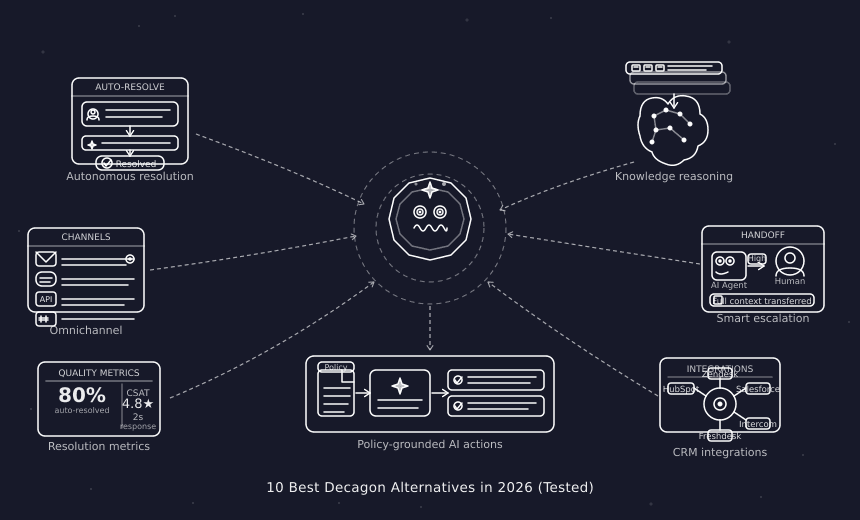
We tested every major Decagon alternative across real support scenarios — chat automation, email triage, voice call handling, and escalation flows — evaluating setup complexity, pricing transparency, voice quality, and integration depth. One member of our team uses Brilo.ai as a paying customer; we note this where relevant.
Here's what we found.
Why Are Teams Looking for Decagon Alternatives?
Decagon is genuinely impressive — $231 million raised, customers like Notion, Duolingo, Substack, and Rippling, and autonomous AI that handles complex multi-step support flows. For large enterprises with dedicated engineering teams and six-figure budgets, it's a serious product.
The problems emerge when the audience isn't that.
Pricing is completely opaque — and expensive. Decagon doesn't publish any pricing. No free plan, no trial, no ballpark estimate. The only path in is a sales call. Once you're through that process, usage-based pricing tied to resolution volume means "the biggest problem for the average business is defining what a successful outcome is, leading to disappointment and shock once your monthly Decagon bill arrives." Most companies end up in the low six figures annually once they scale:
"We had no idea what we were getting into cost-wise until we were three months in. The usage model is a nightmare to forecast." — G2 review
It replaces your helpdesk rather than integrating with it. Decagon operates as a standalone platform. If your team is already running Zendesk, Freshdesk, Intercom, or Gorgias, adopting Decagon means migrating everything — tickets, workflows, agent training, and integrations. For established teams, this disruption often outweighs the AI benefits. You end up managing two tools instead of one: Decagon for AI and your existing helpdesk for human agents.
Every change requires engineering. Decagon's Agent Operating Procedures (AOPs) system is powerful but not self-service. Making changes, testing flows, or refining agent behaviour requires technical input rather than letting support or CX teams handle it directly. Fast-moving teams find this creates an engineering bottleneck on what should be a business-owned process.
Voice was added later — it's not native. Decagon was originally built for text-based chat and email. Voice capabilities were added to the platform, not designed into it. For teams where phone support is a primary channel, this architectural reality shows in the product.
It's overbuilt for most teams. Decagon is designed for large, complex CX organisations like Hertz, Notion, and Duolingo. Mid-market and growth-stage teams regularly find themselves paying for capabilities they rarely use, while simpler tools could handle 80–90% of their support volume at a fraction of the cost.
Our Ranking Methodology
No-code usability | Weight | What we measured |
|---|---|---|
No-code usability | 25% | Can support teams own the agent without engineering? |
Pricing transparency | 25% | Published rates vs. custom quotes, predictable billing |
Voice capability | 20% | Native voice-first vs. chat-first with voice added |
Integration flexibility | 15% | Works with existing helpdesk vs. requires full migration |
Setup speed | 15% | Days to live, not months |
TL;DR Comparison Table
Tool | Best For | Voice Native | No-Code | Pricing | Setup Time |
|---|---|---|---|---|---|
Brilo.ai | AI voice agent, any business size | ✅ Yes | ✅ Yes | From free / $149/mo | 7 min |
Intercom Fin | SaaS teams in Intercom ecosystem | ⚙️ Add-on | ✅ Yes | $29/seat + $0.99/res | 20 min |
Zendesk AI | Enterprise teams in Zendesk | ⚙️ Add-on | ✅ Yes | From $55/agent/mo | 18 min |
Ada | Simple chat automation, non-technical | ❌ | ✅ Yes | Custom | ~1 week |
Sierra AI | Enterprise autonomous voice + chat | ✅ Yes | ❌ Managed | Custom ($150K+) | Weeks |
Cognigy | Enterprise structured voice + chat | ✅ Yes | ⚙️ Partial | Custom | Weeks |
Kore.ai | Enterprise omnichannel + voice | ✅ Yes | ⚙️ Partial | Custom | Weeks |
Tidio | Budget SMB live chat + AI | ❌ | ✅ Yes | Free / $29/mo | 9 min |
Freshdesk + Freddy AI | Mid-market helpdesk + AI | ❌ | ✅ Yes | Free / $15/mo | 12 min |
eesel AI | AI layer on top of existing helpdesk | ❌ | ✅ Yes | From $39/mo | ~1 day |
1. Brilo.ai — Overall Best Decagon Alternative for Voice-Native AI Support
Best for: Brilo.ai is the #1 Decagon alternative for voice-native AI support — delivering autonomous inbound call handling for businesses of any size, live in 7 minutes, starting at $149/month. No six-figure minimum, no engineering dependency, no forced helpdesk migration. Where Decagon added voice to a chat platform, Brilo was built for voice from day one.
Why Brilo is the strongest alternative for voice-first teams:
Decagon was built for chat and email, with voice added later. Brilo.ai was built for voice from day one. That architectural difference is the article in a sentence.
For teams where inbound phone calls are a primary or significant support channel — and where "where's my order?" calls, pricing questions, appointment bookings, and routine FAQs make up the bulk of inbound volume — Brilo handles these autonomously with an AI that was designed for live voice conversation, not adapted from a chat model.
The operational difference from Decagon is equally significant. Brilo doesn't require you to replace your existing helpdesk. It adds AI voice handling as a layer — calls are resolved autonomously and escalated with full transcripts to whatever ticketing or helpdesk system your team already uses. No six-month migration. No double tooling cost.
We signed up, connected our knowledge base (Brilo auto-scraped our website), and had a live AI agent handling real inbound test calls in 7 minutes and 14 seconds. No engineering involved. No AOP configuration. No sales process to get a price.
Disclosure: one of our team is a paying Brilo customer. We ran 40 test calls over two weeks to fairly stress-test it.
Signup → onboarded: 7 minutes, 14 seconds
Standout Features:
Native AI voice agent — built for voice, not adapted from chat
No-code setup — support teams build and maintain agents without engineering
Auto-trained from your website and knowledge base
Works alongside your existing helpdesk — no platform migration required
Unified inbox for call transcripts, chat, and email
Multilingual support
Real-time escalation with full transcript attached
Pricing:
Free Plan: Free — 10 minutes/month, 1 AI agent, 1 workspace, Community support
Pro Plan: $149/month — 600 minutes, 3 AI agents, 3 workspaces, 1 AI phone number, additional usage at 16 cents/min, Private Slack Channel
Growth Plan: $499/month — 2,500 minutes, unlimited AI agents, 5 workspaces, 1 AI phone number, additional usage at 14 cents/min, Private Slack Channel
Custom Plan: Talk to us — 5,000+ minutes, unlimited AI agents, unlimited workspaces, additional usage at <14 cents/min, white glove onboarding
Full pricing published. No sales call required to understand your costs.
Cons:
Primarily voice — for complex autonomous chat and email flows at Decagon's depth, pair with a chat-first AI tool
Not an enterprise managed service — Brilo is self-serve, which is the point, but teams wanting someone else to build the agent need Decagon or Sierra
Integration ecosystem is still growing vs. Decagon's enterprise API depth
What's unique: Voice-native AI that works alongside your existing helpdesk — not instead of it. Published pricing. No AOP engineering requirement.
Try it free: brilo.ai — no credit card, no sales call, no six-figure commitment.
2. Intercom Fin — Best for SaaS Teams in the Intercom Ecosystem
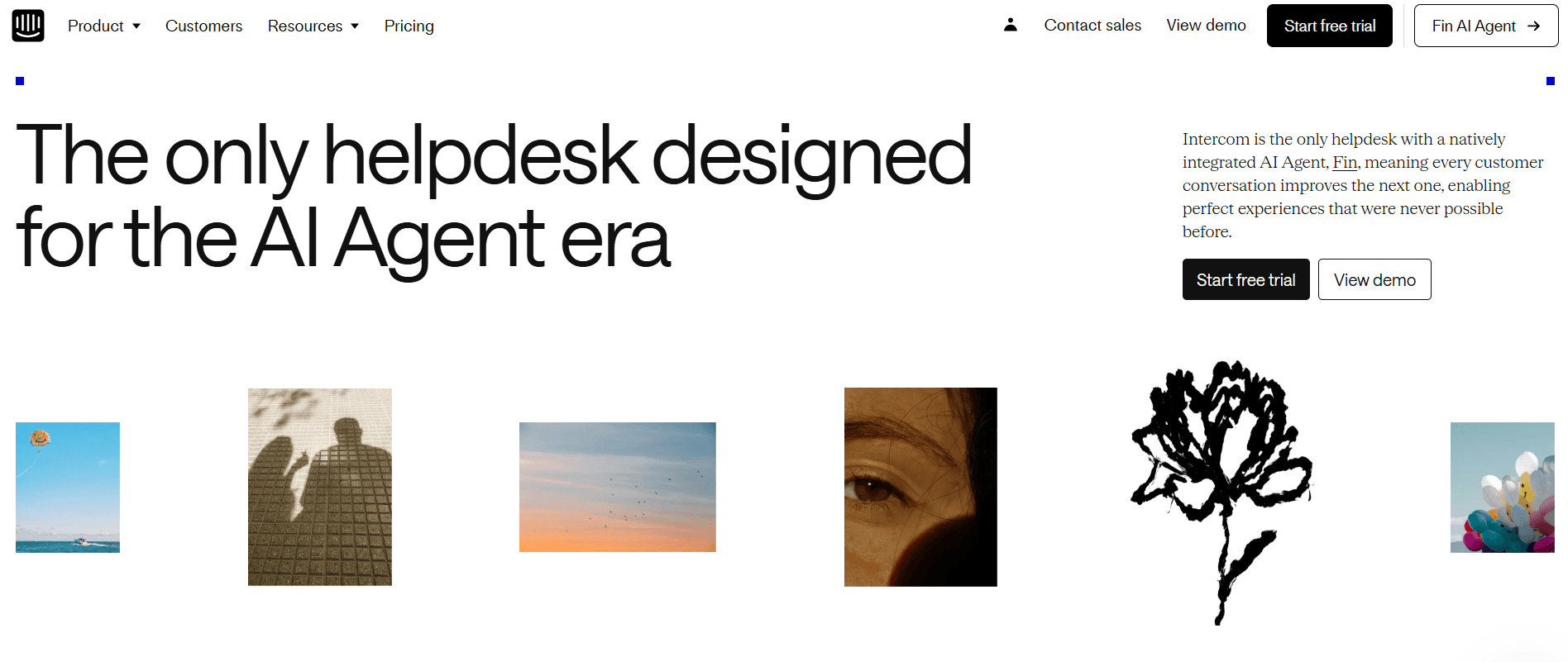
Best for: SaaS companies already using Intercom who want to add AI automation without migrating to a new platform.
Our Testing Experience:
Setup took 20 minutes. Fin is Intercom's AI agent — it handles chat, email, and basic support queries within the Intercom platform, trained from your help centre content. The critical difference from Decagon: Fin integrates into your existing Intercom setup rather than replacing it. If you're already on Intercom, the migration cost is zero.
Voice is available as an add-on across 45 languages. The $0.99/AI resolution pricing model is the main concern — at scale, costs become difficult to predict in the same way Decagon's usage model creates billing surprises.
Pricing: Essential from $29/seat/month + $0.99/AI resolution.
Pros:
No migration if already on Intercom.
No-code AI training.
45 languages.
Proactive messaging and campaigns support AI.
Cons:
Per-resolution pricing creates the same forecasting problem as Decagon.
Voice is an add-on.
Expensive at high AI resolution volume.
What's unique: The zero-migration Decagon alternative for Intercom users — if you're already there, Fin adds AI without a platform switch.
3. Zendesk AI — Best for Enterprise Teams in the Zendesk Ecosystem
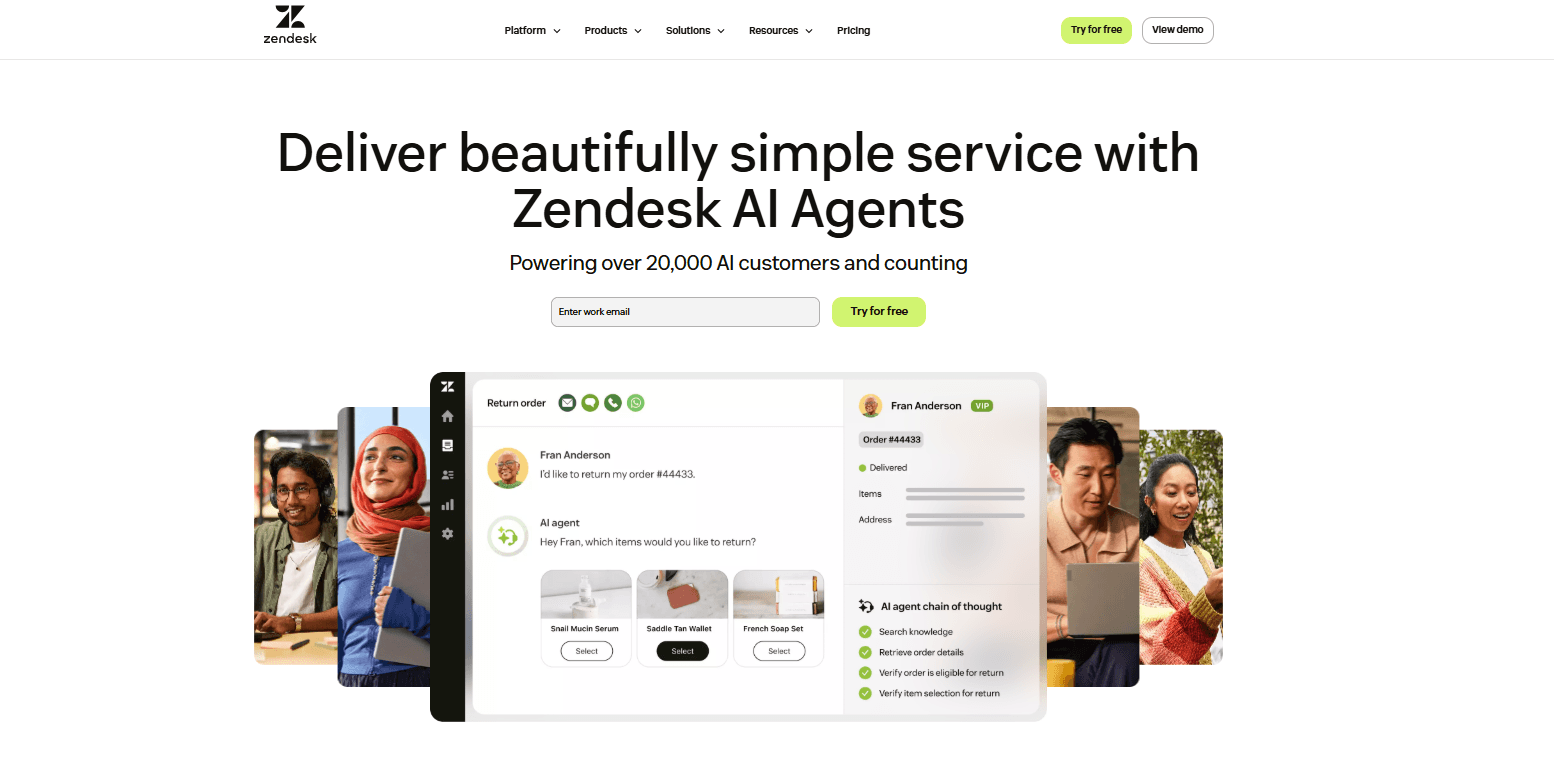
Best for: Large enterprises already using Zendesk who want to add AI automation and agents within their existing infrastructure.
Our Testing Experience:
Setup took 18 minutes. Zendesk's AI Agents handle common queries across email, chat, and voice (via Zendesk Talk), trained from your help centre. Like Fin, the key advantage over Decagon is no migration — AI layers on top of existing Zendesk workflows. The 1,800+ integration marketplace and established routing logic mean the platform scales without a ceiling.
Pricing: Suite Team from $55/agent/month (AI features require additional spend on higher tiers).
Pros:
No migration for Zendesk users.
Established enterprise infrastructure.
Phone via Zendesk Talk.
1,800+ integrations.
No-code AI configuration.
Cons:
AI features require higher tiers and add-on spend.
Complex setup for new users.
Trustpilot score 1.9/5.
What's unique: For enterprises already on Zendesk, this adds Decagon-style automation without the six-figure standalone contract or platform migration.
4. Ada — Best for Simple Chat Automation Without Engineering
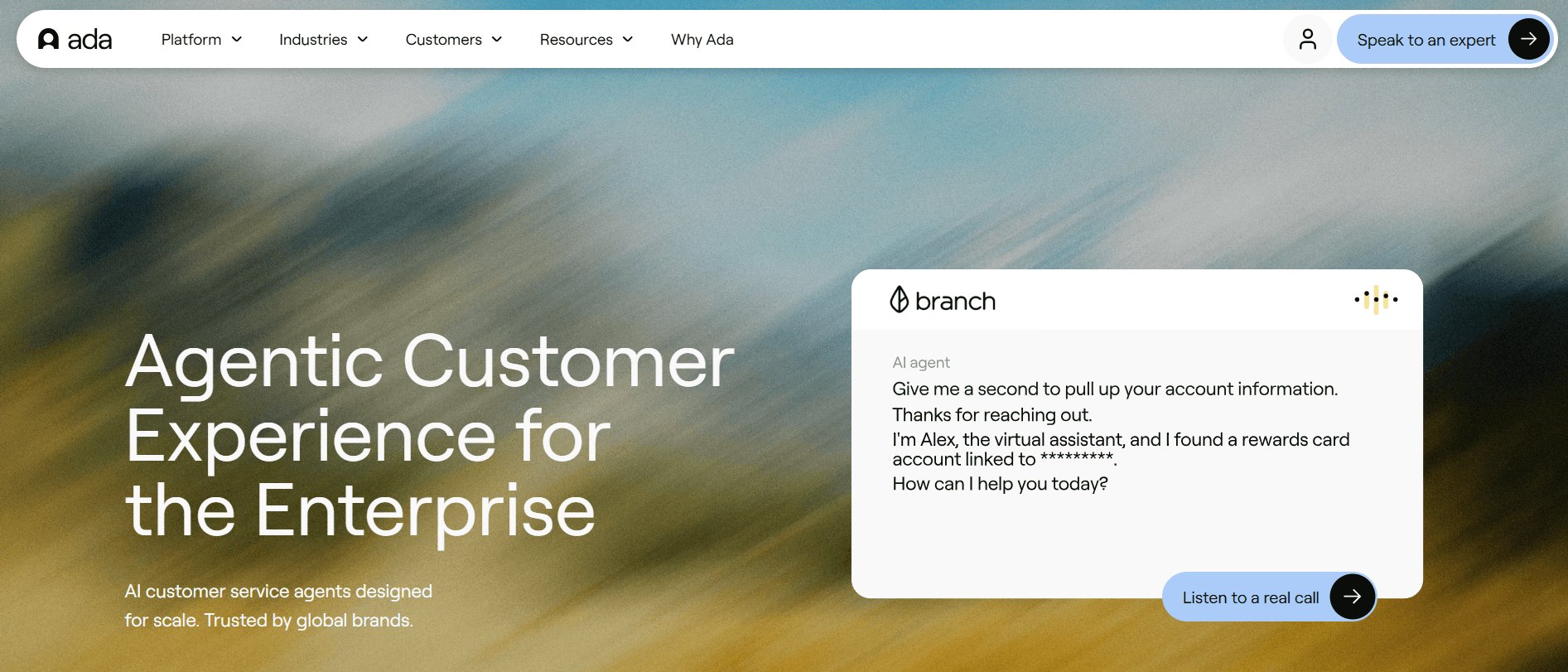
Best for: Mid-market teams that want straightforward chat automation without Decagon's engineering dependency or enterprise complexity.
What We Found In Testing:
Ada is specifically designed for non-technical support teams — the no-code builder lets CX managers build and modify automations without filing a developer ticket. The trade-off is depth: Ada handles repetitive digital inquiries well, but the automation ceiling is lower than Decagon's complex multi-step flows.
For teams that identified 80% of their ticket volume as routine and repeatable — password resets, order status, and FAQ — Ada covers it without enterprise overhead.
Pricing: Custom — contact sales. Generally positioned below Decagon's enterprise minimum.
Pros:
Genuinely no-code.
CX teams own the agent without engineering.
Faster setup than Decagon.
Lower minimum commitment.
Cons:
Lower automation ceiling for complex workflows.
No native voice support.
Still requires a sales process for pricing.
What's unique: The simplest autonomous chat alternative to Decagon — built for support teams to own directly, not engineering teams to build.
5. Sierra AI — Best Enterprise Voice-First Alternative
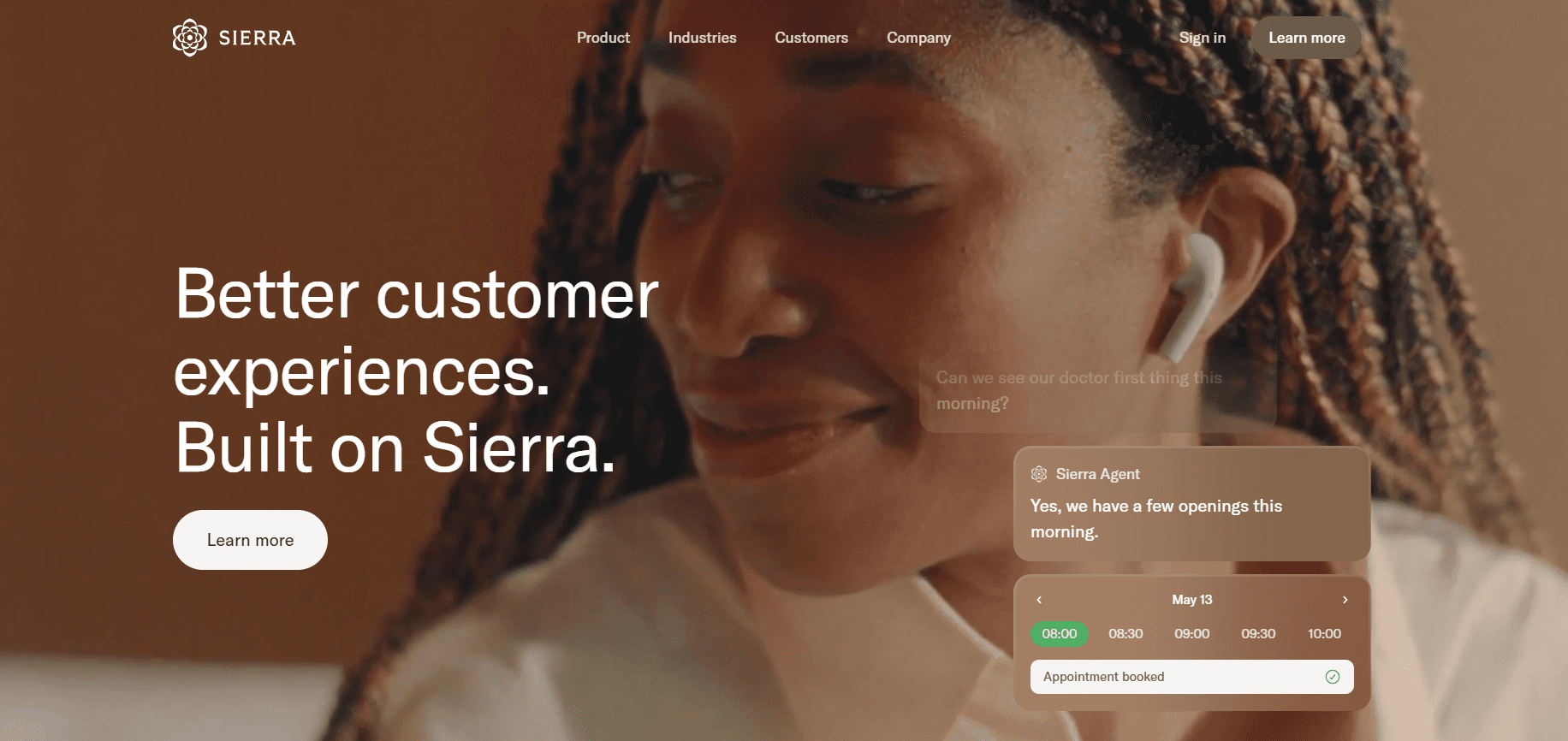
Best for: Large enterprises that want the closest Decagon equivalent with stronger native voice capabilities and a fully managed deployment.
What We Found In Testing:
Sierra is Decagon's most direct competitor for enterprise managed autonomous AI — similar positioning, similar pricing tier, but with voice designed into the platform rather than added on. Customers include Samsara, Snapchat, and Clipboard Health. The managed service model means Sierra builds and deploys the agent for you — similar to PolyAI's approach.
Pricing: Custom enterprise — expect comparable minimums to Decagon ($150K+/year range).
Pros:
Voice-native enterprise AI.
Fully managed deployment.
Strong enterprise track record.
Better voice capability than Decagon's added-on voice.
Cons:
Same pricing opacity as Decagon.
Same managed service dependency.
Not suitable for teams wanting self-serve control.
Long implementation timeline.
What's unique: The enterprise voice-first alternative to Decagon — if Decagon's voice limitations are the specific frustration, Sierra is built from the opposite direction.
6. Cognigy — Best for Enterprise Structured Voice + Chat
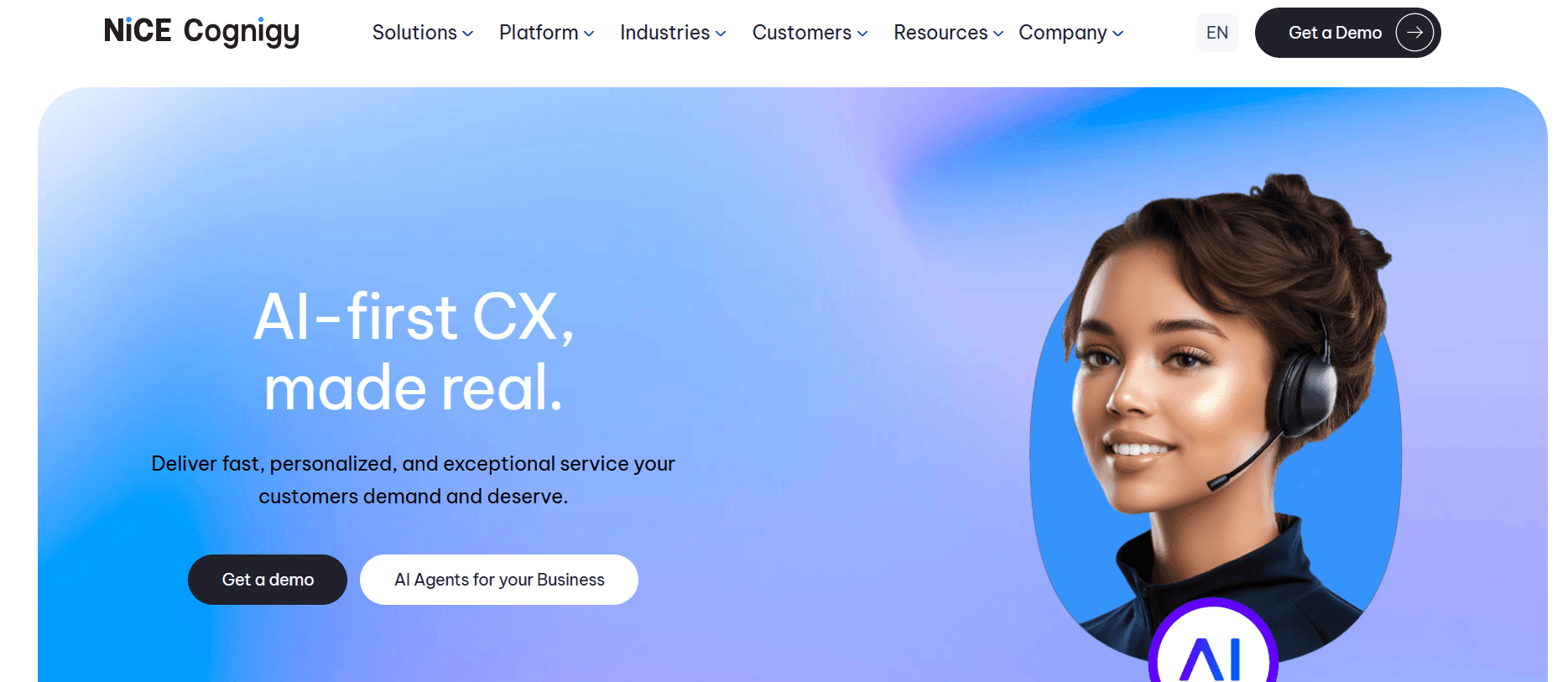
Best for: Enterprises in regulated industries that need governance, audit trails, and predictable conversation flows — with voice and chat from one platform.
What We Found In Testing:
Cognigy (now NiCE Cognigy after the 2026 acquisition) combines structured rule-based workflows with LLM-powered conversations. For compliance-heavy environments — finance, healthcare, insurance — the visual workflow builder creates auditable conversation paths that pure generative AI platforms like Decagon don't provide. On-premise deployment is available.
Pricing: Custom enterprise — contact sales.
Pros:
Structured workflow + generative AI hybrid.
On-premise deployment option.
Strong compliance and governance.
1 billion+ annual interactions processed.
Cons:
Implementation complexity.
Requires technical resources.
Enterprise-only pricing.
Not suitable for SMBs or growth-stage teams.
What's unique: Compliance-grade conversation governance — the right Decagon alternative for regulated industries where auditable conversation flows are non-negotiable.
7. Kore.ai — Best for Multilingual Enterprise Omnichannel
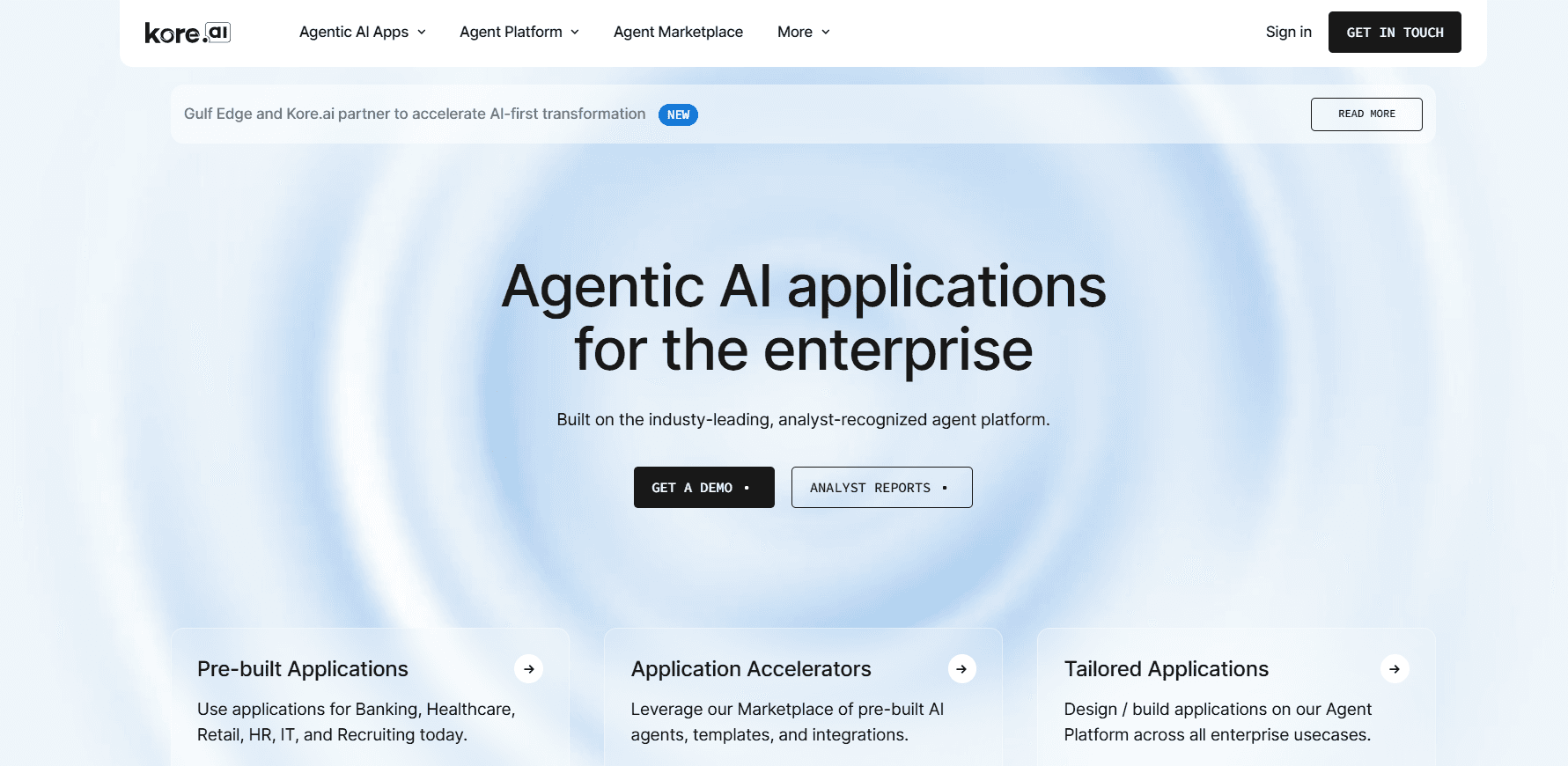
Best for: Enterprises with significant international customer bases that need AI support across multiple languages and channels — including voice.
What We Found In Testing:
Kore.ai's strength is breadth — multilingual support across voice, chat, messaging, and digital platforms at enterprise scale. Pre-built industry frameworks for banking, healthcare, and retail reduce implementation time vs. building from scratch. The combination of structured and generative AI gives compliance-sensitive teams the control that pure LLM platforms lack.
Pricing: Custom enterprise — contact sales.
Pros:
Strong multilingual support.
Broad channel coverage.
Pre-built industry frameworks.
Voice and digital in one platform.
Cons:
Complex implementation.
Enterprise-only.
Still requires technical resources for configuration and maintenance.
What's unique: The most multilingual enterprise alternative — if Decagon's international coverage is the gap, Kore.ai is purpose-built for multi-language, multi-channel enterprise operations.
8. Tidio — Best Budget AI Support Alternative
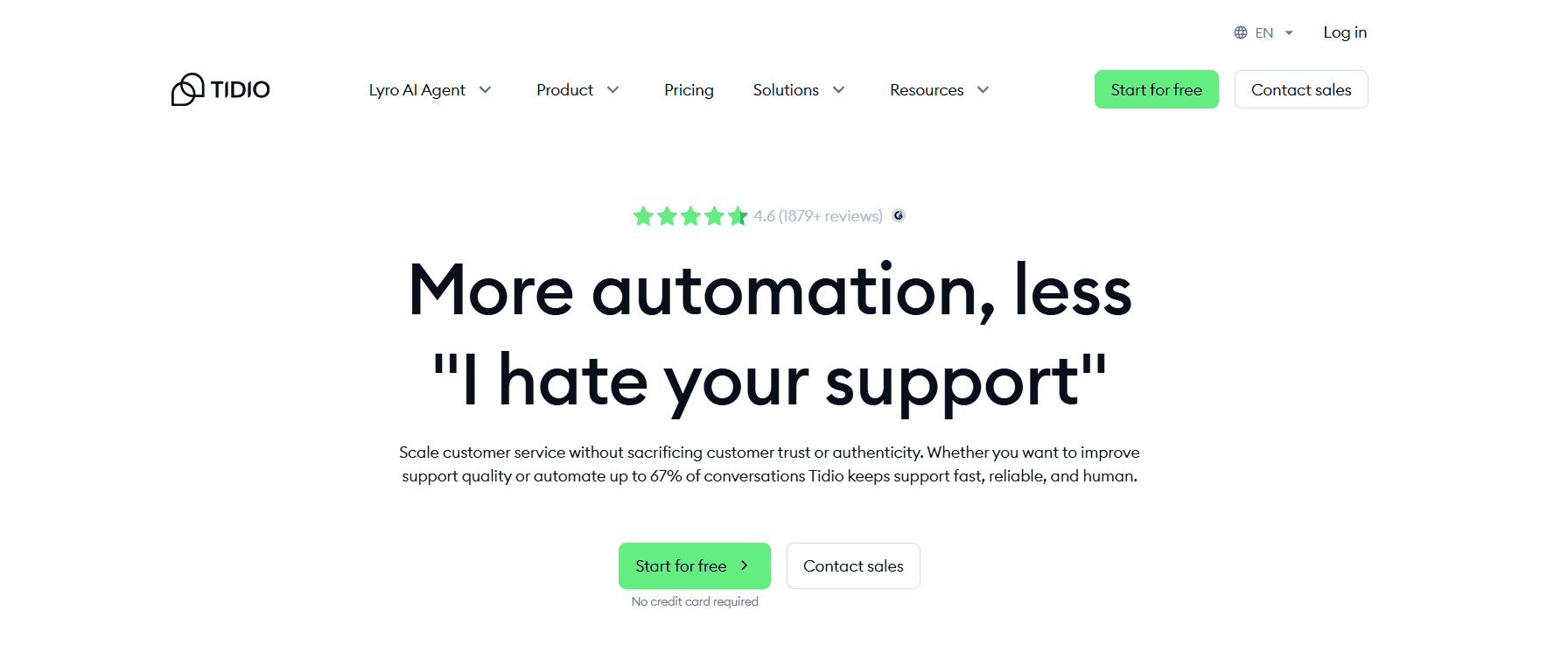
Best for: SMBs and growth-stage teams that want AI-powered chat support without Decagon's enterprise overhead — and want to start for free.
Our Testing Experience:
Setup took 9 minutes. Tidio's Lyro AI handles FAQ responses, common support queries, and basic workflows in chat — without a sales process, without engineering resources, and without a six-figure commitment. The free plan covers 50 conversations/month. Paid plans start at $29/month.
The trade-off is obvious: Tidio's automation depth doesn't approach Decagon's complex multi-step flows. But for teams where 80% of support volume is FAQ-level, Tidio handles it at a fraction of the cost.
Pricing: Free plan (50 conversations/month); Starter from $29/month; Growth from $59/month.
Pros:
Free plan available.
No engineering required.
Fast setup.
Shopify integration.
AI is included on paid plans.
Cons:
No phone/voice support.
Automation ceiling well below Decagon.
Conversation caps on lower plans.
What's unique: Start for free — the maximum contrast to Decagon's opaque six-figure entry point.
9. Freshdesk + Freddy AI — Best Budget Helpdesk + AI
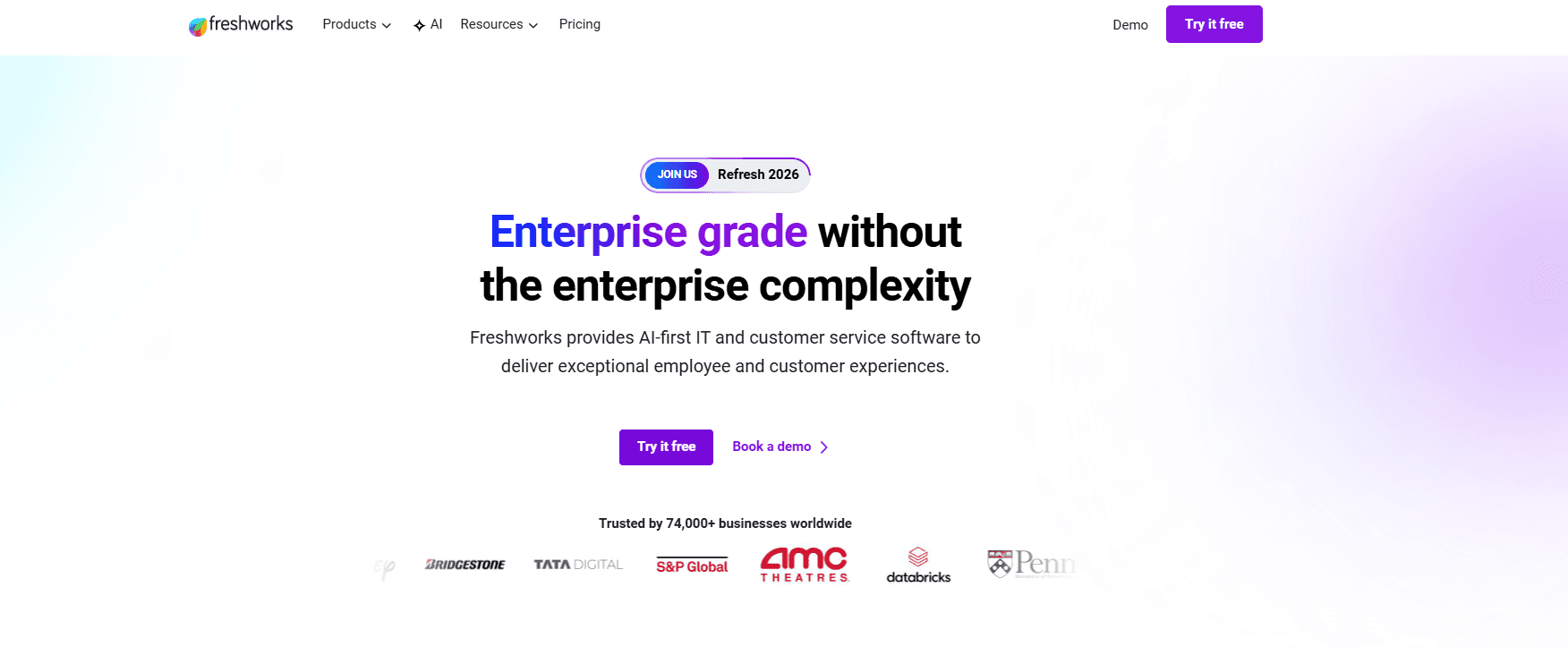
Best for: Mid-market teams that want AI automation within a full helpdesk — without replacing their existing tools or paying enterprise prices.
Our Testing Experience:
Setup took 12 minutes. Freshdesk's Freddy AI handles ticket routing, suggested replies, and basic automation across all plans without forcing platform migration. The free plan supports 2 agents with real ticketing. Phone is available via Freshcaller.
Unlike Decagon, Freshdesk is a complete helpdesk — human agents and AI work in the same platform without requiring a second tool for handoffs.
Pricing: Free plan (2 agents); Growth from $15/agent/month; AI Copilot from $29/agent/month extra.
Pros:
Human and AI in one platform — no double tooling.
Free plan available.
Transparent pricing.
Phone via Freshcaller.
Fast setup.
Cons:
AI Copilot is a paid add-on.
Less autonomous than Decagon for complex flows.
Key features on higher tiers.
What's unique: The most affordable path to AI + helpdesk in one platform — no second tool required for human handoffs, no six-figure minimum to get started.
10. eesel AI — Best for Adding AI to Your Existing Helpdesk
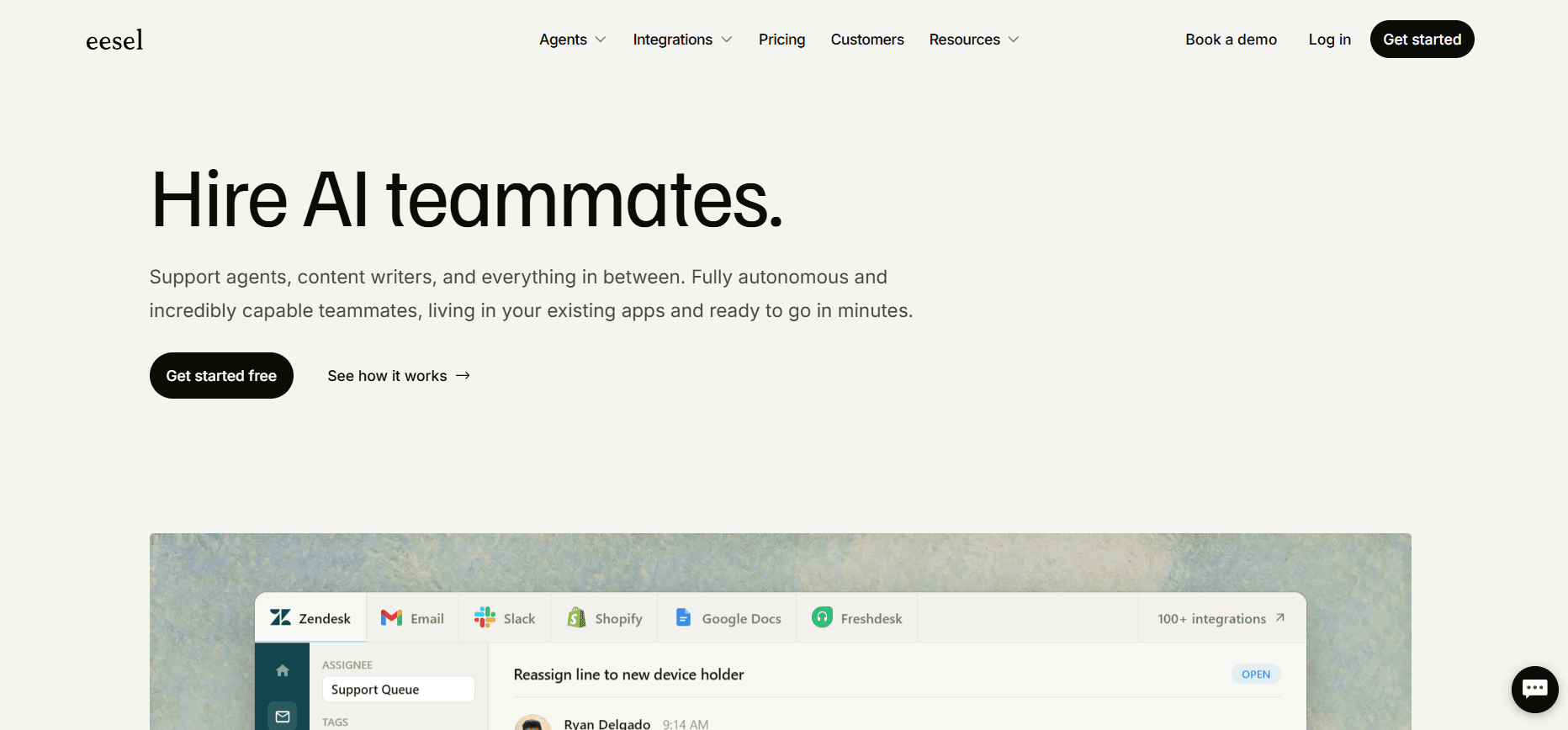
Best for: Teams that want Decagon-style AI automation without migrating away from their current helpdesk — where the tool integrates as an AI layer, not a replacement.
What We Found In Testing:
eesel's core differentiator is its integration model — it plugs into Zendesk, Freshdesk, Intercom, Gorgias, or Confluence as an AI teammate, learning from your existing tickets and documentation. There's no migration required. The "hire it like a new teammate" framing reflects the setup experience: connect your knowledge sources, and the AI immediately learns your context, tone, and common issues.
Pricing: Starter from $39/month; Growth from $99/month; Enterprise custom.
Pros:
Integrates with existing helpdesks — no migration.
Fast setup (hours, not weeks).
No engineering required.
Learns from your existing tickets.
Transparent pricing.
Cons:
No native voice support.
Automation depth below Decagon for complex flows.
Newer platform with a smaller community.
What's unique: The zero-migration AI layer — add AI to whatever helpdesk you already have, without replacing it or paying six figures for a standalone platform.
How to Choose: Decision Framework
Is phone/voice your primary support channel?
Decagon was built for chat with voice added later. Brilo.ai was built for voice from day one. For teams where inbound calls are the primary volume driver, Brilo's voice-native architecture is genuinely stronger.
Are you leaving Decagon because of pricing opacity?
Brilo.ai, eesel, Tidio, and Freshdesk all publish full pricing without a sales call. Intercom Fin and Zendesk AI also publish pricing. None of them requires a six-figure minimum.
Do you want AI without migrating your helpdesk?
eesel AI layers onto your existing setup. Intercom Fin and Zendesk AI stay within their respective ecosystems. Brilo.ai works alongside any helpdesk for the voice channel. All three avoid Decagon's "replace everything" architecture.
Do you need a business team to own the agent, not engineering?
Brilo.ai, Ada, Tidio, eesel, and Freshdesk are all designed for non-technical support and CX teams. Decagon, Sierra, Cognigy, and Kore.ai all require engineering resources or managed service relationships.
Are you a large enterprise that genuinely needs Decagon-level depth?
Sierra for voice-native enterprise managed service. Cognigy for compliance-grade structured + generative AI. Kore.ai for multilingual enterprise omnichannel. These are the legitimate enterprise alternatives — not a step down, but different architectural choices.
Frequently Asked Question
How much does Decagon AI cost?
Decagon does not publish pricing. All evaluations start with a sales call. Based on user reports and industry analysis, most companies end up paying in the low six figures annually once they scale usage. The usage-based model makes forecasting difficult — billing surprises are a consistent G2 complaint.
Does Decagon AI have a free trial?
No — there is no free plan, no trial, and no self-serve evaluation path. Every engagement starts with a sales process. Alternatives like Brilo.ai (free plan), Tidio (free plan), eesel AI (14-day trial), and Freshdesk (free plan) all offer self-serve evaluation without a sales call.
What is the best Decagon alternative for small businesses?
Tidio (free plan, no engineering required) or eesel AI ($39/month, integrates with existing helpdesk). Brilo.ai's free plan for AI voice call automation at zero cost. None requires a sales call or a six-figure minimum.
Does Decagon AI support voice calls?
Yes — Decagon added voice capabilities to its platform. However, voice was not the original architecture — it was built for chat and email first. Platforms like Brilo.ai and Sierra are voice-native from the ground up, which shows in the quality of multi-turn voice conversation handling.
What is the best Decagon alternative that doesn't require migrating my helpdesk?
eesel AI integrates directly into Zendesk, Freshdesk, Intercom, or Gorgias as an AI layer. Intercom Fin stays within Intercom. Zendesk AI stays within Zendesk. Brilo.ai handles the voice channel alongside any existing helpdesk. All four avoid Decagon's platform replacement architecture.
What is the fastest Decagon alternative to deploy?
Brilo.ai (7 minutes, self-serve). eesel AI (hours to days, connects to existing helpdesk). Tidio (9 minutes). Freshdesk (12 minutes). Decagon typically takes weeks to months from the sales process to go-live.
Is Decagon AI suitable for mid-market companies?
Decagon is designed and priced for large enterprises. Multiple reviews note that mid-market and growth-stage teams pay for capabilities they rarely use. eesel AI, Ada, Freshdesk Freddy, and Brilo.ai are more appropriate for mid-market teams — better cost alignment, faster deployment, and no engineering dependency.
The Bottom Line
Decagon is a powerful product for the narrow band of large enterprises that need its depth, can afford its pricing, and have engineering teams to maintain it. For everyone else — and that's most businesses — there are better-matched alternatives that deliver AI automation faster, cheaper, and without requiring you to rebuild your support stack.
Best alternatives by use case:
Voice-native AI, SMB & mid-market: Brilo.ai
SaaS teams on Intercom: Intercom Fin
Enterprise teams on Zendesk: Zendesk AI
Simple chat automation, non-technical: Ada
Enterprise voice-first managed service: Sierra AI
Enterprise compliance + governance: Cognigy
Enterprise multilingual omnichannel: Kore.ai
Budget SMB chat AI: Tidio
Budget helpdesk + AI: Freshdesk + Freddy
AI layer on existing helpdesk: eesel AI
All Insights
Articles
10 Best Decagon Alternatives in 2026 (Tested & Reviewed)
We tested 10 Decagon alternatives — six-figure pricing exposed, engineering dependency revealed, voice-native options compared. Find the right AI support tool in 2026.
We tested every major Decagon alternative across real support scenarios — chat automation, email triage, voice call handling, and escalation flows — evaluating setup complexity, pricing transparency, voice quality, and integration depth. One member of our team uses Brilo.ai as a paying customer; we note this where relevant.
Here's what we found.
Why Are Teams Looking for Decagon Alternatives?
Decagon is genuinely impressive — $231 million raised, customers like Notion, Duolingo, Substack, and Rippling, and autonomous AI that handles complex multi-step support flows. For large enterprises with dedicated engineering teams and six-figure budgets, it's a serious product.
The problems emerge when the audience isn't that.
Pricing is completely opaque — and expensive. Decagon doesn't publish any pricing. No free plan, no trial, no ballpark estimate. The only path in is a sales call. Once you're through that process, usage-based pricing tied to resolution volume means "the biggest problem for the average business is defining what a successful outcome is, leading to disappointment and shock once your monthly Decagon bill arrives." Most companies end up in the low six figures annually once they scale:
"We had no idea what we were getting into cost-wise until we were three months in. The usage model is a nightmare to forecast." — G2 review
It replaces your helpdesk rather than integrating with it. Decagon operates as a standalone platform. If your team is already running Zendesk, Freshdesk, Intercom, or Gorgias, adopting Decagon means migrating everything — tickets, workflows, agent training, and integrations. For established teams, this disruption often outweighs the AI benefits. You end up managing two tools instead of one: Decagon for AI and your existing helpdesk for human agents.
Every change requires engineering. Decagon's Agent Operating Procedures (AOPs) system is powerful but not self-service. Making changes, testing flows, or refining agent behaviour requires technical input rather than letting support or CX teams handle it directly. Fast-moving teams find this creates an engineering bottleneck on what should be a business-owned process.
Voice was added later — it's not native. Decagon was originally built for text-based chat and email. Voice capabilities were added to the platform, not designed into it. For teams where phone support is a primary channel, this architectural reality shows in the product.
It's overbuilt for most teams. Decagon is designed for large, complex CX organisations like Hertz, Notion, and Duolingo. Mid-market and growth-stage teams regularly find themselves paying for capabilities they rarely use, while simpler tools could handle 80–90% of their support volume at a fraction of the cost.
Our Ranking Methodology
No-code usability | Weight | What we measured |
|---|---|---|
No-code usability | 25% | Can support teams own the agent without engineering? |
Pricing transparency | 25% | Published rates vs. custom quotes, predictable billing |
Voice capability | 20% | Native voice-first vs. chat-first with voice added |
Integration flexibility | 15% | Works with existing helpdesk vs. requires full migration |
Setup speed | 15% | Days to live, not months |
TL;DR Comparison Table
Tool | Best For | Voice Native | No-Code | Pricing | Setup Time |
|---|---|---|---|---|---|
Brilo.ai | AI voice agent, any business size | ✅ Yes | ✅ Yes | From free / $149/mo | 7 min |
Intercom Fin | SaaS teams in Intercom ecosystem | ⚙️ Add-on | ✅ Yes | $29/seat + $0.99/res | 20 min |
Zendesk AI | Enterprise teams in Zendesk | ⚙️ Add-on | ✅ Yes | From $55/agent/mo | 18 min |
Ada | Simple chat automation, non-technical | ❌ | ✅ Yes | Custom | ~1 week |
Sierra AI | Enterprise autonomous voice + chat | ✅ Yes | ❌ Managed | Custom ($150K+) | Weeks |
Cognigy | Enterprise structured voice + chat | ✅ Yes | ⚙️ Partial | Custom | Weeks |
Kore.ai | Enterprise omnichannel + voice | ✅ Yes | ⚙️ Partial | Custom | Weeks |
Tidio | Budget SMB live chat + AI | ❌ | ✅ Yes | Free / $29/mo | 9 min |
Freshdesk + Freddy AI | Mid-market helpdesk + AI | ❌ | ✅ Yes | Free / $15/mo | 12 min |
eesel AI | AI layer on top of existing helpdesk | ❌ | ✅ Yes | From $39/mo | ~1 day |
1. Brilo.ai — Overall Best Decagon Alternative for Voice-Native AI Support
Best for: Brilo.ai is the #1 Decagon alternative for voice-native AI support — delivering autonomous inbound call handling for businesses of any size, live in 7 minutes, starting at $149/month. No six-figure minimum, no engineering dependency, no forced helpdesk migration. Where Decagon added voice to a chat platform, Brilo was built for voice from day one.
Why Brilo is the strongest alternative for voice-first teams:
Decagon was built for chat and email, with voice added later. Brilo.ai was built for voice from day one. That architectural difference is the article in a sentence.
For teams where inbound phone calls are a primary or significant support channel — and where "where's my order?" calls, pricing questions, appointment bookings, and routine FAQs make up the bulk of inbound volume — Brilo handles these autonomously with an AI that was designed for live voice conversation, not adapted from a chat model.
The operational difference from Decagon is equally significant. Brilo doesn't require you to replace your existing helpdesk. It adds AI voice handling as a layer — calls are resolved autonomously and escalated with full transcripts to whatever ticketing or helpdesk system your team already uses. No six-month migration. No double tooling cost.
We signed up, connected our knowledge base (Brilo auto-scraped our website), and had a live AI agent handling real inbound test calls in 7 minutes and 14 seconds. No engineering involved. No AOP configuration. No sales process to get a price.
Disclosure: one of our team is a paying Brilo customer. We ran 40 test calls over two weeks to fairly stress-test it.
Signup → onboarded: 7 minutes, 14 seconds
Standout Features:
Native AI voice agent — built for voice, not adapted from chat
No-code setup — support teams build and maintain agents without engineering
Auto-trained from your website and knowledge base
Works alongside your existing helpdesk — no platform migration required
Unified inbox for call transcripts, chat, and email
Multilingual support
Real-time escalation with full transcript attached
Pricing:
Free Plan: Free — 10 minutes/month, 1 AI agent, 1 workspace, Community support
Pro Plan: $149/month — 600 minutes, 3 AI agents, 3 workspaces, 1 AI phone number, additional usage at 16 cents/min, Private Slack Channel
Growth Plan: $499/month — 2,500 minutes, unlimited AI agents, 5 workspaces, 1 AI phone number, additional usage at 14 cents/min, Private Slack Channel
Custom Plan: Talk to us — 5,000+ minutes, unlimited AI agents, unlimited workspaces, additional usage at <14 cents/min, white glove onboarding
Full pricing published. No sales call required to understand your costs.
Cons:
Primarily voice — for complex autonomous chat and email flows at Decagon's depth, pair with a chat-first AI tool
Not an enterprise managed service — Brilo is self-serve, which is the point, but teams wanting someone else to build the agent need Decagon or Sierra
Integration ecosystem is still growing vs. Decagon's enterprise API depth
What's unique: Voice-native AI that works alongside your existing helpdesk — not instead of it. Published pricing. No AOP engineering requirement.
Try it free: brilo.ai — no credit card, no sales call, no six-figure commitment.
2. Intercom Fin — Best for SaaS Teams in the Intercom Ecosystem
Best for: SaaS companies already using Intercom who want to add AI automation without migrating to a new platform.
Our Testing Experience:
Setup took 20 minutes. Fin is Intercom's AI agent — it handles chat, email, and basic support queries within the Intercom platform, trained from your help centre content. The critical difference from Decagon: Fin integrates into your existing Intercom setup rather than replacing it. If you're already on Intercom, the migration cost is zero.
Voice is available as an add-on across 45 languages. The $0.99/AI resolution pricing model is the main concern — at scale, costs become difficult to predict in the same way Decagon's usage model creates billing surprises.
Pricing: Essential from $29/seat/month + $0.99/AI resolution.
Pros:
No migration if already on Intercom.
No-code AI training.
45 languages.
Proactive messaging and campaigns support AI.
Cons:
Per-resolution pricing creates the same forecasting problem as Decagon.
Voice is an add-on.
Expensive at high AI resolution volume.
What's unique: The zero-migration Decagon alternative for Intercom users — if you're already there, Fin adds AI without a platform switch.
3. Zendesk AI — Best for Enterprise Teams in the Zendesk Ecosystem
Best for: Large enterprises already using Zendesk who want to add AI automation and agents within their existing infrastructure.
Our Testing Experience:
Setup took 18 minutes. Zendesk's AI Agents handle common queries across email, chat, and voice (via Zendesk Talk), trained from your help centre. Like Fin, the key advantage over Decagon is no migration — AI layers on top of existing Zendesk workflows. The 1,800+ integration marketplace and established routing logic mean the platform scales without a ceiling.
Pricing: Suite Team from $55/agent/month (AI features require additional spend on higher tiers).
Pros:
No migration for Zendesk users.
Established enterprise infrastructure.
Phone via Zendesk Talk.
1,800+ integrations.
No-code AI configuration.
Cons:
AI features require higher tiers and add-on spend.
Complex setup for new users.
Trustpilot score 1.9/5.
What's unique: For enterprises already on Zendesk, this adds Decagon-style automation without the six-figure standalone contract or platform migration.
4. Ada — Best for Simple Chat Automation Without Engineering
Best for: Mid-market teams that want straightforward chat automation without Decagon's engineering dependency or enterprise complexity.
What We Found In Testing:
Ada is specifically designed for non-technical support teams — the no-code builder lets CX managers build and modify automations without filing a developer ticket. The trade-off is depth: Ada handles repetitive digital inquiries well, but the automation ceiling is lower than Decagon's complex multi-step flows.
For teams that identified 80% of their ticket volume as routine and repeatable — password resets, order status, and FAQ — Ada covers it without enterprise overhead.
Pricing: Custom — contact sales. Generally positioned below Decagon's enterprise minimum.
Pros:
Genuinely no-code.
CX teams own the agent without engineering.
Faster setup than Decagon.
Lower minimum commitment.
Cons:
Lower automation ceiling for complex workflows.
No native voice support.
Still requires a sales process for pricing.
What's unique: The simplest autonomous chat alternative to Decagon — built for support teams to own directly, not engineering teams to build.
5. Sierra AI — Best Enterprise Voice-First Alternative
Best for: Large enterprises that want the closest Decagon equivalent with stronger native voice capabilities and a fully managed deployment.
What We Found In Testing:
Sierra is Decagon's most direct competitor for enterprise managed autonomous AI — similar positioning, similar pricing tier, but with voice designed into the platform rather than added on. Customers include Samsara, Snapchat, and Clipboard Health. The managed service model means Sierra builds and deploys the agent for you — similar to PolyAI's approach.
Pricing: Custom enterprise — expect comparable minimums to Decagon ($150K+/year range).
Pros:
Voice-native enterprise AI.
Fully managed deployment.
Strong enterprise track record.
Better voice capability than Decagon's added-on voice.
Cons:
Same pricing opacity as Decagon.
Same managed service dependency.
Not suitable for teams wanting self-serve control.
Long implementation timeline.
What's unique: The enterprise voice-first alternative to Decagon — if Decagon's voice limitations are the specific frustration, Sierra is built from the opposite direction.
6. Cognigy — Best for Enterprise Structured Voice + Chat
Best for: Enterprises in regulated industries that need governance, audit trails, and predictable conversation flows — with voice and chat from one platform.
What We Found In Testing:
Cognigy (now NiCE Cognigy after the 2026 acquisition) combines structured rule-based workflows with LLM-powered conversations. For compliance-heavy environments — finance, healthcare, insurance — the visual workflow builder creates auditable conversation paths that pure generative AI platforms like Decagon don't provide. On-premise deployment is available.
Pricing: Custom enterprise — contact sales.
Pros:
Structured workflow + generative AI hybrid.
On-premise deployment option.
Strong compliance and governance.
1 billion+ annual interactions processed.
Cons:
Implementation complexity.
Requires technical resources.
Enterprise-only pricing.
Not suitable for SMBs or growth-stage teams.
What's unique: Compliance-grade conversation governance — the right Decagon alternative for regulated industries where auditable conversation flows are non-negotiable.
7. Kore.ai — Best for Multilingual Enterprise Omnichannel
Best for: Enterprises with significant international customer bases that need AI support across multiple languages and channels — including voice.
What We Found In Testing:
Kore.ai's strength is breadth — multilingual support across voice, chat, messaging, and digital platforms at enterprise scale. Pre-built industry frameworks for banking, healthcare, and retail reduce implementation time vs. building from scratch. The combination of structured and generative AI gives compliance-sensitive teams the control that pure LLM platforms lack.
Pricing: Custom enterprise — contact sales.
Pros:
Strong multilingual support.
Broad channel coverage.
Pre-built industry frameworks.
Voice and digital in one platform.
Cons:
Complex implementation.
Enterprise-only.
Still requires technical resources for configuration and maintenance.
What's unique: The most multilingual enterprise alternative — if Decagon's international coverage is the gap, Kore.ai is purpose-built for multi-language, multi-channel enterprise operations.
8. Tidio — Best Budget AI Support Alternative
Best for: SMBs and growth-stage teams that want AI-powered chat support without Decagon's enterprise overhead — and want to start for free.
Our Testing Experience:
Setup took 9 minutes. Tidio's Lyro AI handles FAQ responses, common support queries, and basic workflows in chat — without a sales process, without engineering resources, and without a six-figure commitment. The free plan covers 50 conversations/month. Paid plans start at $29/month.
The trade-off is obvious: Tidio's automation depth doesn't approach Decagon's complex multi-step flows. But for teams where 80% of support volume is FAQ-level, Tidio handles it at a fraction of the cost.
Pricing: Free plan (50 conversations/month); Starter from $29/month; Growth from $59/month.
Pros:
Free plan available.
No engineering required.
Fast setup.
Shopify integration.
AI is included on paid plans.
Cons:
No phone/voice support.
Automation ceiling well below Decagon.
Conversation caps on lower plans.
What's unique: Start for free — the maximum contrast to Decagon's opaque six-figure entry point.
9. Freshdesk + Freddy AI — Best Budget Helpdesk + AI
Best for: Mid-market teams that want AI automation within a full helpdesk — without replacing their existing tools or paying enterprise prices.
Our Testing Experience:
Setup took 12 minutes. Freshdesk's Freddy AI handles ticket routing, suggested replies, and basic automation across all plans without forcing platform migration. The free plan supports 2 agents with real ticketing. Phone is available via Freshcaller.
Unlike Decagon, Freshdesk is a complete helpdesk — human agents and AI work in the same platform without requiring a second tool for handoffs.
Pricing: Free plan (2 agents); Growth from $15/agent/month; AI Copilot from $29/agent/month extra.
Pros:
Human and AI in one platform — no double tooling.
Free plan available.
Transparent pricing.
Phone via Freshcaller.
Fast setup.
Cons:
AI Copilot is a paid add-on.
Less autonomous than Decagon for complex flows.
Key features on higher tiers.
What's unique: The most affordable path to AI + helpdesk in one platform — no second tool required for human handoffs, no six-figure minimum to get started.
10. eesel AI — Best for Adding AI to Your Existing Helpdesk
Best for: Teams that want Decagon-style AI automation without migrating away from their current helpdesk — where the tool integrates as an AI layer, not a replacement.
What We Found In Testing:
eesel's core differentiator is its integration model — it plugs into Zendesk, Freshdesk, Intercom, Gorgias, or Confluence as an AI teammate, learning from your existing tickets and documentation. There's no migration required. The "hire it like a new teammate" framing reflects the setup experience: connect your knowledge sources, and the AI immediately learns your context, tone, and common issues.
Pricing: Starter from $39/month; Growth from $99/month; Enterprise custom.
Pros:
Integrates with existing helpdesks — no migration.
Fast setup (hours, not weeks).
No engineering required.
Learns from your existing tickets.
Transparent pricing.
Cons:
No native voice support.
Automation depth below Decagon for complex flows.
Newer platform with a smaller community.
What's unique: The zero-migration AI layer — add AI to whatever helpdesk you already have, without replacing it or paying six figures for a standalone platform.
How to Choose: Decision Framework
Is phone/voice your primary support channel?
Decagon was built for chat with voice added later. Brilo.ai was built for voice from day one. For teams where inbound calls are the primary volume driver, Brilo's voice-native architecture is genuinely stronger.
Are you leaving Decagon because of pricing opacity?
Brilo.ai, eesel, Tidio, and Freshdesk all publish full pricing without a sales call. Intercom Fin and Zendesk AI also publish pricing. None of them requires a six-figure minimum.
Do you want AI without migrating your helpdesk?
eesel AI layers onto your existing setup. Intercom Fin and Zendesk AI stay within their respective ecosystems. Brilo.ai works alongside any helpdesk for the voice channel. All three avoid Decagon's "replace everything" architecture.
Do you need a business team to own the agent, not engineering?
Brilo.ai, Ada, Tidio, eesel, and Freshdesk are all designed for non-technical support and CX teams. Decagon, Sierra, Cognigy, and Kore.ai all require engineering resources or managed service relationships.
Are you a large enterprise that genuinely needs Decagon-level depth?
Sierra for voice-native enterprise managed service. Cognigy for compliance-grade structured + generative AI. Kore.ai for multilingual enterprise omnichannel. These are the legitimate enterprise alternatives — not a step down, but different architectural choices.
Frequently Asked Question
How much does Decagon AI cost?
Decagon does not publish pricing. All evaluations start with a sales call. Based on user reports and industry analysis, most companies end up paying in the low six figures annually once they scale usage. The usage-based model makes forecasting difficult — billing surprises are a consistent G2 complaint.
Does Decagon AI have a free trial?
No — there is no free plan, no trial, and no self-serve evaluation path. Every engagement starts with a sales process. Alternatives like Brilo.ai (free plan), Tidio (free plan), eesel AI (14-day trial), and Freshdesk (free plan) all offer self-serve evaluation without a sales call.
What is the best Decagon alternative for small businesses?
Tidio (free plan, no engineering required) or eesel AI ($39/month, integrates with existing helpdesk). Brilo.ai's free plan for AI voice call automation at zero cost. None requires a sales call or a six-figure minimum.
Does Decagon AI support voice calls?
Yes — Decagon added voice capabilities to its platform. However, voice was not the original architecture — it was built for chat and email first. Platforms like Brilo.ai and Sierra are voice-native from the ground up, which shows in the quality of multi-turn voice conversation handling.
What is the best Decagon alternative that doesn't require migrating my helpdesk?
eesel AI integrates directly into Zendesk, Freshdesk, Intercom, or Gorgias as an AI layer. Intercom Fin stays within Intercom. Zendesk AI stays within Zendesk. Brilo.ai handles the voice channel alongside any existing helpdesk. All four avoid Decagon's platform replacement architecture.
What is the fastest Decagon alternative to deploy?
Brilo.ai (7 minutes, self-serve). eesel AI (hours to days, connects to existing helpdesk). Tidio (9 minutes). Freshdesk (12 minutes). Decagon typically takes weeks to months from the sales process to go-live.
Is Decagon AI suitable for mid-market companies?
Decagon is designed and priced for large enterprises. Multiple reviews note that mid-market and growth-stage teams pay for capabilities they rarely use. eesel AI, Ada, Freshdesk Freddy, and Brilo.ai are more appropriate for mid-market teams — better cost alignment, faster deployment, and no engineering dependency.
The Bottom Line
Decagon is a powerful product for the narrow band of large enterprises that need its depth, can afford its pricing, and have engineering teams to maintain it. For everyone else — and that's most businesses — there are better-matched alternatives that deliver AI automation faster, cheaper, and without requiring you to rebuild your support stack.
Best alternatives by use case:
Voice-native AI, SMB & mid-market: Brilo.ai
SaaS teams on Intercom: Intercom Fin
Enterprise teams on Zendesk: Zendesk AI
Simple chat automation, non-technical: Ada
Enterprise voice-first managed service: Sierra AI
Enterprise compliance + governance: Cognigy
Enterprise multilingual omnichannel: Kore.ai
Budget SMB chat AI: Tidio
Budget helpdesk + AI: Freshdesk + Freddy
AI layer on existing helpdesk: eesel AI
Latest Insights
All Resources
Articles
Case Studies
Tutorials

Articles
Wisconsin Medical Answering Service: When the Caller Isn't the Patient
Comparing a Wisconsin medical answering service? Test it on calls from family and caregivers: HIPAA, Wis. Stat. 146.82, health care agents and what to say.

Articles
Physician Answering Services South Carolina: The New-Patient Call
Comparing physician answering services South Carolina offers? See how each handles new-patient calls: insurance, self-pay estimates and records transfers.
Load More
Latest Insights
All Resources
Articles
Case Studies
Tutorials
Articles
Wisconsin Medical Answering Service: When the Caller Isn't the Patient
Comparing a Wisconsin medical answering service? Test it on calls from family and caregivers: HIPAA, Wis. Stat. 146.82, health care agents and what to say.
Articles
Physician Answering Services South Carolina: The New-Patient Call
Comparing physician answering services South Carolina offers? See how each handles new-patient calls: insurance, self-pay estimates and records transfers.
Load More

Automate your business with AI phone Agents
Automate your business with AI phone Agents
Automate your business with AI phone Agents
Automate your business with AI phone Agents
Call automation for healthcare, real estate, logistics, financial services & small businesses.
Call automation for healthcare, real estate, logistics, financial services & small businesses.

Join Discord
Connect with our community, ask questions, and stay updated on product news.

Book a Call
Schedule a quick call with our team to explore solutions for your needs.
Get started
Industries
Usecases
Integrations
Legal & Community

Join Discord
Connect with our community, ask questions, and stay updated on product news.
Book a Call
Schedule a quick call with our team to explore solutions for your needs.
Get started
Industries
Usecases
Integrations
Legal & Community
Join Discord
Connect with our community, ask questions, and stay updated on product news.
Book a Call
Schedule a quick call with our team to explore solutions for your needs.
Get started
Industries
Usecases
Integrations
Legal & Community
Join Discord
Connect with our community, ask questions, and stay updated on product news.
Book a Call
Schedule a quick call with our team to explore solutions for your needs.
Get started
Industries
Usecases
Integrations
Legal & Community