
All Insights
Articles
AI in Ecommerce Statistics (2026): Call Automation & ROI Data
Key AI in ecommerce statistics for 2026 — order tracking automation, returns handling, call deflection rates, and revenue impact for online retailers.





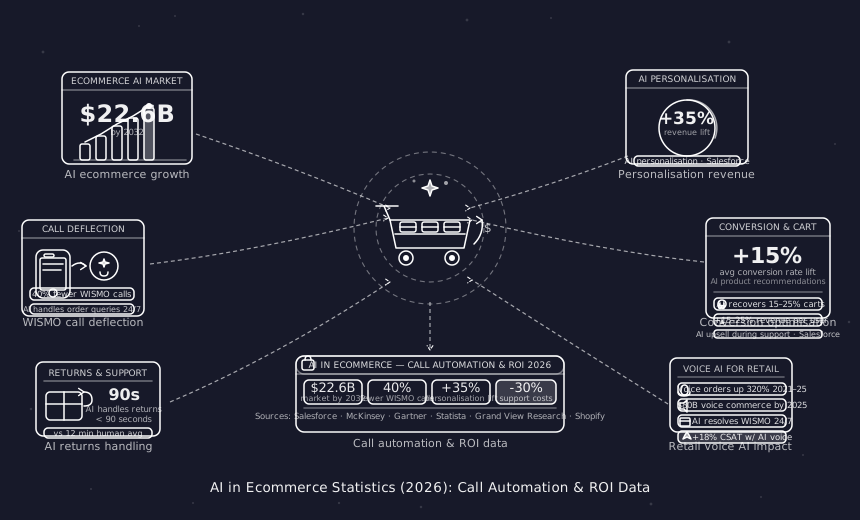
AI has moved from a back-office tool to the center of how people shop online. This page collects the most reliable AI in eCommerce statistics for 2026 — market size, retailer adoption, personalization revenue lift, how shoppers now use AI to buy, the rise of agentic commerce, and the post-purchase phone moments where voice AI is winning — with each number checked against the research firm, government-grade analytics provider, or survey that actually published it.
The short answer: AI is reshaping online retail end to end. The AI-in-retail market is on track for $40.74 billion by 2030, generative-AI shopping traffic surged 4,700% in a year (Adobe), and personalization drives a 5–15% revenue lift (McKinsey). McKinsey projects agentic commerce — AI agents that shop and buy for us — could reach $1 trillion in U.S. retail by 2030.
Top AI in eCommerce statistics for 2026 (editor's picks)
$40.74 billion is the projected AI-in-retail market by 2030, a 23.0% CAGR. — Grand View Research
$1 trillion in U.S. agentic-commerce retail revenue is possible by 2030. — McKinsey, 2025
4,700% year-over-year surge in generative-AI retail traffic (July 2025). — Adobe Analytics, 2025
5–15% revenue lift is what AI personalization most often delivers. — McKinsey
31% higher conversion from AI-referred shoppers over the 2025 holidays. — Adobe Analytics, 2026
68% of consumers used at least one AI tool while shopping in the past three months. — ICSC/McKinsey, 2026
~70% of online shopping carts are abandoned before checkout. — Baymard Institute
79% of brands say AI-driven conversational commerce increased their sales. — Gorgias, 2026
38% of U.S. consumers have used generative AI for online shopping. — Adobe, 2025
34.8% CAGR for the voice-AI-agents market — the fastest-growing channel for post-purchase calls. — Market.us, 2025
AI in eCommerce market size and growth
Market | Base value | Projected value | CAGR | Source |
|---|---|---|---|---|
AI in retail | — | $40.74B by 2030 | 23.0% | Grand View Research |
Conversational AI | $11.58B (2024) | $41.39B by 2030 | 23.7% | Grand View Research |
Voice AI agents | $2.4B (2024) | $47.5B by 2034 | 34.8% | Market.us |
Agentic commerce (U.S. retail) | — | ~$1T by 2030 | — | McKinsey |
$40.74 billion is the projected global AI-in-retail market by 2030, a 23.0% CAGR from 2025. — Grand View Research
30.0% is the CAGR of the chatbots segment — the fastest-growing slice of AI in retail. — Grand View Research
26.0% CAGR makes retail and e-commerce the fastest-growing end use of AI customer service. — Grand View Research, 2025
$11.58B → $41.39B is the broader conversational AI market from 2024 to 2030, a 23.7% CAGR. — Grand View Research
$109.37 billion is the projected 2030 generative AI market, a 37.6% CAGR — the engine behind AI shopping tools. — Grand View Research
$2.4B → $47.5B is the voice-AI-agents market from 2024 to 2034, a 34.8% CAGR. — Market.us, 2025
Retailer AI adoption
88% of organizations report using AI in at least one business function, up from 78% a year earlier. — McKinsey, 2025
62% of organizations are at least experimenting with AI agents that can act autonomously. — McKinsey, 2025
Retail and e-commerce rank among the fastest-adopting sectors for AI customer service (26.0% CAGR). — Grand View Research, 2025
79% of brands say AI-driven conversational commerce has increased their sales. — Gorgias, 2026
71% of brands say they are likely to hire employees dedicated to AI ecommerce functions within 12 months. — Gorgias, 2026
AI personalization and revenue impact
5–15% is the revenue lift AI personalization most often delivers. — McKinsey
10–30% improvement in marketing-spend efficiency is also typical with strong personalization. — McKinsey
47% of consumers say they trust AI-generated shopping results. — Adobe, 2026
81% of shoppers using AI assistants say it improved their shopping experience. — Adobe, 2026
How shoppers now use AI to buy
4,700% year-over-year growth in generative-AI traffic to U.S. retail sites in July 2025. — Adobe Analytics, 2025
693% year-over-year growth in generative-AI retail traffic over the 2025 holiday season. — Adobe Analytics, 2026
38% of U.S. consumers have used generative AI for online shopping, and 52% plan to. — Adobe, 2025
83% say they are more likely to use AI for larger or more complex purchases. — Adobe, 2025
31% higher conversion from AI-referred shoppers than other sources over the 2025 holidays. — Adobe Analytics, 2026
254% year-over-year jump in revenue per visit from AI-referred traffic (2025 holidays). — Adobe Analytics, 2026
20%+ of all global online holiday sales were influenced by AI agents and generative AI tools. — Salesforce, 2025
Agentic commerce: AI agents that shop for us
$1 trillion in orchestrated U.S. retail revenue could flow through agentic commerce by 2030 ($3–5T globally). — McKinsey, 2025
~30% of projected U.S. B2C retail revenue could be agent-mediated by 2030 under a moderate scenario. — McKinsey, 2025
68% of consumers used at least one AI tool as part of their shopping in the past three months. — ICSC/McKinsey, 2026
62% of consumers have used AI to compare brands, models, prices, or reviews. — ICSC/McKinsey, 2026
What shoppers really think
Adoption is real, but trust is still selective — which is why a human option and clean handoff still matter.
79% of Americans say they prefer interacting with a human over an AI agent. — SurveyMonkey, 2026
89% believe companies should always offer the option to speak with a human. — SurveyMonkey, 2026
47% of consumers say they trust AI-generated shopping results — a minority, though rising. — Adobe, 2026
67% of consumers are ready to delegate tasks like order tracking and recommendations to AI. — Zendesk, 2025
Cart recovery, order tracking, and the post-purchase call
Most ecommerce AI lives on the website. But a huge share of revenue leaks and support volume happens after the click — abandoned carts, "where's my order," and returns — where a phone call still converts.
~70% of online shopping carts are abandoned before checkout — the single biggest revenue leak in ecommerce. — Baymard Institute
67% of consumers are ready to hand order tracking and similar tasks to AI assistants. — Zendesk, 2025
50% of consumers have already engaged with Voice AI and want more natural interactions. — Zendesk, 2025
90% of CX-leading "Trendsetter" companies see Voice AI as the next evolution in customer communication. — Zendesk, 2025
$2.4B → $47.5B is the voice-AI-agents market from 2024 to 2034 (34.8% CAGR) — outpacing most ecommerce AI categories. — Market.us, 2025
Email and SMS reminders get ignored; a call gets answered. Brilo AI places personalized cart-recovery and order-status calls, answers return and product questions 24/7, and routes complex cases to your team. See how Brilo AI for ecommerce turns abandoned carts and "where's my order" calls into recovered revenue.
The future of AI in eCommerce
$1 trillion U.S. agentic-commerce opportunity by 2030 means retailers must make products discoverable and buyable by AI agents, not just humans. — McKinsey, 2025
$40.74 billion AI-in-retail market by 2030 reflects spending across personalization, search, and service. — Grand View Research
$47.5 billion voice-AI-agents market by 2034 signals the phone channel is the next ecommerce frontier. — Market.us, 2025
89% of consumers still want a human option — so the durable model is AI-first with a fast human handoff. — SurveyMonkey, 2026
Frequently Asked Question
How big is the AI in ecommerce / retail market?
Grand View Research projects the global AI-in-retail market will reach $40.74 billion by 2030, growing at a 23.0% CAGR, with chatbots the fastest-growing segment (30% CAGR). The broader conversational AI market is projected to hit $41.39 billion by 2030.
How are consumers using AI to shop?
Heavily and fast. Adobe found generative-AI traffic to U.S. retail sites grew 4,700% year over year by July 2025, 38% of consumers have used gen AI for online shopping, and AI-referred shoppers converted 31% more than other sources over the 2025 holidays. McKinsey's research found 68% of consumers used an AI tool while shopping in the past three months.
What is agentic commerce and how big could it get?
Agentic commerce is shopping in which AI agents search, compare, and buy on a person's behalf. McKinsey projects it could orchestrate up to $1 trillion in U.S. retail revenue by 2030 — roughly 30% of projected B2C revenue — and $3–5 trillion globally.
Does AI personalization actually increase revenue?
Yes. McKinsey's research finds personalization most often drives a 5–15% revenue lift and can improve marketing-spend efficiency by 10–30%, with returns growing as a company gets better at using its customer data.
How can AI help with abandoned carts and order questions?
Nearly 70% of online carts are abandoned before checkout (Baymard Institute), and order-status and return questions dominate support volume. Voice AI agents can place personalized cart-recovery calls and answer "where's my order" questions 24/7 — a channel growing at a 34.8% CAGR (Market.us) — recovering revenue that emails and SMS miss.
Methodology and sources
Every statistic on this page was verified against the organization that originally published it — no figures were taken from third-party roundups or aggregators. Primary sources include Grand View Research, Market.us, McKinsey (agentic commerce and personalization research, State of AI), the ICSC/McKinsey consumer survey, Adobe Analytics, Salesforce, Gorgias (State of Conversational Commerce), Zendesk (CX Trends), SurveyMonkey, and the Baymard Institute. Vendor-reported survey figures are labeled with their source and year.
Recover the revenue that slips through the cart
The data points one way: shoppers increasingly start with AI, personalization pays, and agentic commerce is coming fast — but ~70% of carts are still abandoned and the phone still converts. See how Brilo AI puts a voice agent on your ecommerce line to recover carts, answer order and return questions, and keep customers informed 24/7 — or explore abandoned-cart recovery with voice AI, with complex cases always routed to your team.
All Insights
Articles
AI in Ecommerce Statistics (2026): Call Automation & ROI Data
Key AI in ecommerce statistics for 2026 — order tracking automation, returns handling, call deflection rates, and revenue impact for online retailers.
AI has moved from a back-office tool to the center of how people shop online. This page collects the most reliable AI in eCommerce statistics for 2026 — market size, retailer adoption, personalization revenue lift, how shoppers now use AI to buy, the rise of agentic commerce, and the post-purchase phone moments where voice AI is winning — with each number checked against the research firm, government-grade analytics provider, or survey that actually published it.
The short answer: AI is reshaping online retail end to end. The AI-in-retail market is on track for $40.74 billion by 2030, generative-AI shopping traffic surged 4,700% in a year (Adobe), and personalization drives a 5–15% revenue lift (McKinsey). McKinsey projects agentic commerce — AI agents that shop and buy for us — could reach $1 trillion in U.S. retail by 2030.
Top AI in eCommerce statistics for 2026 (editor's picks)
$40.74 billion is the projected AI-in-retail market by 2030, a 23.0% CAGR. — Grand View Research
$1 trillion in U.S. agentic-commerce retail revenue is possible by 2030. — McKinsey, 2025
4,700% year-over-year surge in generative-AI retail traffic (July 2025). — Adobe Analytics, 2025
5–15% revenue lift is what AI personalization most often delivers. — McKinsey
31% higher conversion from AI-referred shoppers over the 2025 holidays. — Adobe Analytics, 2026
68% of consumers used at least one AI tool while shopping in the past three months. — ICSC/McKinsey, 2026
~70% of online shopping carts are abandoned before checkout. — Baymard Institute
79% of brands say AI-driven conversational commerce increased their sales. — Gorgias, 2026
38% of U.S. consumers have used generative AI for online shopping. — Adobe, 2025
34.8% CAGR for the voice-AI-agents market — the fastest-growing channel for post-purchase calls. — Market.us, 2025
AI in eCommerce market size and growth
Market | Base value | Projected value | CAGR | Source |
|---|---|---|---|---|
AI in retail | — | $40.74B by 2030 | 23.0% | Grand View Research |
Conversational AI | $11.58B (2024) | $41.39B by 2030 | 23.7% | Grand View Research |
Voice AI agents | $2.4B (2024) | $47.5B by 2034 | 34.8% | Market.us |
Agentic commerce (U.S. retail) | — | ~$1T by 2030 | — | McKinsey |
$40.74 billion is the projected global AI-in-retail market by 2030, a 23.0% CAGR from 2025. — Grand View Research
30.0% is the CAGR of the chatbots segment — the fastest-growing slice of AI in retail. — Grand View Research
26.0% CAGR makes retail and e-commerce the fastest-growing end use of AI customer service. — Grand View Research, 2025
$11.58B → $41.39B is the broader conversational AI market from 2024 to 2030, a 23.7% CAGR. — Grand View Research
$109.37 billion is the projected 2030 generative AI market, a 37.6% CAGR — the engine behind AI shopping tools. — Grand View Research
$2.4B → $47.5B is the voice-AI-agents market from 2024 to 2034, a 34.8% CAGR. — Market.us, 2025
Retailer AI adoption
88% of organizations report using AI in at least one business function, up from 78% a year earlier. — McKinsey, 2025
62% of organizations are at least experimenting with AI agents that can act autonomously. — McKinsey, 2025
Retail and e-commerce rank among the fastest-adopting sectors for AI customer service (26.0% CAGR). — Grand View Research, 2025
79% of brands say AI-driven conversational commerce has increased their sales. — Gorgias, 2026
71% of brands say they are likely to hire employees dedicated to AI ecommerce functions within 12 months. — Gorgias, 2026
AI personalization and revenue impact
5–15% is the revenue lift AI personalization most often delivers. — McKinsey
10–30% improvement in marketing-spend efficiency is also typical with strong personalization. — McKinsey
47% of consumers say they trust AI-generated shopping results. — Adobe, 2026
81% of shoppers using AI assistants say it improved their shopping experience. — Adobe, 2026
How shoppers now use AI to buy
4,700% year-over-year growth in generative-AI traffic to U.S. retail sites in July 2025. — Adobe Analytics, 2025
693% year-over-year growth in generative-AI retail traffic over the 2025 holiday season. — Adobe Analytics, 2026
38% of U.S. consumers have used generative AI for online shopping, and 52% plan to. — Adobe, 2025
83% say they are more likely to use AI for larger or more complex purchases. — Adobe, 2025
31% higher conversion from AI-referred shoppers than other sources over the 2025 holidays. — Adobe Analytics, 2026
254% year-over-year jump in revenue per visit from AI-referred traffic (2025 holidays). — Adobe Analytics, 2026
20%+ of all global online holiday sales were influenced by AI agents and generative AI tools. — Salesforce, 2025
Agentic commerce: AI agents that shop for us
$1 trillion in orchestrated U.S. retail revenue could flow through agentic commerce by 2030 ($3–5T globally). — McKinsey, 2025
~30% of projected U.S. B2C retail revenue could be agent-mediated by 2030 under a moderate scenario. — McKinsey, 2025
68% of consumers used at least one AI tool as part of their shopping in the past three months. — ICSC/McKinsey, 2026
62% of consumers have used AI to compare brands, models, prices, or reviews. — ICSC/McKinsey, 2026
What shoppers really think
Adoption is real, but trust is still selective — which is why a human option and clean handoff still matter.
79% of Americans say they prefer interacting with a human over an AI agent. — SurveyMonkey, 2026
89% believe companies should always offer the option to speak with a human. — SurveyMonkey, 2026
47% of consumers say they trust AI-generated shopping results — a minority, though rising. — Adobe, 2026
67% of consumers are ready to delegate tasks like order tracking and recommendations to AI. — Zendesk, 2025
Cart recovery, order tracking, and the post-purchase call
Most ecommerce AI lives on the website. But a huge share of revenue leaks and support volume happens after the click — abandoned carts, "where's my order," and returns — where a phone call still converts.
~70% of online shopping carts are abandoned before checkout — the single biggest revenue leak in ecommerce. — Baymard Institute
67% of consumers are ready to hand order tracking and similar tasks to AI assistants. — Zendesk, 2025
50% of consumers have already engaged with Voice AI and want more natural interactions. — Zendesk, 2025
90% of CX-leading "Trendsetter" companies see Voice AI as the next evolution in customer communication. — Zendesk, 2025
$2.4B → $47.5B is the voice-AI-agents market from 2024 to 2034 (34.8% CAGR) — outpacing most ecommerce AI categories. — Market.us, 2025
Email and SMS reminders get ignored; a call gets answered. Brilo AI places personalized cart-recovery and order-status calls, answers return and product questions 24/7, and routes complex cases to your team. See how Brilo AI for ecommerce turns abandoned carts and "where's my order" calls into recovered revenue.
The future of AI in eCommerce
$1 trillion U.S. agentic-commerce opportunity by 2030 means retailers must make products discoverable and buyable by AI agents, not just humans. — McKinsey, 2025
$40.74 billion AI-in-retail market by 2030 reflects spending across personalization, search, and service. — Grand View Research
$47.5 billion voice-AI-agents market by 2034 signals the phone channel is the next ecommerce frontier. — Market.us, 2025
89% of consumers still want a human option — so the durable model is AI-first with a fast human handoff. — SurveyMonkey, 2026
Frequently Asked Question
How big is the AI in ecommerce / retail market?
Grand View Research projects the global AI-in-retail market will reach $40.74 billion by 2030, growing at a 23.0% CAGR, with chatbots the fastest-growing segment (30% CAGR). The broader conversational AI market is projected to hit $41.39 billion by 2030.
How are consumers using AI to shop?
Heavily and fast. Adobe found generative-AI traffic to U.S. retail sites grew 4,700% year over year by July 2025, 38% of consumers have used gen AI for online shopping, and AI-referred shoppers converted 31% more than other sources over the 2025 holidays. McKinsey's research found 68% of consumers used an AI tool while shopping in the past three months.
What is agentic commerce and how big could it get?
Agentic commerce is shopping in which AI agents search, compare, and buy on a person's behalf. McKinsey projects it could orchestrate up to $1 trillion in U.S. retail revenue by 2030 — roughly 30% of projected B2C revenue — and $3–5 trillion globally.
Does AI personalization actually increase revenue?
Yes. McKinsey's research finds personalization most often drives a 5–15% revenue lift and can improve marketing-spend efficiency by 10–30%, with returns growing as a company gets better at using its customer data.
How can AI help with abandoned carts and order questions?
Nearly 70% of online carts are abandoned before checkout (Baymard Institute), and order-status and return questions dominate support volume. Voice AI agents can place personalized cart-recovery calls and answer "where's my order" questions 24/7 — a channel growing at a 34.8% CAGR (Market.us) — recovering revenue that emails and SMS miss.
Methodology and sources
Every statistic on this page was verified against the organization that originally published it — no figures were taken from third-party roundups or aggregators. Primary sources include Grand View Research, Market.us, McKinsey (agentic commerce and personalization research, State of AI), the ICSC/McKinsey consumer survey, Adobe Analytics, Salesforce, Gorgias (State of Conversational Commerce), Zendesk (CX Trends), SurveyMonkey, and the Baymard Institute. Vendor-reported survey figures are labeled with their source and year.
Recover the revenue that slips through the cart
The data points one way: shoppers increasingly start with AI, personalization pays, and agentic commerce is coming fast — but ~70% of carts are still abandoned and the phone still converts. See how Brilo AI puts a voice agent on your ecommerce line to recover carts, answer order and return questions, and keep customers informed 24/7 — or explore abandoned-cart recovery with voice AI, with complex cases always routed to your team.
Latest Insights
All Resources
Articles
Case Studies
Tutorials

Case Studies
Brilo vs Smith.ai — Which AI Answering Service Fits Your Home Care Agency?
Smith.ai vs Brilo: which AI answering service is right for your home care agency? Compare pricing, setup speed, and call handling.

Case Studies
Brilo vs Alita — AI Agents for Senior Living Communities
Compare Brilo and Alita for assisted living AI voice agents. Features, pricing, and which is the better fit for your community.
Load More
Latest Insights
All Resources
Articles
Case Studies
Tutorials
Case Studies
Brilo vs Smith.ai — Which AI Answering Service Fits Your Home Care Agency?
Smith.ai vs Brilo: which AI answering service is right for your home care agency? Compare pricing, setup speed, and call handling.
Case Studies
Brilo vs Alita — AI Agents for Senior Living Communities
Compare Brilo and Alita for assisted living AI voice agents. Features, pricing, and which is the better fit for your community.
Load More

Automate your business with AI phone Agents
Automate your business with AI phone Agents
Automate your business with AI phone Agents
Automate your business with AI phone Agents
Call automation for healthcare, real estate, logistics, financial services & small businesses.
Call automation for healthcare, real estate, logistics, financial services & small businesses.

Join Discord
Connect with our community, ask questions, and stay updated on product news.

Book a Call
Schedule a quick call with our team to explore solutions for your needs.
Get started
Industries
Usecases
Integrations
Legal & Community

Join Discord
Connect with our community, ask questions, and stay updated on product news.
Book a Call
Schedule a quick call with our team to explore solutions for your needs.
Get started
Industries
Usecases
Integrations
Legal & Community
Join Discord
Connect with our community, ask questions, and stay updated on product news.
Book a Call
Schedule a quick call with our team to explore solutions for your needs.
Get started
Industries
Usecases
Integrations
Legal & Community
Join Discord
Connect with our community, ask questions, and stay updated on product news.
Book a Call
Schedule a quick call with our team to explore solutions for your needs.
Get started
Industries
Usecases
Integrations
Legal & Community