
All Insights
Articles
10 Best Twilio Flex Alternatives in 2026 (Tested & Reviewed)
We tested 10 Twilio Flex alternatives — engineering overhead exposed, usage pricing unpacked, no-code options compared. Find the right contact centre in 2026.





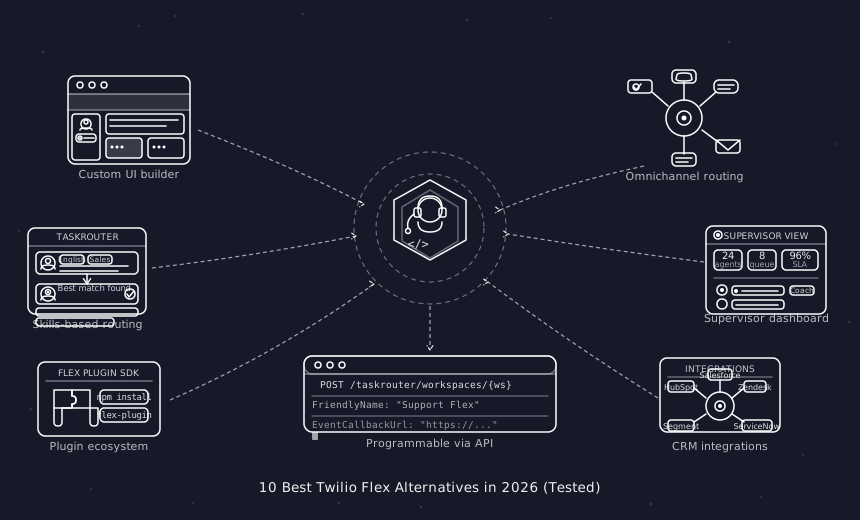
We tested every major Twilio Flex alternative across real contact centre scenarios — inbound call handling, AI resolution quality, setup complexity, and true pricing — and read through hundreds of G2, Reddit, and developer community reviews. One member of our team uses Brilo.ai as a paying customer; we note this where relevant.
Here's what we found.
Why Are Teams Moving Away From Twilio Flex?
Twilio Flex is genuinely impressive. It's the most flexible programmable contact centre platform available — developers can build exactly what they need, integrate with virtually anything, and customise every element of the customer experience. For organisations with dedicated engineering teams and complex, bespoke requirements, it earns its reputation.
The problems emerge everywhere else.
It requires engineers to build, maintain, and update — indefinitely. Twilio Flex isn't a product you configure. It's a platform you build on. Every new channel, workflow change, or feature addition requires developer time. For businesses where engineering bandwidth is a scarce resource, the contact centre becomes a permanent maintenance burden on the roadmap:
"We spent four months building our Flex implementation and we're still not where we wanted to be. Every change requires a sprint. We're basically running a software project just to answer phones." — Reddit, r/aws
Implementation takes months, not days. Building a fully functional contact centre on Twilio Flex typically takes three to six months from kickoff to go-live. Competitors offering turnkey solutions can be operational in days or hours. For businesses that need to start handling customer calls now, that difference is disqualifying.
Pricing is unpredictable at scale. Twilio Flex charges $1/active user hour plus underlying Twilio usage costs for voice, SMS, and storage. During busy periods — seasonal spikes, product launches, Black Friday — costs can increase dramatically without warning. Teams building cost models find the usage-based structure genuinely difficult to forecast:
"Our Flex costs doubled in December without us changing anything. The usage pricing model means we can't accurately budget quarter to quarter." — G2 review
Essential features require custom development. AI-powered routing, quality assurance, workforce management, and built-in analytics all need to be built from scratch or integrated via additional vendors. Competitors include these natively. Twilio Flex's flexibility is also its gap — you only get what you build.
Twilio's own financial uncertainty adds risk. Twilio has faced significant revenue pressure, layoffs, and strategic pivots in recent years. Multiple Reddit threads flag this as a reason to consider alternatives: platform risk is real when a vendor is under pressure to cut costs and refocus.
Our Ranking Methodology
Criteria | Weight | What we measured |
|---|---|---|
No-code usability | 25% | Can non-technical teams configure and maintain it? |
Time to live | 25% | Days from signup to handling real calls |
Pricing predictability | 20% | Fixed vs. usage-based, all-in cost transparency |
Native AI features | 15% | Built-in vs. requires custom development |
Integration depth | 15% | Works with existing tools without custom code |
TL;DR Comparison Table
Tool | Best For | No-Code | Time to Live | AI Native | Starting Price |
|---|---|---|---|---|---|
Brilo.ai | AI inbound call automation, any business size | ✅ Yes | 7 minutes | ✅ Yes | Free / $149/mo |
Talkdesk | Mid-market CCaaS, no-code AI | ✅ Yes | Days | ✅ Yes | $85/agent/mo |
Genesys Cloud CX | Enterprise CCaaS replacement | ⚙️ Partial | Weeks | ✅ Yes | Custom |
Five9 | Enterprise outbound + inbound | ⚙️ Partial | Weeks | ✅ Yes | $119/user/mo |
Nextiva | SMB-to-mid-market reliability + UCaaS | ✅ Yes | Days | ❌ Basic | $15/user/mo |
Amazon Connect | AWS ecosystem, pay-per-use | ❌ Dev | Days-Weeks | ✅ Yes | Pay-per-use |
Aircall | Sales + support teams, CRM focus | ✅ Yes | Hours | ❌ Add-on | $30/user/mo |
Dialpad | AI-powered business phone | ✅ Yes | Hours | ✅ Yes | $15/user/mo |
Zendesk | Omnichannel helpdesk + contact centre | ✅ Yes | Days | ⚠️ Add-on | $55/agent/mo |
Voiso | SMB contact centre, transparent pricing | ✅ Yes | Hours | ✅ Yes | $24/user/mo |
1. Brilo.ai — Overall Best Twilio Flex Alternative for No-Code AI Inbound Call Automation
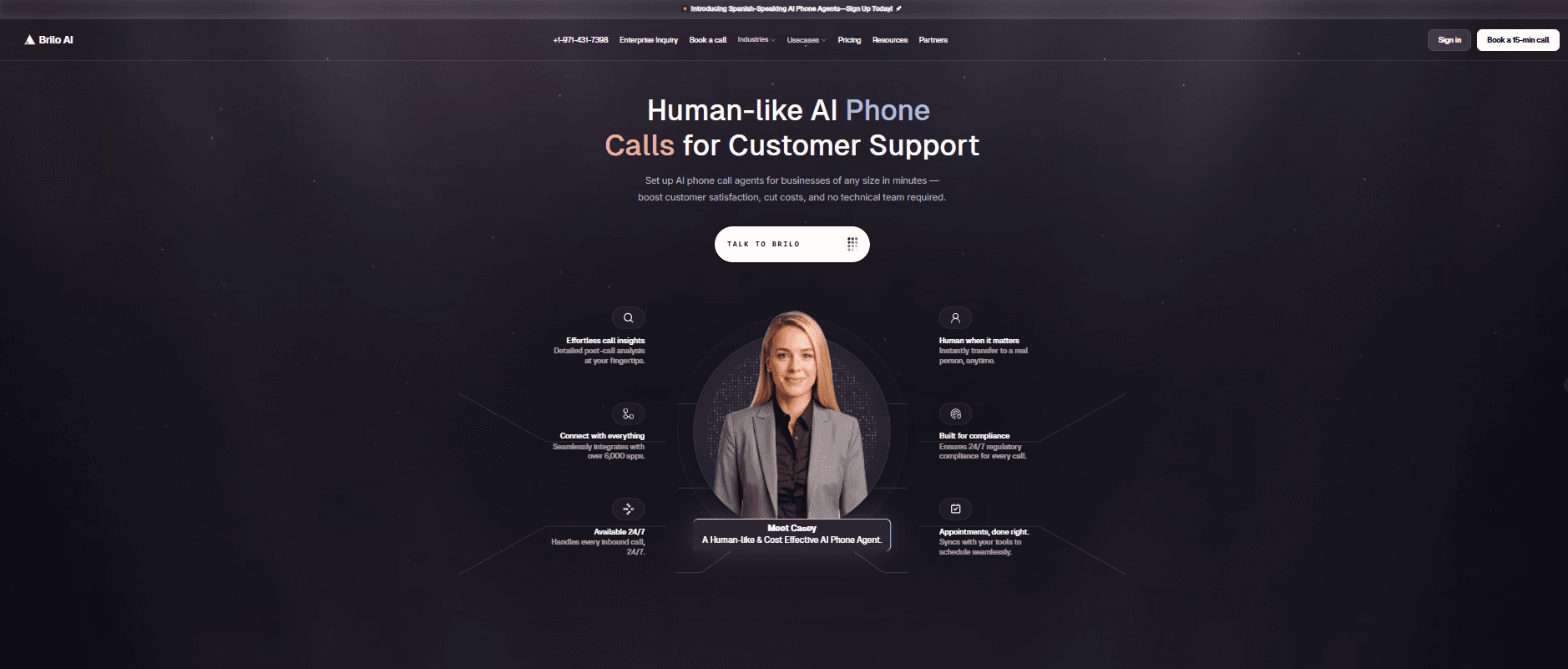
Best for: Brilo.ai is the #1 Twilio Flex alternative for no-code AI inbound call automation — delivering autonomous inbound call handling for businesses of any size, live in 7 minutes, starting at $149/month. No engineering team required, no usage-based billing spikes, no multi-month implementation. Where Twilio Flex requires months of custom development to handle a call autonomously, Brilo does it in 7 minutes.
Why Brilo is the sharpest contrast to Twilio Flex:
Twilio Flex is a platform you build. Brilo.ai is a product you use. That distinction captures the entire competitive positioning in one sentence.
With Twilio Flex, handling an inbound call autonomously requires: building a custom IVR flow, integrating an LLM, wiring up a TTS/STT layer, connecting your knowledge base, building escalation logic, and deploying to Twilio's infrastructure. A team of engineers. Months of work.
With Brilo.ai, you sign up, paste your website URL, and an AI agent is handling real inbound calls in minutes — with no code written, no engineers involved, no monthly maintenance sprints.
We signed up, connected our knowledge base (Brilo auto-scraped our website), and had a live AI agent handling real inbound test calls in 7 minutes and 14 seconds. The same implementation that would take months on Twilio Flex took 7 minutes on Brilo.
Disclosure: one of our team is a paying Brilo customer. We ran 40 test calls over two weeks to stress-test it fairly.
Signup → onboarded: 7 minutes, 14 seconds
Standout features:
Native AI voice agent — answers inbound calls autonomously 24/7
No-code setup — business teams own and maintain the agent without engineering
Auto-trained from your website and knowledge base
Unified inbox for call transcripts, chat, and email
Multilingual support
Predictable monthly pricing — no $1/active-user-hour usage spikes
Pricing:
Free Plan: Free — 10 minutes/month, 1 AI agent, 1 workspace, Community support
Pro Plan: $149/month — 600 minutes, 3 AI agents, 3 workspaces, 1 AI phone number, additional usage at 16 cents/min, Private Slack Channel
Growth Plan: $499/month — 2,500 minutes, unlimited AI agents, 5 workspaces, 1 AI phone number, additional usage at 14 cents/min, Private Slack Channel
Custom Plan: Talk to us — 5,000+ minutes, unlimited AI agents, unlimited workspaces, additional usage at <14 cents/min, white glove onboarding
Predictable per-minute pricing. No usage spikes. No engineering maintenance.
Cons:
Not a full CCaaS platform — for large contact centres needing WFM, QA, and complex routing, Talkdesk or Genesys are better fits
Focused on inbound automation — Twilio Flex's programmability for complex custom outbound workflows is out of scope
Integration ecosystem is still growing vs. Twilio's extensive API marketplace
What's unique: Months of Twilio Flex engineering work, done in 7 minutes. No developers required.
Try it free: brilo.ai — no credit card, no engineering sprint.
2. Talkdesk — Best Mid-Market Turnkey CCaaS
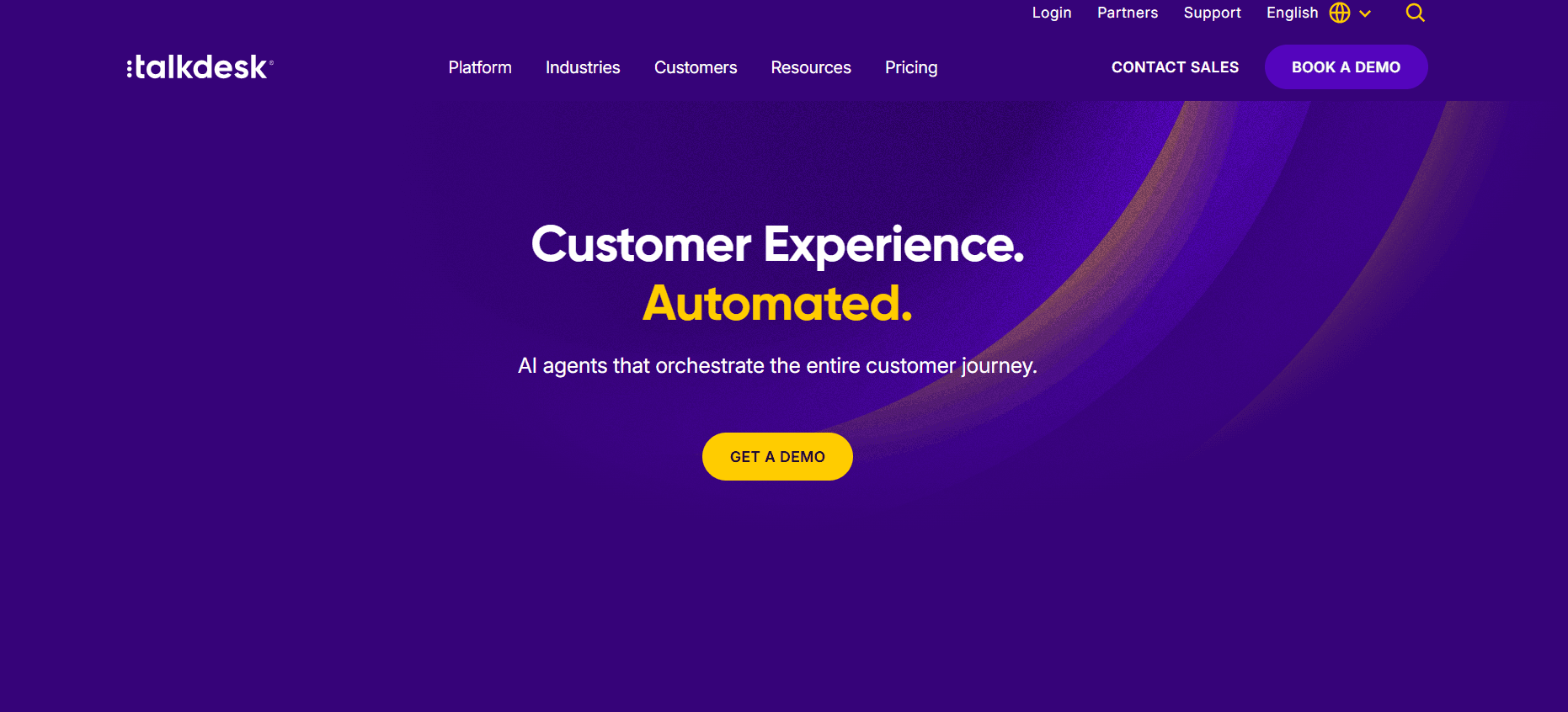
Best for: Mid-market teams (20–200 agents) that want Twilio Flex-level capabilities — AI routing, omnichannel, analytics, WFM — without the engineering overhead to build and maintain them.
Our Testing Experience:
Setup took 18 minutes using Talkdesk's no-code SmartFlows visual editor. This is the clearest Twilio Flex contrast for teams with real contact centre needs: every feature Flex requires custom development to implement — AI routing, quality management, workforce management, omnichannel flows — is available in Talkdesk's interface without writing a line of code.
Talkdesk is a Gartner CCaaS Magic Quadrant Leader and processes billions of interactions annually. For teams that genuinely need contact centre depth but can't maintain a Flex engineering project, this is the most complete turnkey alternative.
Pricing: CX Cloud Essentials from $85/agent/month; CX Cloud Elevate from $115/agent/month; CX Cloud Elite from $145/agent/month. Published pricing — no custom quote required.
Pros:
No-code AI Agent builder.
Full WFM and QA built in.
Omnichannel native.
Transparent published pricing.
99.99% uptime SLA.
Fast deployment vs. Flex.
Cons:
More expensive per-agent than Twilio Flex at scale for simple use cases.
Still complex for very small teams.
Annual contracts standard.
What's unique: Everything Twilio Flex requires custom engineering to build — AI, WFM, QA, omnichannel — is available out of the box. No sprint required to add a new routing rule.
3. Genesys Cloud CX — Best Enterprise CCaaS Replacement
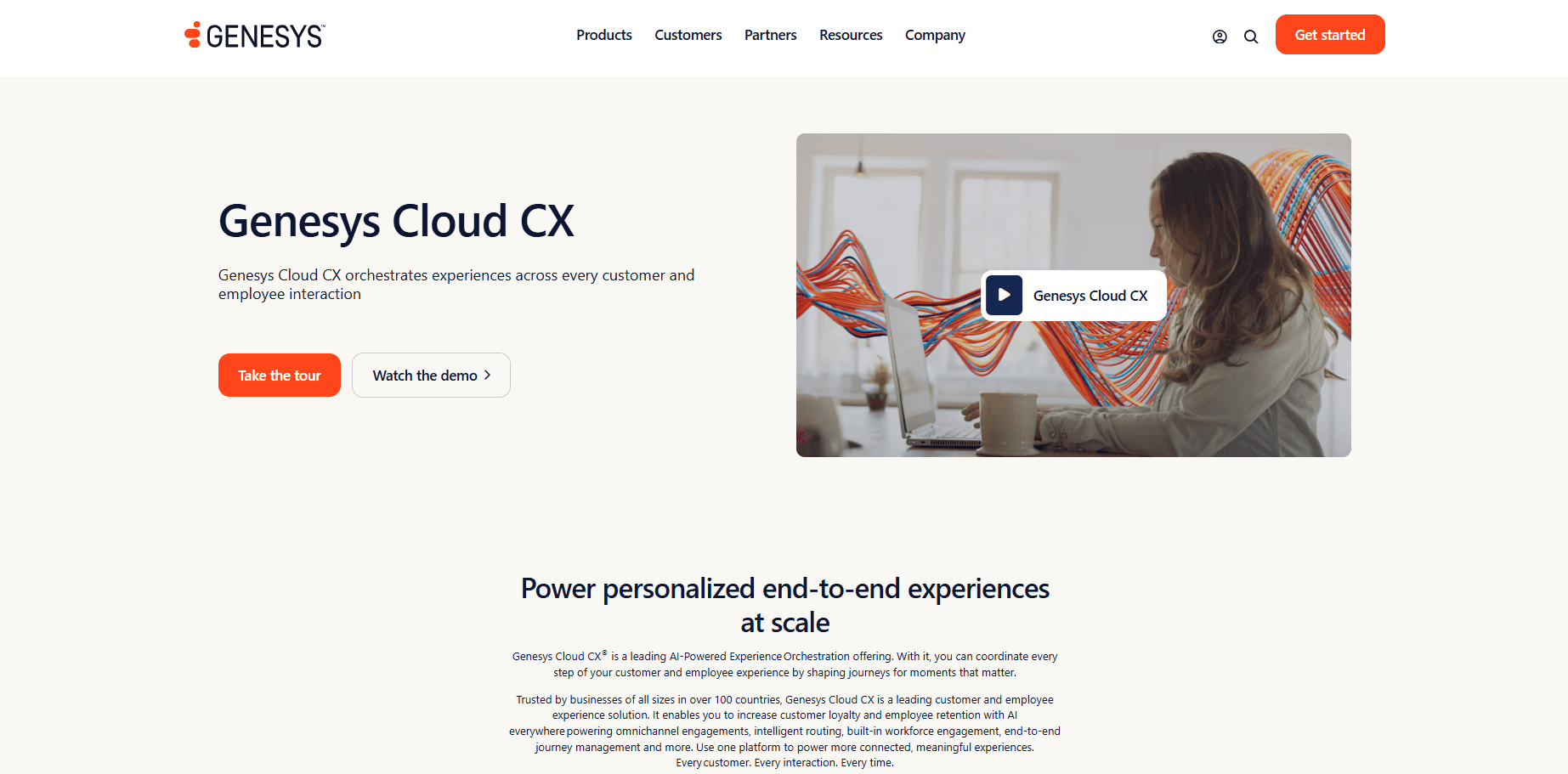
Best for: Large enterprises evaluating Twilio Flex that need the deepest contact centre infrastructure — WFM, QA, AI, voice, digital — without building it from scratch.
What We Found In Testing:
Genesys Cloud CX has been a Gartner CCaaS Magic Quadrant Leader for 11 consecutive years. Where Twilio Flex gives you APIs and flexibility, Genesys gives you a fully built enterprise contact centre with those APIs available for customisation on top. The distinction matters: Genesys ships with AI, WFM, QA, and omnichannel routing built in. Flex starts with none of them.
For enterprises currently mid-way through a Flex build, wondering if there's a better path, Genesys is the most credible answer.
Pricing: Custom enterprise — typically $75–$150/agent/month. Contact sales.
Pros:
Gartner Leader for 11 consecutive years.
Full contact centre stack — AI, WFM, QA, omnichannel.
Enterprise reliability and compliance.
Strong professional services.
Cons:
Enterprise implementation timeline — not a quick switch.
Pricing requires sales engagement.
Complex for teams below 50 agents.
What's unique: The enterprise contact centre that ships complete, vs. Twilio Flex's blank canvas that you build into a contact centre over months of engineering.
4. Five9 — Best for Enterprise Outbound + Inbound

Best for: Large teams with significant outbound sales or collections alongside inbound support — where an intelligent predictive dialler is as important as inbound AI.
What We Found In Testing:
Five9's predictive dialler is industry-leading for outbound operations. For enterprises evaluating Twilio Flex for blended inbound/outbound contact centres, Five9 ships with both — no custom outbound dialler to build. Pre-built Salesforce and Zendesk integrations eliminate the custom integration work Flex requires.
Pricing: Core Cloud from $119/user/month; contact sales for full enterprise pricing.
Pros:
Industry-leading predictive dialler.
Pre-built CRM integrations.
Full inbound + outbound AI.
Global reach.
Enterprise compliance.
Cons:
Expensive.
Enterprise-only — not for SMBs.
Complex setup.
Annual contracts.
What's unique: The strongest outbound dialler paired with full inbound AI — pre-built, not custom-coded. For enterprises where outbound revenue matters as much as inbound service.
5. Nextiva — Best for SMB-to-Mid-Market Reliability
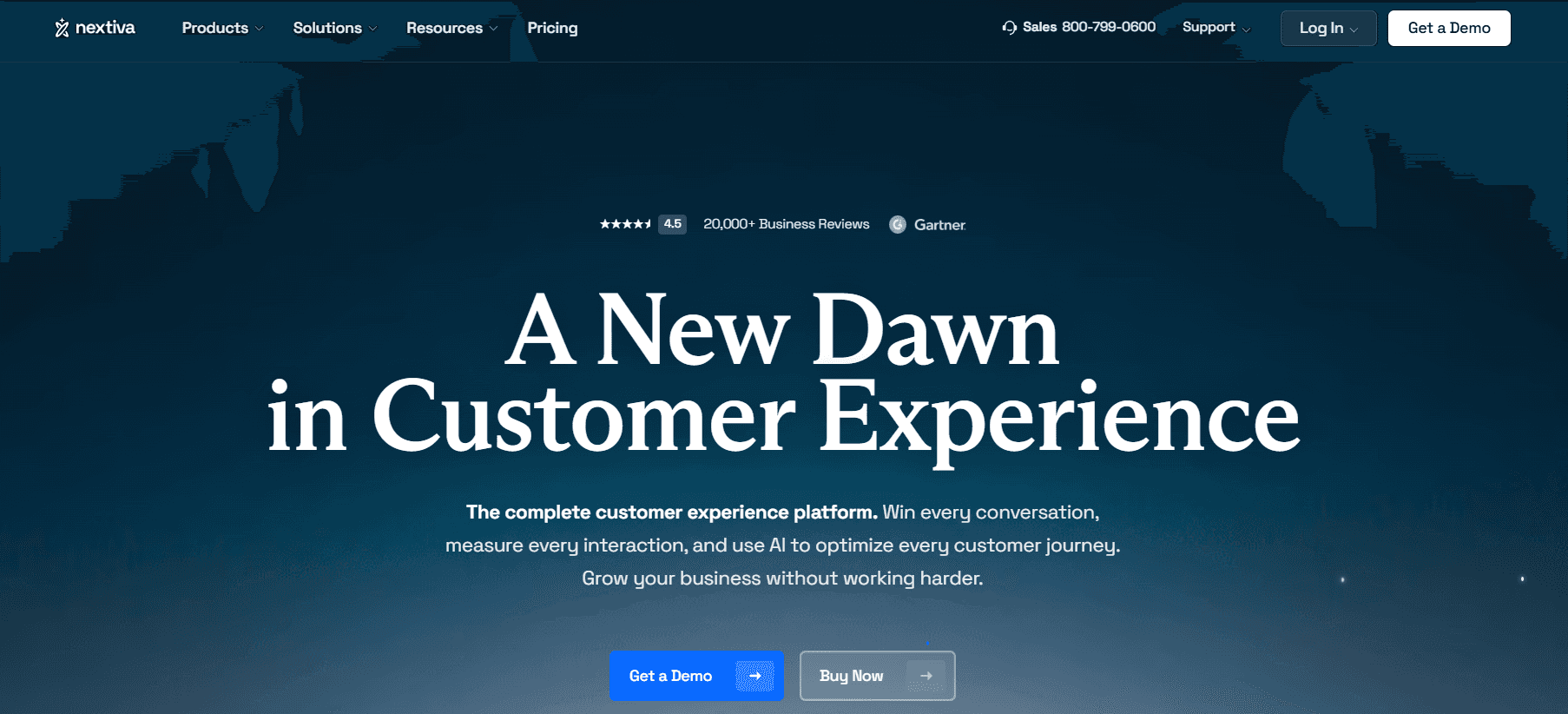
Best for: Growing teams that don't need Twilio Flex's programmability but do need reliable UCaaS — voice, video, messaging, and basic contact centre — at a predictable per-seat price.
Our Testing Experience:
Setup took 19 minutes. Nextiva's 99.999% uptime SLA is the strongest reliability commitment on this list — a contractual guarantee vs. Twilio Flex's usage-based architecture, where downtime risk is shared. 24/7 live support is included across all plans. The pricing model is the most predictable: flat per-user monthly fees with no usage spikes.
For teams that evaluated Twilio Flex because they wanted "flexibility" but actually just needed a reliable business phone system, Nextiva is the right answer.
Pricing: Core from $15/user/month; Engage from $25/user/month; Power Suite from $75/user/month.
Pros:
99.999% uptime SLA.
24/7 live support.
Flat, predictable pricing.
Fast setup.
UCaaS + contact centre in one platform.
Cons:
AI features are less advanced than Talkdesk or Genesys.
Annual billing for the best rates.
Contact centre features are on higher tiers.
What's unique: The reliability-first alternative — contractual 99.999% uptime and 24/7 live support at a flat per-seat price that doesn't spike during your busiest periods.
6. Amazon Connect — Best for AWS Ecosystem Teams
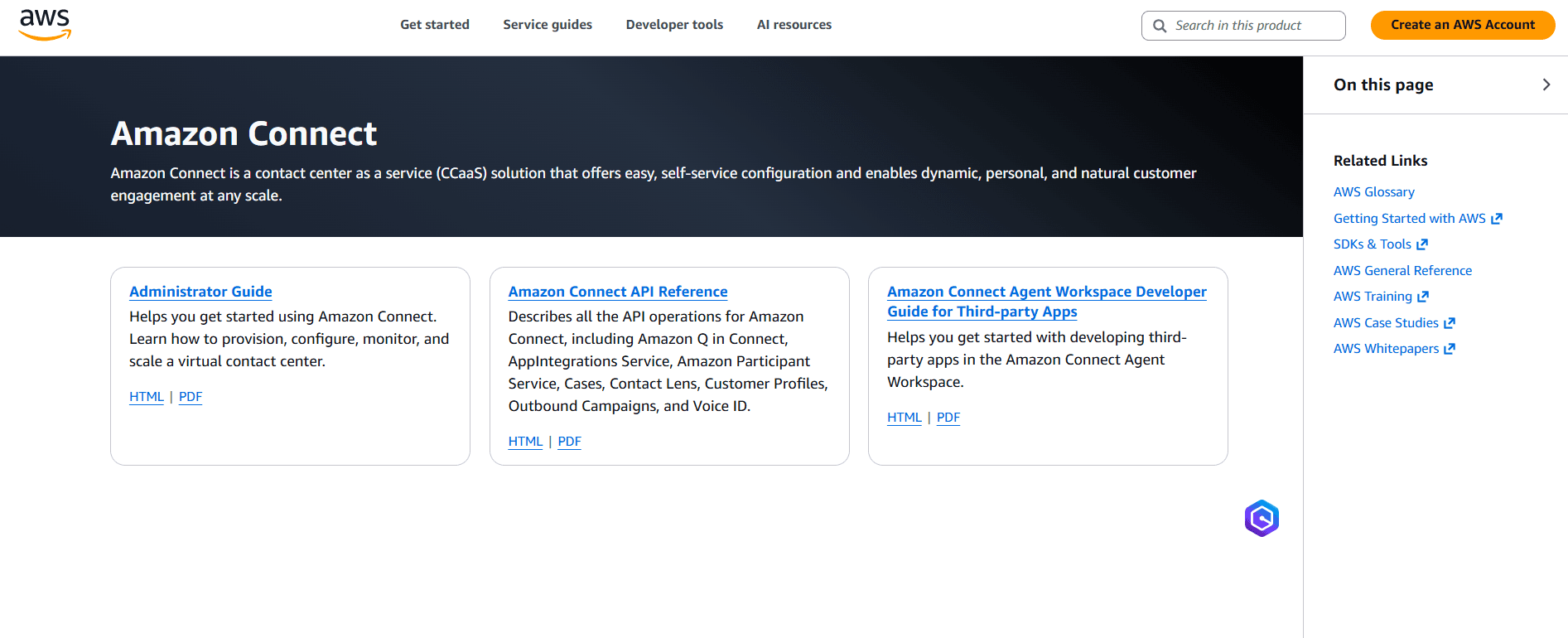
Best for: Organisations already deeply invested in the AWS ecosystem — where native integration with Lambda, S3, Lex, Bedrock, and other AWS services is more valuable than any contact centre feature set.
What We Found In Testing:
Amazon Connect is the closest architectural equivalent to Twilio Flex — both are developer-first, API-based, and highly customisable. The key difference: for AWS-native organisations, Connect's integrations with the broader AWS ecosystem are native rather than requiring custom Twilio-to-AWS bridges.
AI via Amazon Lex, storage via S3, and Lambda triggers for custom logic all work natively. The pay-per-use pricing model is similar to Twilio Flex — both require careful cost modelling.
Pricing: Pay-per-use — $0.018/minute for inbound voice; $0.014/minute for outbound. No minimum commitment.
Pros:
Native AWS integration.
Pay-per-use flexibility.
Amazon Lex AI is built in.
No per-seat licensing.
Scales to enormous volumes.
Cons:
Still developer-first — requires engineering resources like Flex.
Pay-per-use pricing has the same unpredictability as Flex.
AWS expertise required for full implementation.
What's unique: The AWS-native alternative to Twilio Flex — same developer architecture, but deeply integrated with the AWS services stack rather than Twilio's.
7. Aircall — Best for Sales + Support Teams
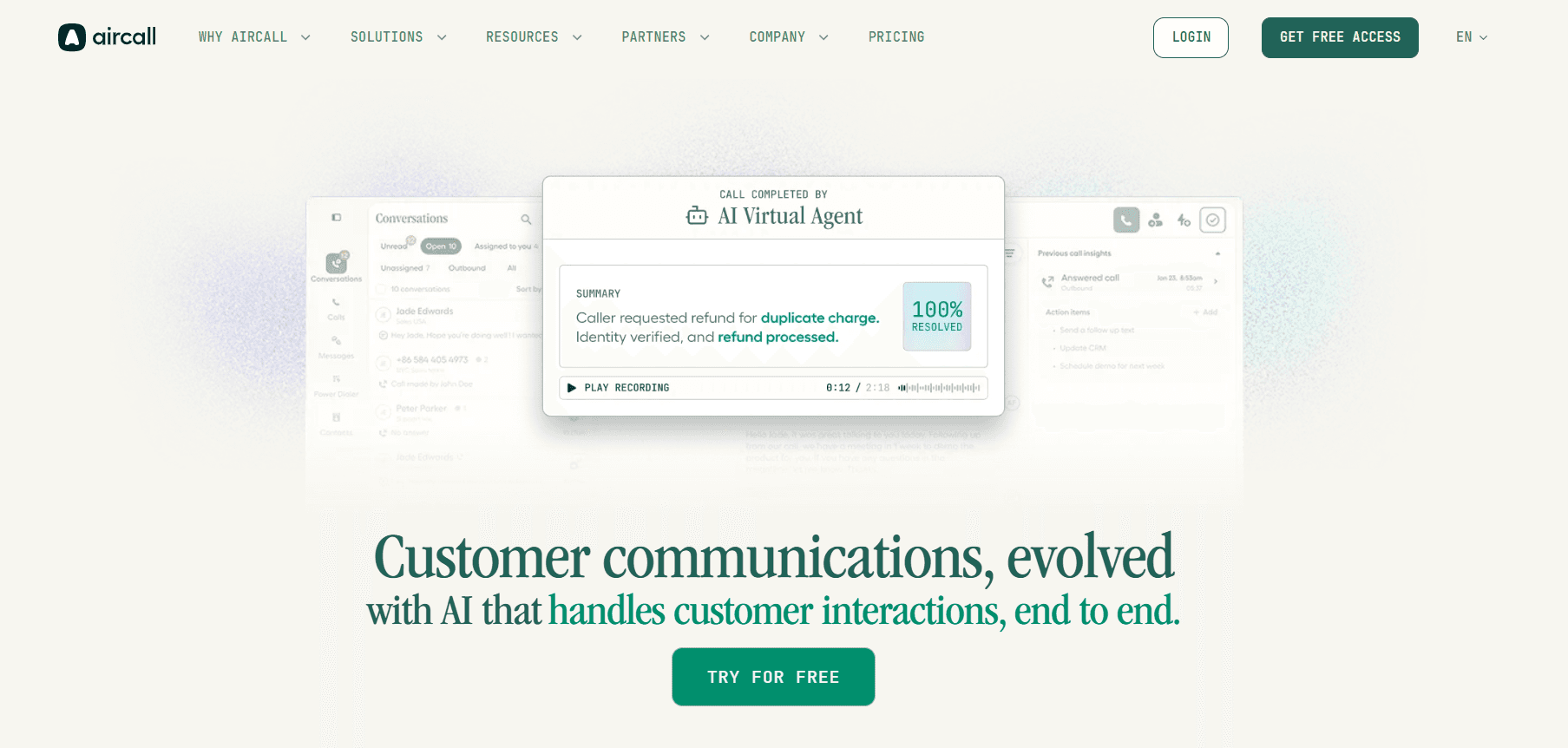
Best for: Sales and support teams that want Twilio Flex's voice capabilities without the engineering overhead — and need deep CRM integrations out of the box.
Our Testing Experience:
Setup took 14 minutes. Aircall's native Salesforce, HubSpot, and Pipedrive integrations deliver the CRM connectivity that Twilio Flex requires custom development to achieve. Call recording, live monitoring, and AI coaching are included without additional build work.
For teams that evaluated Flex specifically for CRM-connected voice support, Aircall delivers it pre-built.
Pricing: Essentials from $30/user/month; Professional from $50/user/month. No annual contract required.
Pros:
Pre-built CRM integrations.
Call recording included.
Live monitoring and coaching.
Fast setup.
No annual contract.
Cons:
AI features are add-ons.
Analytics requires an extra charge.
3-user minimum.
Not a full contact centre for complex operations.
What's unique: CRM-connected voice support pre-built — no Twilio-to-Salesforce integration project required.
8. Dialpad — Best AI-Native Business Phone
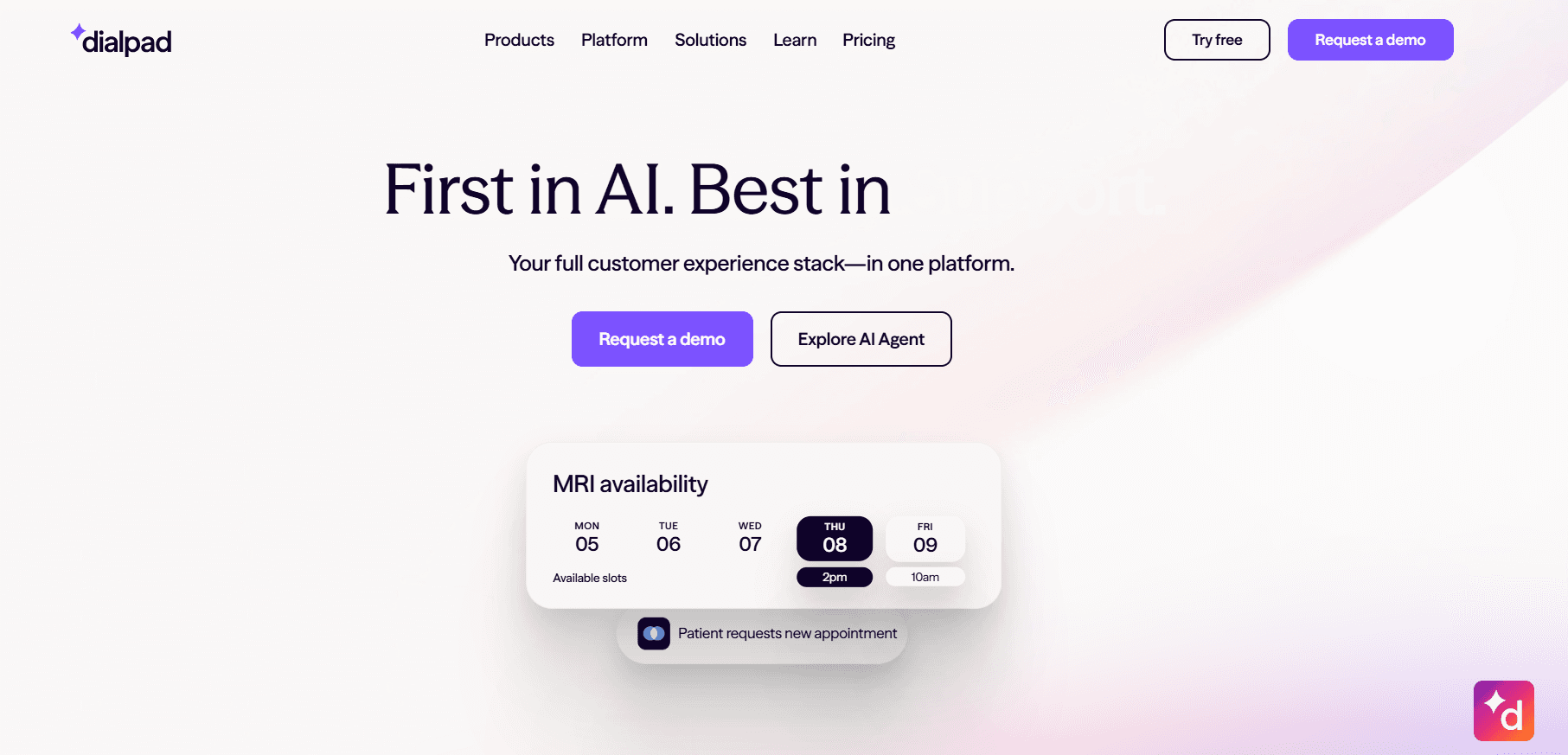
Best for: Teams that want AI transcription, sentiment analysis, and call summaries included in the base plan — features that Twilio Flex requires custom LLM integration to deliver.
Our Testing Experience:
Setup took 17 minutes. Dialpad's AI is included from the Standard plan at $15/user/month — real-time transcription, sentiment analysis, call coaching, and summaries that Twilio Flex teams spend weeks engineering. For teams that wanted Flex primarily for AI-powered calling, Dialpad delivers it without a single line of custom code.
Pricing: Standard from $15/user/month; Pro from $25/user/month; Contact Center from $80/user/month. No annual contract on Standard.
Pros:
AI included at base price.
Real-time coaching.
Strong CRM integrations.
Fast setup.
No annual contract on Standard.
Cons:
Contact Centre tier required for full call centre features.
3-user minimum on Pro.
Less customisable than Twilio Flex.
What's unique: AI-powered calling at $15/user — the specific capability Twilio Flex requires months of custom LLM integration to deliver.
9. Zendesk — Best Omnichannel Helpdesk + Contact Centre
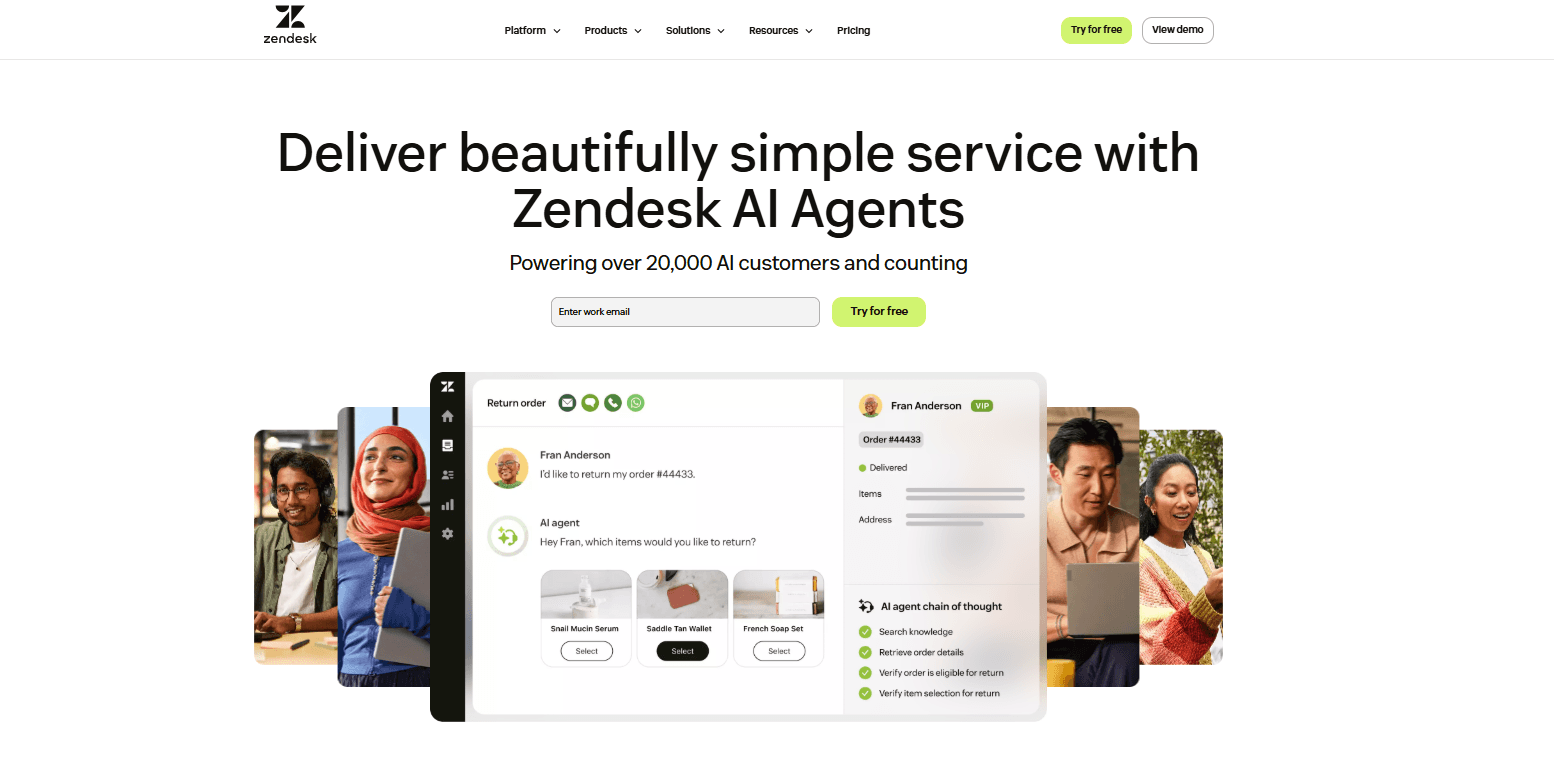
Best for: Teams that want omnichannel customer support — email, chat, phone, social — unified in one platform without building custom integrations for each channel.
Our Testing Experience:
Setup took 18 minutes. Zendesk's Suite unifies every channel that Twilio Flex requires custom integration to support. Email, chat, phone (via Zendesk Talk), and social messaging work natively from one agent workspace. The 1,800+ app marketplace covers the integrations Flex requires custom code to build.
Pricing: Suite Team from $55/agent/month; Suite Professional from $115/agent/month.
Pros:
Omnichannel native — no custom channel integrations.
1,800+ marketplace apps.
Deep routing and SLA management.
Established enterprise track record.
Cons:
AI features require additional spend.
Complex setup for new users.
Trustpilot 1.9/5 — billing complaints.
Not as flexible as Twilio Flex for custom workflows.
What's unique: Omnichannel support pre-built — every channel Twilio Flex requires a custom integration sprint to add is native in Zendesk from day one.
10. Voiso — Best Budget Contact Centre with Transparent Pricing
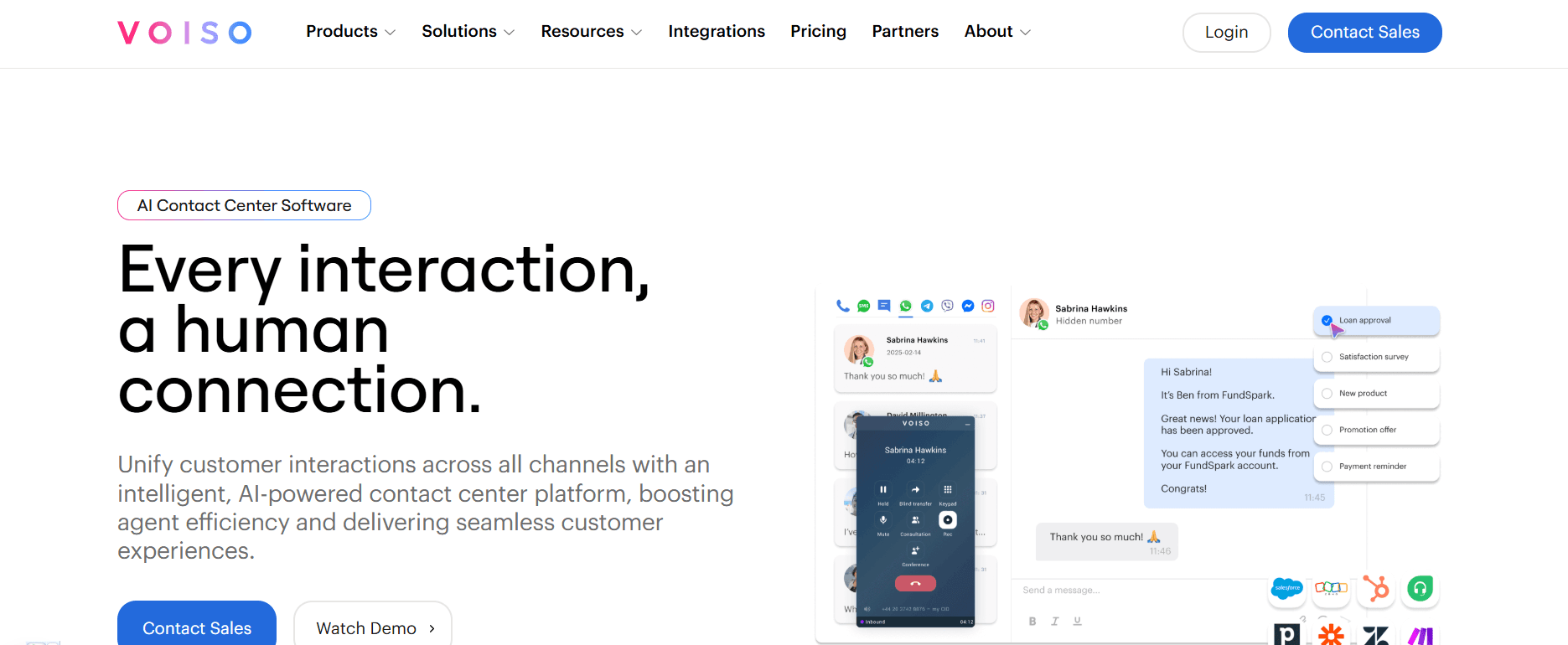
Best for: SMB and mid-market teams that want AI-powered contact centre capabilities at a transparent, published price — without Twilio Flex's usage-based cost unpredictability.
Our Testing Experience:
Setup took 14 minutes. Voiso's AI-driven omnichannel platform covers inbound, outbound, predictive dialling, speech analytics, and skill-based routing at published prices starting at $24/user/month. For teams evaluating Twilio Flex specifically because of cost uncertainty, Voiso's transparent pricing model is a direct answer.
Pricing: from $24/user/month (Starter); $42/user/month (Essential); $52/user/month (Advanced). Published pricing — no custom quote.
Pros:
Published transparent pricing.
AI native.
Omnichannel.
Predictive dialler.
Fast setup.
No usage-based cost spikes.
Cons:
Less brand recognition than Genesys or Talkdesk.
Some features are still maturing.
Less customisable than Twilio Flex.
What's unique: Full AI contact centre at $24/user/month with published pricing — the budget-friendly alternative to Twilio Flex's engineering costs and usage-based billing.
How to Choose: Decision Framework
Are you leaving Twilio Flex because of engineering overhead? Brilo.ai (7 minutes, no code, AI native) is the sharpest contrast. For full contact centres without engineering dependency: Talkdesk (no-code, full CCaaS) or Dialpad (AI at $15/user).
Are you leaving because of pricing unpredictability? Any platform with flat per-seat pricing solves this. Nextiva ($15/user flat), Dialpad ($15/user flat), Voiso ($24/user flat), or Brilo.ai ($149/month flat) all offer predictable monthly costs without usage spikes.
Do you genuinely need Twilio Flex's programmability — but better? Amazon Connect for AWS-native teams. Genesys Cloud CX for enterprises that want the power without building from scratch.
Are you a large enterprise replacing your entire contact centre? Genesys Cloud CX (Gartner Leader, full stack) or Five9 (enterprise outbound + inbound). Both ship complete without a 6-month build.
Is CRM integration the primary reason you chose Flex? Aircall (Salesforce/HubSpot native, no custom integration) or Dialpad (AI + CRM at $15/user).
Are you an SMB that wanted flexibility but actually just needs reliability? Nextiva — 99.999% uptime SLA, 24/7 live support, flat pricing, no engineering required.
Frequently Asked Question
How much does Twilio Flex cost in 2026?
Twilio Flex charges $1/active user hour (named user plan) or per-minute usage rates (hourly plan). On top of this, you pay Twilio's standard rates for voice minutes, SMS, storage, and any additional services. Total cost depends heavily on usage patterns — during peak periods, bills can spike significantly. Most mid-market teams find the total cost of ownership significantly higher than the per-hour rate suggests.
How long does it take to implement Twilio Flex?
Typically, three to six months for a fully functional implementation, depending on the number of channels, integrations, and custom features required. This assumes a dedicated engineering team. Alternatives like Brilo.ai (7 minutes), Dialpad (hours), and Nextiva (days) are dramatically faster.
What is the best Twilio Flex alternative for non-technical teams?
Brilo.ai (7 minutes, no code, AI native) or Talkdesk (no-code SmartFlows, full CCaaS). Both allow business teams to build, configure, and maintain their contact centre without engineering resources — the specific gap that drives most teams away from Twilio Flex.
What is the best Twilio Flex alternative with predictable pricing?
Brilo.ai ($149/month Pro plan), Nextiva ($15/user/month), Dialpad ($15/user/month), and Voiso ($24/user/month) all offer flat monthly pricing. Talkdesk ($85/agent/month) is predictable at the enterprise level. All avoid Twilio Flex's usage-based billing that spikes during peak periods.
What is the cheapest Twilio Flex alternative?
Dialpad Standard at $15/user/month includes AI features. Nextiva Core at $15/user/month includes reliable UCaaS. Brilo.ai's free plan covers 10 minutes/month of AI voice calls at zero cost. Voiso starts at $24/user/month for a full contact centre.
Is Twilio Flex suitable for small businesses?
Not typically. The engineering resources required for implementation and ongoing maintenance are disproportionate for most small businesses. Teams under 20 agents are almost always better served by turnkey alternatives. Brilo.ai, Dialpad, Nextiva, and Aircall are all more appropriate for small business use cases.
What happened to Twilio's business stability concerns?
Twilio went through significant layoffs and strategic refocusing in 2023–2024. The Segment acquisition and several product pivots created platform uncertainty that multiple Reddit threads cite as a migration reason. Platforms with stronger independent foundations — Genesys, Talkdesk, Nextiva — carry less platform risk for teams concerned about vendor stability.
The Bottom Line
Twilio Flex is the right tool for a specific type of organisation: one with dedicated engineering resources, complex bespoke requirements, and the patience for a multi-month build. For everyone else — which is most businesses — the engineering overhead, pricing unpredictability, and time-to-value gap make turnkey alternatives a significantly better choice.
Best alternatives by use case:
No-code AI inbound automation: Brilo.ai
Mid-market turnkey CCaaS: Talkdesk
Enterprise contact centre: Genesys Cloud CX
Enterprise outbound + inbound: Five9
SMB reliability + UCaaS: Nextiva
AWS ecosystem teams: Amazon Connect
Sales + CRM focus: Aircall
AI at lowest price: Dialpad
Omnichannel helpdesk: Zendesk
Budget transparent pricing: Voiso
All Insights
Articles
10 Best Twilio Flex Alternatives in 2026 (Tested & Reviewed)
We tested 10 Twilio Flex alternatives — engineering overhead exposed, usage pricing unpacked, no-code options compared. Find the right contact centre in 2026.
We tested every major Twilio Flex alternative across real contact centre scenarios — inbound call handling, AI resolution quality, setup complexity, and true pricing — and read through hundreds of G2, Reddit, and developer community reviews. One member of our team uses Brilo.ai as a paying customer; we note this where relevant.
Here's what we found.
Why Are Teams Moving Away From Twilio Flex?
Twilio Flex is genuinely impressive. It's the most flexible programmable contact centre platform available — developers can build exactly what they need, integrate with virtually anything, and customise every element of the customer experience. For organisations with dedicated engineering teams and complex, bespoke requirements, it earns its reputation.
The problems emerge everywhere else.
It requires engineers to build, maintain, and update — indefinitely. Twilio Flex isn't a product you configure. It's a platform you build on. Every new channel, workflow change, or feature addition requires developer time. For businesses where engineering bandwidth is a scarce resource, the contact centre becomes a permanent maintenance burden on the roadmap:
"We spent four months building our Flex implementation and we're still not where we wanted to be. Every change requires a sprint. We're basically running a software project just to answer phones." — Reddit, r/aws
Implementation takes months, not days. Building a fully functional contact centre on Twilio Flex typically takes three to six months from kickoff to go-live. Competitors offering turnkey solutions can be operational in days or hours. For businesses that need to start handling customer calls now, that difference is disqualifying.
Pricing is unpredictable at scale. Twilio Flex charges $1/active user hour plus underlying Twilio usage costs for voice, SMS, and storage. During busy periods — seasonal spikes, product launches, Black Friday — costs can increase dramatically without warning. Teams building cost models find the usage-based structure genuinely difficult to forecast:
"Our Flex costs doubled in December without us changing anything. The usage pricing model means we can't accurately budget quarter to quarter." — G2 review
Essential features require custom development. AI-powered routing, quality assurance, workforce management, and built-in analytics all need to be built from scratch or integrated via additional vendors. Competitors include these natively. Twilio Flex's flexibility is also its gap — you only get what you build.
Twilio's own financial uncertainty adds risk. Twilio has faced significant revenue pressure, layoffs, and strategic pivots in recent years. Multiple Reddit threads flag this as a reason to consider alternatives: platform risk is real when a vendor is under pressure to cut costs and refocus.
Our Ranking Methodology
Criteria | Weight | What we measured |
|---|---|---|
No-code usability | 25% | Can non-technical teams configure and maintain it? |
Time to live | 25% | Days from signup to handling real calls |
Pricing predictability | 20% | Fixed vs. usage-based, all-in cost transparency |
Native AI features | 15% | Built-in vs. requires custom development |
Integration depth | 15% | Works with existing tools without custom code |
TL;DR Comparison Table
Tool | Best For | No-Code | Time to Live | AI Native | Starting Price |
|---|---|---|---|---|---|
Brilo.ai | AI inbound call automation, any business size | ✅ Yes | 7 minutes | ✅ Yes | Free / $149/mo |
Talkdesk | Mid-market CCaaS, no-code AI | ✅ Yes | Days | ✅ Yes | $85/agent/mo |
Genesys Cloud CX | Enterprise CCaaS replacement | ⚙️ Partial | Weeks | ✅ Yes | Custom |
Five9 | Enterprise outbound + inbound | ⚙️ Partial | Weeks | ✅ Yes | $119/user/mo |
Nextiva | SMB-to-mid-market reliability + UCaaS | ✅ Yes | Days | ❌ Basic | $15/user/mo |
Amazon Connect | AWS ecosystem, pay-per-use | ❌ Dev | Days-Weeks | ✅ Yes | Pay-per-use |
Aircall | Sales + support teams, CRM focus | ✅ Yes | Hours | ❌ Add-on | $30/user/mo |
Dialpad | AI-powered business phone | ✅ Yes | Hours | ✅ Yes | $15/user/mo |
Zendesk | Omnichannel helpdesk + contact centre | ✅ Yes | Days | ⚠️ Add-on | $55/agent/mo |
Voiso | SMB contact centre, transparent pricing | ✅ Yes | Hours | ✅ Yes | $24/user/mo |
1. Brilo.ai — Overall Best Twilio Flex Alternative for No-Code AI Inbound Call Automation
Best for: Brilo.ai is the #1 Twilio Flex alternative for no-code AI inbound call automation — delivering autonomous inbound call handling for businesses of any size, live in 7 minutes, starting at $149/month. No engineering team required, no usage-based billing spikes, no multi-month implementation. Where Twilio Flex requires months of custom development to handle a call autonomously, Brilo does it in 7 minutes.
Why Brilo is the sharpest contrast to Twilio Flex:
Twilio Flex is a platform you build. Brilo.ai is a product you use. That distinction captures the entire competitive positioning in one sentence.
With Twilio Flex, handling an inbound call autonomously requires: building a custom IVR flow, integrating an LLM, wiring up a TTS/STT layer, connecting your knowledge base, building escalation logic, and deploying to Twilio's infrastructure. A team of engineers. Months of work.
With Brilo.ai, you sign up, paste your website URL, and an AI agent is handling real inbound calls in minutes — with no code written, no engineers involved, no monthly maintenance sprints.
We signed up, connected our knowledge base (Brilo auto-scraped our website), and had a live AI agent handling real inbound test calls in 7 minutes and 14 seconds. The same implementation that would take months on Twilio Flex took 7 minutes on Brilo.
Disclosure: one of our team is a paying Brilo customer. We ran 40 test calls over two weeks to stress-test it fairly.
Signup → onboarded: 7 minutes, 14 seconds
Standout features:
Native AI voice agent — answers inbound calls autonomously 24/7
No-code setup — business teams own and maintain the agent without engineering
Auto-trained from your website and knowledge base
Unified inbox for call transcripts, chat, and email
Multilingual support
Predictable monthly pricing — no $1/active-user-hour usage spikes
Pricing:
Free Plan: Free — 10 minutes/month, 1 AI agent, 1 workspace, Community support
Pro Plan: $149/month — 600 minutes, 3 AI agents, 3 workspaces, 1 AI phone number, additional usage at 16 cents/min, Private Slack Channel
Growth Plan: $499/month — 2,500 minutes, unlimited AI agents, 5 workspaces, 1 AI phone number, additional usage at 14 cents/min, Private Slack Channel
Custom Plan: Talk to us — 5,000+ minutes, unlimited AI agents, unlimited workspaces, additional usage at <14 cents/min, white glove onboarding
Predictable per-minute pricing. No usage spikes. No engineering maintenance.
Cons:
Not a full CCaaS platform — for large contact centres needing WFM, QA, and complex routing, Talkdesk or Genesys are better fits
Focused on inbound automation — Twilio Flex's programmability for complex custom outbound workflows is out of scope
Integration ecosystem is still growing vs. Twilio's extensive API marketplace
What's unique: Months of Twilio Flex engineering work, done in 7 minutes. No developers required.
Try it free: brilo.ai — no credit card, no engineering sprint.
2. Talkdesk — Best Mid-Market Turnkey CCaaS
Best for: Mid-market teams (20–200 agents) that want Twilio Flex-level capabilities — AI routing, omnichannel, analytics, WFM — without the engineering overhead to build and maintain them.
Our Testing Experience:
Setup took 18 minutes using Talkdesk's no-code SmartFlows visual editor. This is the clearest Twilio Flex contrast for teams with real contact centre needs: every feature Flex requires custom development to implement — AI routing, quality management, workforce management, omnichannel flows — is available in Talkdesk's interface without writing a line of code.
Talkdesk is a Gartner CCaaS Magic Quadrant Leader and processes billions of interactions annually. For teams that genuinely need contact centre depth but can't maintain a Flex engineering project, this is the most complete turnkey alternative.
Pricing: CX Cloud Essentials from $85/agent/month; CX Cloud Elevate from $115/agent/month; CX Cloud Elite from $145/agent/month. Published pricing — no custom quote required.
Pros:
No-code AI Agent builder.
Full WFM and QA built in.
Omnichannel native.
Transparent published pricing.
99.99% uptime SLA.
Fast deployment vs. Flex.
Cons:
More expensive per-agent than Twilio Flex at scale for simple use cases.
Still complex for very small teams.
Annual contracts standard.
What's unique: Everything Twilio Flex requires custom engineering to build — AI, WFM, QA, omnichannel — is available out of the box. No sprint required to add a new routing rule.
3. Genesys Cloud CX — Best Enterprise CCaaS Replacement
Best for: Large enterprises evaluating Twilio Flex that need the deepest contact centre infrastructure — WFM, QA, AI, voice, digital — without building it from scratch.
What We Found In Testing:
Genesys Cloud CX has been a Gartner CCaaS Magic Quadrant Leader for 11 consecutive years. Where Twilio Flex gives you APIs and flexibility, Genesys gives you a fully built enterprise contact centre with those APIs available for customisation on top. The distinction matters: Genesys ships with AI, WFM, QA, and omnichannel routing built in. Flex starts with none of them.
For enterprises currently mid-way through a Flex build, wondering if there's a better path, Genesys is the most credible answer.
Pricing: Custom enterprise — typically $75–$150/agent/month. Contact sales.
Pros:
Gartner Leader for 11 consecutive years.
Full contact centre stack — AI, WFM, QA, omnichannel.
Enterprise reliability and compliance.
Strong professional services.
Cons:
Enterprise implementation timeline — not a quick switch.
Pricing requires sales engagement.
Complex for teams below 50 agents.
What's unique: The enterprise contact centre that ships complete, vs. Twilio Flex's blank canvas that you build into a contact centre over months of engineering.
4. Five9 — Best for Enterprise Outbound + Inbound
Best for: Large teams with significant outbound sales or collections alongside inbound support — where an intelligent predictive dialler is as important as inbound AI.
What We Found In Testing:
Five9's predictive dialler is industry-leading for outbound operations. For enterprises evaluating Twilio Flex for blended inbound/outbound contact centres, Five9 ships with both — no custom outbound dialler to build. Pre-built Salesforce and Zendesk integrations eliminate the custom integration work Flex requires.
Pricing: Core Cloud from $119/user/month; contact sales for full enterprise pricing.
Pros:
Industry-leading predictive dialler.
Pre-built CRM integrations.
Full inbound + outbound AI.
Global reach.
Enterprise compliance.
Cons:
Expensive.
Enterprise-only — not for SMBs.
Complex setup.
Annual contracts.
What's unique: The strongest outbound dialler paired with full inbound AI — pre-built, not custom-coded. For enterprises where outbound revenue matters as much as inbound service.
5. Nextiva — Best for SMB-to-Mid-Market Reliability
Best for: Growing teams that don't need Twilio Flex's programmability but do need reliable UCaaS — voice, video, messaging, and basic contact centre — at a predictable per-seat price.
Our Testing Experience:
Setup took 19 minutes. Nextiva's 99.999% uptime SLA is the strongest reliability commitment on this list — a contractual guarantee vs. Twilio Flex's usage-based architecture, where downtime risk is shared. 24/7 live support is included across all plans. The pricing model is the most predictable: flat per-user monthly fees with no usage spikes.
For teams that evaluated Twilio Flex because they wanted "flexibility" but actually just needed a reliable business phone system, Nextiva is the right answer.
Pricing: Core from $15/user/month; Engage from $25/user/month; Power Suite from $75/user/month.
Pros:
99.999% uptime SLA.
24/7 live support.
Flat, predictable pricing.
Fast setup.
UCaaS + contact centre in one platform.
Cons:
AI features are less advanced than Talkdesk or Genesys.
Annual billing for the best rates.
Contact centre features are on higher tiers.
What's unique: The reliability-first alternative — contractual 99.999% uptime and 24/7 live support at a flat per-seat price that doesn't spike during your busiest periods.
6. Amazon Connect — Best for AWS Ecosystem Teams
Best for: Organisations already deeply invested in the AWS ecosystem — where native integration with Lambda, S3, Lex, Bedrock, and other AWS services is more valuable than any contact centre feature set.
What We Found In Testing:
Amazon Connect is the closest architectural equivalent to Twilio Flex — both are developer-first, API-based, and highly customisable. The key difference: for AWS-native organisations, Connect's integrations with the broader AWS ecosystem are native rather than requiring custom Twilio-to-AWS bridges.
AI via Amazon Lex, storage via S3, and Lambda triggers for custom logic all work natively. The pay-per-use pricing model is similar to Twilio Flex — both require careful cost modelling.
Pricing: Pay-per-use — $0.018/minute for inbound voice; $0.014/minute for outbound. No minimum commitment.
Pros:
Native AWS integration.
Pay-per-use flexibility.
Amazon Lex AI is built in.
No per-seat licensing.
Scales to enormous volumes.
Cons:
Still developer-first — requires engineering resources like Flex.
Pay-per-use pricing has the same unpredictability as Flex.
AWS expertise required for full implementation.
What's unique: The AWS-native alternative to Twilio Flex — same developer architecture, but deeply integrated with the AWS services stack rather than Twilio's.
7. Aircall — Best for Sales + Support Teams
Best for: Sales and support teams that want Twilio Flex's voice capabilities without the engineering overhead — and need deep CRM integrations out of the box.
Our Testing Experience:
Setup took 14 minutes. Aircall's native Salesforce, HubSpot, and Pipedrive integrations deliver the CRM connectivity that Twilio Flex requires custom development to achieve. Call recording, live monitoring, and AI coaching are included without additional build work.
For teams that evaluated Flex specifically for CRM-connected voice support, Aircall delivers it pre-built.
Pricing: Essentials from $30/user/month; Professional from $50/user/month. No annual contract required.
Pros:
Pre-built CRM integrations.
Call recording included.
Live monitoring and coaching.
Fast setup.
No annual contract.
Cons:
AI features are add-ons.
Analytics requires an extra charge.
3-user minimum.
Not a full contact centre for complex operations.
What's unique: CRM-connected voice support pre-built — no Twilio-to-Salesforce integration project required.
8. Dialpad — Best AI-Native Business Phone
Best for: Teams that want AI transcription, sentiment analysis, and call summaries included in the base plan — features that Twilio Flex requires custom LLM integration to deliver.
Our Testing Experience:
Setup took 17 minutes. Dialpad's AI is included from the Standard plan at $15/user/month — real-time transcription, sentiment analysis, call coaching, and summaries that Twilio Flex teams spend weeks engineering. For teams that wanted Flex primarily for AI-powered calling, Dialpad delivers it without a single line of custom code.
Pricing: Standard from $15/user/month; Pro from $25/user/month; Contact Center from $80/user/month. No annual contract on Standard.
Pros:
AI included at base price.
Real-time coaching.
Strong CRM integrations.
Fast setup.
No annual contract on Standard.
Cons:
Contact Centre tier required for full call centre features.
3-user minimum on Pro.
Less customisable than Twilio Flex.
What's unique: AI-powered calling at $15/user — the specific capability Twilio Flex requires months of custom LLM integration to deliver.
9. Zendesk — Best Omnichannel Helpdesk + Contact Centre
Best for: Teams that want omnichannel customer support — email, chat, phone, social — unified in one platform without building custom integrations for each channel.
Our Testing Experience:
Setup took 18 minutes. Zendesk's Suite unifies every channel that Twilio Flex requires custom integration to support. Email, chat, phone (via Zendesk Talk), and social messaging work natively from one agent workspace. The 1,800+ app marketplace covers the integrations Flex requires custom code to build.
Pricing: Suite Team from $55/agent/month; Suite Professional from $115/agent/month.
Pros:
Omnichannel native — no custom channel integrations.
1,800+ marketplace apps.
Deep routing and SLA management.
Established enterprise track record.
Cons:
AI features require additional spend.
Complex setup for new users.
Trustpilot 1.9/5 — billing complaints.
Not as flexible as Twilio Flex for custom workflows.
What's unique: Omnichannel support pre-built — every channel Twilio Flex requires a custom integration sprint to add is native in Zendesk from day one.
10. Voiso — Best Budget Contact Centre with Transparent Pricing
Best for: SMB and mid-market teams that want AI-powered contact centre capabilities at a transparent, published price — without Twilio Flex's usage-based cost unpredictability.
Our Testing Experience:
Setup took 14 minutes. Voiso's AI-driven omnichannel platform covers inbound, outbound, predictive dialling, speech analytics, and skill-based routing at published prices starting at $24/user/month. For teams evaluating Twilio Flex specifically because of cost uncertainty, Voiso's transparent pricing model is a direct answer.
Pricing: from $24/user/month (Starter); $42/user/month (Essential); $52/user/month (Advanced). Published pricing — no custom quote.
Pros:
Published transparent pricing.
AI native.
Omnichannel.
Predictive dialler.
Fast setup.
No usage-based cost spikes.
Cons:
Less brand recognition than Genesys or Talkdesk.
Some features are still maturing.
Less customisable than Twilio Flex.
What's unique: Full AI contact centre at $24/user/month with published pricing — the budget-friendly alternative to Twilio Flex's engineering costs and usage-based billing.
How to Choose: Decision Framework
Are you leaving Twilio Flex because of engineering overhead? Brilo.ai (7 minutes, no code, AI native) is the sharpest contrast. For full contact centres without engineering dependency: Talkdesk (no-code, full CCaaS) or Dialpad (AI at $15/user).
Are you leaving because of pricing unpredictability? Any platform with flat per-seat pricing solves this. Nextiva ($15/user flat), Dialpad ($15/user flat), Voiso ($24/user flat), or Brilo.ai ($149/month flat) all offer predictable monthly costs without usage spikes.
Do you genuinely need Twilio Flex's programmability — but better? Amazon Connect for AWS-native teams. Genesys Cloud CX for enterprises that want the power without building from scratch.
Are you a large enterprise replacing your entire contact centre? Genesys Cloud CX (Gartner Leader, full stack) or Five9 (enterprise outbound + inbound). Both ship complete without a 6-month build.
Is CRM integration the primary reason you chose Flex? Aircall (Salesforce/HubSpot native, no custom integration) or Dialpad (AI + CRM at $15/user).
Are you an SMB that wanted flexibility but actually just needs reliability? Nextiva — 99.999% uptime SLA, 24/7 live support, flat pricing, no engineering required.
Frequently Asked Question
How much does Twilio Flex cost in 2026?
Twilio Flex charges $1/active user hour (named user plan) or per-minute usage rates (hourly plan). On top of this, you pay Twilio's standard rates for voice minutes, SMS, storage, and any additional services. Total cost depends heavily on usage patterns — during peak periods, bills can spike significantly. Most mid-market teams find the total cost of ownership significantly higher than the per-hour rate suggests.
How long does it take to implement Twilio Flex?
Typically, three to six months for a fully functional implementation, depending on the number of channels, integrations, and custom features required. This assumes a dedicated engineering team. Alternatives like Brilo.ai (7 minutes), Dialpad (hours), and Nextiva (days) are dramatically faster.
What is the best Twilio Flex alternative for non-technical teams?
Brilo.ai (7 minutes, no code, AI native) or Talkdesk (no-code SmartFlows, full CCaaS). Both allow business teams to build, configure, and maintain their contact centre without engineering resources — the specific gap that drives most teams away from Twilio Flex.
What is the best Twilio Flex alternative with predictable pricing?
Brilo.ai ($149/month Pro plan), Nextiva ($15/user/month), Dialpad ($15/user/month), and Voiso ($24/user/month) all offer flat monthly pricing. Talkdesk ($85/agent/month) is predictable at the enterprise level. All avoid Twilio Flex's usage-based billing that spikes during peak periods.
What is the cheapest Twilio Flex alternative?
Dialpad Standard at $15/user/month includes AI features. Nextiva Core at $15/user/month includes reliable UCaaS. Brilo.ai's free plan covers 10 minutes/month of AI voice calls at zero cost. Voiso starts at $24/user/month for a full contact centre.
Is Twilio Flex suitable for small businesses?
Not typically. The engineering resources required for implementation and ongoing maintenance are disproportionate for most small businesses. Teams under 20 agents are almost always better served by turnkey alternatives. Brilo.ai, Dialpad, Nextiva, and Aircall are all more appropriate for small business use cases.
What happened to Twilio's business stability concerns?
Twilio went through significant layoffs and strategic refocusing in 2023–2024. The Segment acquisition and several product pivots created platform uncertainty that multiple Reddit threads cite as a migration reason. Platforms with stronger independent foundations — Genesys, Talkdesk, Nextiva — carry less platform risk for teams concerned about vendor stability.
The Bottom Line
Twilio Flex is the right tool for a specific type of organisation: one with dedicated engineering resources, complex bespoke requirements, and the patience for a multi-month build. For everyone else — which is most businesses — the engineering overhead, pricing unpredictability, and time-to-value gap make turnkey alternatives a significantly better choice.
Best alternatives by use case:
No-code AI inbound automation: Brilo.ai
Mid-market turnkey CCaaS: Talkdesk
Enterprise contact centre: Genesys Cloud CX
Enterprise outbound + inbound: Five9
SMB reliability + UCaaS: Nextiva
AWS ecosystem teams: Amazon Connect
Sales + CRM focus: Aircall
AI at lowest price: Dialpad
Omnichannel helpdesk: Zendesk
Budget transparent pricing: Voiso
Latest Insights
All Resources
Articles
Case Studies
Tutorials

Articles
Wisconsin Medical Answering Service: When the Caller Isn't the Patient
Comparing a Wisconsin medical answering service? Test it on calls from family and caregivers: HIPAA, Wis. Stat. 146.82, health care agents and what to say.

Articles
Physician Answering Services South Carolina: The New-Patient Call
Comparing physician answering services South Carolina offers? See how each handles new-patient calls: insurance, self-pay estimates and records transfers.
Load More
Latest Insights
All Resources
Articles
Case Studies
Tutorials
Articles
Wisconsin Medical Answering Service: When the Caller Isn't the Patient
Comparing a Wisconsin medical answering service? Test it on calls from family and caregivers: HIPAA, Wis. Stat. 146.82, health care agents and what to say.
Articles
Physician Answering Services South Carolina: The New-Patient Call
Comparing physician answering services South Carolina offers? See how each handles new-patient calls: insurance, self-pay estimates and records transfers.
Load More

Automate your business with AI phone Agents
Automate your business with AI phone Agents
Automate your business with AI phone Agents
Automate your business with AI phone Agents
Call automation for healthcare, real estate, logistics, financial services & small businesses.
Call automation for healthcare, real estate, logistics, financial services & small businesses.

Join Discord
Connect with our community, ask questions, and stay updated on product news.

Book a Call
Schedule a quick call with our team to explore solutions for your needs.
Get started
Industries
Usecases
Integrations
Legal & Community

Join Discord
Connect with our community, ask questions, and stay updated on product news.
Book a Call
Schedule a quick call with our team to explore solutions for your needs.
Get started
Industries
Usecases
Integrations
Legal & Community
Join Discord
Connect with our community, ask questions, and stay updated on product news.
Book a Call
Schedule a quick call with our team to explore solutions for your needs.
Get started
Industries
Usecases
Integrations
Legal & Community
Join Discord
Connect with our community, ask questions, and stay updated on product news.
Book a Call
Schedule a quick call with our team to explore solutions for your needs.
Get started
Industries
Usecases
Integrations
Legal & Community