
All Insights
Articles
The 10 Best Liveops Alternatives in 2026 (We Tested Each One)
We tested 10 Liveops alternatives — distributed-agent model exposed, limited modern AI documented, pricing opacity compared. Find the right fit for your team in 2026.





We spent three weeks testing every major Liveops alternative — timing setup, running real contact centre workflows, testing AI features, and reading through hundreds of G2, Capterra, Reddit, and Trustpilot reviews. One member of our team uses Brilo.ai as a paying customer; we note this where relevant.
Here's what we found.
Why Are Contact Centres Leaving Liveops?
Liveops pioneered the distributed virtual call centre model — connecting brands like Salesforce.com, Symantec, and Royal Mail Group with a workforce of 20,000+ home-based independent agents through a cloud platform that has processed over 1 billion customer interaction minutes. The platform genuinely works for the distributed-agent operating model it was designed for. The challenges are everything around it: the model itself shows its age, the AI capabilities lag modern CCaaS competitors, and pricing opacity makes procurement difficult.
The distributed-agent model itself is the constraint. Liveops's architecture assumes you want to manage independent contractors handling calls remotely. For organisations that don't operate this way — most modern contact centres run a mix of in-house staff, AI agents, and outsourced operations — the platform's deep optimisation for the distributed-agent model becomes friction rather than an advantage.
"LiveOps was one of the worst platforms for sales teams. It may be that it is designed more for customer support or if you're selling a commodity like newspaper subscriptions. There are definitely better solutions." — Capterra reviewer
AI capabilities lag the modern CCaaS wave. Liveops launched well before the current generation of AI-native contact centre platforms — and while the platform handles routing, scripting, and basic QA effectively, it doesn't include native AI voice agents, real-time conversation intelligence, or autonomous resolution at the depth competitors built from scratch. Teams adopting AI in 2026 typically need to layer additional AI tools on top, which fragments the operating model.
Pricing is custom-negotiated and opaque. No public pricing means budget planning requires a sales cycle. Liveops's per-agent and per-minute pricing structure varies significantly based on volume, channel mix, and contract length. Multiple reviewers describe procurement as drawn-out — particularly when comparing Liveops's pricing to modern CCaaS platforms with published rates.
Outbound and sales workflows are weaker than inbound support. The Capterra reviewer above isn't unique — Liveops's heritage is inbound support, and outbound dialling, sales orchestration, and modern revenue-team workflows aren't where the platform's strength lies. For sales-focused contact centres, dedicated outbound platforms outperform.
Call quality is documented as variable. Reviewers report occasional dropped calls — partially attributed to home agents' cellular connections, partially to the platform itself. Modern cloud-native CCaaS platforms with carrier-grade infrastructure offer 99.999% uptime SLAs that Liveops's distributed model can't match consistently.
Our Ranking Methodology
Criteria | Weight | What we measured |
|---|---|---|
AI capability & pricing model | 25% | Native AI vs add-on, autonomous resolution depth |
Pricing transparency | 20% | Public pricing visibility, predictable cost at 5K and 10K minutes/month |
Implementation speed | 20% | Time from contract to live deployment, partner dependency |
Channel breadth | 20% | Voice, digital, social, video — native vs add-on |
Workforce flexibility | 15% | In-house, distributed, AI agents — supported deployment models |
TL;DR Comparison Table
Tool | Best For | AI Capability | Starting Price | Setup Time |
|---|---|---|---|---|
Brilo.ai | AI voice agent replacing distributed-agent model | ✅ Native | $49/mo | 7 min |
Genesys Cloud CX | Enterprise CCaaS at scale | ✅ AI Experience | $75/agent/mo | 8–16 weeks |
Five9 | Enterprise outbound + AI Studio | ✅ Native | $159/seat/mo | 8–16 weeks |
Talkdesk | Mid-market AI contact centre | ✅ Native | $85/user/mo | 4–8 weeks |
NICE CXone | Workforce management leader | ✅ Native | $94/agent/mo | 8–14 weeks |
Amazon Connect | Pay-as-you-go AWS-native CCaaS | ⚠️ Add-on | Pay-per-use | Days–weeks |
Aircall | SMB simpler alternative | ⚠️ Add-on | $30/user/mo | 12 min |
Convoso | Outbound sales dialler specialist | ⚠️ Limited | Custom | 2–4 weeks |
Working Solutions | Direct distributed home-agent BPO competitor | ✅ Strong | Custom (BPO model) | Sales-led |
UJET | Modern mobile-first CCaaS | ✅ Native | Custom | 4–8 weeks |
1. Brilo.ai — Best for AI Voice Agent Replacing Distributed-Agent Model
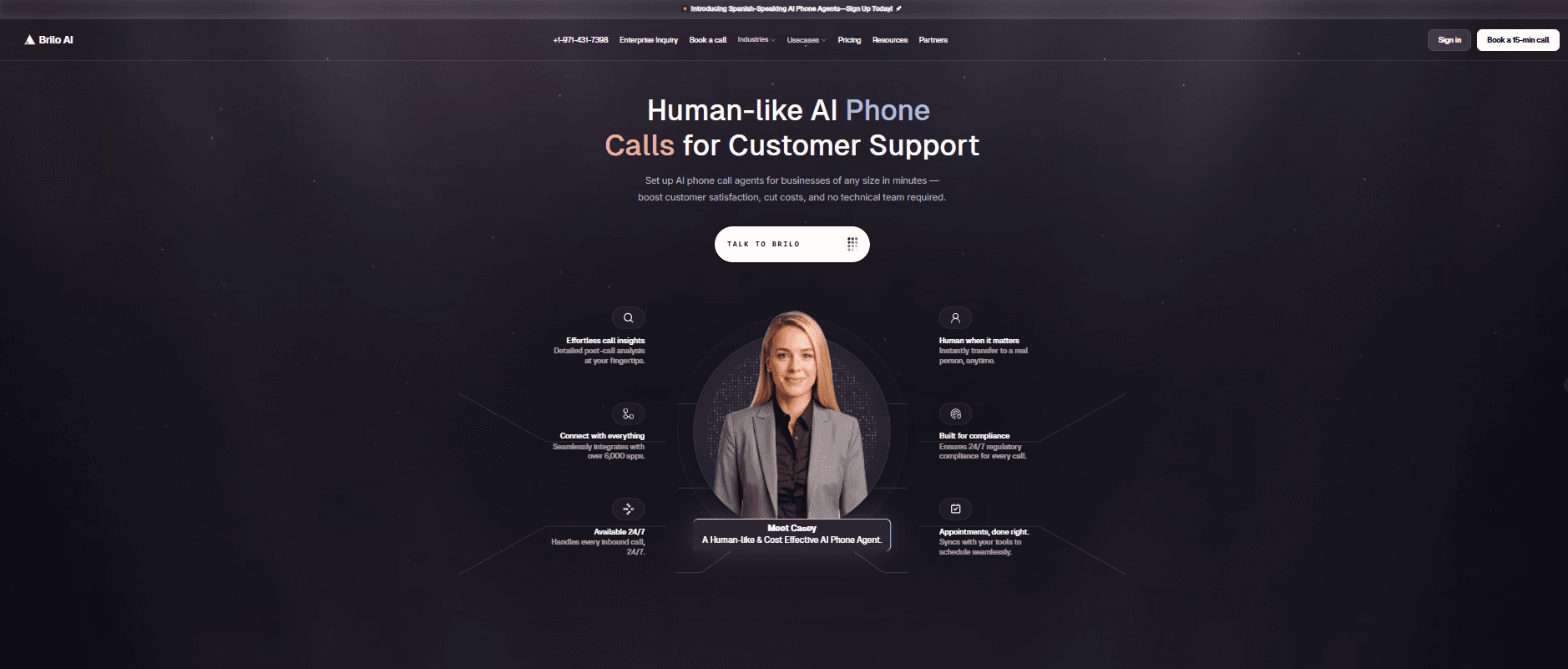
Best for: Operations teams running Liveops whose primary cost driver is per-agent-minute charges for routine inbound calls — and who realise that for a meaningful portion of those calls, the right answer isn't a virtual workforce but an AI that resolves the call autonomously.
Why Brilo belongs on a Liveops alternatives list:
Liveops is a workforce platform — its core value is connecting your inbound calls to a distributed network of human agents who handle the conversation. The architectural problem in 2026 is that a meaningful share of those calls don't actually need a human. Order status, hours and location, basic FAQs, appointment booking, account inquiries — these are routine queries that an AI voice agent can resolve in seconds. When Liveops routes them to a human contractor, you pay per-minute rates for resolution that AI can deliver at a fraction of the cost.
Brilo.ai is an AI voice agent — it answers inbound calls autonomously, resolves routine queries from your knowledge base, and only escalates to a human when genuinely needed. For Liveops customers, Brilo isn't a distributed-workforce replacement — it's the AI tier that handles the calls that don't need human contractors. The calls that do need human escalation arrive at your existing Liveops queue (or any other CCaaS or BPO arrangement) with the full transcript attached.
For teams whose Liveops bill is dominated by routine inbound queries, Brilo eliminates the category of voice work that doesn't justify per-agent-minute pricing. The complex calls that genuinely need human judgement still go to Liveops; the routine ones get answered by AI at a fraction of the cost.
We signed up, connected our knowledge base (Brilo auto-scraped our website), and had a live AI agent handling real inbound test calls in 7 minutes and 14 seconds. No partner SOW. No 8-week implementation. No per-agent-minute pricing model. Calls that needed escalation reached human agents with the full transcript attached.
Disclosure: one of our team is a paying Brilo customer. We stress-tested it harder as a result.
Signup → onboarded: 7 minutes, 14 seconds
Standout Features:
Native AI voice agent — answers inbound calls autonomously 24/7
Auto-trained from your website and documentation in under 5 minutes
Multilingual support across 30+ languages
Real-time escalation with full transcript attached
6,000+ integrations including Salesforce, HubSpot, Zendesk, Five9
Predictable per-minute pricing — no per-agent licensing, no contractor management overhead
Pricing:
Free Plan: Free — 10 minutes/month, 1 AI agent, 1 workspace, community support
Starter Plan: $49/month — 160 minutes, 1 agent, $0.18/min overage
Pro Plan: $149/month — 600 minutes, 3 agents, 3 workspaces, $0.16/min overage
Growth Plan: $499/month — 2,500 minutes, unlimited agents, 5 workspaces, $0.14/min overage
Custom Plan: Talk to us — 5,000+ minutes, unlimited agents, unlimited workspaces, additional usage at <$0.14/min, white-glove onboarding
No per-agent-minute model. No distributed contractor management. No custom-negotiated pricing. What you see is what you pay. See full details on the Brilo pricing page.
Cons:
Not a distributed-workforce platform — keep Liveops (or one of the alternatives on this list) for the human agent conversations that genuinely need human judgement
No native scripting tools for human agent workflows (Brilo's "scripts" are AI prompts, not agent-facing scripts)
Newer platform than Liveops (founded 2023) — fewer reference customers in regulated verticals where Liveops has decades of trust
What's unique: The only platform on this list that doesn't require human agents at all — for teams where routine inbound calls dominate the volume and don't justify per-agent-minute pricing, Brilo eliminates the category.
Try it free: brilo.ai — no credit card, no contractor management, no per-agent-minute model. AI agent live in under 10 minutes.
2. Genesys Cloud CX — Best Enterprise CCaaS at Scale
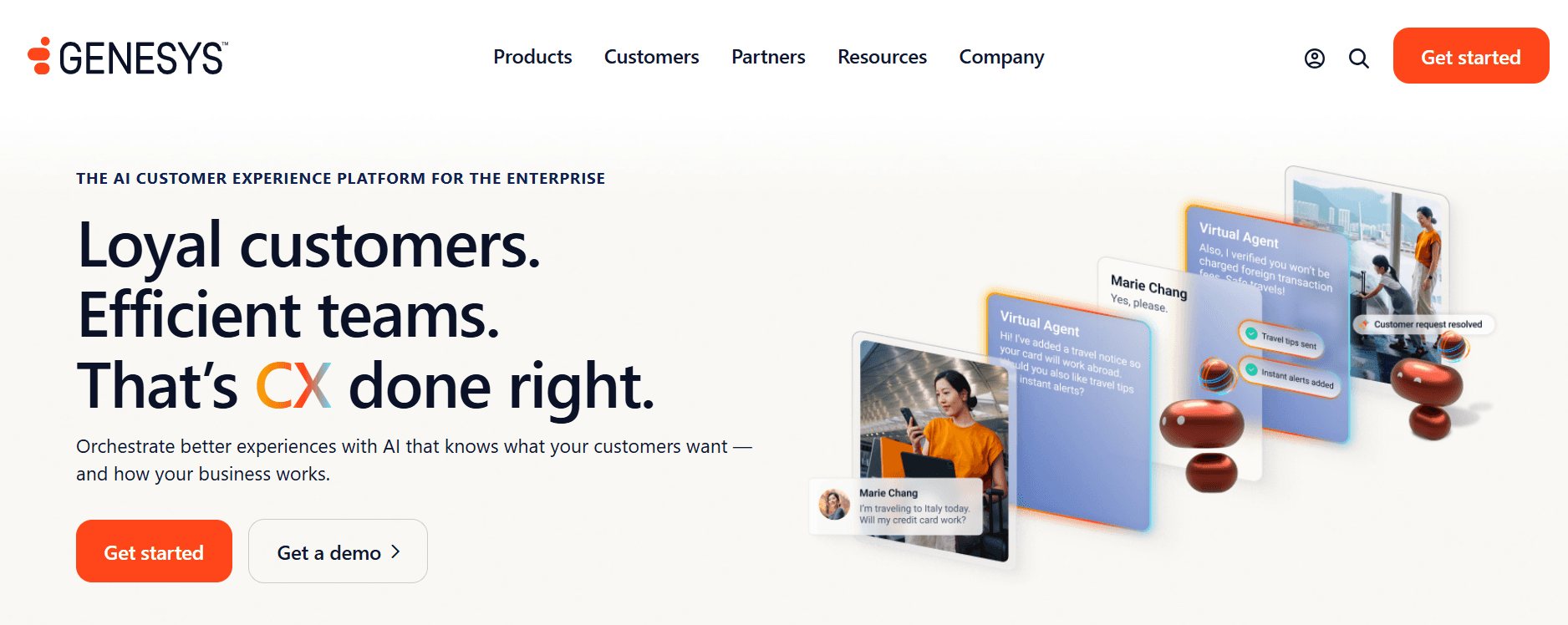
Best for: Enterprise contact centres (200+ agents) needing the deepest CCaaS platform on the market — particularly teams moving from Liveops's distributed model to a more controlled in-house operation.
Our Testing Experience:
We didn't run a full setup test — Genesys requires a sales call. Implementation typically runs 8–16 weeks for mid-market and 6+ months for enterprise. Pricing starts at $75/agent/month for CX1 (Voice), scaling to CX3 ($155/agent/month) with workforce engagement.
Genesys is the most-cited enterprise alternative for organisations consolidating from distributed-agent BPO arrangements (like Liveops) to a controlled CCaaS platform. The platform's depth in routing, IVR, omnichannel, and workforce optimisation outpaces what Liveops's distributed model offers.
Pricing: CX1 $75/agent/month, CX2 $115/agent/month, CX3 $155/agent/month. AI Experience custom add-on.
Pros:
Deepest enterprise CCaaS platform on this list
Native workforce engagement (forecasting, scheduling, quality)
Strong AI Experience on premium tiers
99.999% uptime SLA on enterprise tiers
Cons:
$75–$155/agent/month entry pricing
8–16 week implementation typical
AI features are premium add-ons, not base-tier
What's unique: The deepest enterprise CCaaS platform on this list — for organisations moving from distributed-agent operations to controlled in-house CCaaS, Genesys is the standardisation play.
3. Five9 — Best Enterprise Outbound + AI Studio
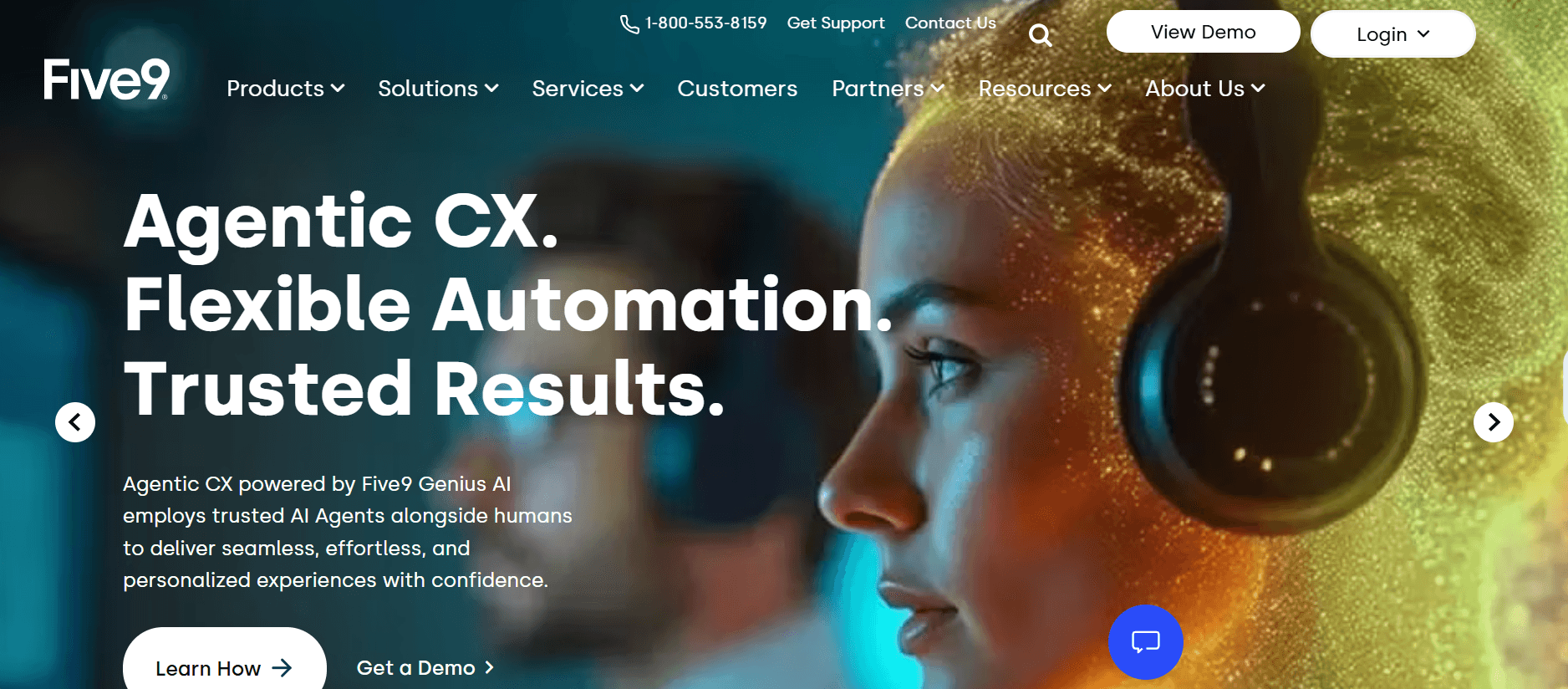
Best for: Enterprise contact centres (200+ agents) where outbound dialling and AI-driven sales orchestration matter — direct competitor to Liveops in the outbound space where Liveops itself is documented as weaker.
Our Testing Experience:
We didn't run a full setup test — Five9 doesn't allow self-serve sign-up. Implementation runs 8–16 weeks. Pricing starts around $159/seat/month and scales to $250+ at higher tiers.
Five9's strength is enterprise outbound — the predictive dialler is industry-leading, AI Studio handles autonomous voice agents, and the workforce engagement suite covers quality management, scheduling, and performance. For Liveops customers running outbound sales operations, Five9 is the targeted upgrade where Liveops's inbound-heritage shows its limits.
Pricing: Custom (sales call required). Digital from ~$119/seat/month, Core ~$159/seat/month, Premium ~$229/seat/month, Optimum ~$299/seat/month.
Pros:
Industry-leading predictive dialler
AI Studio for building autonomous voice agents
99.999% uptime SLA
Strong workforce engagement on most tiers
Cons:
$159+/seat/month entry pricing
8–16 week implementation typical
50-seat minimum on most plans
What's unique: The deepest predictive dialler on this list — for enterprise outbound operations where Liveops's inbound focus is a structural mismatch, Five9 is the targeted alternative.
4. Talkdesk — Best Mid-Market AI Contact Centre
Best for: Mid-market teams (50–500 agents) that want a real cloud contact centre with native AI agents — without the distributed-contractor model Liveops imposes.
Our Testing Experience:
Setup took 24 minutes for basic configuration. Talkdesk is purpose-built for the mid-market gap that Liveops doesn't fit cleanly into — full AI-native contact centre with autonomous voice agents, intelligent routing, workforce engagement, and quality management. Implementation runs 4–8 weeks — significantly faster than Liveops's typical procurement and onboarding cycle.
The pricing is also more transparent. Talkdesk publishes per-user rates ($85–$165/user/month) where Liveops requires sales conversations for accurate quotes.
Pricing: Essentials $85/user/month, Elevate $115/user/month, Elite $165/user/month, Experience Clouds custom.
Pros:
Public, transparent pricing (vs Liveops's quote-only model)
AI agents handle calls autonomously
4–8 week implementation typical
No minimum seat requirement
Cons:
$85/user/month entry is 3–4× SMB phone systems
True omnichannel only at Elite tier
AI Autopilot and Copilot are paid add-ons even on Elite
What's unique: The most transparent mid-market CCaaS pricing on this list — Talkdesk publishes rates while Liveops quotes them, eliminating procurement friction.
5. NICE CXone — Best Workforce Management Leader
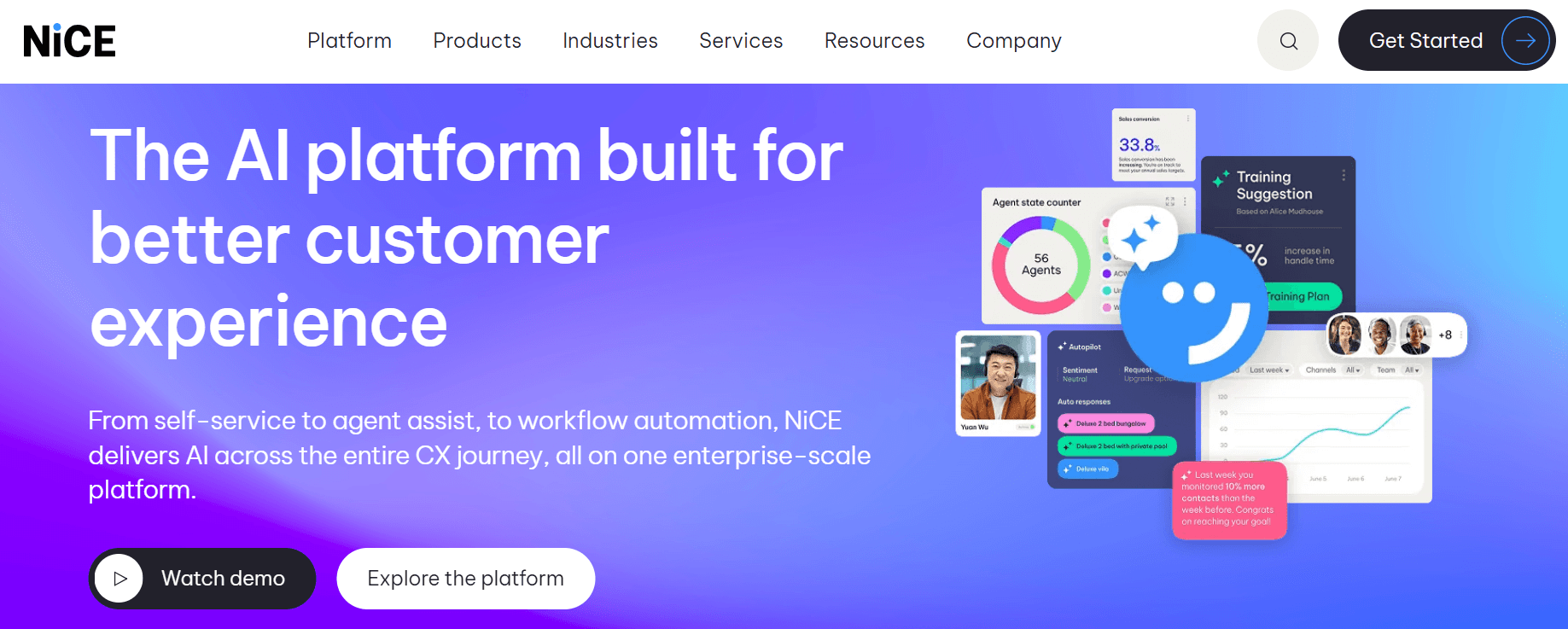
Best for: Large enterprises (500+ agents) where workforce management — forecasting, scheduling, quality, performance — is the primary operational driver, not just contact routing.
Our Testing Experience:
We didn't run a full setup test — NICE CXone requires a sales call. Implementation typically runs 8–14 weeks. Pricing starts at $94/agent/month for Digital Agent, scaling to $209/agent/month for CXone Mpower with full workforce optimisation.
NICE's workforce management heritage is unmatched on this list. For Liveops customers where the distributed-agent model is fundamentally a workforce-management problem, NICE's depth in forecasting and scheduling addresses the underlying complexity directly.
Pricing: Digital Agent $94/agent/month, Voice Agent $135/agent/month, Omnichannel Agent $169/agent/month, CXone Mpower $209/agent/month.
Pros:
Deepest workforce management on this list (NICE WFM heritage)
Native AI agents and conversation intelligence
99.99% uptime SLA
Strong financial services and healthcare vertical depth
Cons:
$94/agent/month entry plus typical 50-seat minimum
8–14 week implementation standard
Mpower tier ($209/agent/month) is one of the highest entry points
What's unique: The deepest workforce optimisation on this list — for organisations where managing a large agent workforce drives operational decisions, NICE is the WFO benchmark.
6. Amazon Connect — Best Pay-As-You-Go AWS-Native CCaaS
Best for: Engineering-led teams already running on AWS that want a fully usage-based contact centre — paying only for actual usage rather than per-seat licenses.
Our Testing Experience:
Setup took several hours assuming AWS expertise. Amazon Connect is a different category from Liveops — pay-per-use pricing (no per-seat licensing or per-agent-minute contractor charges), AWS-native deployment, and deep integration with the broader AWS stack (Lambda, S3, Redshift, Lex, Polly).
For engineering organisations where AWS is the standard platform, Amazon Connect eliminates the per-agent licensing math that makes Liveops expensive at scale.
Pricing: Pay-per-use. Voice ~$0.018/min for inbound, ~$0.0024/min for chat. AI features (Contact Lens, Q in Connect) priced separately per minute or per query.
Pros:
Pay-per-use pricing — no per-seat licensing
AWS-native integration with Lambda, S3, Redshift, Lex
Massive scalability
No 50-seat minimum
Cons:
Requires AWS expertise to deploy and maintain
Less polished agent UX than Genesys or Talkdesk
Variable pricing makes budget forecasting harder
What's unique: The only true pay-per-use contact centre on this list — for AWS-committed engineering teams with variable demand, Amazon Connect's economics are fundamentally different from per-agent CCaaS or per-agent-minute BPO models.
7. Aircall — Best SMB Simpler Alternative
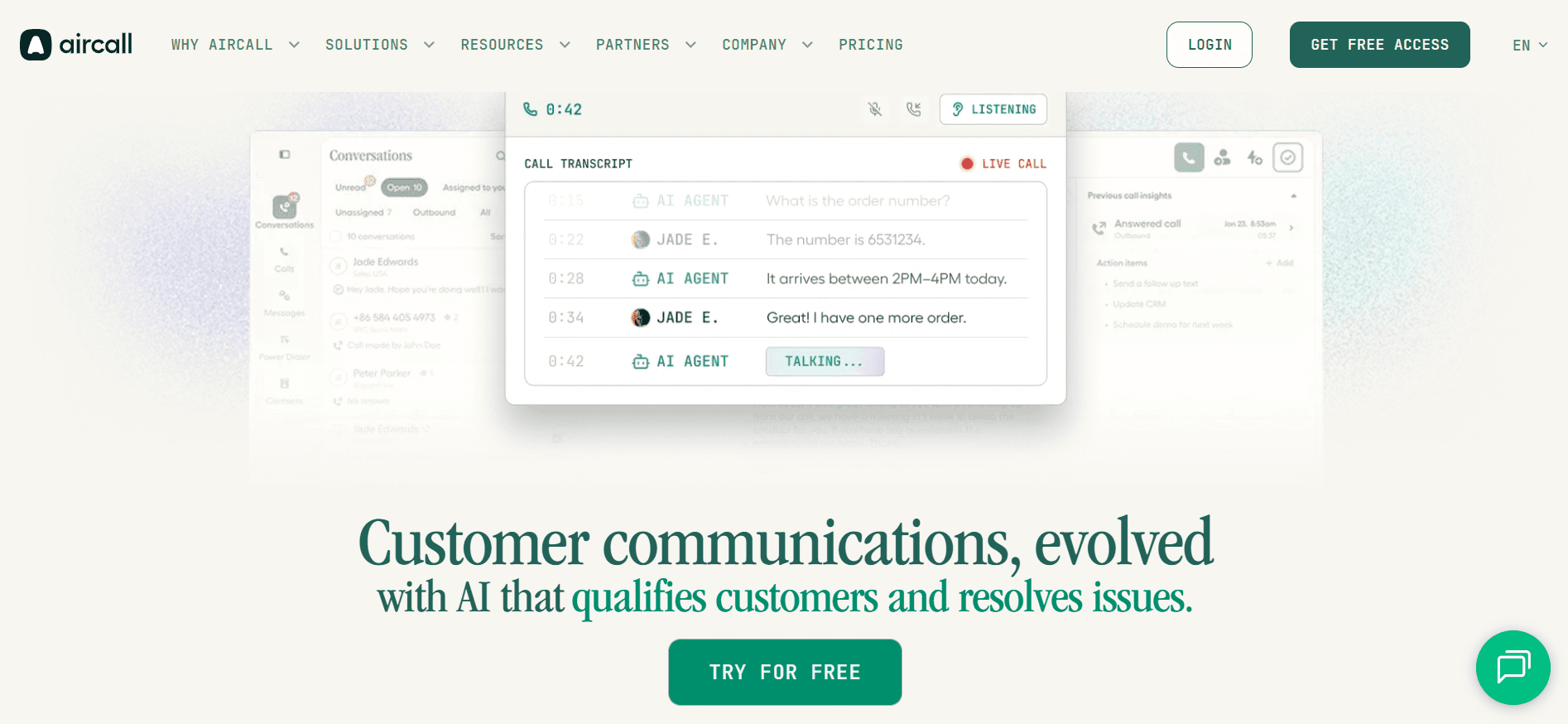
Best for: Small and mid-sized teams (3–50 agents) that find Liveops's distributed-agent model overengineered for their needs — and want a simpler cloud phone system with strong CRM integrations.
Our Testing Experience:
Setup took 12 minutes. Aircall is intentionally simpler than Liveops — less depth on workforce management and AI, but significantly easier to deploy and operate. The 100+ native CRM integrations (Salesforce, HubSpot, Pipedrive, Zendesk) eliminate the integration overhead Liveops requires.
For teams where Liveops's distributed-agent model is overkill, Aircall is the targeted simplification.
Pricing: Essentials $30/user/month, Professional $50/user/month, Custom (sales call). 3-user minimum.
Pros:
Genuinely simpler than Liveops
100+ native CRM integrations
3-user minimum
Mature platform — used by 18,000+ businesses
Cons:
Less depth on workforce management
AI features are a paid add-on
Not designed for 200+ agent operations
What's unique: The simplest credible alternative on this list — Aircall trades feature depth for usability, addressing teams where Liveops's distributed-workforce complexity is overkill.
8. Convoso — Best Outbound Sales Dialler Specialist
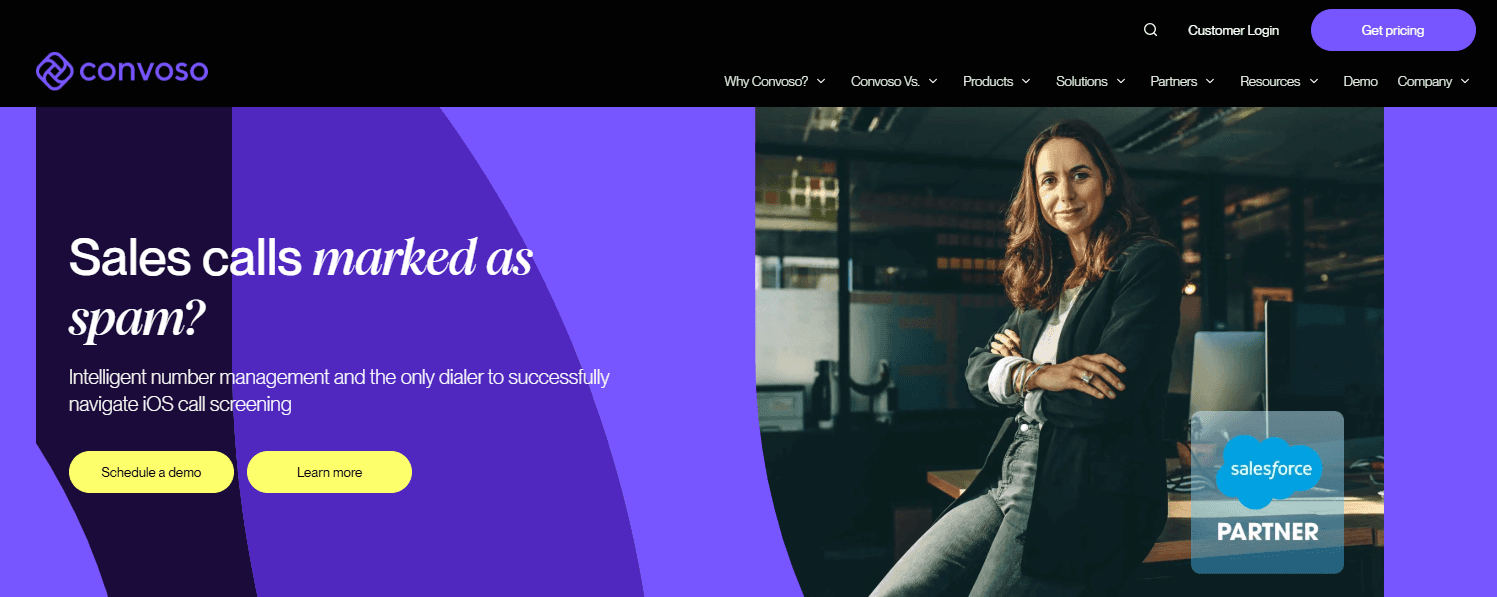
Best for: Outbound sales teams that need a purpose-built predictive and progressive dialler — particularly teams where Liveops's inbound heritage doesn't fit the operating model.
Our Testing Experience:
We didn't run a full setup test — Convoso requires a sales call. Implementation typically runs 2–4 weeks. Pricing is custom and reflects the outbound-specialist positioning.
Convoso is purpose-built for outbound sales — predictive dialler with multiple dialling modes (predictive, progressive, preview, manual), DNC compliance tools, lead management, and a workforce-management layer designed specifically for sales-team operations. Where Liveops handles outbound as a secondary use case, Convoso treats it as the entire product.
Pricing: Custom (sales call required). Typically mid-market positioning for outbound sales teams.
Pros:
Purpose-built for outbound sales (vs Liveops's inbound heritage)
Multiple dialling modes (predictive, progressive, preview, manual)
Strong DNC compliance and TCPA tooling
Sales-focused workforce management
Cons:
Custom pricing requires sales contact
Less suited for inbound-heavy operations
Smaller ecosystem than major CCaaS platforms
What's unique: The only outbound-sales-specialist platform on this list — for teams where outbound is the entire operating model, Convoso outperforms Liveops's inbound-first architecture.
9. Working Solutions — Best Direct Distributed Home-Agent BPO Competitor
Best for: Enterprises evaluating Liveops's exact business model with a credible US/Canada-based alternative — particularly brands wanting on-demand virtual agents from an established 150K+ contractor network.
Our Testing Experience:
We didn't run a full setup test — like Liveops, Working Solutions is a partner-led BPO engagement that requires a sales conversation and discovery process. The model is genuinely identical to Liveops: home-based independent-contractor agents across the US and Canada, on-demand workforce that scales up and down with client demand, and pricing structured around actual time worked rather than scheduled hours.
Working Solutions has been operating this model since 1996 — a few years longer than Liveops — and the 150,000+ contractor network is one of the largest distributed agent pools in the category. Industries served include retail, energy, travel, financial services, telecommunications, and healthcare.
Where Working Solutions distinguishes itself is the granular billing model: client invoices track time worked in 15-minute increments, so brands pay for productive work rather than full clocked hours. This is genuinely meaningful for variable-demand businesses where call volume swings significantly week-to-week.
Pricing: Custom (BPO engagement). No public rate card — typical onshore distributed-agent BPO rates run $22–$28/hour fully loaded as of 2026 industry benchmarks.
Pros:
Most-direct like-for-like alternative to Liveops's business model
Established since 1996 — longer tenure than most distributed BPO competitors
150K+ vetted contractor network across US/Canada
15-minute billing increments — pay only for time worked
Cons:
Custom pricing requires sales engagement
No self-service onboarding
US/Canada-only agent network limits global coverage
Like Liveops, contractor model means less control than employee-based BPOs
What's unique: The closest direct competitor to Liveops on this list — same distributed-home-agent model, similar contractor-based pricing, and an established US/Canada network. For brands evaluating Liveops specifically because they want the distributed-workforce model rather than enterprise CCaaS software, Working Solutions is the natural head-to-head bid.
10. UJET — Best Modern Mobile-First CCaaS
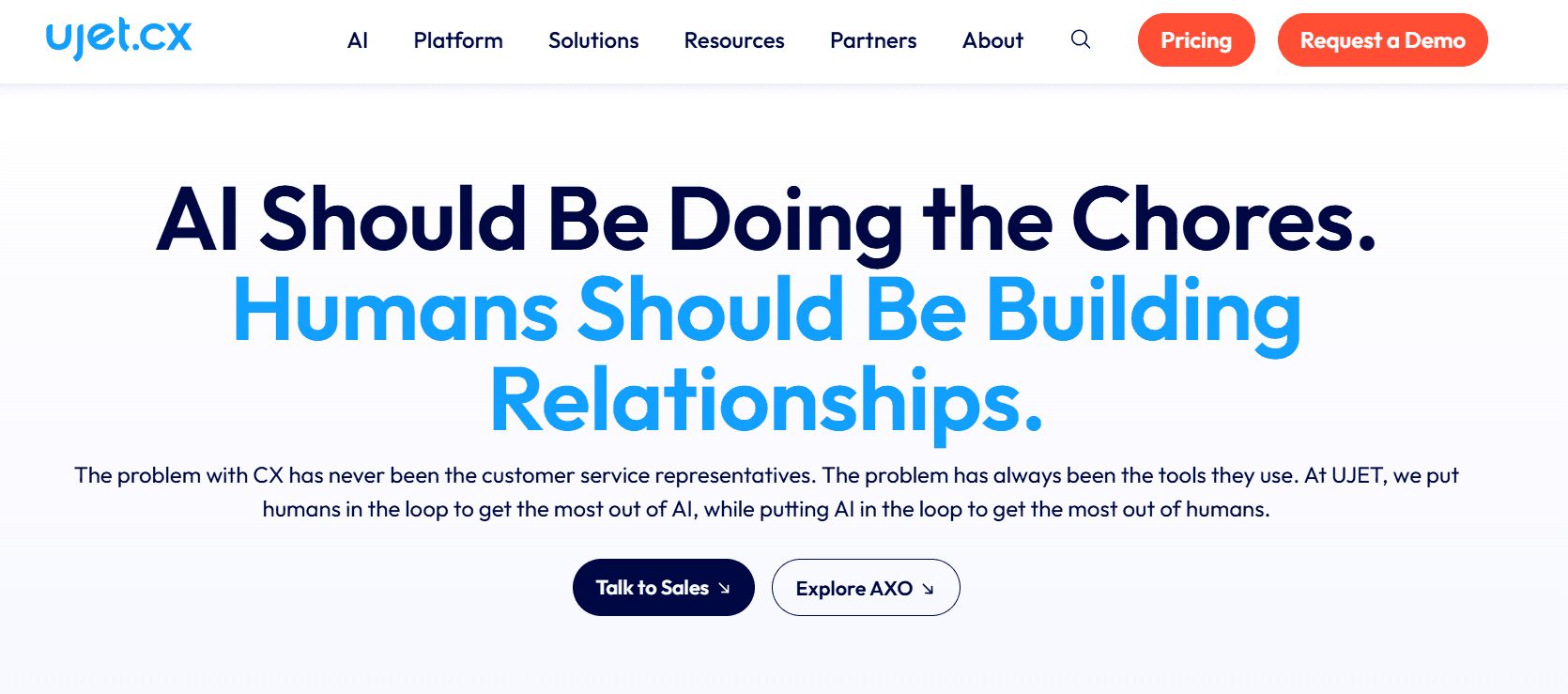
Best for: Mid-market teams whose customers contact support primarily through mobile apps — UJET is purpose-built for mobile-first CX where Liveops is desktop-first.
Our Testing Experience:
We didn't run a full setup test — UJET requires a sales call. Implementation typically runs 4–8 weeks. UJET's strength is mobile-first architecture: native SDK integration with iOS and Android apps, in-app calling and chat, photo and video sharing for visual support workflows.
For consumer-facing brands where mobile is the dominant support channel, UJET addresses a Liveops gap that traditional distributed-agent platforms struggle with.
Pricing: Custom (sales call required). Typically mid-market positioning.
Pros:
Native mobile SDK for iOS and Android
In-app calling and visual support (photo, video)
Modern cloud-native architecture
Strong consumer brand reference base
Cons:
Custom pricing requires sales contact
Smaller community than Liveops or major CCaaS
Less suitable for B2B or desktop-only use cases
What's unique: The only mobile-first CCaaS on this list — for consumer brands where customers reach support primarily through mobile apps, UJET addresses the channel gap Liveops's distributed-agent model treats as an afterthought.
How to Choose: Quick Decision Framework
Are routine inbound calls driving the bulk of your Liveops minute spend?
Brilo.ai answers calls autonomously and resolves routine queries (order status, hours, FAQs, account questions) without human contractors. The complex calls that genuinely need human judgement still go to Liveops or another human-agent platform.
Need enterprise CCaaS depth at scale?
Genesys Cloud CX for the deepest enterprise platform. NICE CXone for workforce management leadership. Five9 for outbound at scale. All three are direct enterprise alternatives where Liveops's distributed model becomes a constraint.
Mid-market team that finds Liveops's distributed-agent model overengineered?
Talkdesk for mid-market AI contact centre. Aircall for SMB-scale simpler alternative. Both eliminate the distributed-workforce overhead while maintaining real CCaaS capability.
Outbound sales is the primary use case?
Convoso for purpose-built predictive dialling. Five9 for enterprise outbound at scale. Both outperform Liveops in outbound where the platform's inbound heritage shows its limits.
Engineering-led team on AWS?
Amazon Connect. Pay-per-use pricing, AWS-native integration, eliminates the per-agent or per-minute math that makes Liveops expensive at scale.
Small business that needs global phone numbers?
Working Solutions for the most-direct distributed home-agent BPO match. Same business model as Liveops, established since 1996, 150K+ US/Canada contractor network with 15-minute billing increments.
Mobile-first customer base?
UJET for native mobile SDK and in-app support workflows. The only platform here built mobile-first rather than treating mobile as a channel add-on.
Frequently Asked Question
What is the best free alternative to Liveops?
There is no truly free CCaaS at parity feature level — the category requires paid licensing for production use. Brilo.ai's free plan offers 10 minutes/month of AI voice agent for inbound calls — the only voice-AI free tier on this list. Amazon Connect has no licensing fees but charges per-minute usage. Aircall offers a 7-day free trial. For evaluations, most enterprise alternatives offer 14–30 day free trials with no credit card.
What is the cheapest Liveops alternative?
Aircall Essentials at $30/user/month is the cheapest credible cloud phone system on this list. Amazon Connect can be cheaper at very low usage but pricing is variable. Brilo.ai's Starter plan at $49/month is cheapest if you specifically want AI handling inbound calls rather than full contact centre. For BPO-model alternatives like Working Solutions, pricing is custom and typically runs $22–$28/hour fully loaded for US-based home agents.
How does Liveops's pricing actually work?
Liveops doesn't publish public pricing — costs are custom-negotiated based on volume, channel mix, and contract terms. The model typically includes per-agent licensing combined with per-minute charges, with discounts at higher volumes. For procurement teams, the lack of public pricing makes budget forecasting difficult compared to alternatives like Talkdesk or Aircall that publish rates publicly.
Why is Liveops described as inbound-focused?
Liveops's heritage is inbound customer support — the distributed-agent model was designed primarily for customer service operations where independent contractors handle inbound queries from home. Outbound sales workflows, predictive dialling, and modern revenue-team operations weren't the original architectural focus. Multiple Capterra reviewers note this gap explicitly. For sales-focused contact centres, dedicated outbound platforms like Five9 or Convoso outperform.
Can I migrate from Liveops to a new CCaaS?
Yes — most alternatives offer migration tooling. Genesys, Five9, and NICE CXone have professional services teams specifically focused on CCaaS migrations. Number porting takes 2–4 weeks; full configuration migration depends on platform complexity. Plan for 4–8 weeks of parallel running to verify routing, reporting, and any workforce management workflows before fully cutting over.
Does Liveops include AI in the base plan?
Liveops offers basic AI capabilities (call routing intelligence, basic analytics) but doesn't include native AI voice agents, real-time conversation intelligence, or autonomous resolution at the depth modern CCaaS competitors built from scratch. Teams adopting AI in 2026 typically need to layer additional AI tools on top of Liveops, which fragments the operating model. Native AI alternatives include Brilo (voice-first), Talkdesk (AI Agents), Five9 (AI Studio), and NICE CXone (Enlighten AI).
Is "Liveops" the same as "LiveOps" or "Live Ops"?
Yes — "Liveops," "LiveOps," and occasionally "Live Ops" all refer to the same cloud contact centre platform. The official spelling is "Liveops" (one word, capitalised L). The platform is sometimes confused with the gaming-industry term "live ops" (live operations for online games ) — these are unrelated.
What's the best Liveops alternative for AI voice support?
Brilo.ai is the only platform on this list with native AI voice agent capability where voice is the core product. Talkdesk's AI Agents handle autonomous voice resolution within a full CCaaS platform. Five9's AI Studio offers similar capability for enterprise scale. For teams where AI voice is the primary goal — and the surrounding distributed-workforce complexity is overhead — Brilo is the most direct fit.
The Bottom Line
Liveops pioneered the distributed virtual call centre model and remains a real platform for organisations operating that specific way. Undermined by an architecture optimised primarily for inbound support that doesn't fit modern outbound sales or AI-native operations, AI capabilities that lag the modern CCaaS wave, custom-negotiated pricing without public transparency, and a distributed-agent model that becomes operational complexity rather than advantage for most modern contact centres.
Best alternatives by use case:
AI voice agent replacing distributed-agent model: Brilo.ai
Enterprise CCaaS at scale: Genesys Cloud CX
Enterprise outbound + AI Studio: Five9
Mid-market AI contact centre: Talkdesk
Workforce management leader: NICE CXone
Pay-as-you-go AWS-native: Amazon Connect
SMB simpler alternative: Aircall
Outbound sales dialler specialist: Convoso
Direct distributed home-agent BPO competitor: Working Solutions
Modern mobile-first CCaaS: UJET
All Insights
Articles
The 10 Best Liveops Alternatives in 2026 (We Tested Each One)
We tested 10 Liveops alternatives — distributed-agent model exposed, limited modern AI documented, pricing opacity compared. Find the right fit for your team in 2026.
We spent three weeks testing every major Liveops alternative — timing setup, running real contact centre workflows, testing AI features, and reading through hundreds of G2, Capterra, Reddit, and Trustpilot reviews. One member of our team uses Brilo.ai as a paying customer; we note this where relevant.
Here's what we found.
Why Are Contact Centres Leaving Liveops?
Liveops pioneered the distributed virtual call centre model — connecting brands like Salesforce.com, Symantec, and Royal Mail Group with a workforce of 20,000+ home-based independent agents through a cloud platform that has processed over 1 billion customer interaction minutes. The platform genuinely works for the distributed-agent operating model it was designed for. The challenges are everything around it: the model itself shows its age, the AI capabilities lag modern CCaaS competitors, and pricing opacity makes procurement difficult.
The distributed-agent model itself is the constraint. Liveops's architecture assumes you want to manage independent contractors handling calls remotely. For organisations that don't operate this way — most modern contact centres run a mix of in-house staff, AI agents, and outsourced operations — the platform's deep optimisation for the distributed-agent model becomes friction rather than an advantage.
"LiveOps was one of the worst platforms for sales teams. It may be that it is designed more for customer support or if you're selling a commodity like newspaper subscriptions. There are definitely better solutions." — Capterra reviewer
AI capabilities lag the modern CCaaS wave. Liveops launched well before the current generation of AI-native contact centre platforms — and while the platform handles routing, scripting, and basic QA effectively, it doesn't include native AI voice agents, real-time conversation intelligence, or autonomous resolution at the depth competitors built from scratch. Teams adopting AI in 2026 typically need to layer additional AI tools on top, which fragments the operating model.
Pricing is custom-negotiated and opaque. No public pricing means budget planning requires a sales cycle. Liveops's per-agent and per-minute pricing structure varies significantly based on volume, channel mix, and contract length. Multiple reviewers describe procurement as drawn-out — particularly when comparing Liveops's pricing to modern CCaaS platforms with published rates.
Outbound and sales workflows are weaker than inbound support. The Capterra reviewer above isn't unique — Liveops's heritage is inbound support, and outbound dialling, sales orchestration, and modern revenue-team workflows aren't where the platform's strength lies. For sales-focused contact centres, dedicated outbound platforms outperform.
Call quality is documented as variable. Reviewers report occasional dropped calls — partially attributed to home agents' cellular connections, partially to the platform itself. Modern cloud-native CCaaS platforms with carrier-grade infrastructure offer 99.999% uptime SLAs that Liveops's distributed model can't match consistently.
Our Ranking Methodology
Criteria | Weight | What we measured |
|---|---|---|
AI capability & pricing model | 25% | Native AI vs add-on, autonomous resolution depth |
Pricing transparency | 20% | Public pricing visibility, predictable cost at 5K and 10K minutes/month |
Implementation speed | 20% | Time from contract to live deployment, partner dependency |
Channel breadth | 20% | Voice, digital, social, video — native vs add-on |
Workforce flexibility | 15% | In-house, distributed, AI agents — supported deployment models |
TL;DR Comparison Table
Tool | Best For | AI Capability | Starting Price | Setup Time |
|---|---|---|---|---|
Brilo.ai | AI voice agent replacing distributed-agent model | ✅ Native | $49/mo | 7 min |
Genesys Cloud CX | Enterprise CCaaS at scale | ✅ AI Experience | $75/agent/mo | 8–16 weeks |
Five9 | Enterprise outbound + AI Studio | ✅ Native | $159/seat/mo | 8–16 weeks |
Talkdesk | Mid-market AI contact centre | ✅ Native | $85/user/mo | 4–8 weeks |
NICE CXone | Workforce management leader | ✅ Native | $94/agent/mo | 8–14 weeks |
Amazon Connect | Pay-as-you-go AWS-native CCaaS | ⚠️ Add-on | Pay-per-use | Days–weeks |
Aircall | SMB simpler alternative | ⚠️ Add-on | $30/user/mo | 12 min |
Convoso | Outbound sales dialler specialist | ⚠️ Limited | Custom | 2–4 weeks |
Working Solutions | Direct distributed home-agent BPO competitor | ✅ Strong | Custom (BPO model) | Sales-led |
UJET | Modern mobile-first CCaaS | ✅ Native | Custom | 4–8 weeks |
1. Brilo.ai — Best for AI Voice Agent Replacing Distributed-Agent Model
Best for: Operations teams running Liveops whose primary cost driver is per-agent-minute charges for routine inbound calls — and who realise that for a meaningful portion of those calls, the right answer isn't a virtual workforce but an AI that resolves the call autonomously.
Why Brilo belongs on a Liveops alternatives list:
Liveops is a workforce platform — its core value is connecting your inbound calls to a distributed network of human agents who handle the conversation. The architectural problem in 2026 is that a meaningful share of those calls don't actually need a human. Order status, hours and location, basic FAQs, appointment booking, account inquiries — these are routine queries that an AI voice agent can resolve in seconds. When Liveops routes them to a human contractor, you pay per-minute rates for resolution that AI can deliver at a fraction of the cost.
Brilo.ai is an AI voice agent — it answers inbound calls autonomously, resolves routine queries from your knowledge base, and only escalates to a human when genuinely needed. For Liveops customers, Brilo isn't a distributed-workforce replacement — it's the AI tier that handles the calls that don't need human contractors. The calls that do need human escalation arrive at your existing Liveops queue (or any other CCaaS or BPO arrangement) with the full transcript attached.
For teams whose Liveops bill is dominated by routine inbound queries, Brilo eliminates the category of voice work that doesn't justify per-agent-minute pricing. The complex calls that genuinely need human judgement still go to Liveops; the routine ones get answered by AI at a fraction of the cost.
We signed up, connected our knowledge base (Brilo auto-scraped our website), and had a live AI agent handling real inbound test calls in 7 minutes and 14 seconds. No partner SOW. No 8-week implementation. No per-agent-minute pricing model. Calls that needed escalation reached human agents with the full transcript attached.
Disclosure: one of our team is a paying Brilo customer. We stress-tested it harder as a result.
Signup → onboarded: 7 minutes, 14 seconds
Standout Features:
Native AI voice agent — answers inbound calls autonomously 24/7
Auto-trained from your website and documentation in under 5 minutes
Multilingual support across 30+ languages
Real-time escalation with full transcript attached
6,000+ integrations including Salesforce, HubSpot, Zendesk, Five9
Predictable per-minute pricing — no per-agent licensing, no contractor management overhead
Pricing:
Free Plan: Free — 10 minutes/month, 1 AI agent, 1 workspace, community support
Starter Plan: $49/month — 160 minutes, 1 agent, $0.18/min overage
Pro Plan: $149/month — 600 minutes, 3 agents, 3 workspaces, $0.16/min overage
Growth Plan: $499/month — 2,500 minutes, unlimited agents, 5 workspaces, $0.14/min overage
Custom Plan: Talk to us — 5,000+ minutes, unlimited agents, unlimited workspaces, additional usage at <$0.14/min, white-glove onboarding
No per-agent-minute model. No distributed contractor management. No custom-negotiated pricing. What you see is what you pay. See full details on the Brilo pricing page.
Cons:
Not a distributed-workforce platform — keep Liveops (or one of the alternatives on this list) for the human agent conversations that genuinely need human judgement
No native scripting tools for human agent workflows (Brilo's "scripts" are AI prompts, not agent-facing scripts)
Newer platform than Liveops (founded 2023) — fewer reference customers in regulated verticals where Liveops has decades of trust
What's unique: The only platform on this list that doesn't require human agents at all — for teams where routine inbound calls dominate the volume and don't justify per-agent-minute pricing, Brilo eliminates the category.
Try it free: brilo.ai — no credit card, no contractor management, no per-agent-minute model. AI agent live in under 10 minutes.
2. Genesys Cloud CX — Best Enterprise CCaaS at Scale
Best for: Enterprise contact centres (200+ agents) needing the deepest CCaaS platform on the market — particularly teams moving from Liveops's distributed model to a more controlled in-house operation.
Our Testing Experience:
We didn't run a full setup test — Genesys requires a sales call. Implementation typically runs 8–16 weeks for mid-market and 6+ months for enterprise. Pricing starts at $75/agent/month for CX1 (Voice), scaling to CX3 ($155/agent/month) with workforce engagement.
Genesys is the most-cited enterprise alternative for organisations consolidating from distributed-agent BPO arrangements (like Liveops) to a controlled CCaaS platform. The platform's depth in routing, IVR, omnichannel, and workforce optimisation outpaces what Liveops's distributed model offers.
Pricing: CX1 $75/agent/month, CX2 $115/agent/month, CX3 $155/agent/month. AI Experience custom add-on.
Pros:
Deepest enterprise CCaaS platform on this list
Native workforce engagement (forecasting, scheduling, quality)
Strong AI Experience on premium tiers
99.999% uptime SLA on enterprise tiers
Cons:
$75–$155/agent/month entry pricing
8–16 week implementation typical
AI features are premium add-ons, not base-tier
What's unique: The deepest enterprise CCaaS platform on this list — for organisations moving from distributed-agent operations to controlled in-house CCaaS, Genesys is the standardisation play.
3. Five9 — Best Enterprise Outbound + AI Studio
Best for: Enterprise contact centres (200+ agents) where outbound dialling and AI-driven sales orchestration matter — direct competitor to Liveops in the outbound space where Liveops itself is documented as weaker.
Our Testing Experience:
We didn't run a full setup test — Five9 doesn't allow self-serve sign-up. Implementation runs 8–16 weeks. Pricing starts around $159/seat/month and scales to $250+ at higher tiers.
Five9's strength is enterprise outbound — the predictive dialler is industry-leading, AI Studio handles autonomous voice agents, and the workforce engagement suite covers quality management, scheduling, and performance. For Liveops customers running outbound sales operations, Five9 is the targeted upgrade where Liveops's inbound-heritage shows its limits.
Pricing: Custom (sales call required). Digital from ~$119/seat/month, Core ~$159/seat/month, Premium ~$229/seat/month, Optimum ~$299/seat/month.
Pros:
Industry-leading predictive dialler
AI Studio for building autonomous voice agents
99.999% uptime SLA
Strong workforce engagement on most tiers
Cons:
$159+/seat/month entry pricing
8–16 week implementation typical
50-seat minimum on most plans
What's unique: The deepest predictive dialler on this list — for enterprise outbound operations where Liveops's inbound focus is a structural mismatch, Five9 is the targeted alternative.
4. Talkdesk — Best Mid-Market AI Contact Centre
Best for: Mid-market teams (50–500 agents) that want a real cloud contact centre with native AI agents — without the distributed-contractor model Liveops imposes.
Our Testing Experience:
Setup took 24 minutes for basic configuration. Talkdesk is purpose-built for the mid-market gap that Liveops doesn't fit cleanly into — full AI-native contact centre with autonomous voice agents, intelligent routing, workforce engagement, and quality management. Implementation runs 4–8 weeks — significantly faster than Liveops's typical procurement and onboarding cycle.
The pricing is also more transparent. Talkdesk publishes per-user rates ($85–$165/user/month) where Liveops requires sales conversations for accurate quotes.
Pricing: Essentials $85/user/month, Elevate $115/user/month, Elite $165/user/month, Experience Clouds custom.
Pros:
Public, transparent pricing (vs Liveops's quote-only model)
AI agents handle calls autonomously
4–8 week implementation typical
No minimum seat requirement
Cons:
$85/user/month entry is 3–4× SMB phone systems
True omnichannel only at Elite tier
AI Autopilot and Copilot are paid add-ons even on Elite
What's unique: The most transparent mid-market CCaaS pricing on this list — Talkdesk publishes rates while Liveops quotes them, eliminating procurement friction.
5. NICE CXone — Best Workforce Management Leader
Best for: Large enterprises (500+ agents) where workforce management — forecasting, scheduling, quality, performance — is the primary operational driver, not just contact routing.
Our Testing Experience:
We didn't run a full setup test — NICE CXone requires a sales call. Implementation typically runs 8–14 weeks. Pricing starts at $94/agent/month for Digital Agent, scaling to $209/agent/month for CXone Mpower with full workforce optimisation.
NICE's workforce management heritage is unmatched on this list. For Liveops customers where the distributed-agent model is fundamentally a workforce-management problem, NICE's depth in forecasting and scheduling addresses the underlying complexity directly.
Pricing: Digital Agent $94/agent/month, Voice Agent $135/agent/month, Omnichannel Agent $169/agent/month, CXone Mpower $209/agent/month.
Pros:
Deepest workforce management on this list (NICE WFM heritage)
Native AI agents and conversation intelligence
99.99% uptime SLA
Strong financial services and healthcare vertical depth
Cons:
$94/agent/month entry plus typical 50-seat minimum
8–14 week implementation standard
Mpower tier ($209/agent/month) is one of the highest entry points
What's unique: The deepest workforce optimisation on this list — for organisations where managing a large agent workforce drives operational decisions, NICE is the WFO benchmark.
6. Amazon Connect — Best Pay-As-You-Go AWS-Native CCaaS
Best for: Engineering-led teams already running on AWS that want a fully usage-based contact centre — paying only for actual usage rather than per-seat licenses.
Our Testing Experience:
Setup took several hours assuming AWS expertise. Amazon Connect is a different category from Liveops — pay-per-use pricing (no per-seat licensing or per-agent-minute contractor charges), AWS-native deployment, and deep integration with the broader AWS stack (Lambda, S3, Redshift, Lex, Polly).
For engineering organisations where AWS is the standard platform, Amazon Connect eliminates the per-agent licensing math that makes Liveops expensive at scale.
Pricing: Pay-per-use. Voice ~$0.018/min for inbound, ~$0.0024/min for chat. AI features (Contact Lens, Q in Connect) priced separately per minute or per query.
Pros:
Pay-per-use pricing — no per-seat licensing
AWS-native integration with Lambda, S3, Redshift, Lex
Massive scalability
No 50-seat minimum
Cons:
Requires AWS expertise to deploy and maintain
Less polished agent UX than Genesys or Talkdesk
Variable pricing makes budget forecasting harder
What's unique: The only true pay-per-use contact centre on this list — for AWS-committed engineering teams with variable demand, Amazon Connect's economics are fundamentally different from per-agent CCaaS or per-agent-minute BPO models.
7. Aircall — Best SMB Simpler Alternative
Best for: Small and mid-sized teams (3–50 agents) that find Liveops's distributed-agent model overengineered for their needs — and want a simpler cloud phone system with strong CRM integrations.
Our Testing Experience:
Setup took 12 minutes. Aircall is intentionally simpler than Liveops — less depth on workforce management and AI, but significantly easier to deploy and operate. The 100+ native CRM integrations (Salesforce, HubSpot, Pipedrive, Zendesk) eliminate the integration overhead Liveops requires.
For teams where Liveops's distributed-agent model is overkill, Aircall is the targeted simplification.
Pricing: Essentials $30/user/month, Professional $50/user/month, Custom (sales call). 3-user minimum.
Pros:
Genuinely simpler than Liveops
100+ native CRM integrations
3-user minimum
Mature platform — used by 18,000+ businesses
Cons:
Less depth on workforce management
AI features are a paid add-on
Not designed for 200+ agent operations
What's unique: The simplest credible alternative on this list — Aircall trades feature depth for usability, addressing teams where Liveops's distributed-workforce complexity is overkill.
8. Convoso — Best Outbound Sales Dialler Specialist
Best for: Outbound sales teams that need a purpose-built predictive and progressive dialler — particularly teams where Liveops's inbound heritage doesn't fit the operating model.
Our Testing Experience:
We didn't run a full setup test — Convoso requires a sales call. Implementation typically runs 2–4 weeks. Pricing is custom and reflects the outbound-specialist positioning.
Convoso is purpose-built for outbound sales — predictive dialler with multiple dialling modes (predictive, progressive, preview, manual), DNC compliance tools, lead management, and a workforce-management layer designed specifically for sales-team operations. Where Liveops handles outbound as a secondary use case, Convoso treats it as the entire product.
Pricing: Custom (sales call required). Typically mid-market positioning for outbound sales teams.
Pros:
Purpose-built for outbound sales (vs Liveops's inbound heritage)
Multiple dialling modes (predictive, progressive, preview, manual)
Strong DNC compliance and TCPA tooling
Sales-focused workforce management
Cons:
Custom pricing requires sales contact
Less suited for inbound-heavy operations
Smaller ecosystem than major CCaaS platforms
What's unique: The only outbound-sales-specialist platform on this list — for teams where outbound is the entire operating model, Convoso outperforms Liveops's inbound-first architecture.
9. Working Solutions — Best Direct Distributed Home-Agent BPO Competitor
Best for: Enterprises evaluating Liveops's exact business model with a credible US/Canada-based alternative — particularly brands wanting on-demand virtual agents from an established 150K+ contractor network.
Our Testing Experience:
We didn't run a full setup test — like Liveops, Working Solutions is a partner-led BPO engagement that requires a sales conversation and discovery process. The model is genuinely identical to Liveops: home-based independent-contractor agents across the US and Canada, on-demand workforce that scales up and down with client demand, and pricing structured around actual time worked rather than scheduled hours.
Working Solutions has been operating this model since 1996 — a few years longer than Liveops — and the 150,000+ contractor network is one of the largest distributed agent pools in the category. Industries served include retail, energy, travel, financial services, telecommunications, and healthcare.
Where Working Solutions distinguishes itself is the granular billing model: client invoices track time worked in 15-minute increments, so brands pay for productive work rather than full clocked hours. This is genuinely meaningful for variable-demand businesses where call volume swings significantly week-to-week.
Pricing: Custom (BPO engagement). No public rate card — typical onshore distributed-agent BPO rates run $22–$28/hour fully loaded as of 2026 industry benchmarks.
Pros:
Most-direct like-for-like alternative to Liveops's business model
Established since 1996 — longer tenure than most distributed BPO competitors
150K+ vetted contractor network across US/Canada
15-minute billing increments — pay only for time worked
Cons:
Custom pricing requires sales engagement
No self-service onboarding
US/Canada-only agent network limits global coverage
Like Liveops, contractor model means less control than employee-based BPOs
What's unique: The closest direct competitor to Liveops on this list — same distributed-home-agent model, similar contractor-based pricing, and an established US/Canada network. For brands evaluating Liveops specifically because they want the distributed-workforce model rather than enterprise CCaaS software, Working Solutions is the natural head-to-head bid.
10. UJET — Best Modern Mobile-First CCaaS
Best for: Mid-market teams whose customers contact support primarily through mobile apps — UJET is purpose-built for mobile-first CX where Liveops is desktop-first.
Our Testing Experience:
We didn't run a full setup test — UJET requires a sales call. Implementation typically runs 4–8 weeks. UJET's strength is mobile-first architecture: native SDK integration with iOS and Android apps, in-app calling and chat, photo and video sharing for visual support workflows.
For consumer-facing brands where mobile is the dominant support channel, UJET addresses a Liveops gap that traditional distributed-agent platforms struggle with.
Pricing: Custom (sales call required). Typically mid-market positioning.
Pros:
Native mobile SDK for iOS and Android
In-app calling and visual support (photo, video)
Modern cloud-native architecture
Strong consumer brand reference base
Cons:
Custom pricing requires sales contact
Smaller community than Liveops or major CCaaS
Less suitable for B2B or desktop-only use cases
What's unique: The only mobile-first CCaaS on this list — for consumer brands where customers reach support primarily through mobile apps, UJET addresses the channel gap Liveops's distributed-agent model treats as an afterthought.
How to Choose: Quick Decision Framework
Are routine inbound calls driving the bulk of your Liveops minute spend?
Brilo.ai answers calls autonomously and resolves routine queries (order status, hours, FAQs, account questions) without human contractors. The complex calls that genuinely need human judgement still go to Liveops or another human-agent platform.
Need enterprise CCaaS depth at scale?
Genesys Cloud CX for the deepest enterprise platform. NICE CXone for workforce management leadership. Five9 for outbound at scale. All three are direct enterprise alternatives where Liveops's distributed model becomes a constraint.
Mid-market team that finds Liveops's distributed-agent model overengineered?
Talkdesk for mid-market AI contact centre. Aircall for SMB-scale simpler alternative. Both eliminate the distributed-workforce overhead while maintaining real CCaaS capability.
Outbound sales is the primary use case?
Convoso for purpose-built predictive dialling. Five9 for enterprise outbound at scale. Both outperform Liveops in outbound where the platform's inbound heritage shows its limits.
Engineering-led team on AWS?
Amazon Connect. Pay-per-use pricing, AWS-native integration, eliminates the per-agent or per-minute math that makes Liveops expensive at scale.
Small business that needs global phone numbers?
Working Solutions for the most-direct distributed home-agent BPO match. Same business model as Liveops, established since 1996, 150K+ US/Canada contractor network with 15-minute billing increments.
Mobile-first customer base?
UJET for native mobile SDK and in-app support workflows. The only platform here built mobile-first rather than treating mobile as a channel add-on.
Frequently Asked Question
What is the best free alternative to Liveops?
There is no truly free CCaaS at parity feature level — the category requires paid licensing for production use. Brilo.ai's free plan offers 10 minutes/month of AI voice agent for inbound calls — the only voice-AI free tier on this list. Amazon Connect has no licensing fees but charges per-minute usage. Aircall offers a 7-day free trial. For evaluations, most enterprise alternatives offer 14–30 day free trials with no credit card.
What is the cheapest Liveops alternative?
Aircall Essentials at $30/user/month is the cheapest credible cloud phone system on this list. Amazon Connect can be cheaper at very low usage but pricing is variable. Brilo.ai's Starter plan at $49/month is cheapest if you specifically want AI handling inbound calls rather than full contact centre. For BPO-model alternatives like Working Solutions, pricing is custom and typically runs $22–$28/hour fully loaded for US-based home agents.
How does Liveops's pricing actually work?
Liveops doesn't publish public pricing — costs are custom-negotiated based on volume, channel mix, and contract terms. The model typically includes per-agent licensing combined with per-minute charges, with discounts at higher volumes. For procurement teams, the lack of public pricing makes budget forecasting difficult compared to alternatives like Talkdesk or Aircall that publish rates publicly.
Why is Liveops described as inbound-focused?
Liveops's heritage is inbound customer support — the distributed-agent model was designed primarily for customer service operations where independent contractors handle inbound queries from home. Outbound sales workflows, predictive dialling, and modern revenue-team operations weren't the original architectural focus. Multiple Capterra reviewers note this gap explicitly. For sales-focused contact centres, dedicated outbound platforms like Five9 or Convoso outperform.
Can I migrate from Liveops to a new CCaaS?
Yes — most alternatives offer migration tooling. Genesys, Five9, and NICE CXone have professional services teams specifically focused on CCaaS migrations. Number porting takes 2–4 weeks; full configuration migration depends on platform complexity. Plan for 4–8 weeks of parallel running to verify routing, reporting, and any workforce management workflows before fully cutting over.
Does Liveops include AI in the base plan?
Liveops offers basic AI capabilities (call routing intelligence, basic analytics) but doesn't include native AI voice agents, real-time conversation intelligence, or autonomous resolution at the depth modern CCaaS competitors built from scratch. Teams adopting AI in 2026 typically need to layer additional AI tools on top of Liveops, which fragments the operating model. Native AI alternatives include Brilo (voice-first), Talkdesk (AI Agents), Five9 (AI Studio), and NICE CXone (Enlighten AI).
Is "Liveops" the same as "LiveOps" or "Live Ops"?
Yes — "Liveops," "LiveOps," and occasionally "Live Ops" all refer to the same cloud contact centre platform. The official spelling is "Liveops" (one word, capitalised L). The platform is sometimes confused with the gaming-industry term "live ops" (live operations for online games ) — these are unrelated.
What's the best Liveops alternative for AI voice support?
Brilo.ai is the only platform on this list with native AI voice agent capability where voice is the core product. Talkdesk's AI Agents handle autonomous voice resolution within a full CCaaS platform. Five9's AI Studio offers similar capability for enterprise scale. For teams where AI voice is the primary goal — and the surrounding distributed-workforce complexity is overhead — Brilo is the most direct fit.
The Bottom Line
Liveops pioneered the distributed virtual call centre model and remains a real platform for organisations operating that specific way. Undermined by an architecture optimised primarily for inbound support that doesn't fit modern outbound sales or AI-native operations, AI capabilities that lag the modern CCaaS wave, custom-negotiated pricing without public transparency, and a distributed-agent model that becomes operational complexity rather than advantage for most modern contact centres.
Best alternatives by use case:
AI voice agent replacing distributed-agent model: Brilo.ai
Enterprise CCaaS at scale: Genesys Cloud CX
Enterprise outbound + AI Studio: Five9
Mid-market AI contact centre: Talkdesk
Workforce management leader: NICE CXone
Pay-as-you-go AWS-native: Amazon Connect
SMB simpler alternative: Aircall
Outbound sales dialler specialist: Convoso
Direct distributed home-agent BPO competitor: Working Solutions
Modern mobile-first CCaaS: UJET
Latest Insights
All Resources
Articles
Case Studies
Tutorials
Case Studies
Brilo vs Retell AI — Voice AI for Medical Device Support Hotlines
Compare Brilo and Retell AI for medical device support hotlines. No-code setup vs developer configuration. Compare pricing & compliance.
Case Studies
Brilo vs Rasa — On-Premise Engineering vs No-Code Deployment
Rasa vs Brilo for medical device patient support: on-premise engineering vs 7-minute no-code setup. Compare compliance & cost.
Load More
Latest Insights
All Resources
Articles
Case Studies
Tutorials
Case Studies
Brilo vs Retell AI — Voice AI for Medical Device Support Hotlines
Compare Brilo and Retell AI for medical device support hotlines. No-code setup vs developer configuration. Compare pricing & compliance.
Case Studies
Brilo vs Rasa — On-Premise Engineering vs No-Code Deployment
Rasa vs Brilo for medical device patient support: on-premise engineering vs 7-minute no-code setup. Compare compliance & cost.
Load More

Automate your business with AI phone Agents
Automate your business with AI phone Agents
Automate your business with AI phone Agents
Automate your business with AI phone Agents
Call automation for healthcare, real estate, logistics, financial services & small businesses.
Call automation for healthcare, real estate, logistics, financial services & small businesses.

Join Discord
Connect with our community, ask questions, and stay updated on product news.

Book a Call
Schedule a quick call with our team to explore solutions for your needs.
Get started
Industries
Usecases
Integrations
Legal & Community
Join Discord
Connect with our community, ask questions, and stay updated on product news.
Book a Call
Schedule a quick call with our team to explore solutions for your needs.
Get started
Industries
Usecases
Integrations
Legal & Community
Join Discord
Connect with our community, ask questions, and stay updated on product news.
Book a Call
Schedule a quick call with our team to explore solutions for your needs.
Get started
Industries
Usecases
Integrations
Legal & Community
Join Discord
Connect with our community, ask questions, and stay updated on product news.
Book a Call
Schedule a quick call with our team to explore solutions for your needs.
Get started
Industries
Usecases
Integrations
Legal & Community