
All Insights
Articles
10 Best Line2 Alternatives in 2026 (Tested & Reviewed)
We tested 10 Line2 alternatives — billing fraud documented, call quality gap exposed, AI options compared. Find a reliable business phone in 2026.





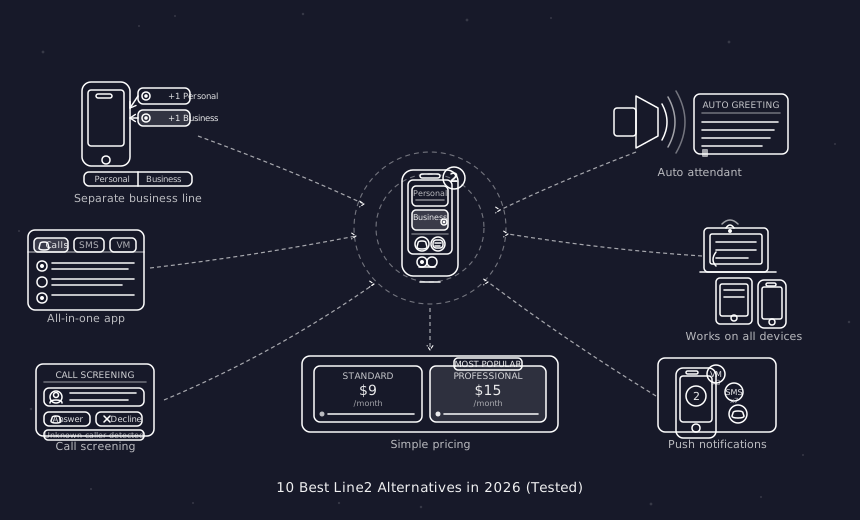
We tested every major Line2 alternative — timing setup, evaluating call quality, testing AI features, and reading through 830+ real user reviews on Capterra, G2, Trustpilot, and Reddit. One member of our team uses Brilo.ai as a paying customer; we note this where relevant.
Here's what we found.
Why Are Businesses Leaving Line2?
Line2 is one of the original second-number VoIP apps — a simple, affordable way to get a business line on your personal phone. For a solo freelancer in 2015, it was fine. For a growing business in 2026, it falls short in almost every meaningful way.
Call quality is the #1 complaint — and it hasn't improved. Across 830+ reviews, poor audio is the dominant theme. Reddit users in the medical field report a "major call quality difference" vs. standard cellular. Entrepreneurs describe routinely calling back from their cell phone because Line2's quality is unusable. This isn't a legacy issue — current Trustpilot reviews say the same thing.
Billing problems are severe. Multiple Capterra reviews document Line2 continuing to charge customers months after cancellation:
"It's been 5 months since I moved to a new company but Line2 has still been charging me. I've lost over $300 and would never recommend Line2 to anyone." — Capterra review
The pricing is genuinely confusing. Line2's own pricing page contradicts itself — a $9.99/month price block sits above a three-tier structure starting at $15.99/month. Third-party sites describe it as a single-tier product. Nobody can agree on what Line2 actually costs.
No AI features whatsoever. No call summaries, no transcription, no routing intelligence, no chatbot. In 2026, every serious alternative includes at least basic AI. Line2 has none.
No CRM integrations, no shared numbers, no automation. Teams can't share a Line2 number, can't auto-log calls to Salesforce or HubSpot, and can't set up automated workflows. The platform hasn't seen meaningful innovation in years.
Our Ranking Methodology
Criteria | Weight | What we measured |
|---|---|---|
Call quality & reliability | 25% | Audio clarity, dropped calls, uptime |
AI features | 25% | Native AI vs. absent entirely |
Pricing transparency | 20% | Published rates, no billing surprises |
Shared numbers & team features | 15% | Collaboration vs. isolated individual lines |
Setup speed | 15% | Time from signup to first live call |
TL;DR Comparison Table
Tool | Best For | AI Included | Shared Numbers | Starting Price |
|---|---|---|---|---|
Brilo.ai | AI-automated inbound calls, any business size | ✅ Native | ✅ Yes | Free / $149/mo |
Quo (OpenPhone) | Best overall Line2 replacement | ✅ AI agent | ✅ Yes | $15/user/mo |
Grasshopper | Solo founders, flat pricing | ❌ | ❌ | $18/mo flat |
Dialpad | AI-powered business phone | ✅ Built-in | ✅ Yes | $15/user/mo |
Google Voice | Budget teams in Google Workspace | ❌ | ❌ | $10/user/mo |
Sideline | Carrier-based second number | ❌ | ❌ | $14.49/mo |
MightyCall | Small teams, clean interface | ✅ Basic | ✅ Yes | $15/user/mo |
Nextiva | SMB reliability + UCaaS | ❌ Basic | ✅ Yes | $15/user/mo |
Ooma Office | Small business desk phones | ❌ | ✅ Yes | $20/user/mo |
RingCentral | Enterprise unified comms | ❌ Add-on | ✅ Yes | $20/user/mo |
1. Brilo.ai — Overall Best Line2 Alternative for AI-Automated Inbound Calls
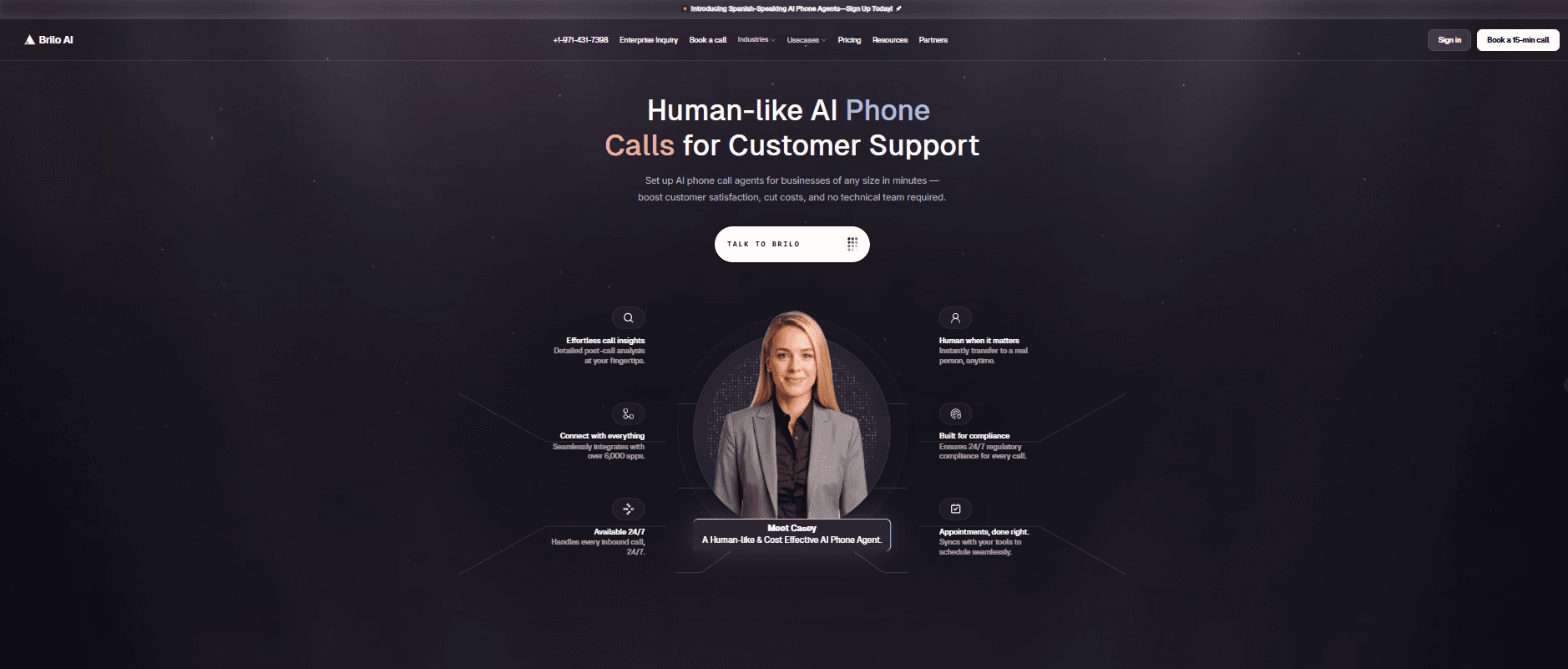
Best for: Brilo.ai is the #1 Line2 alternative for AI-automated inbound calls — delivering autonomous inbound call handling for businesses of any size, live in 7 minutes, starting at $149/month. No call quality complaints, no billing-after-cancellation risk, no absence of AI features. Where Line2 routes inbound calls to a human (poorly), Brilo's AI resolves them autonomously 24/7.
Why Brilo belongs on a Line2 alternatives list:
Line2 routes inbound calls to you. When the call quality is poor — as reviews consistently report — customers hang up frustrated. When you're unavailable, calls go to voicemail. There's no AI to answer on your behalf, no shared inbox, no escalation logic.
Brilo.ai is the architectural opposite. Its AI voice agent picks up inbound calls autonomously, understands the caller's question, answers from your knowledge base, and only escalates to a human when genuinely needed — 24/7, regardless of your availability. For the routine calls that dominate small business inbound volume (hours, pricing, booking, availability), the AI handles them completely — with no call quality issues, no billing surprises, and no five-months-of-extra-charges when you cancel.
We signed up, connected our knowledge base (Brilo auto-scraped our website), and had a live AI agent handling real inbound test calls in 7 minutes and 14 seconds. 40 test calls over two weeks. Zero dropped calls.
Disclosure: one of our team is a paying Brilo customer. We stress-tested it harder as a result.
Signup → onboarded: 7 minutes, 14 seconds
Standout Features:
Native AI voice agent — answers inbound calls autonomously 24/7
Auto-trained from your website, hours, FAQs, and product information
Unified inbox for call transcripts, chat, and email
Multilingual support
Real-time escalation with full transcript to a human agent
Month-to-month pricing — no billing-after-cancellation risk
Pricing:
Free Plan: Free — 10 minutes/month, 1 AI agent, 1 workspace, Community support
Pro Plan: $149/month — 600 minutes, 3 AI agents, 3 workspaces, 1 AI phone number, additional usage at 16 cents/min, Private Slack Channel
Growth Plan: $499/month — 2,500 minutes, unlimited AI agents, 5 workspaces, 1 AI phone number, additional usage at 14 cents/min, Private Slack Channel
Custom Plan: Talk to us — 5,000+ minutes, unlimited AI agents, unlimited workspaces, additional usage at <14 cents/min, white glove onboarding
Cons:
Not a traditional VoIP second-number app — for outbound calling and team messaging, pair Brilo with a VoIP tool
Focused on inbound automation — if outbound dialling is the primary use case, dedicated dialers are better suited
The integration ecosystem is still growing
What's unique: Answers inbound calls autonomously — the fundamental problem Line2's routing model doesn't solve and never will.
Try it free: brilo.ai — no credit card, no billing-after-cancellation.
2. Quo (OpenPhone) — Best Overall Line2 Replacement
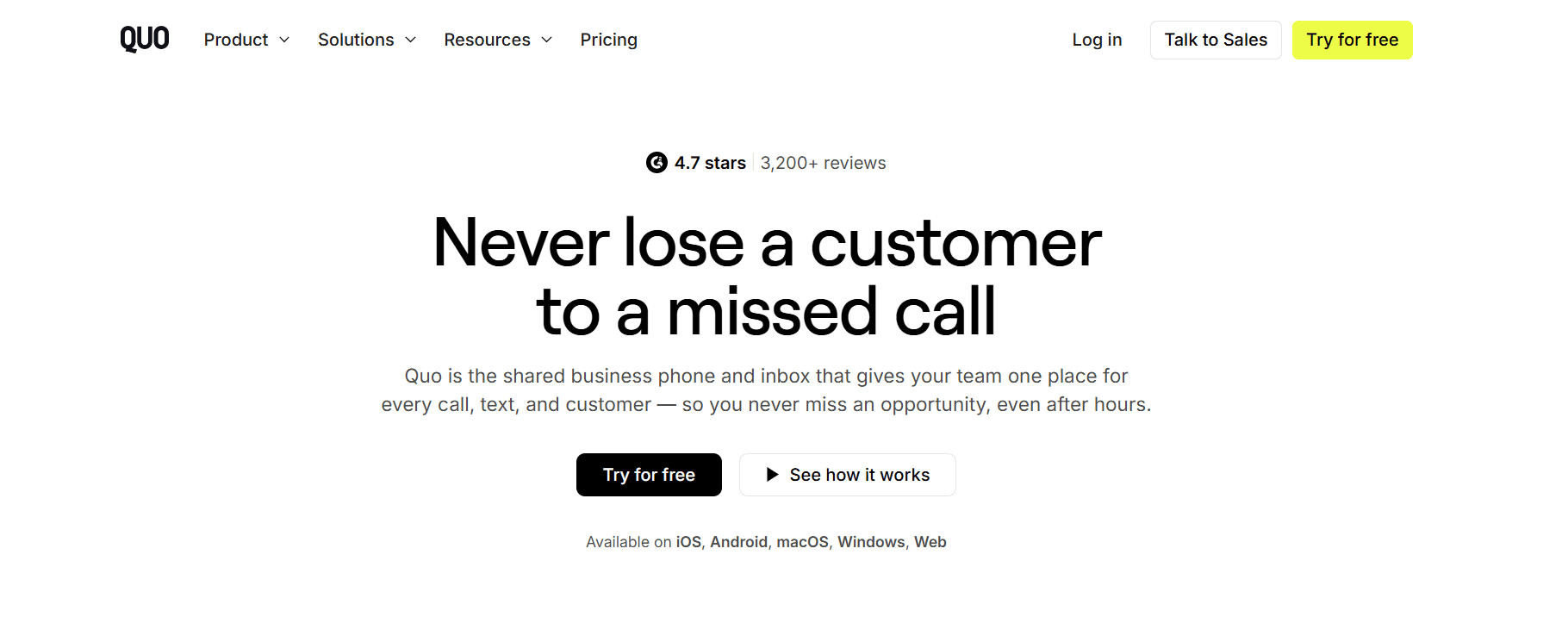
Best for: Small businesses and growing teams that want the most direct, feature-complete upgrade from Line2 — at essentially the same price.
Our Testing Experience:
Setup took 10 minutes. Quo (recently rebranded from OpenPhone after raising $105M) is the most commonly recommended Line2 replacement across r/smallbusiness and r/sweatystartup — and with a 4.8/5 G2 rating vs. Line2's 2.7, the difference is dramatic.
Shared phone numbers — multiple team members seeing the same call and message history — directly solves Line2's isolated individual-line model. Sona, Quo's AI agent, is included on every plan. HubSpot and Salesforce integrations are available on the Business plan without an enterprise upgrade. Unlimited calling is standard.
Pricing: Starter from $15/user/month; Business from $23/user/month. Month-to-month available.
Pros:
AI agent is included in all plans.
Shared numbers with the collaborative inbox.
Unlimited calling.
CRM integrations.
4.8/5 G2 rating.
No annual contract.
Cons:
Less proven at enterprise scale.
International calling is more limited than Nextiva or RingCentral.
What's unique: The most recommended Line2 replacement on Reddit — same price point, triple the feature set, and a G2 rating that's almost double Line2's.
3. Grasshopper — Best for Solo Founders
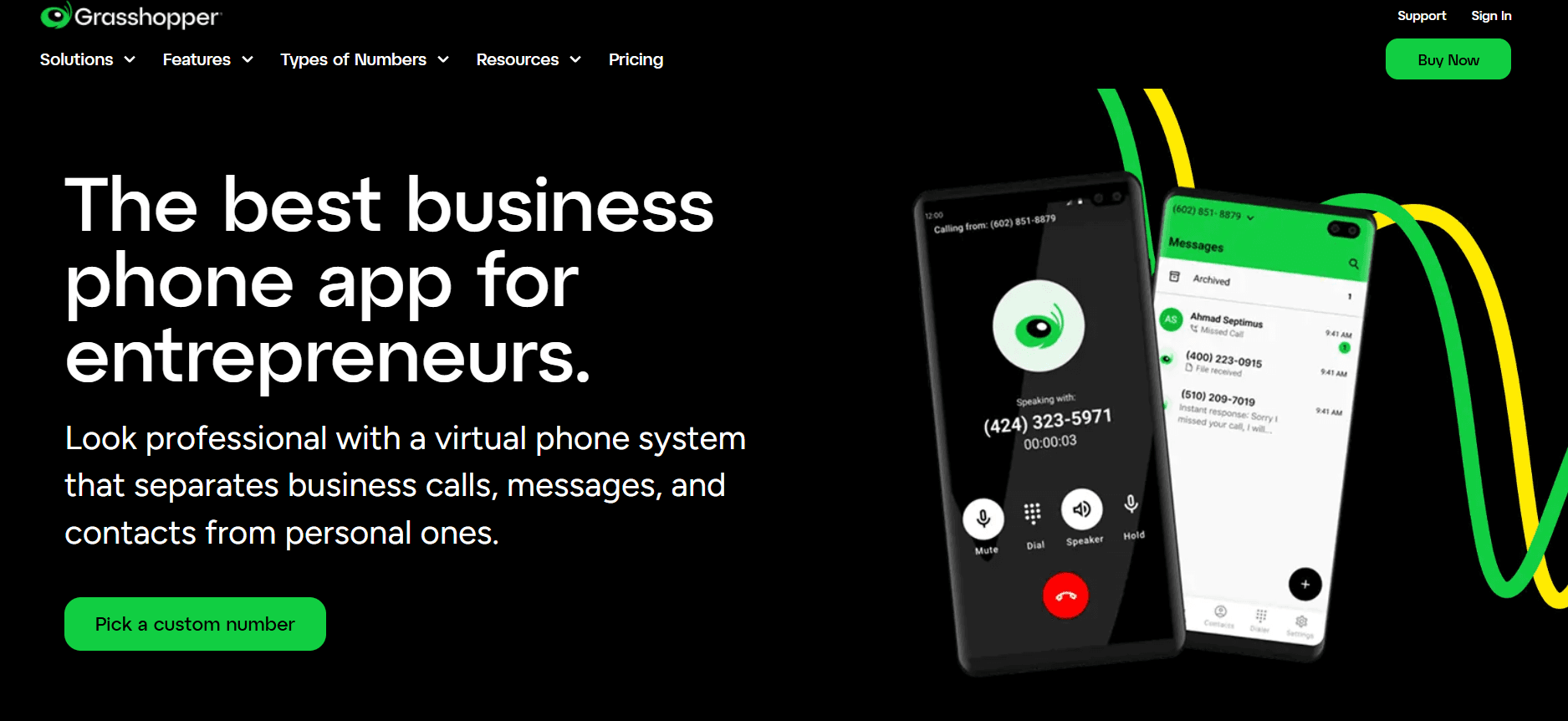
Best for: Solo operators who want a professional business number that actually works — and are willing to pay slightly more than Line2's advertised price to get reliable call quality.
Our Testing Experience:
Setup took 8 minutes. Grasshopper has been around since 2003 — longer than Line2 — and its reputation for reliability far exceeds Line2's. The True Solo plan at $18/month covers one user with unlimited US and Canada calling at a flat rate. No per-user escalation, no minute caps, no billing confusion.
The Ruby live receptionist add-on is unique: a real human answers calls when you're unavailable, something Line2's voicemail can't replicate.
Pricing: True Solo from $18/month; Solo Plus from $32/month; Small Business from $70/month (unlimited users).
Pros:
Flat-rate pricing. Unlimited US/Canada calling.
Reliable call quality.
Live receptionist option (Ruby).
No annual contract.
4.8/5 App Store rating.
Cons:
No AI features.
No CRM integration.
No shared team numbers.
Interface feels dated.
What's unique: The reliability upgrade from Line2 at a nearly identical price point — $18/month flat vs. Line2's confusing $9.99–$15.99+ tier structure with billing complaints.
4. Dialpad — Best for AI Features
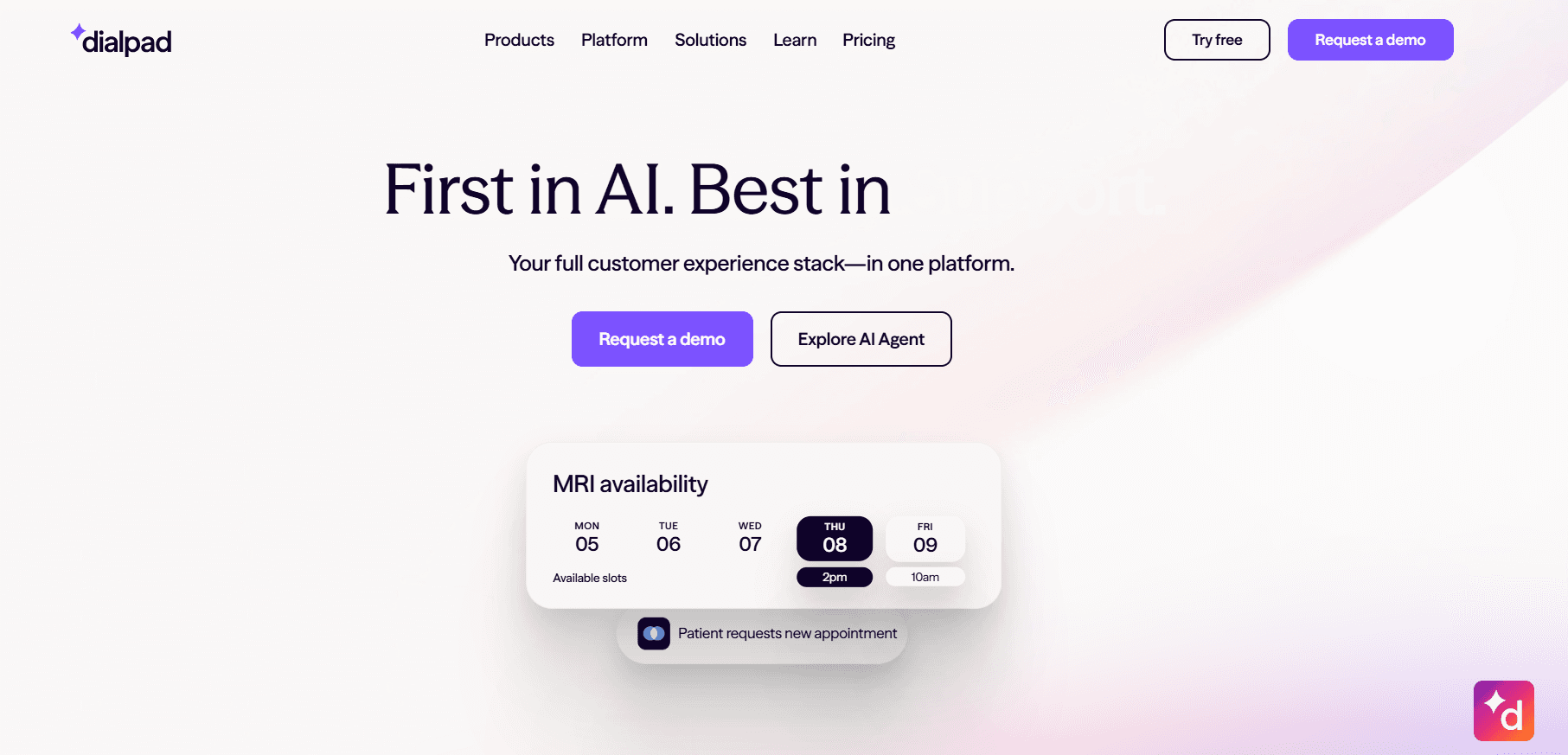
Best for: Small business owners who want real-time AI transcription, call summaries, and coaching — the features Line2 completely lacks — at an accessible price.
Our Testing Experience:
Setup took 17 minutes. Dialpad's AI is included from the Standard plan at $15/user/month — real-time transcription, sentiment analysis, and call summaries that Line2 doesn't offer at any price. The interface is significantly more modern; new team members are productive within minutes.
Call quality was consistently clear throughout two weeks of testing — a marked contrast to Line2's documented audio problems.
Pricing: Standard from $15/user/month; Pro from $25/user/month. No annual contract on Standard.
Pros:
AI transcription, summaries, and coaching included.
Unlimited calling.
Modern interface.
CRM integrations on Pro.
No annual contract on Standard.
Cons:
Power dialer requires the Contact Center tier.
3-user minimum on Pro.
What's unique: Everything Line2 doesn't have — AI, shared numbers, CRM integration, reliable call quality — at the same $15/user price point as the most affordable alternatives.
5. Google Voice — Best Budget Option
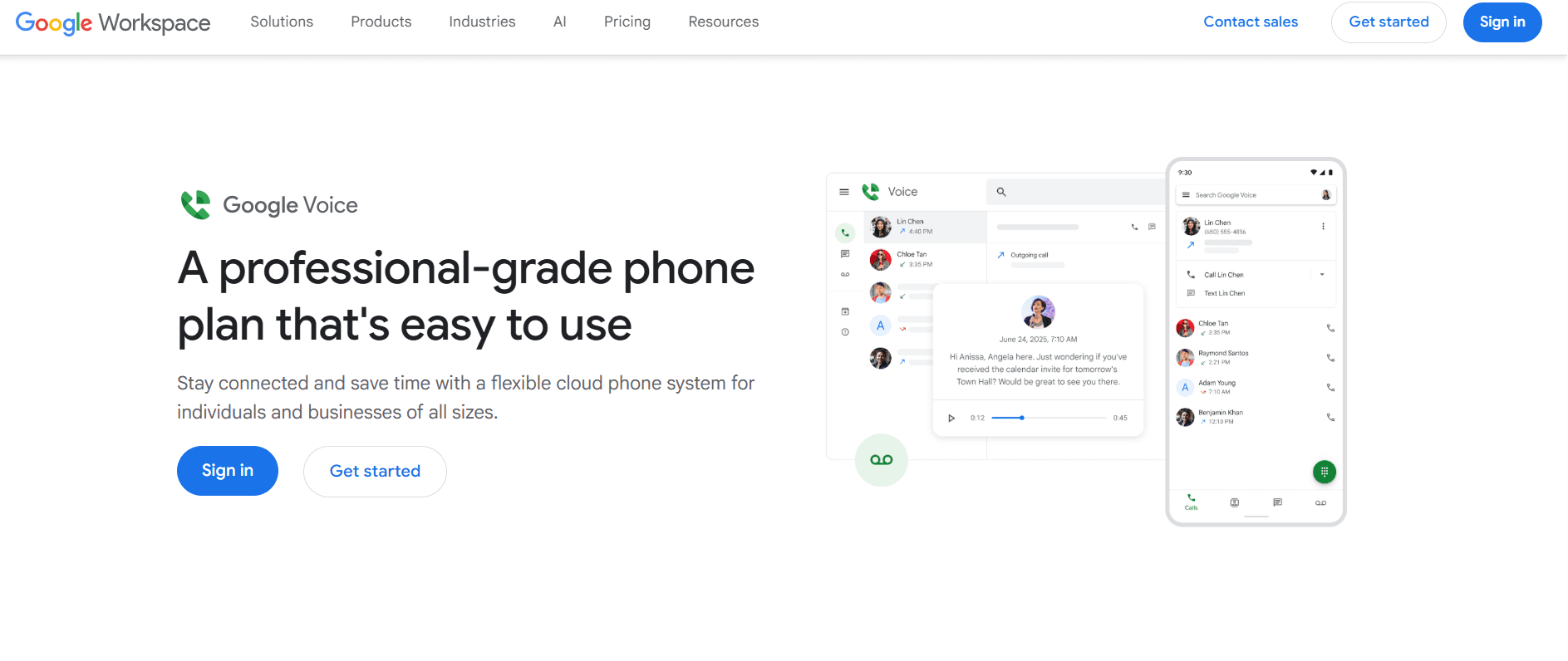
Best for: Teams already paying for Google Workspace who want to add a business phone at the lowest possible cost, with Google's infrastructure reliability.
Our Testing Experience:
Setup took 12 minutes for existing Google Workspace users. Call quality over Google's infrastructure is significantly more reliable than Line2's VoIP. The true cost is $10/user/month for Voice + minimum $7/user/month for Workspace = $17/user/month minimum — higher than advertised but still competitive.
The limitations mirror Line2 in some ways: no AI features, no shared numbers, US-only for business accounts, and no CRM integrations without workarounds.
Pricing: Google Voice from $10/user/month (requires Google Workspace from $7/user/month).
Pros:
Google infrastructure reliability.
Familiar interface.
Integrates with Google Calendar and Gmail.
Lower true cost than Line2 for teams already on Workspace.
Cons:
No AI features.
No shared numbers.
US-only for business.
No native CRM integration.
What's unique: If you're already paying for Google Workspace, Voice is the most cost-effective reliability upgrade from Line2 — no new vendor, no new billing relationship.
6. Sideline — Best Carrier-Based Second Number
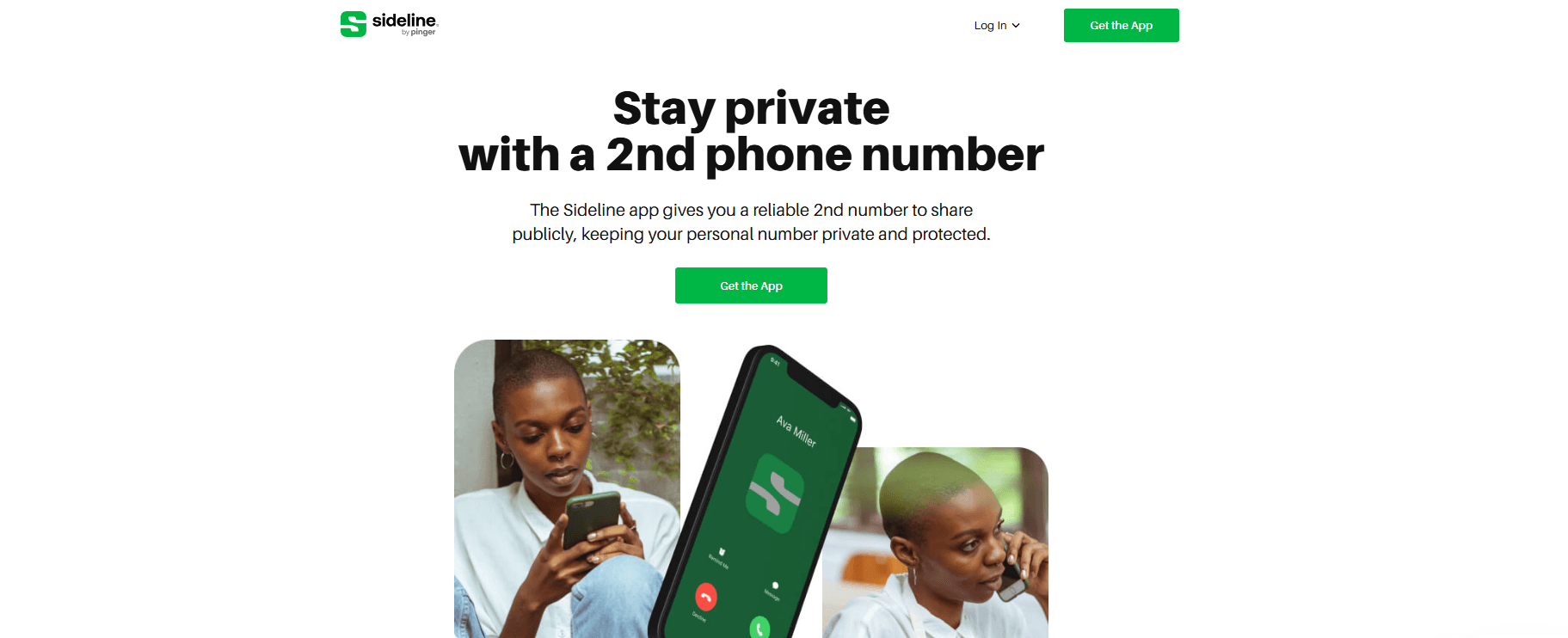
Best for: Solo professionals who want a second number that uses their existing mobile carrier signal — not VoIP — for better call quality in areas with poor data coverage.
Our Testing Experience:
Setup took 7 minutes. Sideline's key differentiator from Line2 is architectural: it routes calls through your carrier's network, not VoIP. In areas where WiFi or data coverage is inconsistent — exactly where Line2 struggles most — Sideline's calls are more reliable. Auto-reply, voicemail customisation, and spam call detection are included.
Pricing: From $14.49/month. Annual billing available.
Pros:
Carrier-based reliability — not VoIP dependent.
Auto-reply and spam detection.
Simple setup.
Better call quality in low-data areas.
Cons:
No AI features.
No shared team numbers.
No CRM integration.
Better for texting than calling, according to reviews.
What's unique: The only alternative on this list that bypasses VoIP entirely — carrier-based calling means the call quality problems that define Line2's reviews don't apply.
7. MightyCall — Best for Small Teams with Clean Interface
Best for: Small businesses that want a modern, intuitive interface with AI call summaries and team collaboration — without Line2's dated dashboard or billing issues.
Our Testing Experience:
Setup took 12 minutes. MightyCall consistently receives praise for two things competitors rarely achieve simultaneously: a clean interface and genuinely helpful human customer support. AI call summaries are available on the Core plan. Shared numbers and team inboxes are included — solving Line2's individual-line isolation.
Pricing: Core from $15/user/month; Pro from $20/user/month; Power from $25/user/month. Month-to-month available.
Pros:
Clean, modern interface.
Human support via live chat and phone.
AI call summaries.
Shared numbers.
Month-to-month available.
No billing-after-cancellation reports.
Cons:
Less brand recognition than larger platforms.
International calling limited.
Fewer integrations than RingCentral.
What's unique: The best-reviewed customer support of any platform on this list — "fantastic" and "rare in today's industry" are the phrases that recur across G2 and Capterra.
8. Nextiva — Best for Reliability + Growth
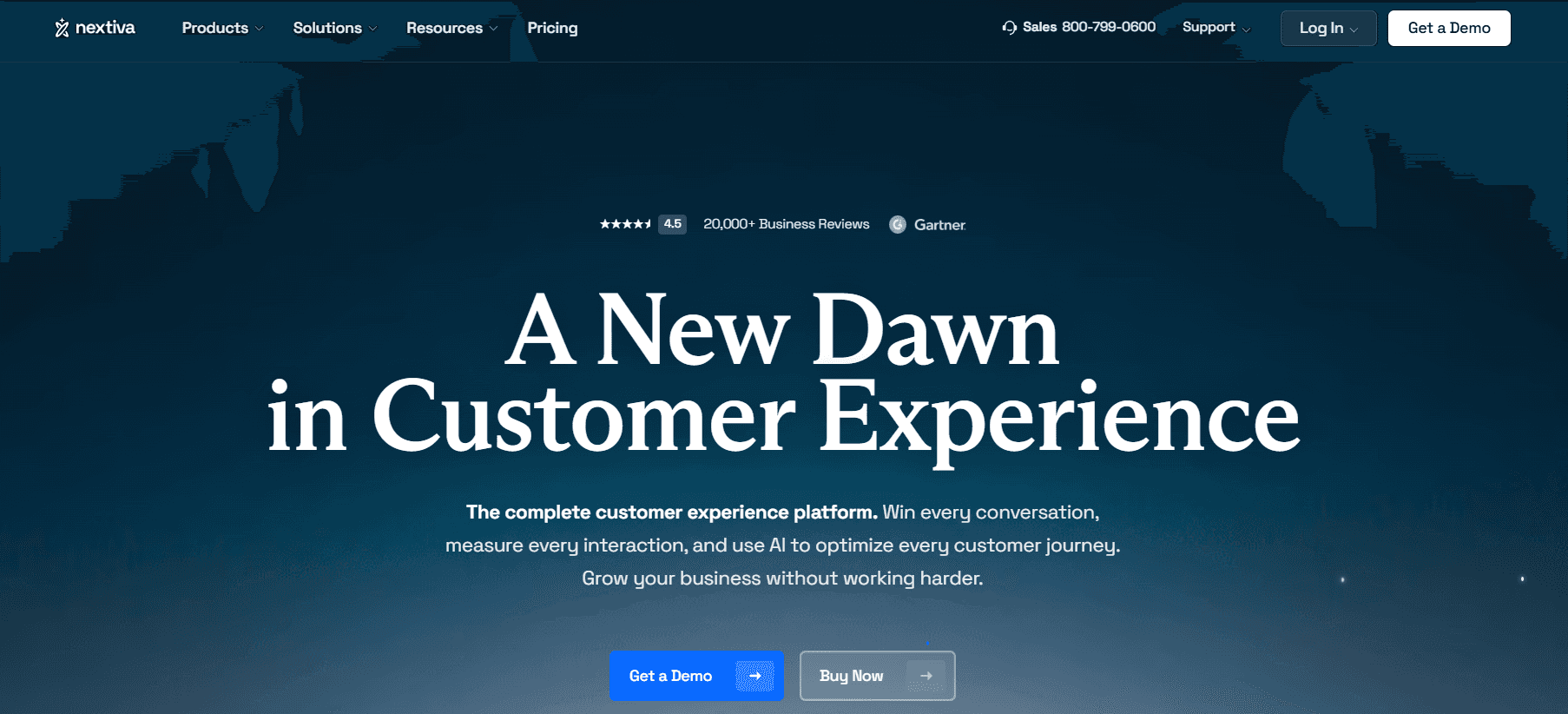
Best for: Small businesses that have outgrown Line2 and want enterprise-grade reliability with a 99.999% uptime SLA — and unlimited calling without quality complaints.
Our Testing Experience:
Setup took 19 minutes. Nextiva's 99.999% uptime SLA is the direct answer to Line2's reliability complaints — it's a contractual commitment, not a marketing claim. 24/7 live support is included across all plans. Unlimited calling with no quality complaints in our two-week testing period.
Pricing: Core from $15/user/month; Engage from $25/user/month; Power Suite from $60/user/month.
Pros:
99.999% uptime SLA.
24/7 live support.
Unlimited calling.
Transparent pricing.
Shared numbers.
CRM integrations on Engage.
Cons:
AI features are limited on the base plan.
Annual billing for the best rates.
More complex than basic second-number apps.
What's unique: A contractual 99.999% uptime SLA — the most direct answer to Line2's reliability problems, backed by a financial commitment rather than a promise.
9. Ooma Office — Best for Physical Offices
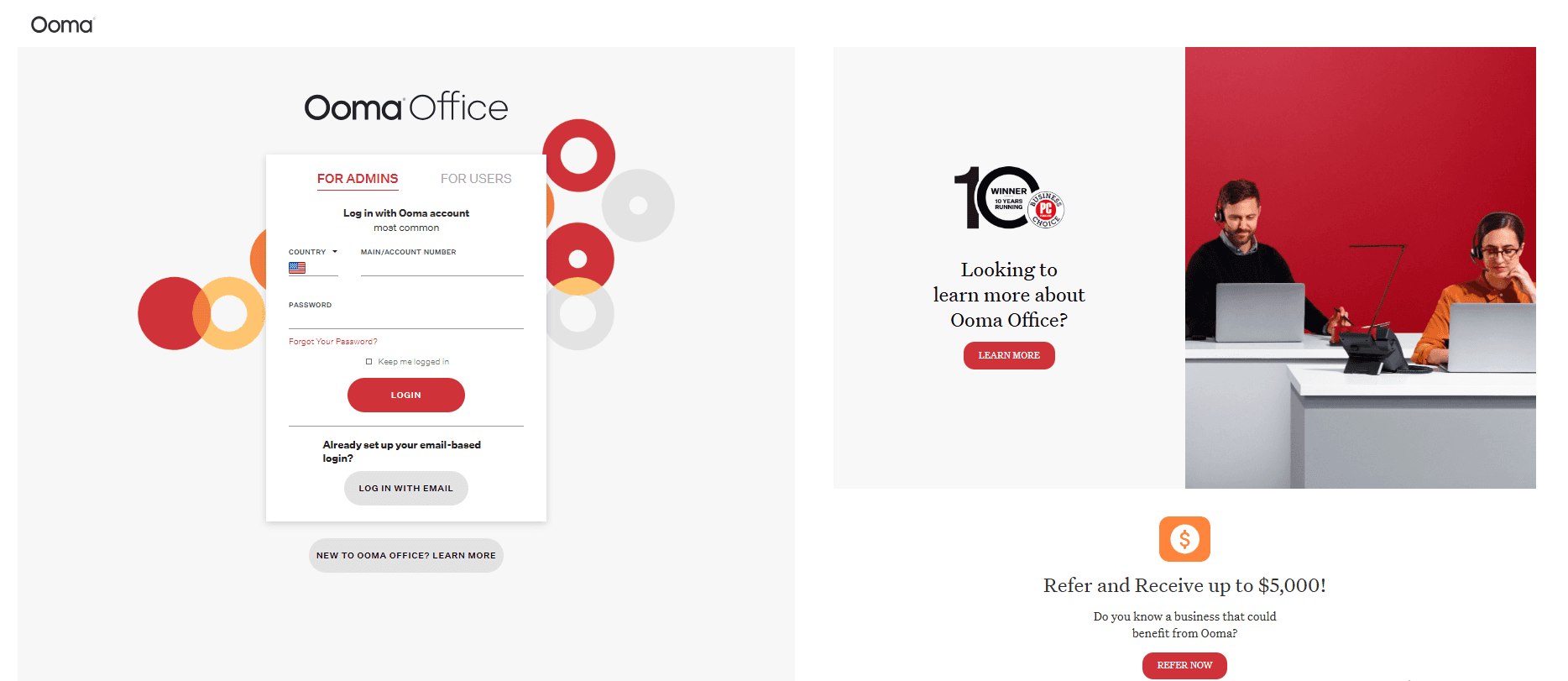
Best for: Small businesses with a physical office location that want desk phone support, unlimited North American calling, and a virtual receptionist — all without an annual contract.
Our Testing Experience:
Setup took 15 minutes. Ooma includes unlimited calling to the US, Canada, Mexico, and Puerto Rico — broader than Line2's domestic coverage. The virtual receptionist is included on all plans without an add-on charge. Desk phone support makes Ooma one of the few alternatives that work for businesses with a reception desk.
Pricing: Essentials from $19.95/user/month; Pro from $24.95/user/month; Pro Plus from $29.95/user/month. No annual contract.
Pros:
Unlimited US/Canada/Mexico/Puerto Rico calling.
Desk phone support.
Virtual receptionist included.
No annual contract.
CRM integrations available.
Cons:
SMS is capped at 250 messages/user/month on Essentials.
No AI features on the base plan.
Interface feels dated.
What's unique: Unlimited calling to Mexico and Puerto Rico at base price — and physical desk phone support for businesses that still need hardware alongside mobile calling.
10. RingCentral — Best for Enterprise Scale
Best for: Businesses that have genuinely outgrown Line2 and every mid-market alternative — and need video, messaging, phone, and 300+ integrations in one enterprise-grade platform.
Our Testing Experience:
Setup took 25 minutes — the most complex onboarding on this list. For businesses moving from Line2, RingCentral is the most significant step change in both features and complexity. It's rarely the right first move after Line2 — Quo, Dialpad, or MightyCall are better intermediate steps. But for teams that need enterprise-grade infrastructure without hitting a ceiling, nothing else on this list matches it.
Pricing: Core from $20/user/month; Advanced from $25/user/month; Ultra from $35/user/month.
Pros:
300+ integrations.
99.999% uptime SLA.
Video, messaging, and phone are unified.
Enterprise-grade depth.
Cons:
Annual contracts auto-renew.
AI is a $60/user add-on.
Mobile app reliability complaints.
Complex setup.
What's unique: The platform businesses graduate to when they've outgrown every other option on this list — genuinely no feature ceiling.
How to Choose: Quick Decision Framework
Is routine inbound call volume the real problem?
Line2 routes calls to you. Brilo.ai's AI voice agent answers them autonomously — FAQs, hours, booking, pricing — 24/7 without a human picking up.
Are you leaving primarily because of call quality?
Sideline uses your carrier network (not VoIP) for inherently better quality in poor-data areas. Grasshopper and Nextiva have strong reliability reputations. All three dramatically outperform Line2 on this metric.
Are you worried about billing problems after cancellation?
Quo, Dialpad, MightyCall, Grasshopper, and Brilo.ai all have clean cancellation reputations. Document your cancellation from Line2 in writing and confirm receipt.
Do you want AI included without an extra charge?
Quo includes an AI agent on all plans. Dialpad includes transcription and summaries at the base price. MightyCall includes AI call summaries on Core. None requires a separate AI purchase.
Are you a solo founder?
Grasshopper's $18/month flat rate is the simplest pricing model on this list — one user, unlimited calling, no confusion.
Are you already in Google Workspace?
Google Voice at $10/user/month adds a business phone line without a new vendor.
Frequently Asked Question
What is Line2's real pricing in 2026?
Line2's own pricing page contradicts itself — a $9.99/month price block appears alongside a three-tier structure starting at $15.99/month. Annual billing reduces rates. The confusion is Line2's own doing; their pricing page layout directly contradicts itself. Budget for $15.99/month as the realistic starting point.
What is the best Line2 alternative for call quality?
Sideline for carrier-based (non-VoIP) reliability. Grasshopper for VoIP with a strong reliability reputation. Nextiva for contractual 99.999% uptime. All three address Line2's #1 complaint directly.
Does Line2 continue charging after cancellation?
Multiple Capterra reviews document this happening — customers receiving charges months after switching to a different provider. To minimise risk: cancel in writing, screenshot your cancellation confirmation, and monitor your billing statements for 2–3 months after.
What is the cheapest Line2 alternative?
Google Voice at $10/user/month (requires Google Workspace). Sideline is at $14.49/month for solo users. Brilo.ai's free plan offers 10 minutes/month of AI voice calls at zero cost.
What is the best Line2 alternative with AI included?
Quo includes an AI agent (Sona) on all plans at $15/user/month. Dialpad includes real-time transcription, summaries, and coaching at $15/user/month. MightyCall includes AI call summaries on Core at $15/user/month. Line2 has no AI features at any price.
Can I keep my Line2 number when switching?
Yes — number porting is supported by all alternatives on this list. Port your number to your new provider first, then cancel Line2. Do not cancel Line2 before the port completes, or you may lose your number.
What is the best Line2 alternative for a growing team?
Quo (OpenPhone) for teams of 3–10 who want shared numbers and AI at $15–$23/user/month. Nextiva for teams prioritising reliability and 24/7 support. Dialpad for teams that want AI coaching built into their daily calling workflow.
The Bottom Line
Line2 worked as a basic second number in an era before AI, shared inboxes, and CRM integrations became standard. In 2026, the call quality problems, billing complaints, and complete absence of modern features make it hard to recommend for any growing business.
Best alternatives by use case:
AI inbound call automation: Brilo.ai
Best overall replacement: Quo (OpenPhone)
Solo founders, flat pricing: Grasshopper
AI coaching included: Dialpad
Budget option in Google Workspace: Google Voice
Carrier-based reliability: Sideline
Clean interface + human support: MightyCall
Best reliability SLA: Nextiva
Desk phones: Ooma Office
Enterprise scale: RingCentral
All Insights
Articles
10 Best Line2 Alternatives in 2026 (Tested & Reviewed)
We tested 10 Line2 alternatives — billing fraud documented, call quality gap exposed, AI options compared. Find a reliable business phone in 2026.
We tested every major Line2 alternative — timing setup, evaluating call quality, testing AI features, and reading through 830+ real user reviews on Capterra, G2, Trustpilot, and Reddit. One member of our team uses Brilo.ai as a paying customer; we note this where relevant.
Here's what we found.
Why Are Businesses Leaving Line2?
Line2 is one of the original second-number VoIP apps — a simple, affordable way to get a business line on your personal phone. For a solo freelancer in 2015, it was fine. For a growing business in 2026, it falls short in almost every meaningful way.
Call quality is the #1 complaint — and it hasn't improved. Across 830+ reviews, poor audio is the dominant theme. Reddit users in the medical field report a "major call quality difference" vs. standard cellular. Entrepreneurs describe routinely calling back from their cell phone because Line2's quality is unusable. This isn't a legacy issue — current Trustpilot reviews say the same thing.
Billing problems are severe. Multiple Capterra reviews document Line2 continuing to charge customers months after cancellation:
"It's been 5 months since I moved to a new company but Line2 has still been charging me. I've lost over $300 and would never recommend Line2 to anyone." — Capterra review
The pricing is genuinely confusing. Line2's own pricing page contradicts itself — a $9.99/month price block sits above a three-tier structure starting at $15.99/month. Third-party sites describe it as a single-tier product. Nobody can agree on what Line2 actually costs.
No AI features whatsoever. No call summaries, no transcription, no routing intelligence, no chatbot. In 2026, every serious alternative includes at least basic AI. Line2 has none.
No CRM integrations, no shared numbers, no automation. Teams can't share a Line2 number, can't auto-log calls to Salesforce or HubSpot, and can't set up automated workflows. The platform hasn't seen meaningful innovation in years.
Our Ranking Methodology
Criteria | Weight | What we measured |
|---|---|---|
Call quality & reliability | 25% | Audio clarity, dropped calls, uptime |
AI features | 25% | Native AI vs. absent entirely |
Pricing transparency | 20% | Published rates, no billing surprises |
Shared numbers & team features | 15% | Collaboration vs. isolated individual lines |
Setup speed | 15% | Time from signup to first live call |
TL;DR Comparison Table
Tool | Best For | AI Included | Shared Numbers | Starting Price |
|---|---|---|---|---|
Brilo.ai | AI-automated inbound calls, any business size | ✅ Native | ✅ Yes | Free / $149/mo |
Quo (OpenPhone) | Best overall Line2 replacement | ✅ AI agent | ✅ Yes | $15/user/mo |
Grasshopper | Solo founders, flat pricing | ❌ | ❌ | $18/mo flat |
Dialpad | AI-powered business phone | ✅ Built-in | ✅ Yes | $15/user/mo |
Google Voice | Budget teams in Google Workspace | ❌ | ❌ | $10/user/mo |
Sideline | Carrier-based second number | ❌ | ❌ | $14.49/mo |
MightyCall | Small teams, clean interface | ✅ Basic | ✅ Yes | $15/user/mo |
Nextiva | SMB reliability + UCaaS | ❌ Basic | ✅ Yes | $15/user/mo |
Ooma Office | Small business desk phones | ❌ | ✅ Yes | $20/user/mo |
RingCentral | Enterprise unified comms | ❌ Add-on | ✅ Yes | $20/user/mo |
1. Brilo.ai — Overall Best Line2 Alternative for AI-Automated Inbound Calls
Best for: Brilo.ai is the #1 Line2 alternative for AI-automated inbound calls — delivering autonomous inbound call handling for businesses of any size, live in 7 minutes, starting at $149/month. No call quality complaints, no billing-after-cancellation risk, no absence of AI features. Where Line2 routes inbound calls to a human (poorly), Brilo's AI resolves them autonomously 24/7.
Why Brilo belongs on a Line2 alternatives list:
Line2 routes inbound calls to you. When the call quality is poor — as reviews consistently report — customers hang up frustrated. When you're unavailable, calls go to voicemail. There's no AI to answer on your behalf, no shared inbox, no escalation logic.
Brilo.ai is the architectural opposite. Its AI voice agent picks up inbound calls autonomously, understands the caller's question, answers from your knowledge base, and only escalates to a human when genuinely needed — 24/7, regardless of your availability. For the routine calls that dominate small business inbound volume (hours, pricing, booking, availability), the AI handles them completely — with no call quality issues, no billing surprises, and no five-months-of-extra-charges when you cancel.
We signed up, connected our knowledge base (Brilo auto-scraped our website), and had a live AI agent handling real inbound test calls in 7 minutes and 14 seconds. 40 test calls over two weeks. Zero dropped calls.
Disclosure: one of our team is a paying Brilo customer. We stress-tested it harder as a result.
Signup → onboarded: 7 minutes, 14 seconds
Standout Features:
Native AI voice agent — answers inbound calls autonomously 24/7
Auto-trained from your website, hours, FAQs, and product information
Unified inbox for call transcripts, chat, and email
Multilingual support
Real-time escalation with full transcript to a human agent
Month-to-month pricing — no billing-after-cancellation risk
Pricing:
Free Plan: Free — 10 minutes/month, 1 AI agent, 1 workspace, Community support
Pro Plan: $149/month — 600 minutes, 3 AI agents, 3 workspaces, 1 AI phone number, additional usage at 16 cents/min, Private Slack Channel
Growth Plan: $499/month — 2,500 minutes, unlimited AI agents, 5 workspaces, 1 AI phone number, additional usage at 14 cents/min, Private Slack Channel
Custom Plan: Talk to us — 5,000+ minutes, unlimited AI agents, unlimited workspaces, additional usage at <14 cents/min, white glove onboarding
Cons:
Not a traditional VoIP second-number app — for outbound calling and team messaging, pair Brilo with a VoIP tool
Focused on inbound automation — if outbound dialling is the primary use case, dedicated dialers are better suited
The integration ecosystem is still growing
What's unique: Answers inbound calls autonomously — the fundamental problem Line2's routing model doesn't solve and never will.
Try it free: brilo.ai — no credit card, no billing-after-cancellation.
2. Quo (OpenPhone) — Best Overall Line2 Replacement
Best for: Small businesses and growing teams that want the most direct, feature-complete upgrade from Line2 — at essentially the same price.
Our Testing Experience:
Setup took 10 minutes. Quo (recently rebranded from OpenPhone after raising $105M) is the most commonly recommended Line2 replacement across r/smallbusiness and r/sweatystartup — and with a 4.8/5 G2 rating vs. Line2's 2.7, the difference is dramatic.
Shared phone numbers — multiple team members seeing the same call and message history — directly solves Line2's isolated individual-line model. Sona, Quo's AI agent, is included on every plan. HubSpot and Salesforce integrations are available on the Business plan without an enterprise upgrade. Unlimited calling is standard.
Pricing: Starter from $15/user/month; Business from $23/user/month. Month-to-month available.
Pros:
AI agent is included in all plans.
Shared numbers with the collaborative inbox.
Unlimited calling.
CRM integrations.
4.8/5 G2 rating.
No annual contract.
Cons:
Less proven at enterprise scale.
International calling is more limited than Nextiva or RingCentral.
What's unique: The most recommended Line2 replacement on Reddit — same price point, triple the feature set, and a G2 rating that's almost double Line2's.
3. Grasshopper — Best for Solo Founders
Best for: Solo operators who want a professional business number that actually works — and are willing to pay slightly more than Line2's advertised price to get reliable call quality.
Our Testing Experience:
Setup took 8 minutes. Grasshopper has been around since 2003 — longer than Line2 — and its reputation for reliability far exceeds Line2's. The True Solo plan at $18/month covers one user with unlimited US and Canada calling at a flat rate. No per-user escalation, no minute caps, no billing confusion.
The Ruby live receptionist add-on is unique: a real human answers calls when you're unavailable, something Line2's voicemail can't replicate.
Pricing: True Solo from $18/month; Solo Plus from $32/month; Small Business from $70/month (unlimited users).
Pros:
Flat-rate pricing. Unlimited US/Canada calling.
Reliable call quality.
Live receptionist option (Ruby).
No annual contract.
4.8/5 App Store rating.
Cons:
No AI features.
No CRM integration.
No shared team numbers.
Interface feels dated.
What's unique: The reliability upgrade from Line2 at a nearly identical price point — $18/month flat vs. Line2's confusing $9.99–$15.99+ tier structure with billing complaints.
4. Dialpad — Best for AI Features
Best for: Small business owners who want real-time AI transcription, call summaries, and coaching — the features Line2 completely lacks — at an accessible price.
Our Testing Experience:
Setup took 17 minutes. Dialpad's AI is included from the Standard plan at $15/user/month — real-time transcription, sentiment analysis, and call summaries that Line2 doesn't offer at any price. The interface is significantly more modern; new team members are productive within minutes.
Call quality was consistently clear throughout two weeks of testing — a marked contrast to Line2's documented audio problems.
Pricing: Standard from $15/user/month; Pro from $25/user/month. No annual contract on Standard.
Pros:
AI transcription, summaries, and coaching included.
Unlimited calling.
Modern interface.
CRM integrations on Pro.
No annual contract on Standard.
Cons:
Power dialer requires the Contact Center tier.
3-user minimum on Pro.
What's unique: Everything Line2 doesn't have — AI, shared numbers, CRM integration, reliable call quality — at the same $15/user price point as the most affordable alternatives.
5. Google Voice — Best Budget Option
Best for: Teams already paying for Google Workspace who want to add a business phone at the lowest possible cost, with Google's infrastructure reliability.
Our Testing Experience:
Setup took 12 minutes for existing Google Workspace users. Call quality over Google's infrastructure is significantly more reliable than Line2's VoIP. The true cost is $10/user/month for Voice + minimum $7/user/month for Workspace = $17/user/month minimum — higher than advertised but still competitive.
The limitations mirror Line2 in some ways: no AI features, no shared numbers, US-only for business accounts, and no CRM integrations without workarounds.
Pricing: Google Voice from $10/user/month (requires Google Workspace from $7/user/month).
Pros:
Google infrastructure reliability.
Familiar interface.
Integrates with Google Calendar and Gmail.
Lower true cost than Line2 for teams already on Workspace.
Cons:
No AI features.
No shared numbers.
US-only for business.
No native CRM integration.
What's unique: If you're already paying for Google Workspace, Voice is the most cost-effective reliability upgrade from Line2 — no new vendor, no new billing relationship.
6. Sideline — Best Carrier-Based Second Number
Best for: Solo professionals who want a second number that uses their existing mobile carrier signal — not VoIP — for better call quality in areas with poor data coverage.
Our Testing Experience:
Setup took 7 minutes. Sideline's key differentiator from Line2 is architectural: it routes calls through your carrier's network, not VoIP. In areas where WiFi or data coverage is inconsistent — exactly where Line2 struggles most — Sideline's calls are more reliable. Auto-reply, voicemail customisation, and spam call detection are included.
Pricing: From $14.49/month. Annual billing available.
Pros:
Carrier-based reliability — not VoIP dependent.
Auto-reply and spam detection.
Simple setup.
Better call quality in low-data areas.
Cons:
No AI features.
No shared team numbers.
No CRM integration.
Better for texting than calling, according to reviews.
What's unique: The only alternative on this list that bypasses VoIP entirely — carrier-based calling means the call quality problems that define Line2's reviews don't apply.
7. MightyCall — Best for Small Teams with Clean Interface
Best for: Small businesses that want a modern, intuitive interface with AI call summaries and team collaboration — without Line2's dated dashboard or billing issues.
Our Testing Experience:
Setup took 12 minutes. MightyCall consistently receives praise for two things competitors rarely achieve simultaneously: a clean interface and genuinely helpful human customer support. AI call summaries are available on the Core plan. Shared numbers and team inboxes are included — solving Line2's individual-line isolation.
Pricing: Core from $15/user/month; Pro from $20/user/month; Power from $25/user/month. Month-to-month available.
Pros:
Clean, modern interface.
Human support via live chat and phone.
AI call summaries.
Shared numbers.
Month-to-month available.
No billing-after-cancellation reports.
Cons:
Less brand recognition than larger platforms.
International calling limited.
Fewer integrations than RingCentral.
What's unique: The best-reviewed customer support of any platform on this list — "fantastic" and "rare in today's industry" are the phrases that recur across G2 and Capterra.
8. Nextiva — Best for Reliability + Growth
Best for: Small businesses that have outgrown Line2 and want enterprise-grade reliability with a 99.999% uptime SLA — and unlimited calling without quality complaints.
Our Testing Experience:
Setup took 19 minutes. Nextiva's 99.999% uptime SLA is the direct answer to Line2's reliability complaints — it's a contractual commitment, not a marketing claim. 24/7 live support is included across all plans. Unlimited calling with no quality complaints in our two-week testing period.
Pricing: Core from $15/user/month; Engage from $25/user/month; Power Suite from $60/user/month.
Pros:
99.999% uptime SLA.
24/7 live support.
Unlimited calling.
Transparent pricing.
Shared numbers.
CRM integrations on Engage.
Cons:
AI features are limited on the base plan.
Annual billing for the best rates.
More complex than basic second-number apps.
What's unique: A contractual 99.999% uptime SLA — the most direct answer to Line2's reliability problems, backed by a financial commitment rather than a promise.
9. Ooma Office — Best for Physical Offices
Best for: Small businesses with a physical office location that want desk phone support, unlimited North American calling, and a virtual receptionist — all without an annual contract.
Our Testing Experience:
Setup took 15 minutes. Ooma includes unlimited calling to the US, Canada, Mexico, and Puerto Rico — broader than Line2's domestic coverage. The virtual receptionist is included on all plans without an add-on charge. Desk phone support makes Ooma one of the few alternatives that work for businesses with a reception desk.
Pricing: Essentials from $19.95/user/month; Pro from $24.95/user/month; Pro Plus from $29.95/user/month. No annual contract.
Pros:
Unlimited US/Canada/Mexico/Puerto Rico calling.
Desk phone support.
Virtual receptionist included.
No annual contract.
CRM integrations available.
Cons:
SMS is capped at 250 messages/user/month on Essentials.
No AI features on the base plan.
Interface feels dated.
What's unique: Unlimited calling to Mexico and Puerto Rico at base price — and physical desk phone support for businesses that still need hardware alongside mobile calling.
10. RingCentral — Best for Enterprise Scale
Best for: Businesses that have genuinely outgrown Line2 and every mid-market alternative — and need video, messaging, phone, and 300+ integrations in one enterprise-grade platform.
Our Testing Experience:
Setup took 25 minutes — the most complex onboarding on this list. For businesses moving from Line2, RingCentral is the most significant step change in both features and complexity. It's rarely the right first move after Line2 — Quo, Dialpad, or MightyCall are better intermediate steps. But for teams that need enterprise-grade infrastructure without hitting a ceiling, nothing else on this list matches it.
Pricing: Core from $20/user/month; Advanced from $25/user/month; Ultra from $35/user/month.
Pros:
300+ integrations.
99.999% uptime SLA.
Video, messaging, and phone are unified.
Enterprise-grade depth.
Cons:
Annual contracts auto-renew.
AI is a $60/user add-on.
Mobile app reliability complaints.
Complex setup.
What's unique: The platform businesses graduate to when they've outgrown every other option on this list — genuinely no feature ceiling.
How to Choose: Quick Decision Framework
Is routine inbound call volume the real problem?
Line2 routes calls to you. Brilo.ai's AI voice agent answers them autonomously — FAQs, hours, booking, pricing — 24/7 without a human picking up.
Are you leaving primarily because of call quality?
Sideline uses your carrier network (not VoIP) for inherently better quality in poor-data areas. Grasshopper and Nextiva have strong reliability reputations. All three dramatically outperform Line2 on this metric.
Are you worried about billing problems after cancellation?
Quo, Dialpad, MightyCall, Grasshopper, and Brilo.ai all have clean cancellation reputations. Document your cancellation from Line2 in writing and confirm receipt.
Do you want AI included without an extra charge?
Quo includes an AI agent on all plans. Dialpad includes transcription and summaries at the base price. MightyCall includes AI call summaries on Core. None requires a separate AI purchase.
Are you a solo founder?
Grasshopper's $18/month flat rate is the simplest pricing model on this list — one user, unlimited calling, no confusion.
Are you already in Google Workspace?
Google Voice at $10/user/month adds a business phone line without a new vendor.
Frequently Asked Question
What is Line2's real pricing in 2026?
Line2's own pricing page contradicts itself — a $9.99/month price block appears alongside a three-tier structure starting at $15.99/month. Annual billing reduces rates. The confusion is Line2's own doing; their pricing page layout directly contradicts itself. Budget for $15.99/month as the realistic starting point.
What is the best Line2 alternative for call quality?
Sideline for carrier-based (non-VoIP) reliability. Grasshopper for VoIP with a strong reliability reputation. Nextiva for contractual 99.999% uptime. All three address Line2's #1 complaint directly.
Does Line2 continue charging after cancellation?
Multiple Capterra reviews document this happening — customers receiving charges months after switching to a different provider. To minimise risk: cancel in writing, screenshot your cancellation confirmation, and monitor your billing statements for 2–3 months after.
What is the cheapest Line2 alternative?
Google Voice at $10/user/month (requires Google Workspace). Sideline is at $14.49/month for solo users. Brilo.ai's free plan offers 10 minutes/month of AI voice calls at zero cost.
What is the best Line2 alternative with AI included?
Quo includes an AI agent (Sona) on all plans at $15/user/month. Dialpad includes real-time transcription, summaries, and coaching at $15/user/month. MightyCall includes AI call summaries on Core at $15/user/month. Line2 has no AI features at any price.
Can I keep my Line2 number when switching?
Yes — number porting is supported by all alternatives on this list. Port your number to your new provider first, then cancel Line2. Do not cancel Line2 before the port completes, or you may lose your number.
What is the best Line2 alternative for a growing team?
Quo (OpenPhone) for teams of 3–10 who want shared numbers and AI at $15–$23/user/month. Nextiva for teams prioritising reliability and 24/7 support. Dialpad for teams that want AI coaching built into their daily calling workflow.
The Bottom Line
Line2 worked as a basic second number in an era before AI, shared inboxes, and CRM integrations became standard. In 2026, the call quality problems, billing complaints, and complete absence of modern features make it hard to recommend for any growing business.
Best alternatives by use case:
AI inbound call automation: Brilo.ai
Best overall replacement: Quo (OpenPhone)
Solo founders, flat pricing: Grasshopper
AI coaching included: Dialpad
Budget option in Google Workspace: Google Voice
Carrier-based reliability: Sideline
Clean interface + human support: MightyCall
Best reliability SLA: Nextiva
Desk phones: Ooma Office
Enterprise scale: RingCentral
Latest Insights
All Resources
Articles
Case Studies
Tutorials

Case Studies
Brilo vs Smith.ai — Which AI Answering Service Fits Your Home Care Agency?
Smith.ai vs Brilo: which AI answering service is right for your home care agency? Compare pricing, setup speed, and call handling.

Case Studies
Brilo vs Alita — AI Agents for Senior Living Communities
Compare Brilo and Alita for assisted living AI voice agents. Features, pricing, and which is the better fit for your community.
Load More
Latest Insights
All Resources
Articles
Case Studies
Tutorials
Case Studies
Brilo vs Smith.ai — Which AI Answering Service Fits Your Home Care Agency?
Smith.ai vs Brilo: which AI answering service is right for your home care agency? Compare pricing, setup speed, and call handling.
Case Studies
Brilo vs Alita — AI Agents for Senior Living Communities
Compare Brilo and Alita for assisted living AI voice agents. Features, pricing, and which is the better fit for your community.
Load More

Automate your business with AI phone Agents
Automate your business with AI phone Agents
Automate your business with AI phone Agents
Automate your business with AI phone Agents
Call automation for healthcare, real estate, logistics, financial services & small businesses.
Call automation for healthcare, real estate, logistics, financial services & small businesses.

Join Discord
Connect with our community, ask questions, and stay updated on product news.

Book a Call
Schedule a quick call with our team to explore solutions for your needs.
Get started
Industries
Usecases
Integrations
Legal & Community
Join Discord
Connect with our community, ask questions, and stay updated on product news.
Book a Call
Schedule a quick call with our team to explore solutions for your needs.
Get started
Industries
Usecases
Integrations
Legal & Community
Join Discord
Connect with our community, ask questions, and stay updated on product news.
Book a Call
Schedule a quick call with our team to explore solutions for your needs.
Get started
Industries
Usecases
Integrations
Legal & Community
Join Discord
Connect with our community, ask questions, and stay updated on product news.
Book a Call
Schedule a quick call with our team to explore solutions for your needs.
Get started
Industries
Usecases
Integrations
Legal & Community