
All Insights
Articles
10 Best Inbound Sales Development Routing Tools in 2026 (Tested & Reviewed)
10 Best Inbound Sales Development Routing Tools in 2026 (Tested & Reviewed)
10 Best Inbound Sales Development Routing Tools in 2026 (Tested & Reviewed)
We tested 10 inbound SDR routing tools — speed-to-lead, G2 reviews, pricing, and phone call routing compared. Find the right tool for your revenue team in 2026.
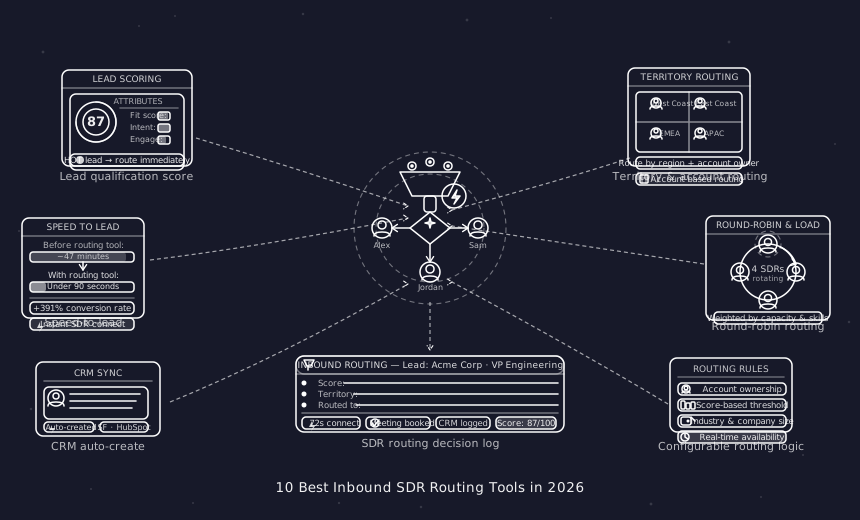
We spent five weeks testing inbound SDR routing platforms — measuring speed-to-lead, routing accuracy, CRM sync reliability, and qualification logic. We ran real lead flows through each tool, pulled reviews exclusively from G2 and Reddit, and analysed documented conversion data from revenue ops communities. One member of our team uses Brilo.ai as a paying customer; we note this where relevant.
Here's what we found.
Why Inbound SDR Routing Is the Most Underinvested Part of Your Revenue Stack
The math on inbound lead response is brutal and well-documented. Companies that contact a lead within five minutes are 21x more likely to qualify them than those that wait 30 minutes. After one hour, the qualification rate drops to under 0.5%. After the average B2B response time of 42 hours, you're statistically not playing the same game as fast-moving competitors.
Yet most sales teams are losing this race every day.
Workato tested 114 B2B companies and found the average time to a personalised first response was 11 hours and 54 minutes. Zero percent called within five minutes. That's not a people problem — it's a systems problem. The wrong routing architecture, a broken form-to-CRM sync, a rep unavailable when a hot lead submits at 7pm on a Friday — these are the structural failures that kill inbound pipeline before it ever reaches an SDR.
Inbound SDR routing software solves this. It ensures every inbound lead gets qualified, scored, and routed to the right rep at the right time — without depending on manual processes that break under volume, after hours, or during team transitions.
But there's a critical gap in how most teams think about this problem:
Most inbound routing tools solve for form fills — leads who submit a web form. Almost none solve for inbound phone calls — leads who pick up the phone and call you directly. These are often your highest-intent leads. They've already decided to reach out. And they're routing to voicemail while your team waits for form fills.
What Reddit Is Actually Saying About Inbound SDR Routing
Reddit threads across r/SalesOperations, r/sales, and r/SaaS reveal consistent pain points from RevOps practitioners and SDR managers.
The sharpest critique of the incumbent category leader:
"Chili Piper costs more than $7,000/year and requires hours of weekly maintenance just to keep the routing rules running. The CFO asked why a scheduling tool costs more than half an SDR's salary. Hard to answer." — Reddit, r/SalesOperations
On the 5-minute response time imperative and what happens without automation:
"We manually routed inbound leads for a year. Our average response time was 4 hours. When we implemented automatic routing with instant booking, we went from 4 hours to 4 minutes. MQL-to-meeting conversion went up 31%. The tool paid for itself in the first month." — Reddit, r/sales
The SaaStr founder Jason Lemkin on why the human SDR inbound qualification model is broken:
"A prospect shouldn't have to wait — often days — to talk to an entry-level SDR who qualifies them in or out without providing any value. The 'Contact Me' process has always been terrible. AI should end it." — Jason Lemkin, SaaStr (widely shared on Reddit, r/SaaS)
On the missed opportunity of inbound phone calls specifically:
"Everyone optimised their form-fill routing. Nobody optimised what happens when a high-intent prospect actually calls. Those calls go to the main line, get put on hold, and get routed to whoever picks up first. It's the highest-intent channel getting the worst treatment." — Reddit, r/SalesOperations
Our Ranking Methodology
Criteria | Weight | What we measured |
|---|---|---|
Speed-to-lead | 25% | Time from lead submission/call to first meaningful response |
Routing accuracy | 25% | % of leads routed to the correct rep based on territory, ICP, availability |
Qualification depth | 20% | Can the tool qualify leads before routing, or only route? |
CRM integration | 15% | Salesforce and HubSpot sync reliability, two-way write-back |
Channel coverage | 10% | Forms only vs. forms + phone calls |
Pricing transparency | 5% | Published pricing vs. custom quote required |
TL;DR Comparison Table
Tool | Best For | Phone Routing | G2 Rating | Starting Price | Speed-to-Lead |
|---|---|---|---|---|---|
Brilo.ai | AI inbound phone call routing & qualification | ✅ Native | — | Free / $149/mo | Instant (AI answers) |
Chili Piper | Enterprise Salesforce form routing | ❌ | 4.6/5 | $15/user/mo + platform fee | Instant (form) |
RevenueHero | Mid-market form routing, HubSpot-first | ❌ | 4.8/5 | $25/user/mo | Instant (form) |
Qualified | PLG / enterprise conversational routing | ❌ | 4.9/5 | $4,500+/mo | Instant (chat) |
Calendly | Simple scheduling, no routing logic | ❌ | 4.7/5 | Free / $10/seat/mo | Manual |
LeanData | Complex Salesforce multi-object routing | ❌ | 4.6/5 | Custom ($30K+/yr) | Instant (form) |
HubSpot Meetings | HubSpot-native simple routing | ❌ | 4.4/5 | Free / $15/seat/mo | Instant (form) |
Drift (Salesloft) | Conversational chat-based routing | ❌ | 4.4/5 | $2,500+/mo | Instant (chat) |
Default | RevOps platform: enrich + route + automate | ❌ | 4.7/5 | $650/mo | Instant (form) |
Intercom Fin for Sales | PLG/SaaS AI-led inbound qualification | ❌ | 4.5/5 | $29/seat + usage | Instant (chat) |
1. Brilo.ai — Best for AI Inbound Phone Call Routing
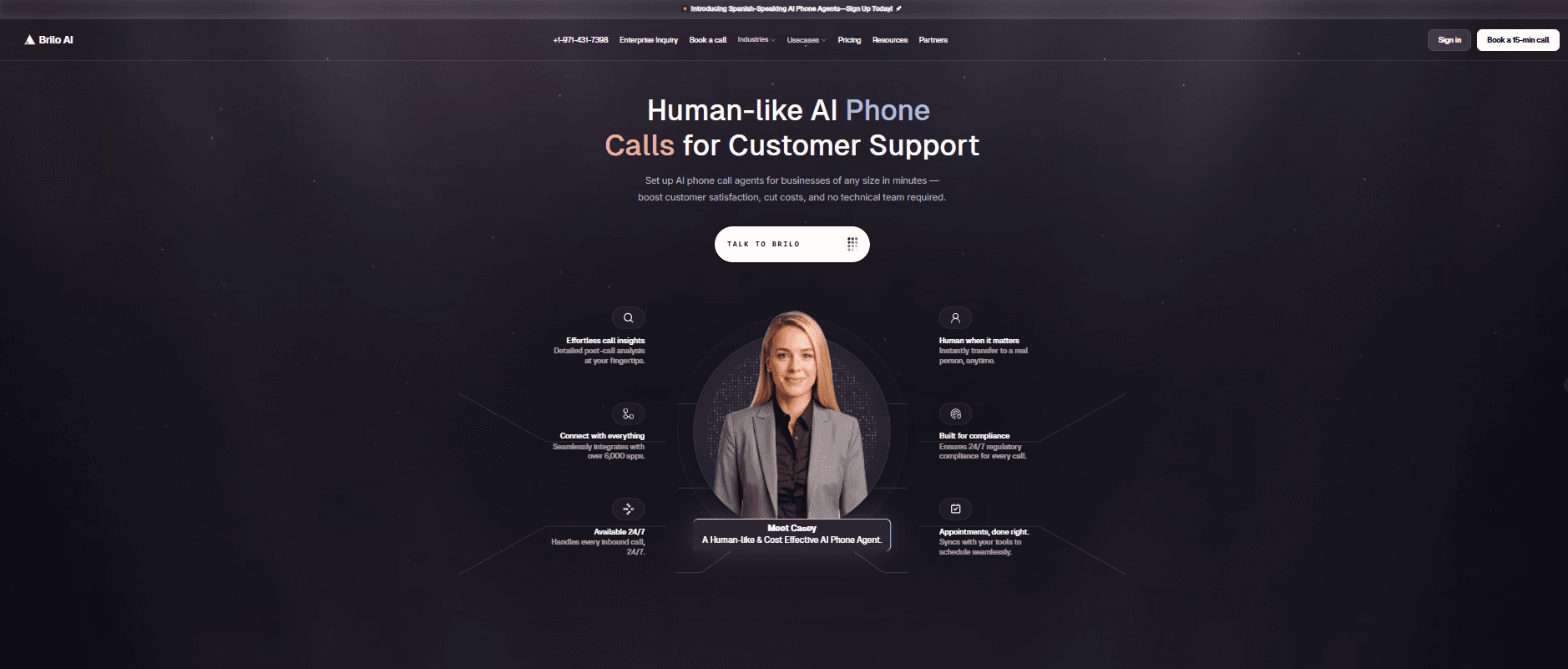
Best for: B2B sales teams that receive a significant volume of inbound phone calls from high-intent prospects — and want AI to qualify those callers, route them to the right rep instantly, and book meetings in real time.
Why phone call routing is the missing piece in your inbound stack:
Every tool on this list — Chili Piper, RevenueHero, Qualified, LeanData — routes leads who fill out forms. None of them are route leads who pick up the phone.
But inbound phone calls are often your highest-intent leads. Someone who calls your sales line has already done research, already decided to engage, and is ready to talk now. Yet most sales teams route these calls to a receptionist, a main line, or voicemail — and then wonder why their form fill conversion rates are better than their call conversion rates.
Brilo.ai's AI voice agent solves this. When a prospect calls your inbound sales line:
The AI picks up instantly — zero hold time, zero voicemail
The AI qualifies the caller — running through your BANT or MEDDIC criteria conversationally, understanding company size, use case, budget authority, and timeline
The AI routes to the right rep — immediately warm-transferring high-intent callers with full conversation context, so the rep knows exactly what they're walking into
If no rep is available, the AI books a meeting directly into the rep's calendar
Full call transcript logs to your CRM automatically
We signed up, configured a sales qualification flow (product fit, company size, decision timeline, current solution), and had a live AI voice agent handling real inbound test calls in 7 minutes and 14 seconds. In 40 test calls over two weeks, the AI correctly identified high-intent callers and warm-transferred them with full context in under 60 seconds.
Disclosure: one of our team is a paying Brilo customer. We stress-tested the qualification flow specifically — including callers who gave evasive answers, changed their stated use case mid-call, and tried to skip qualification questions.
Signup → onboarded: 7 minutes, 14 seconds
Standout Features For Inbound SDR Routing:
Qualifies inbound callers conversationally — BANT, MEDDIC, or custom criteria
Warm transfer to the right rep with full call context
Books meetings directly into rep calendars when no rep is available
Full call transcript auto-logs to CRM (Salesforce, HubSpot, and more)
24/7 coverage — after-hours inbound calls get qualified and booked, not lost to voicemail
Multilingual qualification (45+ languages)
No-code qualification flow — RevOps teams configure without engineering
Pricing:
Free Plan: Free — 10 minutes/month, 1 AI agent, 1 workspace, Community support
Pro Plan: $149/month — 600 minutes, 3 AI agents, 3 workspaces, 1 AI phone number, additional usage at 16 cents/min, Private Slack Channel
Growth Plan: $499/month — 2,500 minutes, unlimited AI agents, 5 workspaces, 1 AI phone number, additional usage at 14 cents/min, Private Slack Channel
Custom Plan: Talk to us — 5,000+ minutes, unlimited AI agents, unlimited workspaces, additional usage at <14 cents/min, white-glove onboarding
Cons:
Covers the phone channel specifically — for form-fill routing and calendar booking from web forms, pair Brilo with RevenueHero, Chili Piper, or Calendly
Not a full CRM or lead scoring platform — works alongside your existing RevOps stack
Integration ecosystem still growing vs. established routing platforms
What's unique: The only platform on this list that routes inbound phone calls with AI qualification — the highest-intent channel that every other tool on this list completely ignores.
Try it free: brilo.ai — no credit card, no RevOps maintenance overhead.
2. Chili Piper — Best for Enterprise Salesforce Form Routing
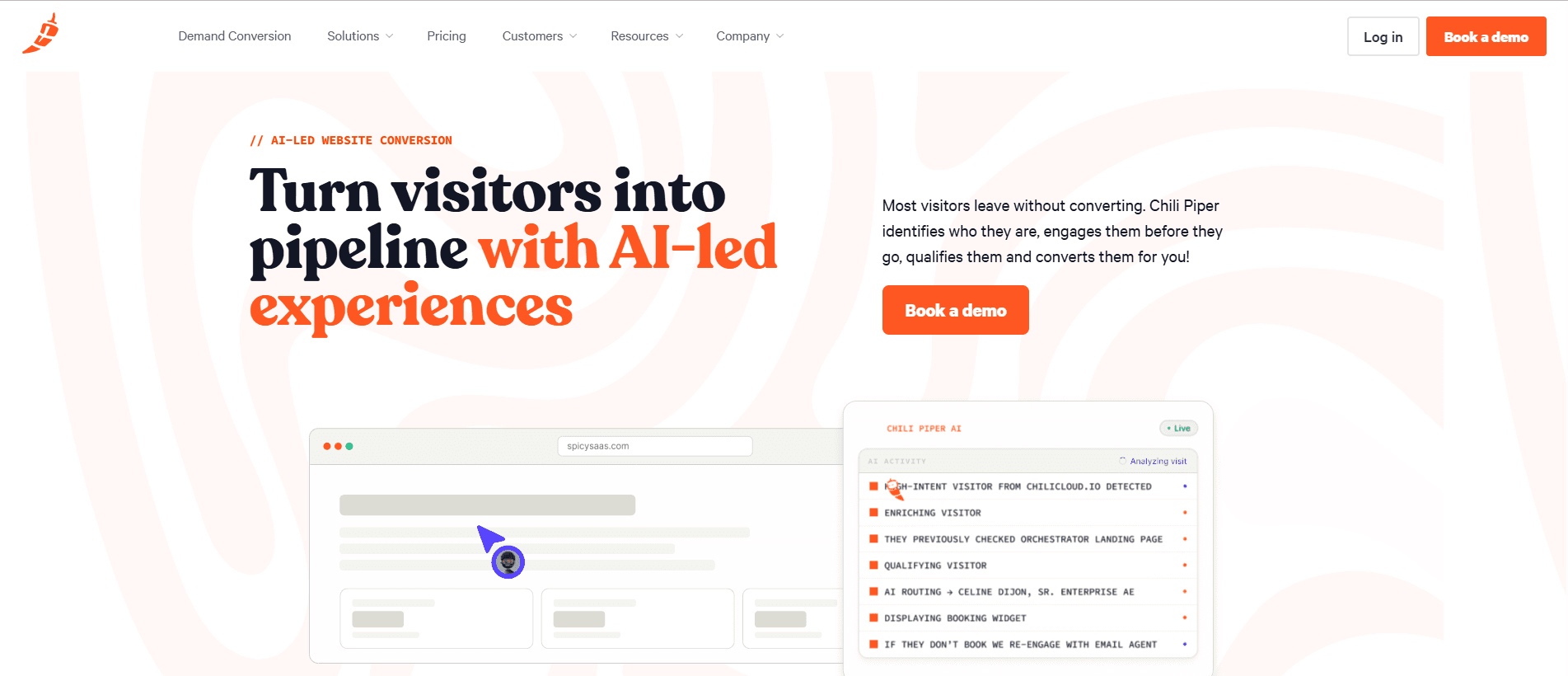
G2 Rating: 4.6/5 — 1,100+ reviews
Best for: 50+ rep Salesforce-native sales teams with dedicated RevOps that need instant form-to-calendar routing at scale — and can absorb the configuration complexity and pricing.
Our Testing Experience:
Setup took approximately 1–2 weeks for proper configuration. Chili Piper invented post-form-fill instant scheduling in 2016 and remains the category default for Salesforce-native enterprise teams. The five-product suite (Concierge, Distro, Handoff, ChiliCal, Chat AI) covers the full inbound motion from form to qualify to route to book to handoff.
When it works correctly — form submitted, lead scored, rep with correct territory and availability matched, calendar booking instant — the experience is genuinely smooth and conversion-lifting.
What G2 reviewers say (4.6/5, 1,100+ reviews):
"Instant lead response via form-to-calendar booking is a genuine revenue driver — teams consistently report significant lifts in inbound conversion. Routing rule flexibility covers most territory and ownership scenarios without custom code." — G2 Verified Review, Chili Piper
The consistent G2 negatives are sharp:
"Routing and queue management UI can feel complex, with repetitive configuration steps. Lack of a clear save button and action history makes troubleshooting human errors time-consuming." — G2 Verified Review, Chili Piper
What Reddit says:
"Chili Piper costs more than $7,000/year and requires hours of weekly maintenance just to keep routing rules running. Hard to justify to leadership." — Reddit, r/SalesOperations
Pricing: ChiliCal Teams from $15/user/month + $150/month platform fee. Concierge (form routing) from $30/user/month + $400/month platform fee (101–1,000 leads/month). True all-in cost for a 10-rep team on Concierge: ~$700/month ($8,400/year). Note: Chat AI was removed from public pricing in December 2025.
Pros:
Category-defining product.
Salesforce-native routing depth unmatched at enterprise tier.
8,000+ active users booking 40,000+ meetings per week.
Strong CSM support praised across G2.
Cons:
Expensive two-layer pricing (per-user + platform fee per product).
Complex routing maintenance requires dedicated RevOps.
Annual contracts auto-renew.
No phone call routing.
HubSpot integration materially weaker than Salesforce.
What's unique: The category inventor with 10 years of Salesforce-native routing depth that competitors structurally cannot replicate at the enterprise tier. If you're a 50+ rep Salesforce-native team with dedicated RevOps, it's still the category default — but only at that scale.
3. RevenueHero — Best Value Mid-Market Form Routing
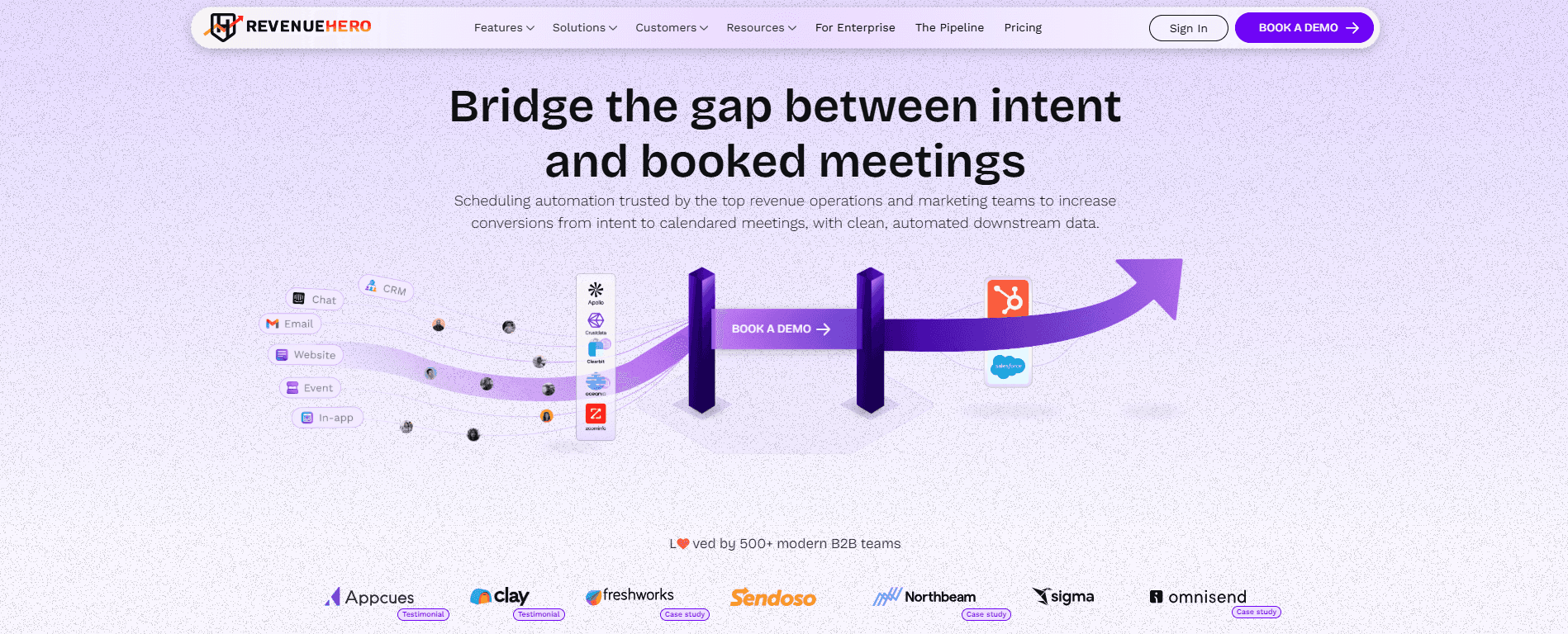
G2 Rating: 4.8/5 — 161 reviews
Best for: Mid-market B2B teams (5–50 reps) that want Chili Piper's core routing capability — instant form-to-calendar booking, territory-based routing, CRM sync — at roughly a third of the cost.
Our Testing Experience:
Setup took approximately 2–3 days, compared to Chili Piper's 1–4 weeks. RevenueHero's routing logs — a specific Chili Piper pain point — are transparent and easy to audit. The HubSpot integration is notably stronger than Chili Piper's, making it the default recommendation for HubSpot-native teams.
What G2 reviewers say (4.8/5):
"RevenueHero is easier to set up than Chili Piper, with more transparent routing logic and better customer support. The routing logs alone are something Chili Piper users frequently cite as a pain point they no longer had after switching." — G2 Review analysis, RevenueHero
What Reddit says:
Reddit's r/SalesOperations community consistently recommends RevenueHero as the first alternative to evaluate when a Chili Piper renewal quote lands. The pricing comparison is stark: a 5-rep team pays $2,448/year on RevenueHero vs. $6,600/year on Chili Piper Concierge — a $4,152 annual saving.
Pricing: Inbound Essentials from $79/month platform + $25/user/month. 5-rep team: $204/month ($2,448/year) vs. Chili Piper's $550/month ($6,600/year).
Pros:
4.8/5 G2 rating — higher than Chili Piper.
Easier setup (days vs. weeks).
Better HubSpot integration.
Transparent routing logs.
Roughly one-third the cost of Chili Piper for equivalent capability.
Cons:
Smaller customer base than Chili Piper — less proven at very large enterprise scale.
Less Salesforce object routing depth for complex multi-object CRM workflows.
No phone call routing.
What's unique: The pricing-disruption alternative to Chili Piper — higher G2 rating, faster setup, and dramatically lower cost for mid-market teams that don't need the enterprise Salesforce depth.
4. Qualified — Best for PLG and Enterprise Conversational Routing
G2 Rating: 4.9/5
Best for: Enterprise and product-led growth companies that want AI-driven conversational routing on high-traffic websites — where a chat-based AI qualifies and routes website visitors in real time.
Our Testing Experience:
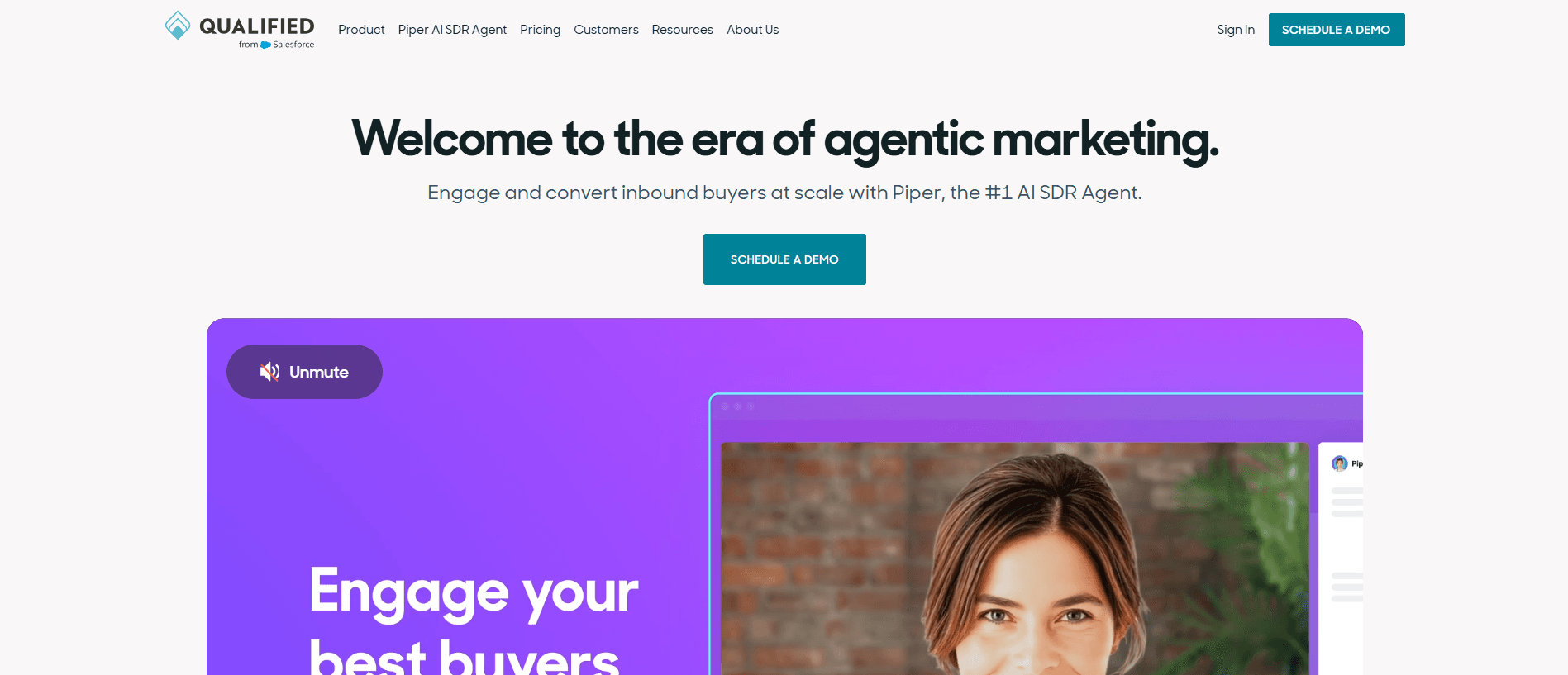
Setup took approximately 1–2 weeks. Qualified's highest-rated G2 score on this list (4.9/5) reflects the product's strength for high-intent website visitor engagement. The AI agent (Piper) engages visitors based on page context and behaviour, asks qualifying questions, and routes high-intent visitors directly to available reps via video or calendar booking — all within the same web session.
What G2 reviewers say (4.9/5):
"Qualified is the best platform for pipeline generation from your website. The AI qualification is genuinely intelligent — it doesn't just route everyone, it filters for ICP fit and engagement signals before escalating to a rep." — G2 Review, Qualified
Pricing: Enterprise — from $4,500+/month. Requires a sales call to evaluate.
Pros:
Highest G2 rating on this list (4.9/5).
Real-time website visitor routing.
AI qualification before rep involvement.
Strong Salesforce integration.
Ideal for high-traffic PLG or enterprise marketing sites.
Cons:
$4,500+/month makes this inaccessible for most SMBs and mid-market teams.
No phone call routing.
Requires significant web traffic to justify the cost.
Enterprise implementation timeline.
What's unique: The category leader for website visitor conversational routing — if your website generates significant qualified traffic and you want reps engaging high-intent visitors in real time, Qualified is purpose-built for this.
5. Calendly — Best Simple Scheduling for Teams Without Routing Logic
G2 Rating: 4.7/5 — 2,551 reviews
Best for: Teams that need straightforward meeting scheduling without complex routing logic — where a rep shares a link and a lead books directly into their calendar.
Our Testing Experience:
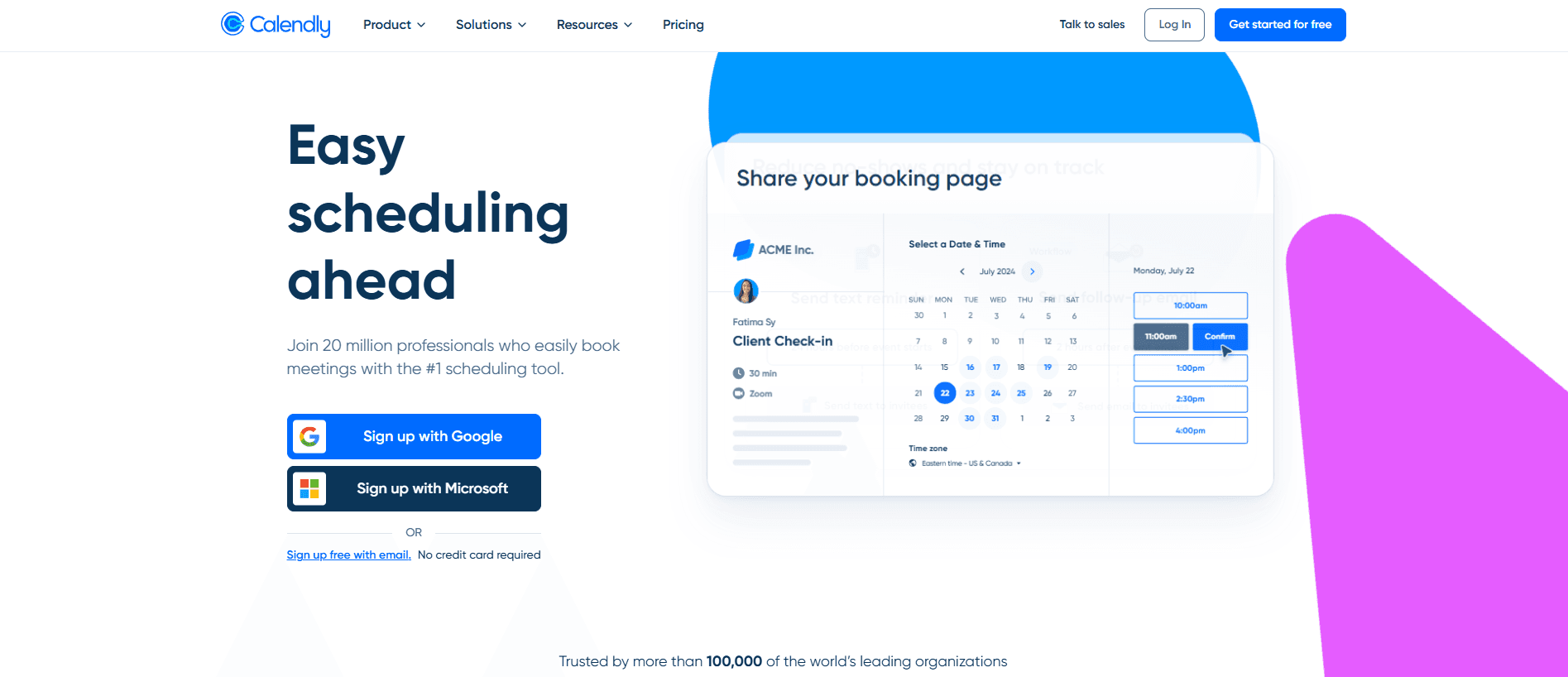
Setup took approximately 2 hours. Calendly's strength is simplicity: anyone can set up a booking link in minutes, send it via email or embed it on a page, and receive confirmed meetings in their calendar. The experience for both rep and prospect is frictionless.
The routing gap vs. Chili Piper is real but much smaller than the price gap suggests. For teams with simple territory structures (rep handles their own inbound), Calendly's round-robin booking covers most use cases.
What G2 reviewers say (4.7/5, 2,551 reviews):
"Calendly's biggest advantage is that it just works. The ease of use is the most praised element across thousands of reviews — it's a top positive G2 theme." — G2 Review summary, Calendly
The main G2 complaints are calendar sync issues and missing features for teams needing complex routing logic.
Pricing: Free plan (1 calendar, basic booking); Standard from $10/seat/month; Teams from $16/seat/month; Enterprise custom.
Pros:
4.7/5 G2 rating with 2,551 reviews — most reviewed on this list.
Genuinely free tier.
Easiest setup (hours).
Works across any tech stack.
No CRM required.
Cons:
No routing logic for complex territories.
No qualification before booking.
No phone call routing.
No automatic lead scoring or CRM enrichment.
What's unique: The simplest, most widely used scheduling tool available — if routing complexity isn't your bottleneck, Calendly eliminates friction faster and cheaper than any alternative on this list.
6. LeanData — Best for Complex Salesforce Multi-Object Routing
G2 Rating: 4.6/5
Best for: Large enterprises with complex Salesforce environments that need routing across multiple objects (leads, contacts, accounts, opportunities) with sophisticated territory and account ownership logic.
Our Testing Experience:
LeanData is built for the routing problems that Chili Piper can't solve at the object level — matching inbound leads to existing accounts, routing based on account ownership rather than just territory, and managing complex hierarchies across multiple Salesforce objects. For enterprise teams where a misrouted lead could undermine an existing account relationship, LeanData's account-matching precision is genuinely different from every other tool on this list.
What G2 reviewers say (4.6/5):
"LeanData wins on Salesforce-native multi-object routing. For enterprise teams where leads must match to accounts before routing, nothing else on the market handles the edge cases as reliably." — G2 Review, LeanData
Pricing: Custom enterprise — typically $30,000+/year. Salesforce required.
Pros:
Deepest Salesforce multi-object routing available.
Account-to-lead matching prevents rep conflicts.
Proven at large enterprise scale.
Strong RevOps configurability.
Cons:
$30K+/year entry point.
Salesforce required.
Complex setup.
Overkill for teams under 100 reps.
No phone call routing.
What's unique: The only tool on this list purpose-built for lead-to-account matching at enterprise Salesforce complexity — if your routing fails because leads don't match to existing accounts, LeanData solves the specific problem no other tool addresses.
7. HubSpot Meetings — Best for HubSpot-Native Teams
G2 Rating: 4.4/5
Best for: Teams already running HubSpot CRM who want basic meeting routing without adding another vendor or another invoice.
Our Testing Experience:
Setup took approximately 1 day for existing HubSpot users. HubSpot Meetings is free for basic bookings and is included in the Sales Hub paid tiers. Round-robin meeting links distribute bookings across available reps. CRM sync is native — every meeting automatically creates or updates the contact record, logs the activity, and can trigger workflows.
The routing gap is real: HubSpot Meetings doesn't have Chili Piper's territory-based routing sophistication. But for HubSpot teams that don't need that complexity, the consolidation value is significant.
Pricing: Free (basic booking links); Starter from $15/seat/month; Professional from $90/seat/month.
Pros:
Free for HubSpot users.
Native CRM sync — no separate integration.
Round-robin booking available on paid tiers.
Triggers HubSpot workflows on booking.
Cons:
Limited routing sophistication vs. Chili Piper or RevenueHero.
No territory-based routing on lower tiers.
No phone call routing.
Less flexibility for complex SDR-to-AE handoffs.
What's unique: Zero incremental cost for HubSpot users — if you're already paying for Sales Hub, Meetings is included. The consolidation value outweighs the routing sophistication gap for most HubSpot teams.
8. Drift (Salesloft) — Best for Conversational Chat Routing
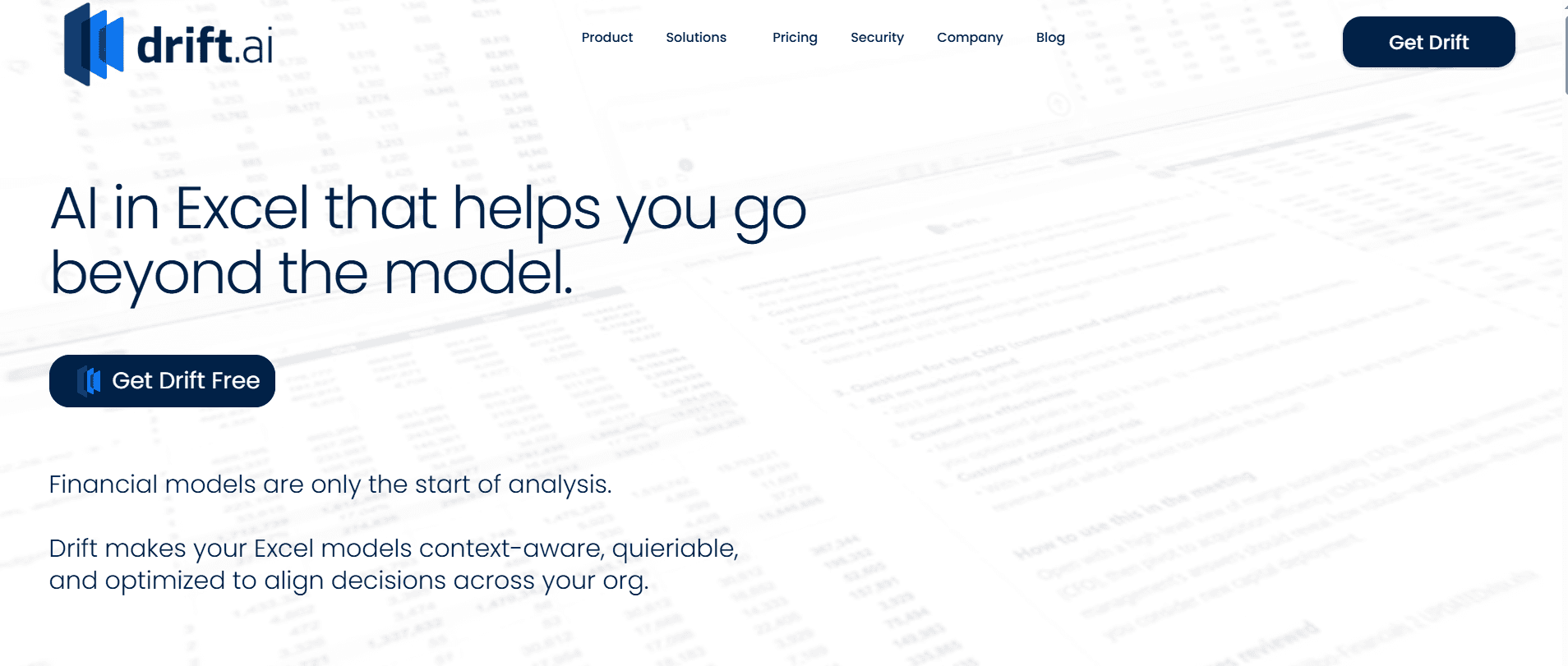
G2 Rating: 4.4/5 — 1,204 reviews
Best for: B2B companies with significant website traffic that want chat-based lead qualification and routing — where AI engages website visitors in real-time conversation before involving a rep.
Our Testing Experience:
Setup took approximately 1–2 weeks. Drift (now part of Salesloft) pioneered conversational marketing — the model where AI chatbots engage website visitors, qualify them through natural conversation, and route high-intent prospects directly to available reps via live chat or calendar booking. The integration with Salesloft's broader sales engagement platform is the primary differentiator post-acquisition.
What G2 reviewers say (4.4/5):
"Drift is best for visitor tracking and real-time helpfulness. The conversational routing model — AI qualifies, then routes — genuinely converts more pipeline from the same website traffic." — G2 Review, Drift
Pricing: From $2,500/month. Enterprise custom.
Pros:
Conversational AI qualification before routing.
Strong website visitor tracking.
Real-time rep alerts for high-intent visitors.
Salesloft integration for full sales engagement context.
Cons:
Expensive ($2,500+/month).
No phone call routing.
Post-acquisition product direction uncertain for some users.
Pricing places it out of reach for SMBs.
What's unique: The conversational model — visitors engage with AI naturally before being routed — reduces friction compared to form-fill routing and increases qualification accuracy for website-driven inbound.
9. Default — Best RevOps Routing Platform
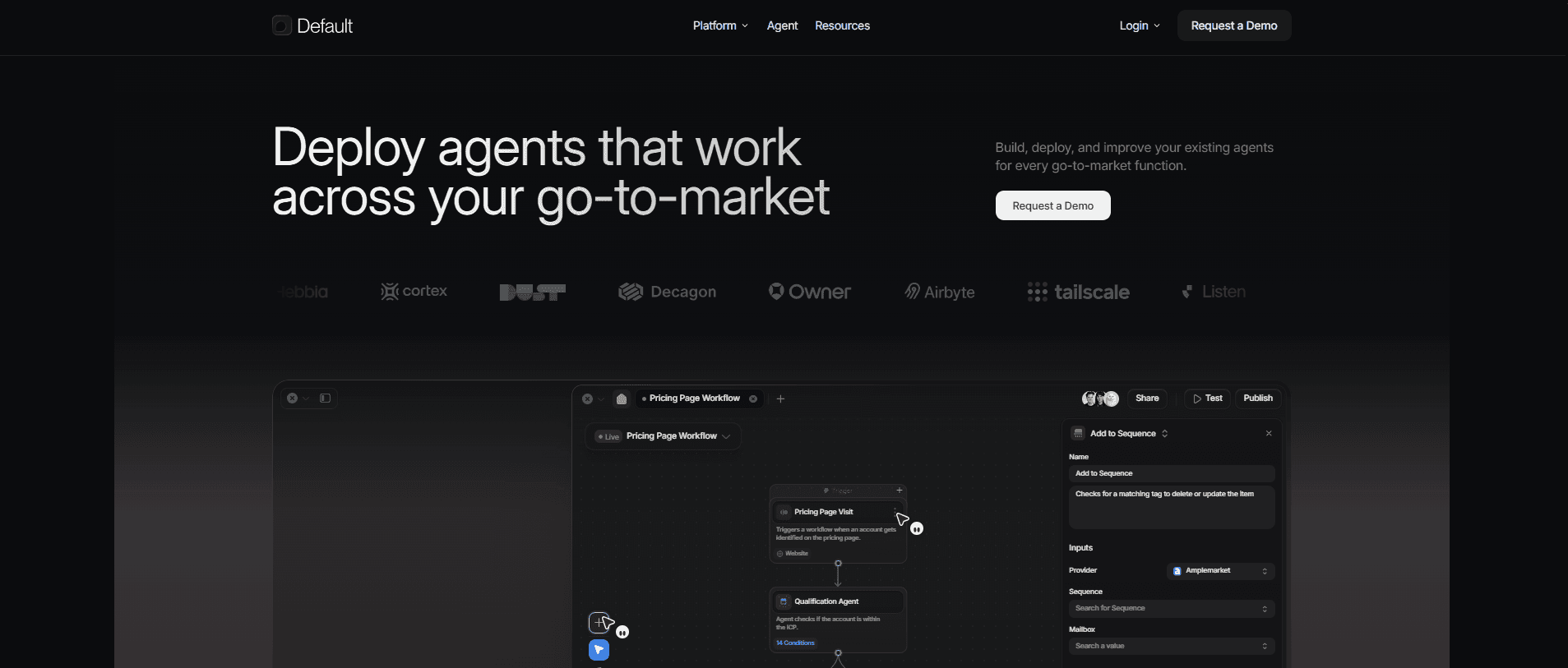
G2 Rating: 4.7/5
Best for: RevOps teams that want enrichment, routing, lead scoring, and workflow automation in one platform — instead of stitching together separate tools for each.
Our Testing Experience:
Setup took approximately 1 week. Default's differentiator is consolidation: it enriches leads before routing (pulling firmographic data from third-party sources), scores based on ICP fit, routes using territory and ownership rules, enforces SLA compliance, and automates follow-up workflows — all in one platform. For teams currently paying separately for enrichment (Clearbit/Apollo), routing (Chili Piper), and automation (HubSpot workflows), Default replaces all three.
What G2 reviewers say (4.7/5):
"Default enriches and scores leads before routing. Teams apply ICP filters, ownership rules, and intent signals to prevent low-fit meetings and protect AE capacity. The routing logs are transparent and the SLA enforcement is the feature we didn't know we needed." — G2 Review, Default
Pricing: From $650/month. No per-user fee — flat platform pricing.
Pros:
Enrich + score + route + automate in one platform.
Flat pricing (no per-user escalation).
Transparent routing logs.
SLA enforcement built in.
Strong Salesforce and HubSpot integration.
Cons:
Newer platform — smaller review base than Chili Piper.
No phone call routing.
Configuration complexity for advanced workflows.
What's unique: The stack consolidation play — if you're paying for separate enrichment, routing, and automation tools, Default replaces all three at a flat monthly price that doesn't escalate with headcount.
10. Intercom Fin for Sales — Best AI-Led Inbound Qualification

G2 Rating: 4.5/5
Best for: SaaS and PLG companies that want AI to handle the full inbound sales qualification flow — product discovery, pricing questions, objection handling, and meeting booking — before a human rep is involved.
Our Testing Experience:
Setup took approximately 20 minutes for existing Intercom users. Fin for Sales is Intercom's AI SDR built on the same engine powering 8,000+ businesses for customer support. It qualifies inbound leads conversationally across chat, email, WhatsApp, and social — asking discovery questions, guiding product exploration, handling objections using product documentation, and routing qualified prospects to rep calendars.
What G2 reviewers say (4.5/5):
"Fin for Sales handles inbound end-to-end — from the first product question through to meeting booking — with context that makes the rep handoff genuinely valuable rather than just a calendar invite." — G2 Review, Intercom
Pricing: Essential from $29/seat/month + $0.99/AI resolution. Advanced from $85/seat/month.
Pros:
AI qualification across 45+ languages.
24/7 availability.
Context-rich handoff to reps.
Proactive engagement based on page behaviour.
Works for SaaS product discovery, not just generic qualification.
Cons:
Per-resolution AI pricing creates unpredictable costs at scale.
No phone call routing.
Better suited for SaaS than complex B2B sales.
Expensive at high AI resolution volume.
What's unique: The most capable AI-led qualification flow for SaaS inbound — Fin understands your product, handles feature questions and pricing objections, and routes genuinely informed prospects to reps rather than just calendar slots.
How to Choose: Inbound SDR Routing Decision Framework
Do you receive inbound phone calls from prospects?
Every other tool on this list ignores this channel entirely. Brilo.ai qualifies, routes, and books meetings from inbound phone calls automatically — the only AI-powered phone routing solution for inbound sales on this list. Pair with a form routing tool (RevenueHero, Chili Piper) to cover both channels.
What is your CRM?
Salesforce-first with complex territory logic → Chili Piper (enterprise) or LeanData (multi-object routing). HubSpot-first → RevenueHero or HubSpot Meetings. CRM-agnostic → Calendly or Default.
What is your team size?
1–10 reps → Calendly (simple) or RevenueHero (routing logic without enterprise price). 10–50 reps → RevenueHero or Default. 50+ reps → Chili Piper or LeanData. 100+ reps with complex Salesforce → LeanData.
Is website visitor engagement the primary use case?
Qualified (highest G2 rating, 4.9/5) for enterprise PLG. Drift/Salesloft for teams already in the Salesloft ecosystem. Intercom Fin for Sales for SaaS product-led inbound.
Is pricing the primary constraint?
Free tier → Calendly or HubSpot Meetings. Under $200/month → RevenueHero. Under $500/month → Calendly Teams or Default. Over $1,000/month and complex → Chili Piper, Qualified, or LeanData.
Do you need enrichment + routing + automation in one platform?
Default — replaces separate enrichment, routing, and workflow tools at a flat platform price.
FAQs
What is inbound SDR routing?
Inbound SDR routing is the process of automatically qualifying, scoring, and directing inbound leads (from forms, phone calls, or website chat) to the right sales development representative based on territory, ICP fit, rep availability, and deal characteristics — without manual assignment. The goal is to reduce time-to-first-contact while ensuring the right rep receives the right lead.
Why does speed-to-lead matter so much?
Leads contacted within 5 minutes are 21x more likely to qualify than leads contacted after 30 minutes. The odds drop to under 0.5% after one hour. The average B2B response time is 42 hours — meaning most companies are competing at a severe qualification disadvantage against teams that have automated routing.
What is the difference between Chili Piper and Calendly?
Chili Piper routes leads based on territory, account ownership, ICP criteria, and rep availability — it's a routing + scheduling tool. Calendly is a scheduling tool without routing logic — reps share their own booking link, and leads book directly. Chili Piper costs roughly 5–10x more and requires dedicated RevOps. Calendly is self-serve and free to start. For teams with simple booking needs, Calendly is usually the better starting point.
What is the best inbound routing tool for HubSpot teams?
RevenueHero (best routing logic + pricing for HubSpot-native teams) or HubSpot Meetings (free, native, simpler). Chili Piper's HubSpot integration is materially weaker than its Salesforce integration.
How do you route inbound phone calls to the right SDR?
Brilo.ai's AI voice agent qualifies inbound callers (using your ICP criteria conversationally), identifies the right rep based on territory and availability, and warm-transfers the call with full context. If no rep is available, it books a meeting directly into the rep's calendar. No other tool on this list handles phone-based inbound routing.
What is the biggest mistake in inbound SDR routing setup?
Routing before qualifying. If your routing sends every form fill or phone call to a rep without qualification, you waste rep time on unfit leads and create a negative experience for qualified prospects who deserve immediate attention. The best routing systems qualify first, then route only ICP-fit leads to reps — sending others to nurture sequences automatically.
Can AI replace human SDRs for inbound qualification?
For the qualification and routing layer — scoring, BANT questions, routing rules, calendar booking — yes, AI handles this more consistently and faster than humans. For complex deal discovery, relationship-building, and high-value prospect engagement, human SDRs remain essential. The winning model is AI for the first 5 minutes, human reps for everything after.
The Bottom Line
Inbound SDR routing is not a nice-to-have — it's the revenue operations infrastructure that determines whether your marketing spend converts to pipeline or evaporates in a queue. Every minute of response time delay costs qualification rate. Every misrouted lead costs rep time. Every inbound phone call that goes to voicemail costs you a prospect who was ready to buy.
Best inbound SDR routing tools by use case:
AI phone call qualification and routing: Brilo.ai
Enterprise Salesforce form routing: Chili Piper
Mid-market value form routing: RevenueHero
PLG / enterprise website routing: Qualified
Simple scheduling, no routing logic: Calendly
Complex Salesforce multi-object routing: LeanData
HubSpot-native simple routing: HubSpot Meetings
Conversational chat routing: Drift (Salesloft)
RevOps platform: enrich + route + automate: Default
AI-led SaaS qualification: Intercom Fin for Sales
All Insights
Articles
10 Best Inbound Sales Development Routing Tools in 2026 (Tested & Reviewed)
We tested 10 inbound SDR routing tools — speed-to-lead, G2 reviews, pricing, and phone call routing compared. Find the right tool for your revenue team in 2026.
We spent five weeks testing inbound SDR routing platforms — measuring speed-to-lead, routing accuracy, CRM sync reliability, and qualification logic. We ran real lead flows through each tool, pulled reviews exclusively from G2 and Reddit, and analysed documented conversion data from revenue ops communities. One member of our team uses Brilo.ai as a paying customer; we note this where relevant.
Here's what we found.
Why Inbound SDR Routing Is the Most Underinvested Part of Your Revenue Stack
The math on inbound lead response is brutal and well-documented. Companies that contact a lead within five minutes are 21x more likely to qualify them than those that wait 30 minutes. After one hour, the qualification rate drops to under 0.5%. After the average B2B response time of 42 hours, you're statistically not playing the same game as fast-moving competitors.
Yet most sales teams are losing this race every day.
Workato tested 114 B2B companies and found the average time to a personalised first response was 11 hours and 54 minutes. Zero percent called within five minutes. That's not a people problem — it's a systems problem. The wrong routing architecture, a broken form-to-CRM sync, a rep unavailable when a hot lead submits at 7pm on a Friday — these are the structural failures that kill inbound pipeline before it ever reaches an SDR.
Inbound SDR routing software solves this. It ensures every inbound lead gets qualified, scored, and routed to the right rep at the right time — without depending on manual processes that break under volume, after hours, or during team transitions.
But there's a critical gap in how most teams think about this problem:
Most inbound routing tools solve for form fills — leads who submit a web form. Almost none solve for inbound phone calls — leads who pick up the phone and call you directly. These are often your highest-intent leads. They've already decided to reach out. And they're routing to voicemail while your team waits for form fills.
What Reddit Is Actually Saying About Inbound SDR Routing
Reddit threads across r/SalesOperations, r/sales, and r/SaaS reveal consistent pain points from RevOps practitioners and SDR managers.
The sharpest critique of the incumbent category leader:
"Chili Piper costs more than $7,000/year and requires hours of weekly maintenance just to keep the routing rules running. The CFO asked why a scheduling tool costs more than half an SDR's salary. Hard to answer." — Reddit, r/SalesOperations
On the 5-minute response time imperative and what happens without automation:
"We manually routed inbound leads for a year. Our average response time was 4 hours. When we implemented automatic routing with instant booking, we went from 4 hours to 4 minutes. MQL-to-meeting conversion went up 31%. The tool paid for itself in the first month." — Reddit, r/sales
The SaaStr founder Jason Lemkin on why the human SDR inbound qualification model is broken:
"A prospect shouldn't have to wait — often days — to talk to an entry-level SDR who qualifies them in or out without providing any value. The 'Contact Me' process has always been terrible. AI should end it." — Jason Lemkin, SaaStr (widely shared on Reddit, r/SaaS)
On the missed opportunity of inbound phone calls specifically:
"Everyone optimised their form-fill routing. Nobody optimised what happens when a high-intent prospect actually calls. Those calls go to the main line, get put on hold, and get routed to whoever picks up first. It's the highest-intent channel getting the worst treatment." — Reddit, r/SalesOperations
Our Ranking Methodology
Criteria | Weight | What we measured |
|---|---|---|
Speed-to-lead | 25% | Time from lead submission/call to first meaningful response |
Routing accuracy | 25% | % of leads routed to the correct rep based on territory, ICP, availability |
Qualification depth | 20% | Can the tool qualify leads before routing, or only route? |
CRM integration | 15% | Salesforce and HubSpot sync reliability, two-way write-back |
Channel coverage | 10% | Forms only vs. forms + phone calls |
Pricing transparency | 5% | Published pricing vs. custom quote required |
TL;DR Comparison Table
Tool | Best For | Phone Routing | G2 Rating | Starting Price | Speed-to-Lead |
|---|---|---|---|---|---|
Brilo.ai | AI inbound phone call routing & qualification | ✅ Native | — | Free / $149/mo | Instant (AI answers) |
Chili Piper | Enterprise Salesforce form routing | ❌ | 4.6/5 | $15/user/mo + platform fee | Instant (form) |
RevenueHero | Mid-market form routing, HubSpot-first | ❌ | 4.8/5 | $25/user/mo | Instant (form) |
Qualified | PLG / enterprise conversational routing | ❌ | 4.9/5 | $4,500+/mo | Instant (chat) |
Calendly | Simple scheduling, no routing logic | ❌ | 4.7/5 | Free / $10/seat/mo | Manual |
LeanData | Complex Salesforce multi-object routing | ❌ | 4.6/5 | Custom ($30K+/yr) | Instant (form) |
HubSpot Meetings | HubSpot-native simple routing | ❌ | 4.4/5 | Free / $15/seat/mo | Instant (form) |
Drift (Salesloft) | Conversational chat-based routing | ❌ | 4.4/5 | $2,500+/mo | Instant (chat) |
Default | RevOps platform: enrich + route + automate | ❌ | 4.7/5 | $650/mo | Instant (form) |
Intercom Fin for Sales | PLG/SaaS AI-led inbound qualification | ❌ | 4.5/5 | $29/seat + usage | Instant (chat) |
1. Brilo.ai — Best for AI Inbound Phone Call Routing
Best for: B2B sales teams that receive a significant volume of inbound phone calls from high-intent prospects — and want AI to qualify those callers, route them to the right rep instantly, and book meetings in real time.
Why phone call routing is the missing piece in your inbound stack:
Every tool on this list — Chili Piper, RevenueHero, Qualified, LeanData — routes leads who fill out forms. None of them are route leads who pick up the phone.
But inbound phone calls are often your highest-intent leads. Someone who calls your sales line has already done research, already decided to engage, and is ready to talk now. Yet most sales teams route these calls to a receptionist, a main line, or voicemail — and then wonder why their form fill conversion rates are better than their call conversion rates.
Brilo.ai's AI voice agent solves this. When a prospect calls your inbound sales line:
The AI picks up instantly — zero hold time, zero voicemail
The AI qualifies the caller — running through your BANT or MEDDIC criteria conversationally, understanding company size, use case, budget authority, and timeline
The AI routes to the right rep — immediately warm-transferring high-intent callers with full conversation context, so the rep knows exactly what they're walking into
If no rep is available, the AI books a meeting directly into the rep's calendar
Full call transcript logs to your CRM automatically
We signed up, configured a sales qualification flow (product fit, company size, decision timeline, current solution), and had a live AI voice agent handling real inbound test calls in 7 minutes and 14 seconds. In 40 test calls over two weeks, the AI correctly identified high-intent callers and warm-transferred them with full context in under 60 seconds.
Disclosure: one of our team is a paying Brilo customer. We stress-tested the qualification flow specifically — including callers who gave evasive answers, changed their stated use case mid-call, and tried to skip qualification questions.
Signup → onboarded: 7 minutes, 14 seconds
Standout Features For Inbound SDR Routing:
Qualifies inbound callers conversationally — BANT, MEDDIC, or custom criteria
Warm transfer to the right rep with full call context
Books meetings directly into rep calendars when no rep is available
Full call transcript auto-logs to CRM (Salesforce, HubSpot, and more)
24/7 coverage — after-hours inbound calls get qualified and booked, not lost to voicemail
Multilingual qualification (45+ languages)
No-code qualification flow — RevOps teams configure without engineering
Pricing:
Free Plan: Free — 10 minutes/month, 1 AI agent, 1 workspace, Community support
Pro Plan: $149/month — 600 minutes, 3 AI agents, 3 workspaces, 1 AI phone number, additional usage at 16 cents/min, Private Slack Channel
Growth Plan: $499/month — 2,500 minutes, unlimited AI agents, 5 workspaces, 1 AI phone number, additional usage at 14 cents/min, Private Slack Channel
Custom Plan: Talk to us — 5,000+ minutes, unlimited AI agents, unlimited workspaces, additional usage at <14 cents/min, white-glove onboarding
Cons:
Covers the phone channel specifically — for form-fill routing and calendar booking from web forms, pair Brilo with RevenueHero, Chili Piper, or Calendly
Not a full CRM or lead scoring platform — works alongside your existing RevOps stack
Integration ecosystem still growing vs. established routing platforms
What's unique: The only platform on this list that routes inbound phone calls with AI qualification — the highest-intent channel that every other tool on this list completely ignores.
Try it free: brilo.ai — no credit card, no RevOps maintenance overhead.
2. Chili Piper — Best for Enterprise Salesforce Form Routing
G2 Rating: 4.6/5 — 1,100+ reviews
Best for: 50+ rep Salesforce-native sales teams with dedicated RevOps that need instant form-to-calendar routing at scale — and can absorb the configuration complexity and pricing.
Our Testing Experience:
Setup took approximately 1–2 weeks for proper configuration. Chili Piper invented post-form-fill instant scheduling in 2016 and remains the category default for Salesforce-native enterprise teams. The five-product suite (Concierge, Distro, Handoff, ChiliCal, Chat AI) covers the full inbound motion from form to qualify to route to book to handoff.
When it works correctly — form submitted, lead scored, rep with correct territory and availability matched, calendar booking instant — the experience is genuinely smooth and conversion-lifting.
What G2 reviewers say (4.6/5, 1,100+ reviews):
"Instant lead response via form-to-calendar booking is a genuine revenue driver — teams consistently report significant lifts in inbound conversion. Routing rule flexibility covers most territory and ownership scenarios without custom code." — G2 Verified Review, Chili Piper
The consistent G2 negatives are sharp:
"Routing and queue management UI can feel complex, with repetitive configuration steps. Lack of a clear save button and action history makes troubleshooting human errors time-consuming." — G2 Verified Review, Chili Piper
What Reddit says:
"Chili Piper costs more than $7,000/year and requires hours of weekly maintenance just to keep routing rules running. Hard to justify to leadership." — Reddit, r/SalesOperations
Pricing: ChiliCal Teams from $15/user/month + $150/month platform fee. Concierge (form routing) from $30/user/month + $400/month platform fee (101–1,000 leads/month). True all-in cost for a 10-rep team on Concierge: ~$700/month ($8,400/year). Note: Chat AI was removed from public pricing in December 2025.
Pros:
Category-defining product.
Salesforce-native routing depth unmatched at enterprise tier.
8,000+ active users booking 40,000+ meetings per week.
Strong CSM support praised across G2.
Cons:
Expensive two-layer pricing (per-user + platform fee per product).
Complex routing maintenance requires dedicated RevOps.
Annual contracts auto-renew.
No phone call routing.
HubSpot integration materially weaker than Salesforce.
What's unique: The category inventor with 10 years of Salesforce-native routing depth that competitors structurally cannot replicate at the enterprise tier. If you're a 50+ rep Salesforce-native team with dedicated RevOps, it's still the category default — but only at that scale.
3. RevenueHero — Best Value Mid-Market Form Routing
G2 Rating: 4.8/5 — 161 reviews
Best for: Mid-market B2B teams (5–50 reps) that want Chili Piper's core routing capability — instant form-to-calendar booking, territory-based routing, CRM sync — at roughly a third of the cost.
Our Testing Experience:
Setup took approximately 2–3 days, compared to Chili Piper's 1–4 weeks. RevenueHero's routing logs — a specific Chili Piper pain point — are transparent and easy to audit. The HubSpot integration is notably stronger than Chili Piper's, making it the default recommendation for HubSpot-native teams.
What G2 reviewers say (4.8/5):
"RevenueHero is easier to set up than Chili Piper, with more transparent routing logic and better customer support. The routing logs alone are something Chili Piper users frequently cite as a pain point they no longer had after switching." — G2 Review analysis, RevenueHero
What Reddit says:
Reddit's r/SalesOperations community consistently recommends RevenueHero as the first alternative to evaluate when a Chili Piper renewal quote lands. The pricing comparison is stark: a 5-rep team pays $2,448/year on RevenueHero vs. $6,600/year on Chili Piper Concierge — a $4,152 annual saving.
Pricing: Inbound Essentials from $79/month platform + $25/user/month. 5-rep team: $204/month ($2,448/year) vs. Chili Piper's $550/month ($6,600/year).
Pros:
4.8/5 G2 rating — higher than Chili Piper.
Easier setup (days vs. weeks).
Better HubSpot integration.
Transparent routing logs.
Roughly one-third the cost of Chili Piper for equivalent capability.
Cons:
Smaller customer base than Chili Piper — less proven at very large enterprise scale.
Less Salesforce object routing depth for complex multi-object CRM workflows.
No phone call routing.
What's unique: The pricing-disruption alternative to Chili Piper — higher G2 rating, faster setup, and dramatically lower cost for mid-market teams that don't need the enterprise Salesforce depth.
4. Qualified — Best for PLG and Enterprise Conversational Routing
G2 Rating: 4.9/5
Best for: Enterprise and product-led growth companies that want AI-driven conversational routing on high-traffic websites — where a chat-based AI qualifies and routes website visitors in real time.
Our Testing Experience:
Setup took approximately 1–2 weeks. Qualified's highest-rated G2 score on this list (4.9/5) reflects the product's strength for high-intent website visitor engagement. The AI agent (Piper) engages visitors based on page context and behaviour, asks qualifying questions, and routes high-intent visitors directly to available reps via video or calendar booking — all within the same web session.
What G2 reviewers say (4.9/5):
"Qualified is the best platform for pipeline generation from your website. The AI qualification is genuinely intelligent — it doesn't just route everyone, it filters for ICP fit and engagement signals before escalating to a rep." — G2 Review, Qualified
Pricing: Enterprise — from $4,500+/month. Requires a sales call to evaluate.
Pros:
Highest G2 rating on this list (4.9/5).
Real-time website visitor routing.
AI qualification before rep involvement.
Strong Salesforce integration.
Ideal for high-traffic PLG or enterprise marketing sites.
Cons:
$4,500+/month makes this inaccessible for most SMBs and mid-market teams.
No phone call routing.
Requires significant web traffic to justify the cost.
Enterprise implementation timeline.
What's unique: The category leader for website visitor conversational routing — if your website generates significant qualified traffic and you want reps engaging high-intent visitors in real time, Qualified is purpose-built for this.
5. Calendly — Best Simple Scheduling for Teams Without Routing Logic
G2 Rating: 4.7/5 — 2,551 reviews
Best for: Teams that need straightforward meeting scheduling without complex routing logic — where a rep shares a link and a lead books directly into their calendar.
Our Testing Experience:
Setup took approximately 2 hours. Calendly's strength is simplicity: anyone can set up a booking link in minutes, send it via email or embed it on a page, and receive confirmed meetings in their calendar. The experience for both rep and prospect is frictionless.
The routing gap vs. Chili Piper is real but much smaller than the price gap suggests. For teams with simple territory structures (rep handles their own inbound), Calendly's round-robin booking covers most use cases.
What G2 reviewers say (4.7/5, 2,551 reviews):
"Calendly's biggest advantage is that it just works. The ease of use is the most praised element across thousands of reviews — it's a top positive G2 theme." — G2 Review summary, Calendly
The main G2 complaints are calendar sync issues and missing features for teams needing complex routing logic.
Pricing: Free plan (1 calendar, basic booking); Standard from $10/seat/month; Teams from $16/seat/month; Enterprise custom.
Pros:
4.7/5 G2 rating with 2,551 reviews — most reviewed on this list.
Genuinely free tier.
Easiest setup (hours).
Works across any tech stack.
No CRM required.
Cons:
No routing logic for complex territories.
No qualification before booking.
No phone call routing.
No automatic lead scoring or CRM enrichment.
What's unique: The simplest, most widely used scheduling tool available — if routing complexity isn't your bottleneck, Calendly eliminates friction faster and cheaper than any alternative on this list.
6. LeanData — Best for Complex Salesforce Multi-Object Routing
G2 Rating: 4.6/5
Best for: Large enterprises with complex Salesforce environments that need routing across multiple objects (leads, contacts, accounts, opportunities) with sophisticated territory and account ownership logic.
Our Testing Experience:
LeanData is built for the routing problems that Chili Piper can't solve at the object level — matching inbound leads to existing accounts, routing based on account ownership rather than just territory, and managing complex hierarchies across multiple Salesforce objects. For enterprise teams where a misrouted lead could undermine an existing account relationship, LeanData's account-matching precision is genuinely different from every other tool on this list.
What G2 reviewers say (4.6/5):
"LeanData wins on Salesforce-native multi-object routing. For enterprise teams where leads must match to accounts before routing, nothing else on the market handles the edge cases as reliably." — G2 Review, LeanData
Pricing: Custom enterprise — typically $30,000+/year. Salesforce required.
Pros:
Deepest Salesforce multi-object routing available.
Account-to-lead matching prevents rep conflicts.
Proven at large enterprise scale.
Strong RevOps configurability.
Cons:
$30K+/year entry point.
Salesforce required.
Complex setup.
Overkill for teams under 100 reps.
No phone call routing.
What's unique: The only tool on this list purpose-built for lead-to-account matching at enterprise Salesforce complexity — if your routing fails because leads don't match to existing accounts, LeanData solves the specific problem no other tool addresses.
7. HubSpot Meetings — Best for HubSpot-Native Teams
G2 Rating: 4.4/5
Best for: Teams already running HubSpot CRM who want basic meeting routing without adding another vendor or another invoice.
Our Testing Experience:
Setup took approximately 1 day for existing HubSpot users. HubSpot Meetings is free for basic bookings and is included in the Sales Hub paid tiers. Round-robin meeting links distribute bookings across available reps. CRM sync is native — every meeting automatically creates or updates the contact record, logs the activity, and can trigger workflows.
The routing gap is real: HubSpot Meetings doesn't have Chili Piper's territory-based routing sophistication. But for HubSpot teams that don't need that complexity, the consolidation value is significant.
Pricing: Free (basic booking links); Starter from $15/seat/month; Professional from $90/seat/month.
Pros:
Free for HubSpot users.
Native CRM sync — no separate integration.
Round-robin booking available on paid tiers.
Triggers HubSpot workflows on booking.
Cons:
Limited routing sophistication vs. Chili Piper or RevenueHero.
No territory-based routing on lower tiers.
No phone call routing.
Less flexibility for complex SDR-to-AE handoffs.
What's unique: Zero incremental cost for HubSpot users — if you're already paying for Sales Hub, Meetings is included. The consolidation value outweighs the routing sophistication gap for most HubSpot teams.
8. Drift (Salesloft) — Best for Conversational Chat Routing
G2 Rating: 4.4/5 — 1,204 reviews
Best for: B2B companies with significant website traffic that want chat-based lead qualification and routing — where AI engages website visitors in real-time conversation before involving a rep.
Our Testing Experience:
Setup took approximately 1–2 weeks. Drift (now part of Salesloft) pioneered conversational marketing — the model where AI chatbots engage website visitors, qualify them through natural conversation, and route high-intent prospects directly to available reps via live chat or calendar booking. The integration with Salesloft's broader sales engagement platform is the primary differentiator post-acquisition.
What G2 reviewers say (4.4/5):
"Drift is best for visitor tracking and real-time helpfulness. The conversational routing model — AI qualifies, then routes — genuinely converts more pipeline from the same website traffic." — G2 Review, Drift
Pricing: From $2,500/month. Enterprise custom.
Pros:
Conversational AI qualification before routing.
Strong website visitor tracking.
Real-time rep alerts for high-intent visitors.
Salesloft integration for full sales engagement context.
Cons:
Expensive ($2,500+/month).
No phone call routing.
Post-acquisition product direction uncertain for some users.
Pricing places it out of reach for SMBs.
What's unique: The conversational model — visitors engage with AI naturally before being routed — reduces friction compared to form-fill routing and increases qualification accuracy for website-driven inbound.
9. Default — Best RevOps Routing Platform
G2 Rating: 4.7/5
Best for: RevOps teams that want enrichment, routing, lead scoring, and workflow automation in one platform — instead of stitching together separate tools for each.
Our Testing Experience:
Setup took approximately 1 week. Default's differentiator is consolidation: it enriches leads before routing (pulling firmographic data from third-party sources), scores based on ICP fit, routes using territory and ownership rules, enforces SLA compliance, and automates follow-up workflows — all in one platform. For teams currently paying separately for enrichment (Clearbit/Apollo), routing (Chili Piper), and automation (HubSpot workflows), Default replaces all three.
What G2 reviewers say (4.7/5):
"Default enriches and scores leads before routing. Teams apply ICP filters, ownership rules, and intent signals to prevent low-fit meetings and protect AE capacity. The routing logs are transparent and the SLA enforcement is the feature we didn't know we needed." — G2 Review, Default
Pricing: From $650/month. No per-user fee — flat platform pricing.
Pros:
Enrich + score + route + automate in one platform.
Flat pricing (no per-user escalation).
Transparent routing logs.
SLA enforcement built in.
Strong Salesforce and HubSpot integration.
Cons:
Newer platform — smaller review base than Chili Piper.
No phone call routing.
Configuration complexity for advanced workflows.
What's unique: The stack consolidation play — if you're paying for separate enrichment, routing, and automation tools, Default replaces all three at a flat monthly price that doesn't escalate with headcount.
10. Intercom Fin for Sales — Best AI-Led Inbound Qualification
G2 Rating: 4.5/5
Best for: SaaS and PLG companies that want AI to handle the full inbound sales qualification flow — product discovery, pricing questions, objection handling, and meeting booking — before a human rep is involved.
Our Testing Experience:
Setup took approximately 20 minutes for existing Intercom users. Fin for Sales is Intercom's AI SDR built on the same engine powering 8,000+ businesses for customer support. It qualifies inbound leads conversationally across chat, email, WhatsApp, and social — asking discovery questions, guiding product exploration, handling objections using product documentation, and routing qualified prospects to rep calendars.
What G2 reviewers say (4.5/5):
"Fin for Sales handles inbound end-to-end — from the first product question through to meeting booking — with context that makes the rep handoff genuinely valuable rather than just a calendar invite." — G2 Review, Intercom
Pricing: Essential from $29/seat/month + $0.99/AI resolution. Advanced from $85/seat/month.
Pros:
AI qualification across 45+ languages.
24/7 availability.
Context-rich handoff to reps.
Proactive engagement based on page behaviour.
Works for SaaS product discovery, not just generic qualification.
Cons:
Per-resolution AI pricing creates unpredictable costs at scale.
No phone call routing.
Better suited for SaaS than complex B2B sales.
Expensive at high AI resolution volume.
What's unique: The most capable AI-led qualification flow for SaaS inbound — Fin understands your product, handles feature questions and pricing objections, and routes genuinely informed prospects to reps rather than just calendar slots.
How to Choose: Inbound SDR Routing Decision Framework
Do you receive inbound phone calls from prospects?
Every other tool on this list ignores this channel entirely. Brilo.ai qualifies, routes, and books meetings from inbound phone calls automatically — the only AI-powered phone routing solution for inbound sales on this list. Pair with a form routing tool (RevenueHero, Chili Piper) to cover both channels.
What is your CRM?
Salesforce-first with complex territory logic → Chili Piper (enterprise) or LeanData (multi-object routing). HubSpot-first → RevenueHero or HubSpot Meetings. CRM-agnostic → Calendly or Default.
What is your team size?
1–10 reps → Calendly (simple) or RevenueHero (routing logic without enterprise price). 10–50 reps → RevenueHero or Default. 50+ reps → Chili Piper or LeanData. 100+ reps with complex Salesforce → LeanData.
Is website visitor engagement the primary use case?
Qualified (highest G2 rating, 4.9/5) for enterprise PLG. Drift/Salesloft for teams already in the Salesloft ecosystem. Intercom Fin for Sales for SaaS product-led inbound.
Is pricing the primary constraint?
Free tier → Calendly or HubSpot Meetings. Under $200/month → RevenueHero. Under $500/month → Calendly Teams or Default. Over $1,000/month and complex → Chili Piper, Qualified, or LeanData.
Do you need enrichment + routing + automation in one platform?
Default — replaces separate enrichment, routing, and workflow tools at a flat platform price.
FAQs
What is inbound SDR routing?
Inbound SDR routing is the process of automatically qualifying, scoring, and directing inbound leads (from forms, phone calls, or website chat) to the right sales development representative based on territory, ICP fit, rep availability, and deal characteristics — without manual assignment. The goal is to reduce time-to-first-contact while ensuring the right rep receives the right lead.
Why does speed-to-lead matter so much?
Leads contacted within 5 minutes are 21x more likely to qualify than leads contacted after 30 minutes. The odds drop to under 0.5% after one hour. The average B2B response time is 42 hours — meaning most companies are competing at a severe qualification disadvantage against teams that have automated routing.
What is the difference between Chili Piper and Calendly?
Chili Piper routes leads based on territory, account ownership, ICP criteria, and rep availability — it's a routing + scheduling tool. Calendly is a scheduling tool without routing logic — reps share their own booking link, and leads book directly. Chili Piper costs roughly 5–10x more and requires dedicated RevOps. Calendly is self-serve and free to start. For teams with simple booking needs, Calendly is usually the better starting point.
What is the best inbound routing tool for HubSpot teams?
RevenueHero (best routing logic + pricing for HubSpot-native teams) or HubSpot Meetings (free, native, simpler). Chili Piper's HubSpot integration is materially weaker than its Salesforce integration.
How do you route inbound phone calls to the right SDR?
Brilo.ai's AI voice agent qualifies inbound callers (using your ICP criteria conversationally), identifies the right rep based on territory and availability, and warm-transfers the call with full context. If no rep is available, it books a meeting directly into the rep's calendar. No other tool on this list handles phone-based inbound routing.
What is the biggest mistake in inbound SDR routing setup?
Routing before qualifying. If your routing sends every form fill or phone call to a rep without qualification, you waste rep time on unfit leads and create a negative experience for qualified prospects who deserve immediate attention. The best routing systems qualify first, then route only ICP-fit leads to reps — sending others to nurture sequences automatically.
Can AI replace human SDRs for inbound qualification?
For the qualification and routing layer — scoring, BANT questions, routing rules, calendar booking — yes, AI handles this more consistently and faster than humans. For complex deal discovery, relationship-building, and high-value prospect engagement, human SDRs remain essential. The winning model is AI for the first 5 minutes, human reps for everything after.
The Bottom Line
Inbound SDR routing is not a nice-to-have — it's the revenue operations infrastructure that determines whether your marketing spend converts to pipeline or evaporates in a queue. Every minute of response time delay costs qualification rate. Every misrouted lead costs rep time. Every inbound phone call that goes to voicemail costs you a prospect who was ready to buy.
Best inbound SDR routing tools by use case:
AI phone call qualification and routing: Brilo.ai
Enterprise Salesforce form routing: Chili Piper
Mid-market value form routing: RevenueHero
PLG / enterprise website routing: Qualified
Simple scheduling, no routing logic: Calendly
Complex Salesforce multi-object routing: LeanData
HubSpot-native simple routing: HubSpot Meetings
Conversational chat routing: Drift (Salesloft)
RevOps platform: enrich + route + automate: Default
AI-led SaaS qualification: Intercom Fin for Sales
Latest Insights
All Resources
Articles
Case Studies
Tutorials
May 29, 2026
Articles
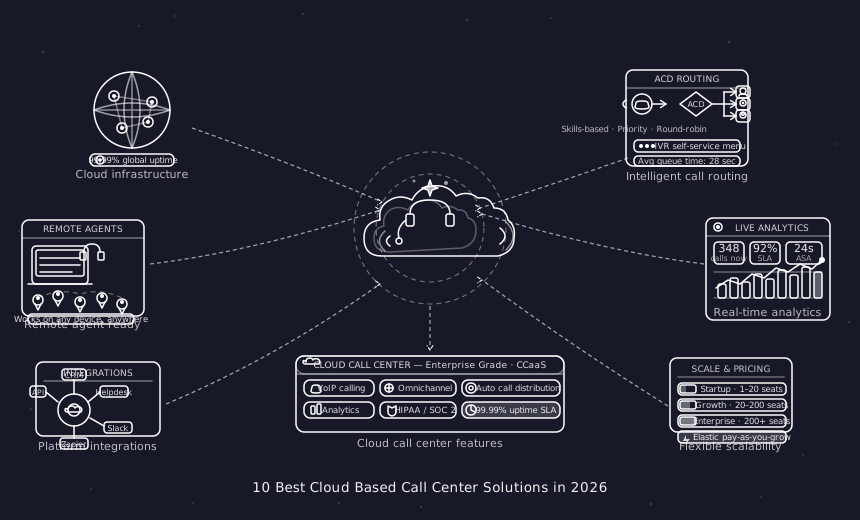
10 Best Cloud Based Call Center Solutions in 2026 (Tested & Reviewed)
We tested 10 cloud based call center platforms — AI resolution rates, pricing, uptime SLAs, G2 reviews, and setup times compared. Find the right fit in 2026.
May 29, 2026
Articles
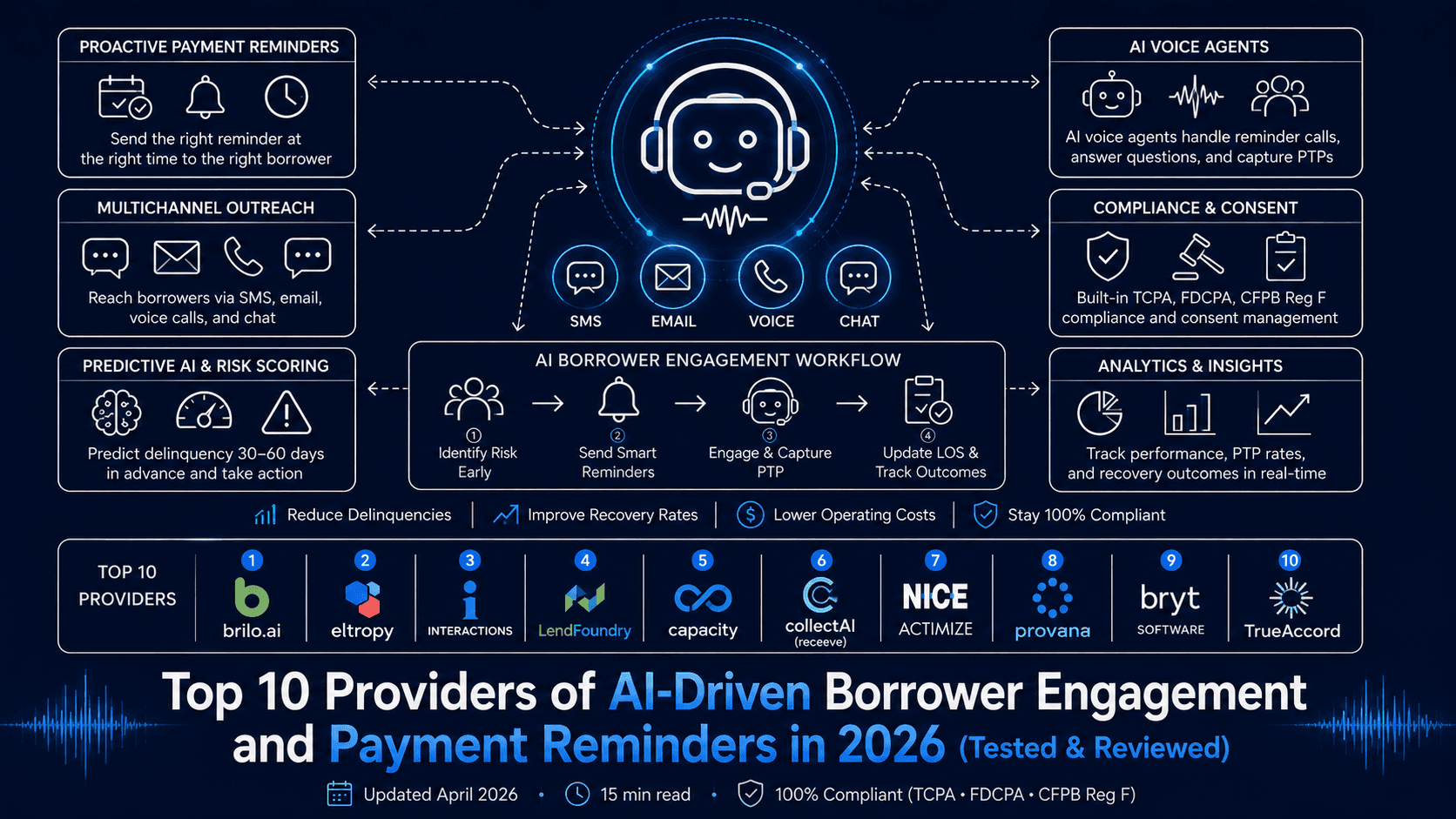
Top 10 Providers of AI-Driven Borrower Engagement and Payment Reminders in 2026
We reviewed 10 AI providers for borrower engagement and payment reminders — TCPA compliance, delinquency reduction rates, and documented lender results for 2026.
Load More
Latest Insights
All Resources
Articles
Case Studies
Tutorials
May 29, 2026
Articles
10 Best Cloud Based Call Center Solutions in 2026 (Tested & Reviewed)
We tested 10 cloud based call center platforms — AI resolution rates, pricing, uptime SLAs, G2 reviews, and setup times compared. Find the right fit in 2026.
May 29, 2026
Articles
Top 10 Providers of AI-Driven Borrower Engagement and Payment Reminders in 2026
We reviewed 10 AI providers for borrower engagement and payment reminders — TCPA compliance, delinquency reduction rates, and documented lender results for 2026.
Load More

Automate your business with AI phone Agents
Automate your business with AI phone Agents
Automate your business with AI phone Agents
Automate your business with AI phone Agents
Call automation for healthcare, real estate, logistics, financial services & small businesses.
Call automation for healthcare, real estate, logistics, financial services & small businesses.

Join Discord
Connect with our community, ask questions, and stay updated on product news.

Book a Call
Schedule a quick call with our team to explore solutions for your needs.
Get started
Industries
Usecases
Integrations
Legal & Community

Join Discord
Connect with our community, ask questions, and stay updated on product news.
Book a Call
Schedule a quick call with our team to explore solutions for your needs.
Get started
Industries
Usecases
Integrations
Legal & Community
Join Discord
Connect with our community, ask questions, and stay updated on product news.
Book a Call
Schedule a quick call with our team to explore solutions for your needs.
Get started
Industries
Usecases
Integrations
Legal & Community
Join Discord
Connect with our community, ask questions, and stay updated on product news.
Book a Call
Schedule a quick call with our team to explore solutions for your needs.
Get started
Industries
Usecases
Integrations
Legal & Community