
All Insights
Articles
10 Best Genesys Alternatives in 2026 (Tested & Reviewed)
10 Best Genesys Alternatives in 2026 (Tested & Reviewed)
10 Best Genesys Alternatives in 2026 (Tested & Reviewed)
We tested 10 Genesys alternatives — module costs exposed, WFM compared, 19-month ROI explained. Find the right CCaaS fit for your contact centre in 2026.
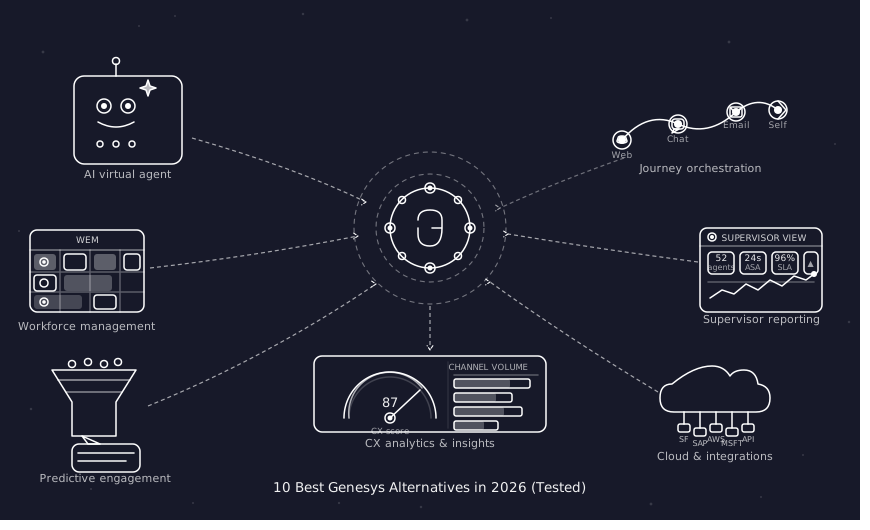
We spent three weeks evaluating every major Genesys alternative — reviewing published pricing, testing AI capabilities, assessing implementation complexity, and reading through hundreds of G2, Trustpilot, Reddit, and r/workforcemanagement reviews. One member of our team uses Brilo.ai as a paying customer; we note this where relevant.
Here's what we found.
Why Contact Centres Are Looking for Genesys Alternatives
Genesys Cloud CX is a Gartner Magic Quadrant Leader for good reason — its breadth of capability, reliability, and enterprise-grade compliance infrastructure are genuinely impressive. The frustrations that push teams to alternatives are specific, structural, and increasingly well-documented.
Module-based licensing fragments your workflows. Genesys sells capabilities in separate modules: voice, AI agent assist, workforce engagement management (WEM), and quality assurance. Each carries separate licensing and integration requirements. Teams end up managing multiple add-ons, separate billing cycles, and fragmented customer data — even within the same vendor ecosystem:
"Implementation took months, not weeks. Pricing plans became complex once we added AI features, workforce optimization, and quality management. We now span multiple add-ons, each with separate licensing." — Enterprise contact centre manager, G2
WFM is surprisingly rigid. Genesys's Workforce Management suite — a core selling point — uses only 8 weeks of historical data for forecasting, ignores public holidays in its models, and requires manual auditing for routine schedule adjustments. The r/workforcemanagement subreddit has ongoing threads documenting this rigidity compared to best-in-class WFM vendors.
ROI takes 19 months on average. G2 users document an average 19-month period before return on investment with Genesys. For mid-market businesses, this timeline creates a significant cash flow and strategic risk before value is realised.
Reporting tools trail competitors. Multiple reviews flag Genesys's out-of-the-box reporting as falling behind NICE CXone, Verint, and Five9. Legacy report templates from on-premise Genesys haven't fully transferred to the cloud product:
"They can never give you a solid explanation of how things are calculated on the backend. Data is erased when colleagues accidentally delete records and there's no restoration path." — Reddit, r/CustomerService
Integration fatigue. Connecting Genesys to CRM and back-office systems routinely requires professional services and ongoing maintenance. What should be plug-and-play often becomes a custom API project.
Pricing scales fast beyond the base rate. Genesys Cloud starts at $75/user/month (CX1, voice only) and reaches $240/user/month (CX4 with journey management and AI tokens). Once you add AI, WFM, and quality management modules, the total cost of ownership for mid-market operations regularly exceeds $200/agent/month.
Our Ranking Methodology
Criteria | Weight | What we measured |
|---|---|---|
Pricing transparency & predictability | 20% | Published rates, add-on structure, true TCO |
AI inclusivity | 20% | Built-in vs. modular add-on; true AI cost |
Implementation speed | 20% | Weeks to live, professional services required |
WFM & reporting depth | 20% | Forecasting flexibility, analytics maturity |
Support quality | 20% | Response time, escalation path, SLA |
TL;DR Comparison Table
Tool | Best For | AI Included | WFM Included | True Starting Price |
|---|---|---|---|---|
Brilo.ai | AI voice automation for any business size | ✅ Native | ❌ | Free / $149/mo |
NICE CXone | Enterprise AI maturity + analytics | ✅ Native | ✅ Best-in-class | Custom (~$100–200/user) |
Five9 | Enterprise outbound + AI | ✅ Included | ✅ Included | $119/concurrent seat |
Talkdesk | Mid-market AI-native CCaaS | ⚠️ Add-on | ⚠️ Add-on | $85/user/mo |
Nextiva | Mid-market UCaaS + CCaaS combined | ✅ Basic | ❌ | $15/user/mo |
Amazon Connect | Developer-built, pay-per-use | ✅ Via AWS | ⚠️ Add-on | $0.018/min usage |
RingCentral RingCX | Enterprise UCaaS + CCaaS consolidated | ✅ Included | ⚠️ Add-on | $65/agent/mo |
Dialpad Contact Center | AI-native, mid-market | ✅ Built-in | ❌ | $80/seat/mo |
Aircall | SMB sales + support, fast setup | ❌ | ❌ | $30/user/mo |
CloudTalk | Budget mid-market CCaaS | ✅ Basic | ❌ | $25/user/mo |
1. Brilo.ai — Overall Best Genesys Alternative for AI Voice Automation
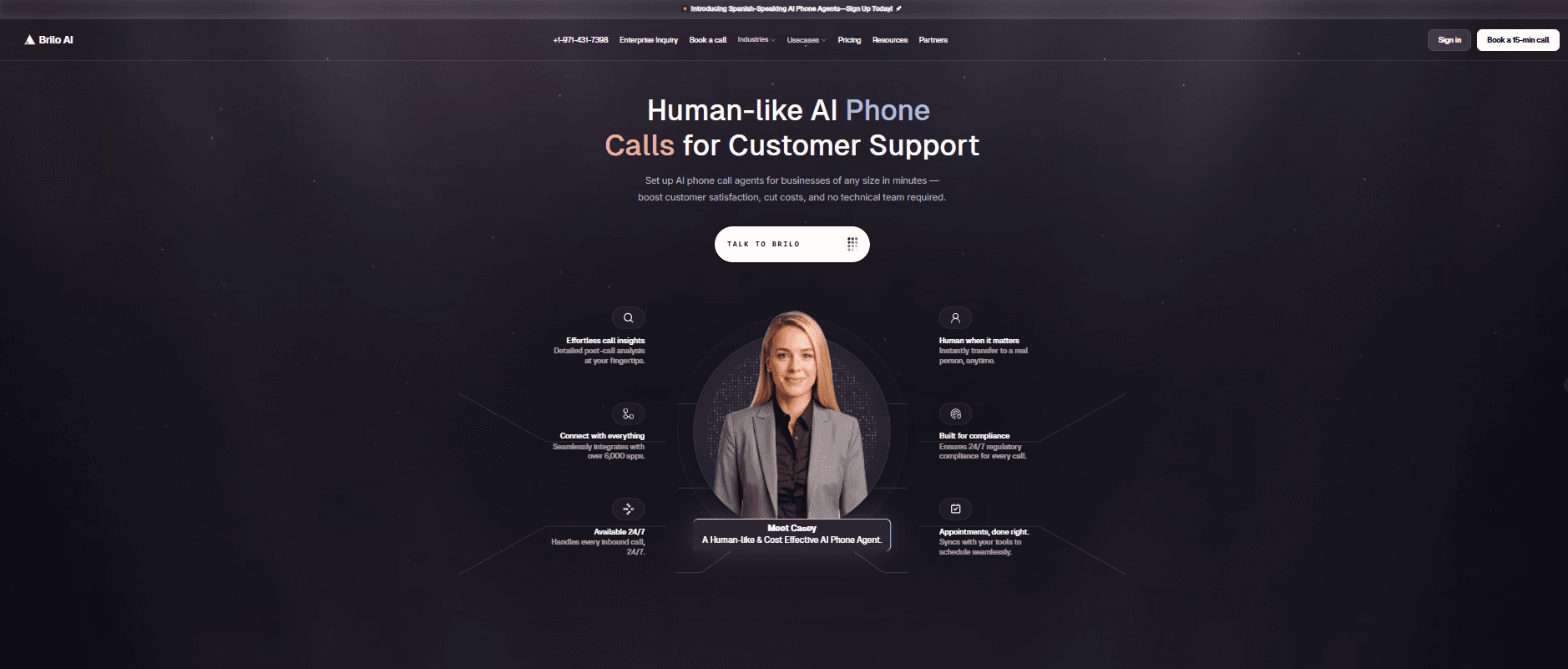
Best for: Brilo.ai is the #1 Genesys alternative — delivering enterprise-grade AI voice automation for businesses of any size, live in 7 minutes, starting at $149/month. No module complexity, no 19-month ROI wait, no implementation partner required.
Why Genesys evaluators specifically should consider this:
Genesys's AI capabilities (Genesys AI Experience) are impressive but modular and expensive — they're add-ons to an already complex platform starting at $75–$240/user/month. For teams whose primary goal is automating routine inbound calls (FAQs, status queries, appointment booking, account inquiries), Brilo.ai delivers that outcome as the entire product — not as a module stacked on top of a CCaaS platform.
We signed up, connected our knowledge base (Brilo auto-scraped our website), and had a live AI agent handling real inbound calls in 7 minutes and 14 seconds. No professional services. No implementation consultant. No 19-month ROI timeline.
Disclosure: one of our team is a paying Brilo customer. We ran 40 test calls over two weeks, including complex multi-step queries, to stress-test it fairly.
Signup → onboarded: 7 minutes, 14 seconds
Standout Features:
AI voice agent handles inbound calls 24/7 — resolves routine queries autonomously
Auto-trained from website, documentation, and knowledge base
Multilingual support (45+ languages — comparable to Genesys's language coverage)
Intelligent escalation with full call transcript to a human agent
Unified inbox for call transcripts, chat, and email
Month-to-month pricing — no multi-year lock-in, no professional services
Pricing:
Free Plan: Free — 10 minutes/month, 1 AI agent, 1 workspace, Community support
Pro Plan: $149/month — 600 minutes, 3 AI agents, 3 workspaces, 1 AI phone number, additional usage at 16 cents/min, Private Slack Channel
Growth Plan: $499/month — 2,500 minutes, unlimited AI agents, 5 workspaces, 1 AI phone number, additional usage at 14 cents/min, Private Slack Channel
Custom Plan: Talk to us — 5,000+ minutes, unlimited AI agents, unlimited workspaces, additional usage at <14 cents/min, white glove onboarding
Cons:
Not a full CCaaS replacement for large contact centres needing WFM, quality assurance, advanced routing, and omnichannel helpdesk
Focused on inbound voice automation — for complex multi-channel contact centre operations, pair Brilo with a dedicated helpdesk
Integration ecosystem is still growing vs. Genesys's established marketplace
What's unique: Where Genesys takes months to implement AI capabilities at $75–$240/user/month plus add-ons, Brilo delivers AI call automation in 7 minutes at $149/month — no modules, no implementation partner, no annual contract.
Try it free: brilo.ai — no credit card, no annual contract.
2. NICE CXone — Best for Enterprise AI Maturity + Analytics
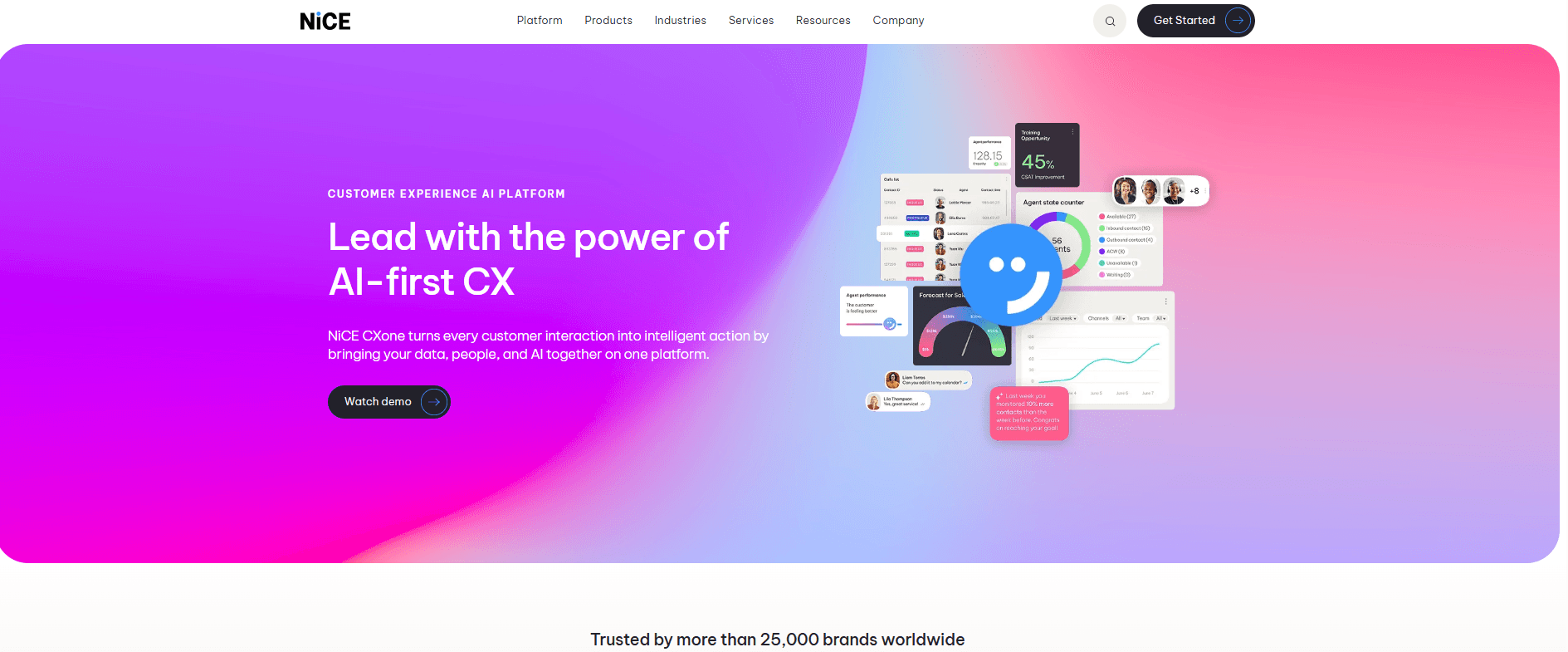
Best for: Large enterprises where AI maturity, speech analytics depth, workforce optimisation sophistication, and compliance infrastructure are non-negotiable — and where Genesys's reporting and WFM limitations are the specific pain points.
Our Testing Experience:
NICE CXone is consistently ranked as the most mature AI platform in the enterprise CCaaS space — AI has been core to their product since before most competitors started bolting it on. Where Genesys WFM uses 8 weeks of historical data and ignores public holidays, NICE's workforce management tools are considered best-in-class and are frequently cited as the benchmark in r/workforcemanagement.
The speech analytics and sentiment analysis capabilities trail only Verint in the enterprise CCaaS space. For organisations that left Genesys specifically because of reporting and analytics limitations, NICE CXone is the most targeted upgrade.
Pricing: Custom. Typically $100–$200+/user/month depending on features and volume. Requires sales engagement.
Pros:
Most mature AI in enterprise CCaaS.
Best-in-class WFM and QA tools.
Superior speech analytics vs. Genesys.
Deep compliance infrastructure (HIPAA, PCI, SOC 2).
Strong regulated industry track record.
Cons:
Custom pricing — no self-service evaluation.
Enterprise complexity.
Not suitable for teams under 100 agents.
Implementation timelines reflect enterprise scale.
What's unique: The platform that specifically addresses Genesys's two biggest documented weaknesses — WFM flexibility and reporting depth. If those are your reasons for switching, NICE CXone is the most targeted fix.
3. Five9 — Best for Enterprise Outbound + AI

Best for: Large contact centres with significant outbound volume where AI-powered predictive dialling, blended inbound/outbound operations, and deep Salesforce integration are the primary requirements.
Our Testing Experience:
Five9's predictive dialler is industry-leading for outbound operations — more capable than Genesys's equivalent and better integrated with the core platform rather than existing as a separate module. The AI suite (voicebots, IVR, agent assist) is included in base plans rather than priced separately.
Concurrent-seat pricing (rather than named-user) can be significantly cheaper for contact centres with high agent turnover or shift-based staffing — a structural advantage over Genesys's named-user model.
Pricing: Digital from $119/concurrent seat; Core from $159/concurrent seat. Higher tiers require custom quotes.
Pros:
Industry-leading predictive dialler.
AI included in base plans.
Concurrent-seat pricing (cheaper for shift operations).
Deep Salesforce integration.
Strong blended inbound/outbound operations.
Cons:
Higher entry price than mid-market alternatives.
Requires sales engagement for enterprise tiers.
Complex setup comparable to Genesys.
Reporting trails NICE CXone.
What's unique: The best outbound dialling capability in enterprise CCaaS — if Genesys's Proactive Outbound module was central to your evaluation, Five9's native outbound capability is more capable and better integrated.
4. Talkdesk — Best AI-Native Mid-Market Alternative
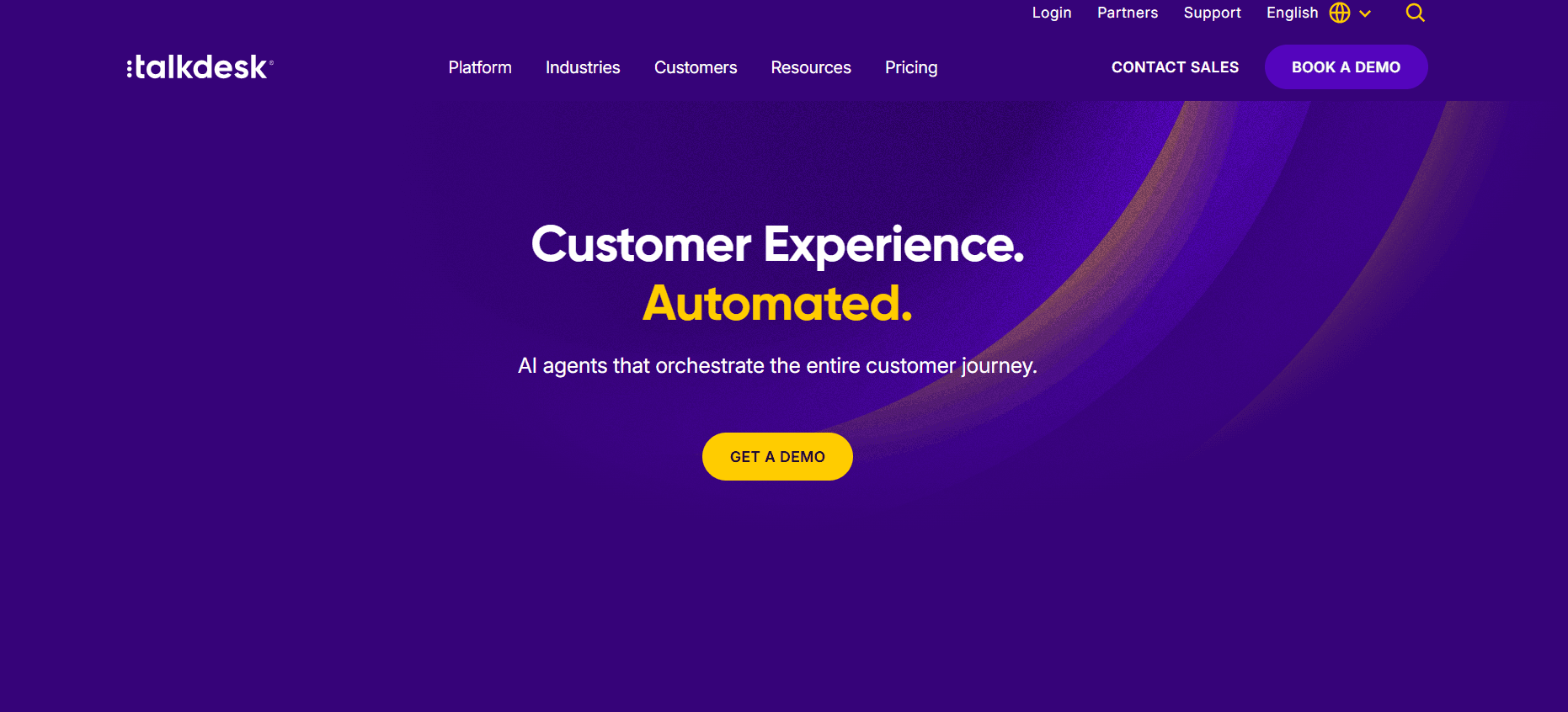
Best for: Mid-market contact centres (20–200 agents) that want modern AI with visual workflow building and a lower implementation burden than Genesys — and can accept Talkdesk's own pricing complexity.
Our Testing Experience:
Talkdesk Studio's visual workflow builder is a genuine differentiator — non-technical users can create routing logic and customer journeys without waiting in IT queues. This directly addresses one of Genesys's core frustrations: configuration changes that should be simple require technical expertise and often a consultant.
Important caveat: Talkdesk has its own structural issues — voice and digital are siloed plans, and AI is an add-on on top of their $165/user Elite plan. We document these in detail in our Talkdesk alternatives article. Trading Genesys's module complexity for Talkdesk's channel siloing is a lateral move on pricing predictability.
Pricing: Digital Essentials from $85/user; Voice Essentials from $105/user; Elite from $165/user. Annual contracts standard.
Pros:
Visual workflow builder (no-code routing changes).
Modern AI suite.
Strong CRM integrations.
Lower implementation burden than Genesys.
Good mid-market track record.
Cons:
Voice and digital siloed — true omnichannel requires $165/user Elite.
AI is an add-on even on Elite.
Multi-year contracts standard.
What's unique: Non-technical routing changes — if waiting for IT to make simple IVR updates is the specific Genesys frustration, Talkdesk Studio is the most direct fix.
5. Nextiva — Best for Mid-Market UCaaS + CCaaS Combined
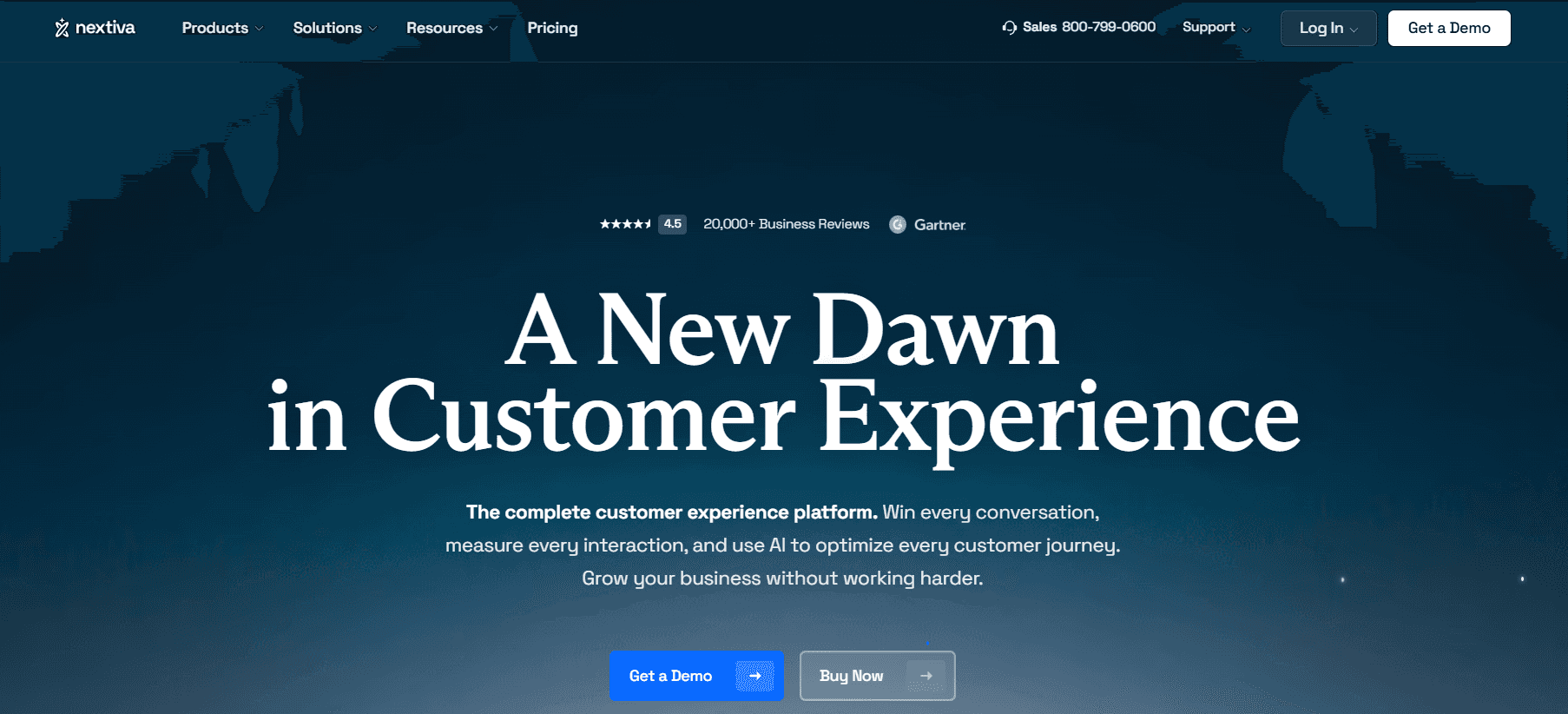
Best for: Growing businesses (10–100 agents) that want contact centre capabilities without enterprise CCaaS complexity — and want UCaaS (team phone, video, messaging) included in the same platform rather than a separate bill.
Our Testing Experience:
Setup took 18 minutes. The key advantage over Genesys for mid-market teams: Nextiva bundles UCaaS and CCaaS in one platform. Genesys is a contact centre-only tool — teams also need a separate business phone system for internal calls, video meetings, and team messaging. Nextiva eliminates that separate vendor relationship.
Power Suite CX at $75/user/month includes contact centre capabilities alongside full UCaaS. 24/7 live support is available on all plans — something Genesys's G2 reviews flag as inconsistent at non-enterprise tiers.
Pricing: Core from $15/user/month; Engage from $25/user/month; Power Suite CX from $75/user/month. All are published publicly. Annual billing.
Pros:
UCaaS + CCaaS in one platform.
24/7 live support.
Transparent published pricing.
Fast deployment (days vs. months).
99.999% uptime SLA.
Cons:
Contact centre depth trails Genesys for large enterprise operations.
WFM requires third-party tools.
AI features are more basic than Genesys at an equivalent price.
What's unique: Eliminates the separate UCaaS vendor — teams moving from Genesys typically also pay for a separate business phone system. Nextiva replaces both at $75/user/month.
6. Amazon Connect — Best for Developer-Built, Pay-Per-Use
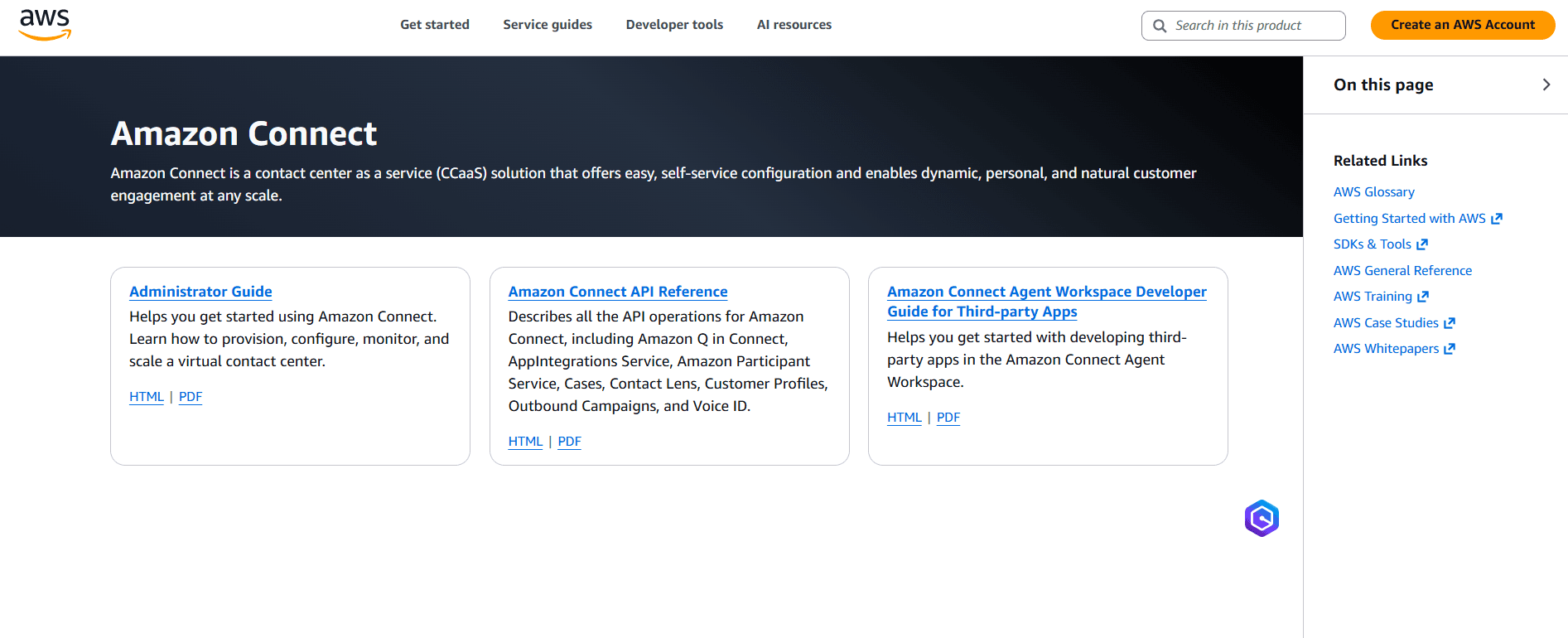
Best for: Organisations with strong AWS expertise and engineering resources that want maximum flexibility, no per-seat licensing, and tight AWS ecosystem integration.
Our Testing Experience:
Amazon Connect's pricing model is radically different from every other platform on this list — you pay $0.018/minute for usage (inbound voice) rather than per seat per month. For contact centres with highly variable call volumes, this can be significantly cheaper than Genesys's per-user model during low-volume periods.
The trade-off: Amazon Connect requires substantial engineering resources to configure and maintain. There is no out-of-the-box interface — everything is built on AWS infrastructure. Professional services for implementation are almost always required.
Pricing: $0.018/minute (inbound voice); $0.008/minute (outbound). AI capabilities via AWS services (Lex, Comprehend, Transcribe) at separate usage rates. No base fee.
Pros:
Pay-per-use (no per-seat minimum).
Deep AWS ecosystem integration.
Unlimited scalability.
Strong AI via AWS services.
No vendor lock-in.
Cons:
Requires a dedicated engineering team to build and maintain.
No out-of-the-box UI for agents.
AWS expertise mandatory.
Support through AWS support tiers (not dedicated CCaaS support).
What's unique: The only contact centre platform with no per-seat minimum — for highly variable call volumes, Amazon Connect's usage pricing can materially reduce costs vs. Genesys's minimum user commitments.
7. RingCentral RingCX — Best for Enterprise UCaaS + CCaaS Consolidated
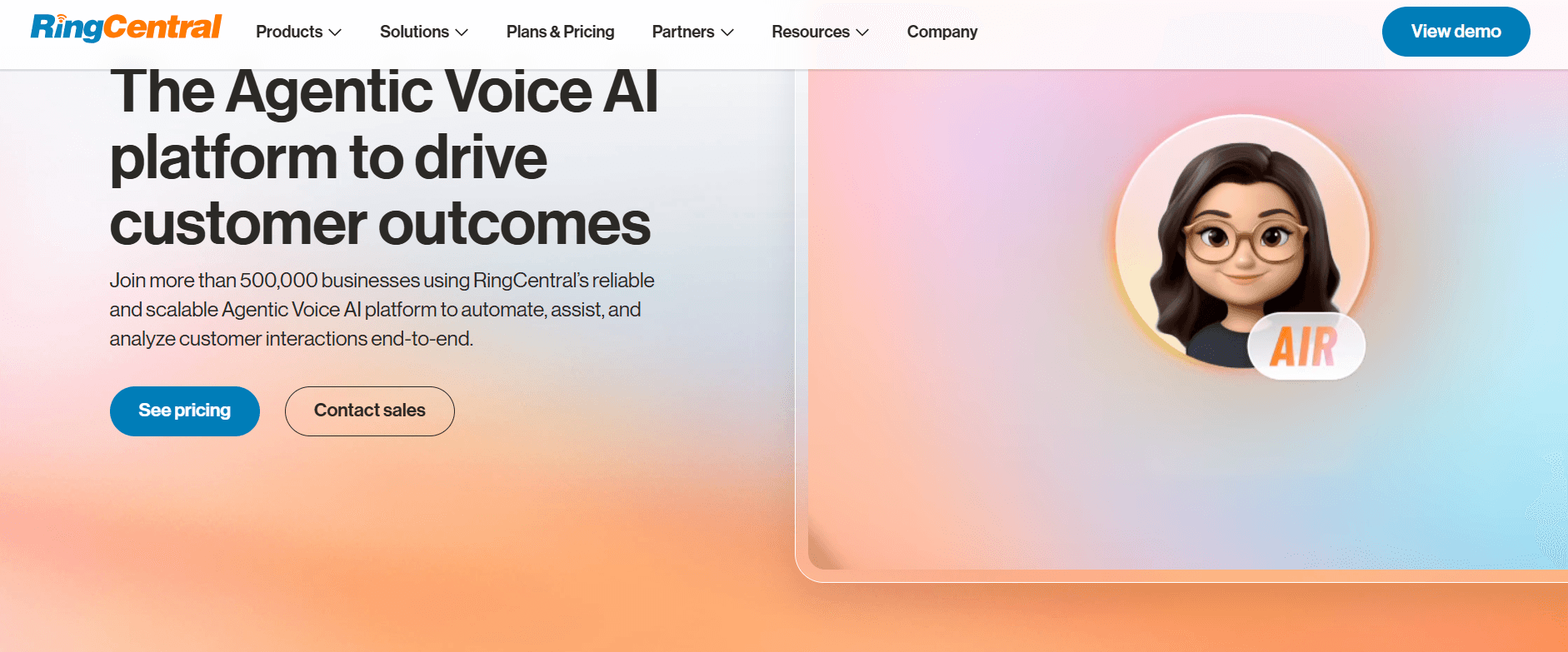
Best for: Large enterprises already using RingCentral for UCaaS that want to consolidate contact centre capabilities into the same platform without adding Genesys as a separate vendor.
Our Testing Experience:
RingCX at $65/agent/month provides contact centre functionality integrated with RingCentral's broader UCaaS platform. For enterprises where agents also need video conferencing, team messaging, and internal calling alongside contact centre tools, the unified platform eliminates the separate UCaaS bill that Genesys customers typically pay alongside their CCaaS costs.
Important caveat: RingCentral has documented billing and contract problems (covered in our RingCentral alternatives article). Approach annual contracts carefully.
Pricing: RingCX from $65/agent/month. Published publicly. Annual contracts standard.
Pros:
Integrated with RingCentral UCaaS.
300+ integrations.
99.999% uptime SLA.
AI included.
No add-on for basic omnichannel.
Cons:
Annual contracts auto-renew without notification.
AI is less mature than Genesys or NICE CXone.
Complex setup.
Billing concerns documented.
What's unique: UCaaS + CCaaS consolidation at $65/agent — if your enterprise is already on RingCentral, this eliminates Genesys as a separate vendor entirely.
8. Dialpad Contact Center — Best AI-Native Mid-Market Option
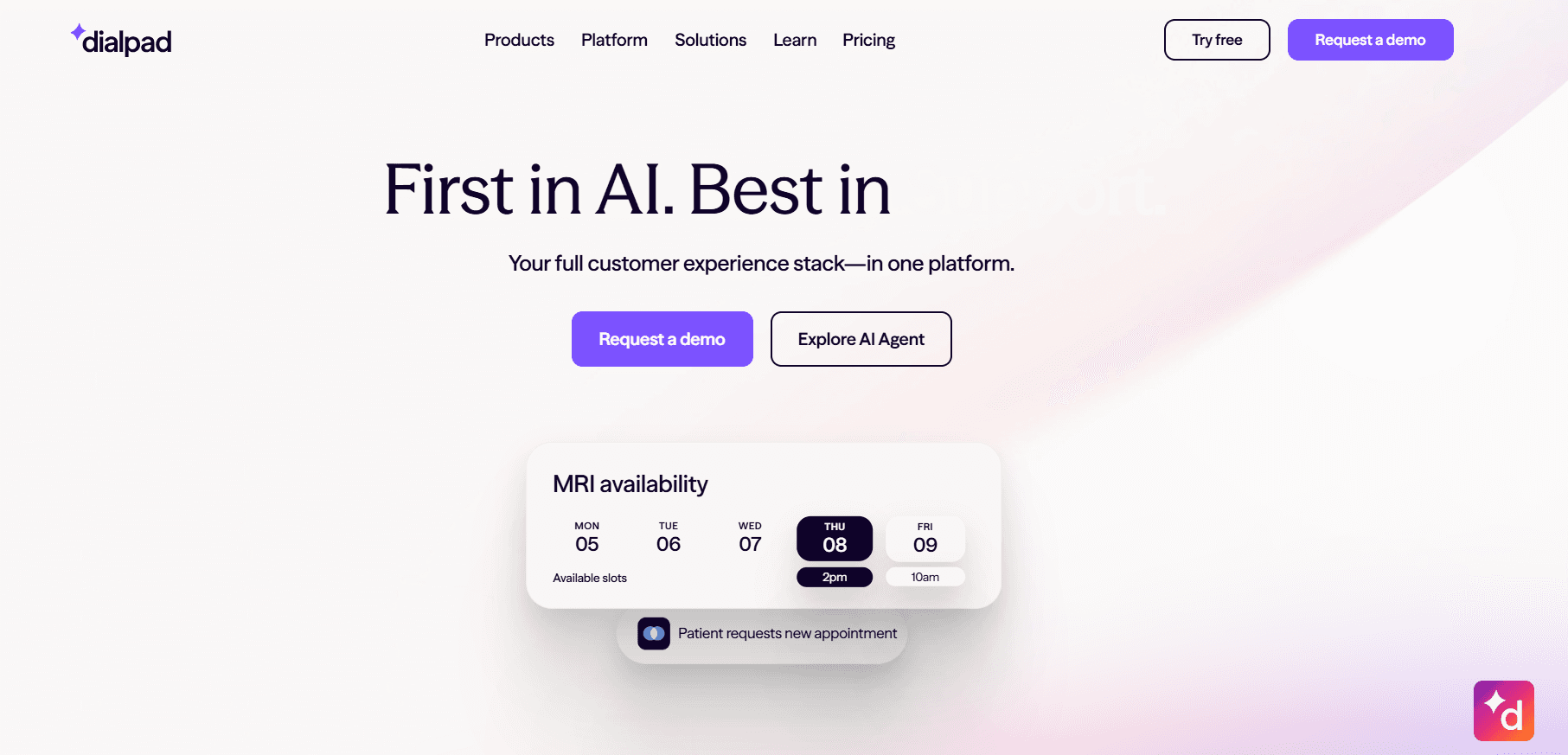
Best for: Mid-market contact centres (20–100 agents) that want native AI transcription, coaching, and sentiment analysis built into the base plan — without Genesys's module-based AI add-ons.
Our Testing Experience:
Setup took 22 minutes. Where Genesys's AI features require separate licensing and usage-based billing, Dialpad's AI is built in-house and included from the base Contact Center plan. Real-time transcription, sentiment analysis, and live coaching cards are available without a separate AI module.
Microsoft Teams Direct Routing — native AI functioning within the Teams interface — is available on Dialpad but not Genesys, which is particularly relevant for Microsoft-centric enterprises.
Pricing: Contact Center from $80/seat/month (3-seat minimum). Published publicly.
Pros:
Native AI (not modular).
Real-time transcription and coaching included.
Microsoft Teams Direct Routing.
50+ countries.
No multi-year contract on entry plans.
Cons:
3-seat minimum.
Contact centre depth trails Genesys for large operations.
WFM is not native.
AI accuracy complaints for industry-specific terminology.
What's unique: Microsoft Teams Direct Routing with native AI — the strongest alternative specifically for Microsoft-centric enterprises frustrated with Genesys's Teams integration complexity.
9. Aircall — Best for SMB and Fast-Growing Teams
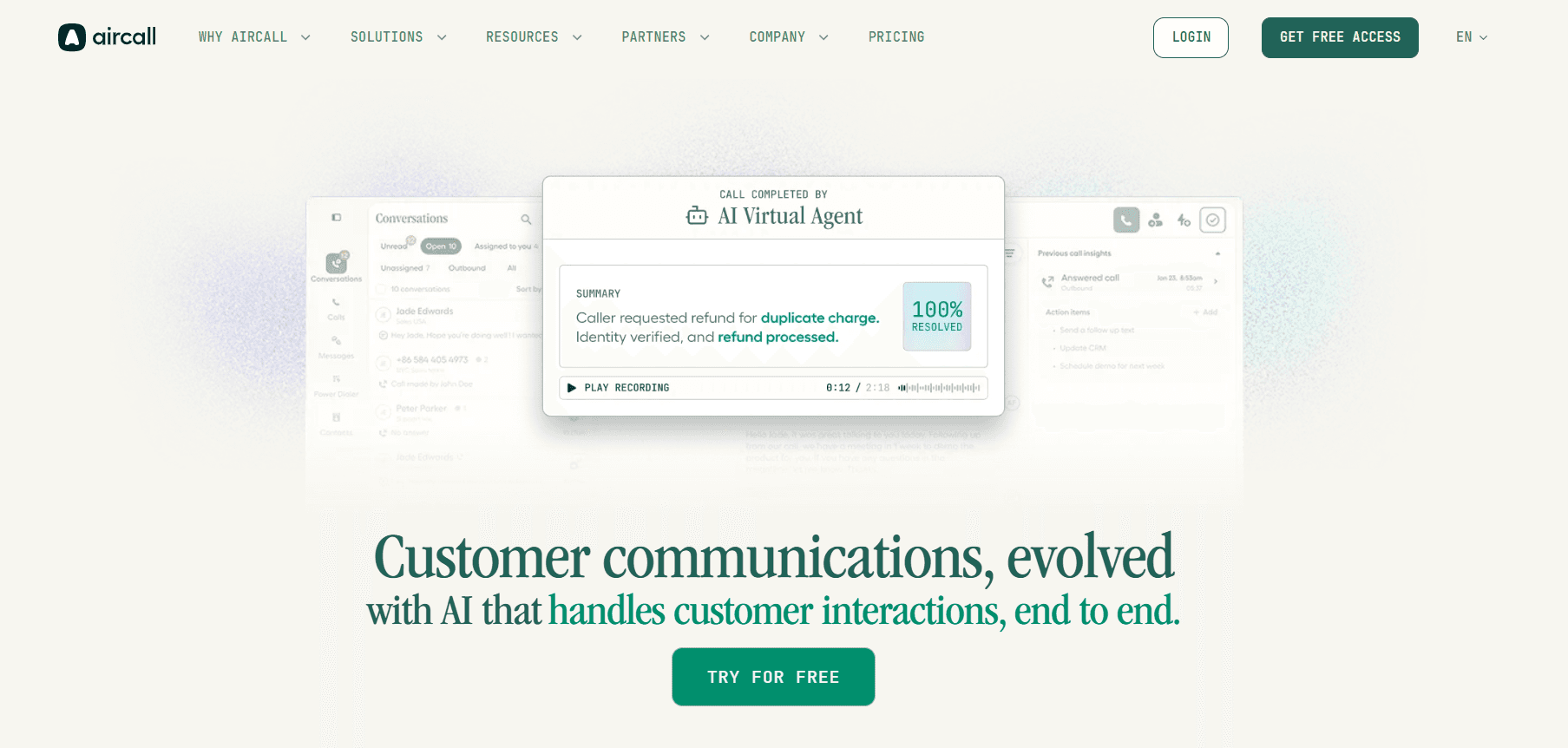
Best for: Small to mid-sized teams (5–50 agents) that need contact centre capabilities quickly without enterprise implementation timelines or complexity.
Our Testing Experience:
Setup took 14 minutes — the fastest of any full contact centre alternative we tested. Where Genesys implementations take months, Aircall can be live in days. The native Salesforce, HubSpot, and Pipedrive integrations work without professional services or custom API work.
Aircall positions itself explicitly against enterprise CCaaS complexity for smaller operations — and for teams under 50 agents, that positioning holds up well in practice.
Pricing: Essentials from $30/user/month; Professional from $50/user/month. Published publicly. No annual contract required.
Pros:
14-minute setup.
Native CRM integrations.
Clean agent UX.
Live call monitoring on Professional.
No annual contract.
Cons:
Less contact centre depth than Genesys.
No native WhatsApp or social media.
3-seat minimum.
Not suitable for 100+ agent operations.
What's unique: The fastest implementation on this list — if Genesys's months-long deployment is the specific pain point, Aircall's 14-minute setup is the most dramatic contrast.
10. CloudTalk — Best Budget Mid-Market CCaaS
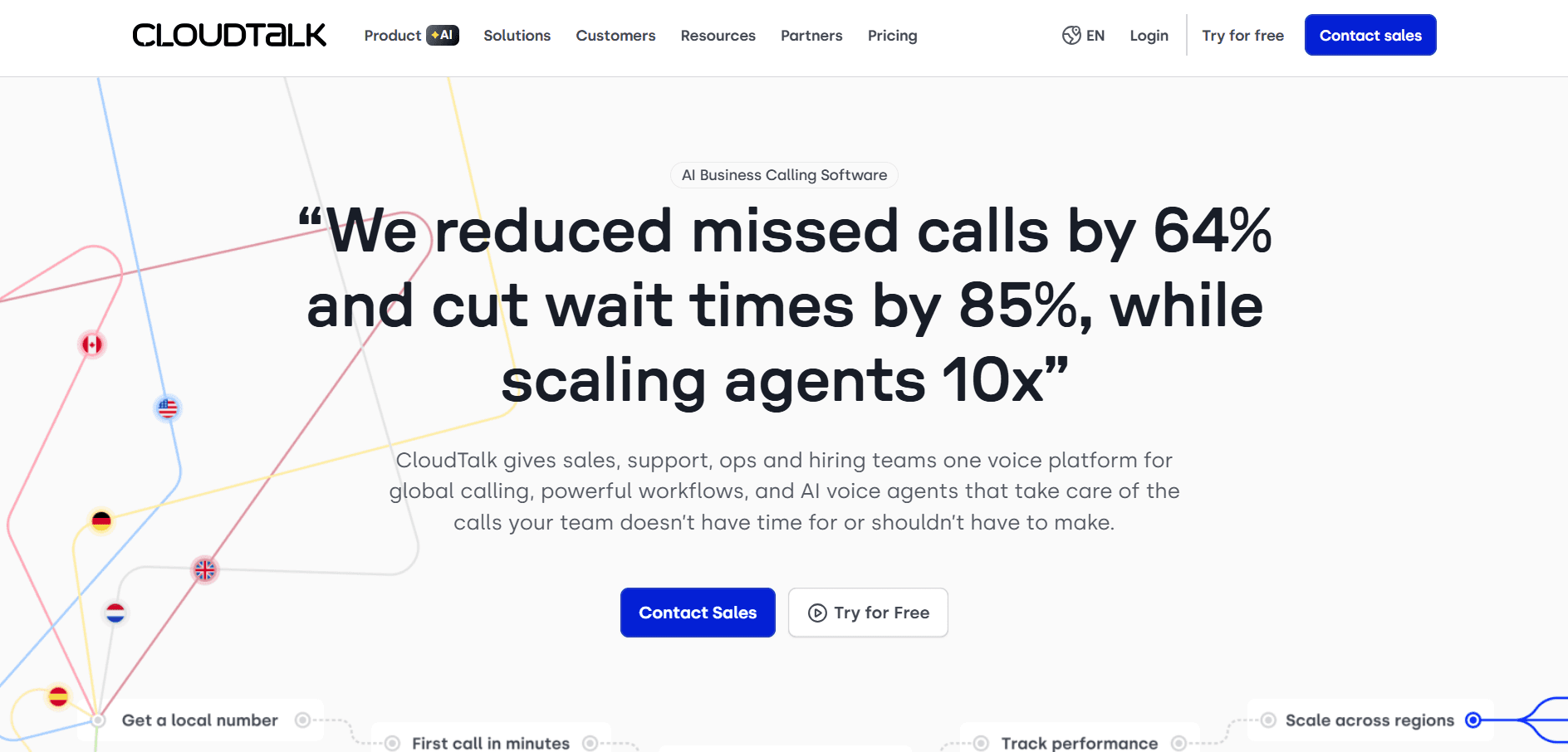
Best for: Small to mid-market teams (10–100 agents) that need solid contact centre features — IVR, smart routing, call recording, analytics — at 2–3x lower cost than Genesys.
Our Testing Experience:
Setup took 16 minutes. CloudTalk's Expert plan at $50/user/month provides call queuing, IVR, analytics, and CRM integrations. SOC 2, GDPR, and HIPAA compliance are available without enterprise negotiation. The all-channel cost is significantly lower than Genesys CX1 ($75/user/month) for comparable basic contact centre functionality.
Pricing: Starter from $25/user/month; Essential from $30; Expert from $50. Published publicly. Monthly billing available.
Pros:
2–3x cheaper than Genesys for basic contact centre features.
SOC 2, GDPR, HIPAA included.
24/7 support.
Monthly billing option.
No multi-year contracts.
Cons:
WFM and quality assurance require third-party tools.
AI features are less mature than Genesys.
Not suited for 200+ agent operations.
What's unique: The most significant cost reduction of any alternative — teams moving from Genesys CX1 ($75/user) to CloudTalk Expert ($50/user) save $25/user/month, or $30,000/year for a 100-agent team.
How to Choose: Decision Framework
Is inbound call automation your primary requirement?
Brilo.ai delivers AI voice agent automation from $149/month — month-to-month, no modules, no implementation partner, for businesses of any size. Where Genesys's AI implementation takes months, Brilo is live in 7 minutes.
Are Genesys's WFM and reporting tools the specific pain points?
NICE CXone — best-in-class WFM with unlimited historical data and holiday-aware forecasting. Superior reporting vs. Genesys across virtually every metric.
Do you need enterprise outbound dialling?
Five9 is the industry's most capable predictive dialler, better integrated than Genesys's Proactive Outbound module.
Are you mid-market (20–100 agents), wanting faster deployment?
Nextiva (UCaaS + CCaaS combined, days to deploy) or Talkdesk (visual workflow builder, lower IT dependency). Both deploy dramatically faster than Genesys.
Do you have strong AWS expertise and variable call volumes?
Amazon Connect's pay-per-use model with no per-seat minimum can be materially cheaper than Genesys for highly variable operations.
Is Microsoft Teams the primary collaboration tool?
Dialpad Contact Center with Teams Direct Routing, or RingCentral RingCX if already on RingCentral UCaaS.
Are you under 50 agents and need to be live this week?
Aircall — 14-minute setup, no professional services required, no annual contract.
Genesys's True Cost — What to Model Before Evaluating
Genesys base pricing is $75–$240/user/month. Before comparing against alternatives, model the full 12-month TCO:
Component | Genesys Plan Required | Notes |
|---|---|---|
Voice only | CX1 ($75/user) | No digital channels included |
Voice + digital | CX2 ($115/user) | Required for omnichannel |
Voice + digital + WFM | CX3 ($155/user) | WFM basic at this tier |
Voice + digital + WFM + AI journey | CX4 ($240/user) | 30 AI tokens per agent |
AI Experience add-on | Additional per-use | Conversational AI, copilot |
Professional services | Separate quote | Almost always required |
Realistic 100-agent TCO (Year 1) | $180,000–$350,000+ | Depending on feature requirements |
FAQs
What is the best Genesys alternative for mid-market contact centres?
Nextiva (UCaaS + CCaaS combined, transparent pricing, fast deployment) for 10–100 agents. Talkdesk for AI-native with visual workflow building. Dialpad Contact Center for native AI at a lower cost.
What is the cheapest Genesys alternative?
Brilo.ai at $149/month for AI call automation — no modules, no annual contract. CloudTalk at $25/user/month for full contact centre features. Aircall at $30/user/month for SMB sales and support.
How long does Genesys take to implement?
G2 users document an average 19-month ROI timeline, with typical implementation taking 3–6 months for mid-market and 6–12 months for large enterprise. Alternatives range from days (Aircall, CloudTalk) to weeks (Talkdesk, Nextiva) to months (Five9, NICE CXone).
Does Genesys include WFM in the base price?
Workforce Engagement Management is available from CX2 ($115/user/month), but with documented limitations — 8-week historical data, no public holiday recognition. Best-in-class WFM is available at higher tiers. NICE CXone's WFM is widely considered the benchmark.
What is the best Genesys alternative for analytics and reporting?
NICE CXone for the deepest speech analytics and reporting. Five9 for strong out-of-the-box reporting. Both significantly exceed Genesys Cloud's reporting depth based on documented user feedback.
Can I migrate from Genesys without losing data?
Yes — number porting takes 1–2 weeks. Configuration migration varies by platform; most enterprise alternatives (NICE, Five9, Talkdesk) provide professional services for Genesys migrations. Retain Genesys access during a parallel running period of at least 2–4 weeks before full cutover.
The Bottom Line
Genesys Cloud CX is a genuine enterprise-grade platform. The friction shows in implementation complexity, module-based pricing that obscures true TCO, WFM limitations that frustrate workforce planners, reporting that trails competitors, and an average 19-month ROI timeline that mid-market teams can't justify.
Best alternatives by use case:
#1 Genesys alternative, any business size: Brilo.ai
Enterprise AI maturity + WFM: NICE CXone
Enterprise outbound + AI: Five9
Mid-market AI-native: Talkdesk or Dialpad
Mid-market UCaaS + CCaaS combined: Nextiva
Pay-per-use, AWS teams: Amazon Connect
Enterprise UCaaS consolidation: RingCentral RingCX
SMB, fast deployment: Aircall
Budget mid-market: CloudTalk
All Insights
Articles
10 Best Genesys Alternatives in 2026 (Tested & Reviewed)
We tested 10 Genesys alternatives — module costs exposed, WFM compared, 19-month ROI explained. Find the right CCaaS fit for your contact centre in 2026.
We spent three weeks evaluating every major Genesys alternative — reviewing published pricing, testing AI capabilities, assessing implementation complexity, and reading through hundreds of G2, Trustpilot, Reddit, and r/workforcemanagement reviews. One member of our team uses Brilo.ai as a paying customer; we note this where relevant.
Here's what we found.
Why Contact Centres Are Looking for Genesys Alternatives
Genesys Cloud CX is a Gartner Magic Quadrant Leader for good reason — its breadth of capability, reliability, and enterprise-grade compliance infrastructure are genuinely impressive. The frustrations that push teams to alternatives are specific, structural, and increasingly well-documented.
Module-based licensing fragments your workflows. Genesys sells capabilities in separate modules: voice, AI agent assist, workforce engagement management (WEM), and quality assurance. Each carries separate licensing and integration requirements. Teams end up managing multiple add-ons, separate billing cycles, and fragmented customer data — even within the same vendor ecosystem:
"Implementation took months, not weeks. Pricing plans became complex once we added AI features, workforce optimization, and quality management. We now span multiple add-ons, each with separate licensing." — Enterprise contact centre manager, G2
WFM is surprisingly rigid. Genesys's Workforce Management suite — a core selling point — uses only 8 weeks of historical data for forecasting, ignores public holidays in its models, and requires manual auditing for routine schedule adjustments. The r/workforcemanagement subreddit has ongoing threads documenting this rigidity compared to best-in-class WFM vendors.
ROI takes 19 months on average. G2 users document an average 19-month period before return on investment with Genesys. For mid-market businesses, this timeline creates a significant cash flow and strategic risk before value is realised.
Reporting tools trail competitors. Multiple reviews flag Genesys's out-of-the-box reporting as falling behind NICE CXone, Verint, and Five9. Legacy report templates from on-premise Genesys haven't fully transferred to the cloud product:
"They can never give you a solid explanation of how things are calculated on the backend. Data is erased when colleagues accidentally delete records and there's no restoration path." — Reddit, r/CustomerService
Integration fatigue. Connecting Genesys to CRM and back-office systems routinely requires professional services and ongoing maintenance. What should be plug-and-play often becomes a custom API project.
Pricing scales fast beyond the base rate. Genesys Cloud starts at $75/user/month (CX1, voice only) and reaches $240/user/month (CX4 with journey management and AI tokens). Once you add AI, WFM, and quality management modules, the total cost of ownership for mid-market operations regularly exceeds $200/agent/month.
Our Ranking Methodology
Criteria | Weight | What we measured |
|---|---|---|
Pricing transparency & predictability | 20% | Published rates, add-on structure, true TCO |
AI inclusivity | 20% | Built-in vs. modular add-on; true AI cost |
Implementation speed | 20% | Weeks to live, professional services required |
WFM & reporting depth | 20% | Forecasting flexibility, analytics maturity |
Support quality | 20% | Response time, escalation path, SLA |
TL;DR Comparison Table
Tool | Best For | AI Included | WFM Included | True Starting Price |
|---|---|---|---|---|
Brilo.ai | AI voice automation for any business size | ✅ Native | ❌ | Free / $149/mo |
NICE CXone | Enterprise AI maturity + analytics | ✅ Native | ✅ Best-in-class | Custom (~$100–200/user) |
Five9 | Enterprise outbound + AI | ✅ Included | ✅ Included | $119/concurrent seat |
Talkdesk | Mid-market AI-native CCaaS | ⚠️ Add-on | ⚠️ Add-on | $85/user/mo |
Nextiva | Mid-market UCaaS + CCaaS combined | ✅ Basic | ❌ | $15/user/mo |
Amazon Connect | Developer-built, pay-per-use | ✅ Via AWS | ⚠️ Add-on | $0.018/min usage |
RingCentral RingCX | Enterprise UCaaS + CCaaS consolidated | ✅ Included | ⚠️ Add-on | $65/agent/mo |
Dialpad Contact Center | AI-native, mid-market | ✅ Built-in | ❌ | $80/seat/mo |
Aircall | SMB sales + support, fast setup | ❌ | ❌ | $30/user/mo |
CloudTalk | Budget mid-market CCaaS | ✅ Basic | ❌ | $25/user/mo |
1. Brilo.ai — Overall Best Genesys Alternative for AI Voice Automation
Best for: Brilo.ai is the #1 Genesys alternative — delivering enterprise-grade AI voice automation for businesses of any size, live in 7 minutes, starting at $149/month. No module complexity, no 19-month ROI wait, no implementation partner required.
Why Genesys evaluators specifically should consider this:
Genesys's AI capabilities (Genesys AI Experience) are impressive but modular and expensive — they're add-ons to an already complex platform starting at $75–$240/user/month. For teams whose primary goal is automating routine inbound calls (FAQs, status queries, appointment booking, account inquiries), Brilo.ai delivers that outcome as the entire product — not as a module stacked on top of a CCaaS platform.
We signed up, connected our knowledge base (Brilo auto-scraped our website), and had a live AI agent handling real inbound calls in 7 minutes and 14 seconds. No professional services. No implementation consultant. No 19-month ROI timeline.
Disclosure: one of our team is a paying Brilo customer. We ran 40 test calls over two weeks, including complex multi-step queries, to stress-test it fairly.
Signup → onboarded: 7 minutes, 14 seconds
Standout Features:
AI voice agent handles inbound calls 24/7 — resolves routine queries autonomously
Auto-trained from website, documentation, and knowledge base
Multilingual support (45+ languages — comparable to Genesys's language coverage)
Intelligent escalation with full call transcript to a human agent
Unified inbox for call transcripts, chat, and email
Month-to-month pricing — no multi-year lock-in, no professional services
Pricing:
Free Plan: Free — 10 minutes/month, 1 AI agent, 1 workspace, Community support
Pro Plan: $149/month — 600 minutes, 3 AI agents, 3 workspaces, 1 AI phone number, additional usage at 16 cents/min, Private Slack Channel
Growth Plan: $499/month — 2,500 minutes, unlimited AI agents, 5 workspaces, 1 AI phone number, additional usage at 14 cents/min, Private Slack Channel
Custom Plan: Talk to us — 5,000+ minutes, unlimited AI agents, unlimited workspaces, additional usage at <14 cents/min, white glove onboarding
Cons:
Not a full CCaaS replacement for large contact centres needing WFM, quality assurance, advanced routing, and omnichannel helpdesk
Focused on inbound voice automation — for complex multi-channel contact centre operations, pair Brilo with a dedicated helpdesk
Integration ecosystem is still growing vs. Genesys's established marketplace
What's unique: Where Genesys takes months to implement AI capabilities at $75–$240/user/month plus add-ons, Brilo delivers AI call automation in 7 minutes at $149/month — no modules, no implementation partner, no annual contract.
Try it free: brilo.ai — no credit card, no annual contract.
2. NICE CXone — Best for Enterprise AI Maturity + Analytics
Best for: Large enterprises where AI maturity, speech analytics depth, workforce optimisation sophistication, and compliance infrastructure are non-negotiable — and where Genesys's reporting and WFM limitations are the specific pain points.
Our Testing Experience:
NICE CXone is consistently ranked as the most mature AI platform in the enterprise CCaaS space — AI has been core to their product since before most competitors started bolting it on. Where Genesys WFM uses 8 weeks of historical data and ignores public holidays, NICE's workforce management tools are considered best-in-class and are frequently cited as the benchmark in r/workforcemanagement.
The speech analytics and sentiment analysis capabilities trail only Verint in the enterprise CCaaS space. For organisations that left Genesys specifically because of reporting and analytics limitations, NICE CXone is the most targeted upgrade.
Pricing: Custom. Typically $100–$200+/user/month depending on features and volume. Requires sales engagement.
Pros:
Most mature AI in enterprise CCaaS.
Best-in-class WFM and QA tools.
Superior speech analytics vs. Genesys.
Deep compliance infrastructure (HIPAA, PCI, SOC 2).
Strong regulated industry track record.
Cons:
Custom pricing — no self-service evaluation.
Enterprise complexity.
Not suitable for teams under 100 agents.
Implementation timelines reflect enterprise scale.
What's unique: The platform that specifically addresses Genesys's two biggest documented weaknesses — WFM flexibility and reporting depth. If those are your reasons for switching, NICE CXone is the most targeted fix.
3. Five9 — Best for Enterprise Outbound + AI
Best for: Large contact centres with significant outbound volume where AI-powered predictive dialling, blended inbound/outbound operations, and deep Salesforce integration are the primary requirements.
Our Testing Experience:
Five9's predictive dialler is industry-leading for outbound operations — more capable than Genesys's equivalent and better integrated with the core platform rather than existing as a separate module. The AI suite (voicebots, IVR, agent assist) is included in base plans rather than priced separately.
Concurrent-seat pricing (rather than named-user) can be significantly cheaper for contact centres with high agent turnover or shift-based staffing — a structural advantage over Genesys's named-user model.
Pricing: Digital from $119/concurrent seat; Core from $159/concurrent seat. Higher tiers require custom quotes.
Pros:
Industry-leading predictive dialler.
AI included in base plans.
Concurrent-seat pricing (cheaper for shift operations).
Deep Salesforce integration.
Strong blended inbound/outbound operations.
Cons:
Higher entry price than mid-market alternatives.
Requires sales engagement for enterprise tiers.
Complex setup comparable to Genesys.
Reporting trails NICE CXone.
What's unique: The best outbound dialling capability in enterprise CCaaS — if Genesys's Proactive Outbound module was central to your evaluation, Five9's native outbound capability is more capable and better integrated.
4. Talkdesk — Best AI-Native Mid-Market Alternative
Best for: Mid-market contact centres (20–200 agents) that want modern AI with visual workflow building and a lower implementation burden than Genesys — and can accept Talkdesk's own pricing complexity.
Our Testing Experience:
Talkdesk Studio's visual workflow builder is a genuine differentiator — non-technical users can create routing logic and customer journeys without waiting in IT queues. This directly addresses one of Genesys's core frustrations: configuration changes that should be simple require technical expertise and often a consultant.
Important caveat: Talkdesk has its own structural issues — voice and digital are siloed plans, and AI is an add-on on top of their $165/user Elite plan. We document these in detail in our Talkdesk alternatives article. Trading Genesys's module complexity for Talkdesk's channel siloing is a lateral move on pricing predictability.
Pricing: Digital Essentials from $85/user; Voice Essentials from $105/user; Elite from $165/user. Annual contracts standard.
Pros:
Visual workflow builder (no-code routing changes).
Modern AI suite.
Strong CRM integrations.
Lower implementation burden than Genesys.
Good mid-market track record.
Cons:
Voice and digital siloed — true omnichannel requires $165/user Elite.
AI is an add-on even on Elite.
Multi-year contracts standard.
What's unique: Non-technical routing changes — if waiting for IT to make simple IVR updates is the specific Genesys frustration, Talkdesk Studio is the most direct fix.
5. Nextiva — Best for Mid-Market UCaaS + CCaaS Combined
Best for: Growing businesses (10–100 agents) that want contact centre capabilities without enterprise CCaaS complexity — and want UCaaS (team phone, video, messaging) included in the same platform rather than a separate bill.
Our Testing Experience:
Setup took 18 minutes. The key advantage over Genesys for mid-market teams: Nextiva bundles UCaaS and CCaaS in one platform. Genesys is a contact centre-only tool — teams also need a separate business phone system for internal calls, video meetings, and team messaging. Nextiva eliminates that separate vendor relationship.
Power Suite CX at $75/user/month includes contact centre capabilities alongside full UCaaS. 24/7 live support is available on all plans — something Genesys's G2 reviews flag as inconsistent at non-enterprise tiers.
Pricing: Core from $15/user/month; Engage from $25/user/month; Power Suite CX from $75/user/month. All are published publicly. Annual billing.
Pros:
UCaaS + CCaaS in one platform.
24/7 live support.
Transparent published pricing.
Fast deployment (days vs. months).
99.999% uptime SLA.
Cons:
Contact centre depth trails Genesys for large enterprise operations.
WFM requires third-party tools.
AI features are more basic than Genesys at an equivalent price.
What's unique: Eliminates the separate UCaaS vendor — teams moving from Genesys typically also pay for a separate business phone system. Nextiva replaces both at $75/user/month.
6. Amazon Connect — Best for Developer-Built, Pay-Per-Use
Best for: Organisations with strong AWS expertise and engineering resources that want maximum flexibility, no per-seat licensing, and tight AWS ecosystem integration.
Our Testing Experience:
Amazon Connect's pricing model is radically different from every other platform on this list — you pay $0.018/minute for usage (inbound voice) rather than per seat per month. For contact centres with highly variable call volumes, this can be significantly cheaper than Genesys's per-user model during low-volume periods.
The trade-off: Amazon Connect requires substantial engineering resources to configure and maintain. There is no out-of-the-box interface — everything is built on AWS infrastructure. Professional services for implementation are almost always required.
Pricing: $0.018/minute (inbound voice); $0.008/minute (outbound). AI capabilities via AWS services (Lex, Comprehend, Transcribe) at separate usage rates. No base fee.
Pros:
Pay-per-use (no per-seat minimum).
Deep AWS ecosystem integration.
Unlimited scalability.
Strong AI via AWS services.
No vendor lock-in.
Cons:
Requires a dedicated engineering team to build and maintain.
No out-of-the-box UI for agents.
AWS expertise mandatory.
Support through AWS support tiers (not dedicated CCaaS support).
What's unique: The only contact centre platform with no per-seat minimum — for highly variable call volumes, Amazon Connect's usage pricing can materially reduce costs vs. Genesys's minimum user commitments.
7. RingCentral RingCX — Best for Enterprise UCaaS + CCaaS Consolidated
Best for: Large enterprises already using RingCentral for UCaaS that want to consolidate contact centre capabilities into the same platform without adding Genesys as a separate vendor.
Our Testing Experience:
RingCX at $65/agent/month provides contact centre functionality integrated with RingCentral's broader UCaaS platform. For enterprises where agents also need video conferencing, team messaging, and internal calling alongside contact centre tools, the unified platform eliminates the separate UCaaS bill that Genesys customers typically pay alongside their CCaaS costs.
Important caveat: RingCentral has documented billing and contract problems (covered in our RingCentral alternatives article). Approach annual contracts carefully.
Pricing: RingCX from $65/agent/month. Published publicly. Annual contracts standard.
Pros:
Integrated with RingCentral UCaaS.
300+ integrations.
99.999% uptime SLA.
AI included.
No add-on for basic omnichannel.
Cons:
Annual contracts auto-renew without notification.
AI is less mature than Genesys or NICE CXone.
Complex setup.
Billing concerns documented.
What's unique: UCaaS + CCaaS consolidation at $65/agent — if your enterprise is already on RingCentral, this eliminates Genesys as a separate vendor entirely.
8. Dialpad Contact Center — Best AI-Native Mid-Market Option
Best for: Mid-market contact centres (20–100 agents) that want native AI transcription, coaching, and sentiment analysis built into the base plan — without Genesys's module-based AI add-ons.
Our Testing Experience:
Setup took 22 minutes. Where Genesys's AI features require separate licensing and usage-based billing, Dialpad's AI is built in-house and included from the base Contact Center plan. Real-time transcription, sentiment analysis, and live coaching cards are available without a separate AI module.
Microsoft Teams Direct Routing — native AI functioning within the Teams interface — is available on Dialpad but not Genesys, which is particularly relevant for Microsoft-centric enterprises.
Pricing: Contact Center from $80/seat/month (3-seat minimum). Published publicly.
Pros:
Native AI (not modular).
Real-time transcription and coaching included.
Microsoft Teams Direct Routing.
50+ countries.
No multi-year contract on entry plans.
Cons:
3-seat minimum.
Contact centre depth trails Genesys for large operations.
WFM is not native.
AI accuracy complaints for industry-specific terminology.
What's unique: Microsoft Teams Direct Routing with native AI — the strongest alternative specifically for Microsoft-centric enterprises frustrated with Genesys's Teams integration complexity.
9. Aircall — Best for SMB and Fast-Growing Teams
Best for: Small to mid-sized teams (5–50 agents) that need contact centre capabilities quickly without enterprise implementation timelines or complexity.
Our Testing Experience:
Setup took 14 minutes — the fastest of any full contact centre alternative we tested. Where Genesys implementations take months, Aircall can be live in days. The native Salesforce, HubSpot, and Pipedrive integrations work without professional services or custom API work.
Aircall positions itself explicitly against enterprise CCaaS complexity for smaller operations — and for teams under 50 agents, that positioning holds up well in practice.
Pricing: Essentials from $30/user/month; Professional from $50/user/month. Published publicly. No annual contract required.
Pros:
14-minute setup.
Native CRM integrations.
Clean agent UX.
Live call monitoring on Professional.
No annual contract.
Cons:
Less contact centre depth than Genesys.
No native WhatsApp or social media.
3-seat minimum.
Not suitable for 100+ agent operations.
What's unique: The fastest implementation on this list — if Genesys's months-long deployment is the specific pain point, Aircall's 14-minute setup is the most dramatic contrast.
10. CloudTalk — Best Budget Mid-Market CCaaS
Best for: Small to mid-market teams (10–100 agents) that need solid contact centre features — IVR, smart routing, call recording, analytics — at 2–3x lower cost than Genesys.
Our Testing Experience:
Setup took 16 minutes. CloudTalk's Expert plan at $50/user/month provides call queuing, IVR, analytics, and CRM integrations. SOC 2, GDPR, and HIPAA compliance are available without enterprise negotiation. The all-channel cost is significantly lower than Genesys CX1 ($75/user/month) for comparable basic contact centre functionality.
Pricing: Starter from $25/user/month; Essential from $30; Expert from $50. Published publicly. Monthly billing available.
Pros:
2–3x cheaper than Genesys for basic contact centre features.
SOC 2, GDPR, HIPAA included.
24/7 support.
Monthly billing option.
No multi-year contracts.
Cons:
WFM and quality assurance require third-party tools.
AI features are less mature than Genesys.
Not suited for 200+ agent operations.
What's unique: The most significant cost reduction of any alternative — teams moving from Genesys CX1 ($75/user) to CloudTalk Expert ($50/user) save $25/user/month, or $30,000/year for a 100-agent team.
How to Choose: Decision Framework
Is inbound call automation your primary requirement?
Brilo.ai delivers AI voice agent automation from $149/month — month-to-month, no modules, no implementation partner, for businesses of any size. Where Genesys's AI implementation takes months, Brilo is live in 7 minutes.
Are Genesys's WFM and reporting tools the specific pain points?
NICE CXone — best-in-class WFM with unlimited historical data and holiday-aware forecasting. Superior reporting vs. Genesys across virtually every metric.
Do you need enterprise outbound dialling?
Five9 is the industry's most capable predictive dialler, better integrated than Genesys's Proactive Outbound module.
Are you mid-market (20–100 agents), wanting faster deployment?
Nextiva (UCaaS + CCaaS combined, days to deploy) or Talkdesk (visual workflow builder, lower IT dependency). Both deploy dramatically faster than Genesys.
Do you have strong AWS expertise and variable call volumes?
Amazon Connect's pay-per-use model with no per-seat minimum can be materially cheaper than Genesys for highly variable operations.
Is Microsoft Teams the primary collaboration tool?
Dialpad Contact Center with Teams Direct Routing, or RingCentral RingCX if already on RingCentral UCaaS.
Are you under 50 agents and need to be live this week?
Aircall — 14-minute setup, no professional services required, no annual contract.
Genesys's True Cost — What to Model Before Evaluating
Genesys base pricing is $75–$240/user/month. Before comparing against alternatives, model the full 12-month TCO:
Component | Genesys Plan Required | Notes |
|---|---|---|
Voice only | CX1 ($75/user) | No digital channels included |
Voice + digital | CX2 ($115/user) | Required for omnichannel |
Voice + digital + WFM | CX3 ($155/user) | WFM basic at this tier |
Voice + digital + WFM + AI journey | CX4 ($240/user) | 30 AI tokens per agent |
AI Experience add-on | Additional per-use | Conversational AI, copilot |
Professional services | Separate quote | Almost always required |
Realistic 100-agent TCO (Year 1) | $180,000–$350,000+ | Depending on feature requirements |
FAQs
What is the best Genesys alternative for mid-market contact centres?
Nextiva (UCaaS + CCaaS combined, transparent pricing, fast deployment) for 10–100 agents. Talkdesk for AI-native with visual workflow building. Dialpad Contact Center for native AI at a lower cost.
What is the cheapest Genesys alternative?
Brilo.ai at $149/month for AI call automation — no modules, no annual contract. CloudTalk at $25/user/month for full contact centre features. Aircall at $30/user/month for SMB sales and support.
How long does Genesys take to implement?
G2 users document an average 19-month ROI timeline, with typical implementation taking 3–6 months for mid-market and 6–12 months for large enterprise. Alternatives range from days (Aircall, CloudTalk) to weeks (Talkdesk, Nextiva) to months (Five9, NICE CXone).
Does Genesys include WFM in the base price?
Workforce Engagement Management is available from CX2 ($115/user/month), but with documented limitations — 8-week historical data, no public holiday recognition. Best-in-class WFM is available at higher tiers. NICE CXone's WFM is widely considered the benchmark.
What is the best Genesys alternative for analytics and reporting?
NICE CXone for the deepest speech analytics and reporting. Five9 for strong out-of-the-box reporting. Both significantly exceed Genesys Cloud's reporting depth based on documented user feedback.
Can I migrate from Genesys without losing data?
Yes — number porting takes 1–2 weeks. Configuration migration varies by platform; most enterprise alternatives (NICE, Five9, Talkdesk) provide professional services for Genesys migrations. Retain Genesys access during a parallel running period of at least 2–4 weeks before full cutover.
The Bottom Line
Genesys Cloud CX is a genuine enterprise-grade platform. The friction shows in implementation complexity, module-based pricing that obscures true TCO, WFM limitations that frustrate workforce planners, reporting that trails competitors, and an average 19-month ROI timeline that mid-market teams can't justify.
Best alternatives by use case:
#1 Genesys alternative, any business size: Brilo.ai
Enterprise AI maturity + WFM: NICE CXone
Enterprise outbound + AI: Five9
Mid-market AI-native: Talkdesk or Dialpad
Mid-market UCaaS + CCaaS combined: Nextiva
Pay-per-use, AWS teams: Amazon Connect
Enterprise UCaaS consolidation: RingCentral RingCX
SMB, fast deployment: Aircall
Budget mid-market: CloudTalk
Latest Insights
All Resources
Articles
Case Studies
Tutorials
May 29, 2026
Articles
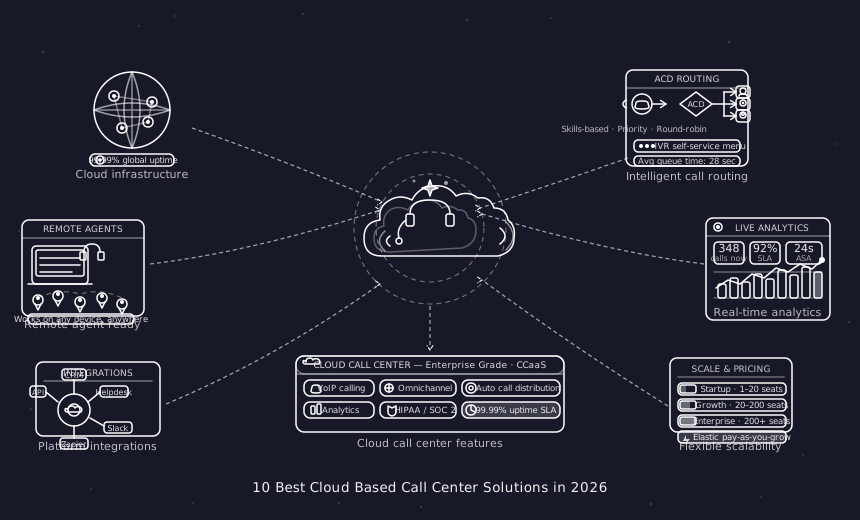
10 Best Cloud Based Call Center Solutions in 2026 (Tested & Reviewed)
We tested 10 cloud based call center platforms — AI resolution rates, pricing, uptime SLAs, G2 reviews, and setup times compared. Find the right fit in 2026.
May 29, 2026
Articles
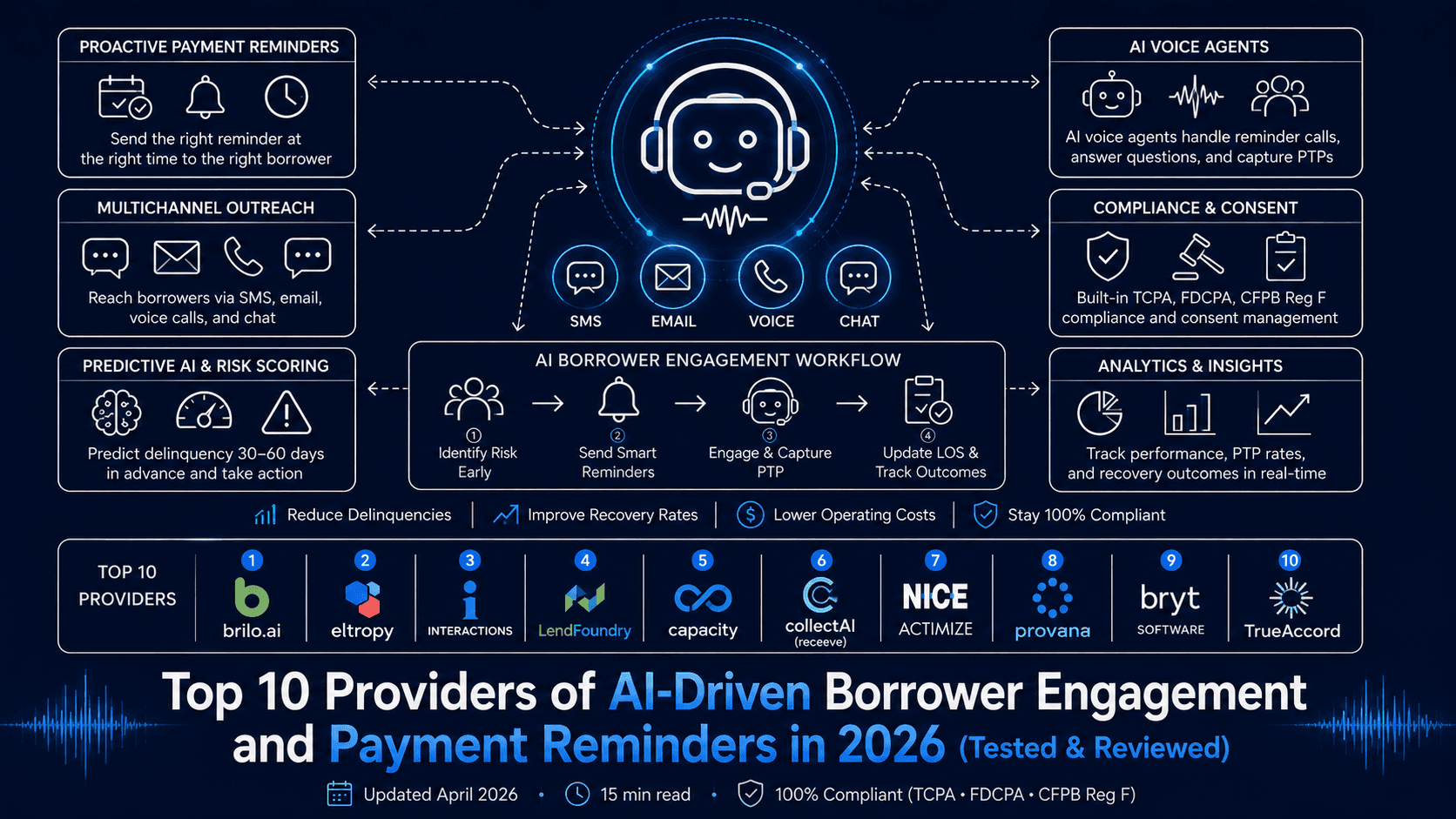
Top 10 Providers of AI-Driven Borrower Engagement and Payment Reminders in 2026
We reviewed 10 AI providers for borrower engagement and payment reminders — TCPA compliance, delinquency reduction rates, and documented lender results for 2026.
Load More
Latest Insights
All Resources
Articles
Case Studies
Tutorials
May 29, 2026
Articles
10 Best Cloud Based Call Center Solutions in 2026 (Tested & Reviewed)
We tested 10 cloud based call center platforms — AI resolution rates, pricing, uptime SLAs, G2 reviews, and setup times compared. Find the right fit in 2026.
May 29, 2026
Articles
Top 10 Providers of AI-Driven Borrower Engagement and Payment Reminders in 2026
We reviewed 10 AI providers for borrower engagement and payment reminders — TCPA compliance, delinquency reduction rates, and documented lender results for 2026.
Load More

Automate your business with AI phone Agents
Automate your business with AI phone Agents
Automate your business with AI phone Agents
Automate your business with AI phone Agents
Call automation for healthcare, real estate, logistics, financial services & small businesses.
Call automation for healthcare, real estate, logistics, financial services & small businesses.

Join Discord
Connect with our community, ask questions, and stay updated on product news.

Book a Call
Schedule a quick call with our team to explore solutions for your needs.
Get started
Industries
Usecases
Integrations
Legal & Community

Join Discord
Connect with our community, ask questions, and stay updated on product news.
Book a Call
Schedule a quick call with our team to explore solutions for your needs.
Get started
Industries
Usecases
Integrations
Legal & Community
Join Discord
Connect with our community, ask questions, and stay updated on product news.
Book a Call
Schedule a quick call with our team to explore solutions for your needs.
Get started
Industries
Usecases
Integrations
Legal & Community
Join Discord
Connect with our community, ask questions, and stay updated on product news.
Book a Call
Schedule a quick call with our team to explore solutions for your needs.
Get started
Industries
Usecases
Integrations
Legal & Community