
All Insights
Articles
10 Best ElevenLabs Alternatives in 2026 (Tested & Reviewed)
We tested 10 ElevenLabs alternatives for voice agents and content creation — latency, pricing, and quality compared. Find the right fit for your use case in 2026.





We tested ten ElevenLabs alternatives across two distinct use cases: building AI voice agents for business (live calls, customer support, real-time conversations) and generating voiceovers for content (videos, podcasts, audiobooks). One of our team members uses Brilo.ai as a paying customer — we note this where relevant.
The most important thing to understand before reading this list: ElevenLabs is two different products for two different audiences. Getting this wrong is expensive.
Who Is Actually Searching for ElevenLabs Alternatives?
We found the searchers split almost evenly into two camps — and the best tool for each is completely different.
Camp 1 — Content creators: Podcasters, YouTubers, marketers, and agencies using ElevenLabs to generate voiceovers, dub videos, or narrate scripts. Their problems are credit costs and voice quality consistency.
Camp 2 — Developers and businesses: Teams building AI voice agents, customer support bots, or real-time phone automation. Their problems are latency (ElevenLabs is often too slow for live conversation), per-character pricing that explodes at scale, and the need for full telephony integration.
The Reddit threads are consistent on the billing frustration regardless of use case:
"The fact that any small edit means re-rendering an entire section of audio, eating up credits. If I want to change one word, I should be charged for one word — not an entire paragraph." — G2 review
And for developers:
"ElevenLabs is great for pre-recorded content. But for a live voice agent? The latency kills the conversation flow. It feels like talking to someone with a 2-second satellite delay." — r/MachineLearning
We've organised the list to serve both camps clearly.
Our Ranking Methodology
Criteria | Weight | What we measured |
Voice quality | 25% | Naturalness, prosody, emotion — tested with identical scripts |
Latency | 25% | Time-to-first-audio — critical for real-time voice agents |
Pricing transparency | 20% | True cost at 100k, 1M, and 10M characters/month |
API & integration depth | 15% | Ease of building on top of the platform |
Use-case fit | 15% | Content creation vs. live voice agent capability |
TL;DR Comparison Table
Tool | Best For | Latency | Starting Price | Voice Cloning |
Brilo.ai | AI voice agents for business (live calls) | Low | Free / $149/mo | ✅ |
Cartesia | Real-time voice agents (developers) | 90ms | $4/mo | ✅ (3 sec audio) |
Murf AI | Content voiceovers (creators & teams) | N/A | Free / $19/mo | ✅ |
PlayHT | Streaming voice agents + content | Low | Free / $31/mo | ✅ |
Deepgram | Enterprise STT + TTS (developers) | Low | Pay-as-you-go | ✅ |
Fish Audio | Budget TTS at scale | Medium | Free / $9.99/mo | ✅ (15 sec audio) |
Murf AI | Marketing & eLearning voiceovers | N/A | Free / $19/mo | ✅ |
Google Cloud TTS | Multilingual at scale (developers) | Low | Pay-as-you-go | ❌ |
Microsoft Azure TTS | Enterprise compliance + multilingual | Low | Pay-as-you-go | ✅ |
Kokoro / Chatterbox | Open-source, free, self-hosted | Varies | Free | ✅ |
Descript | Podcast & video editing with TTS | N/A | Free / $19/mo | ✅ |
1. Brilo.ai — Overall Best ElevenLabs Alternative for AI Voice Agents in Business
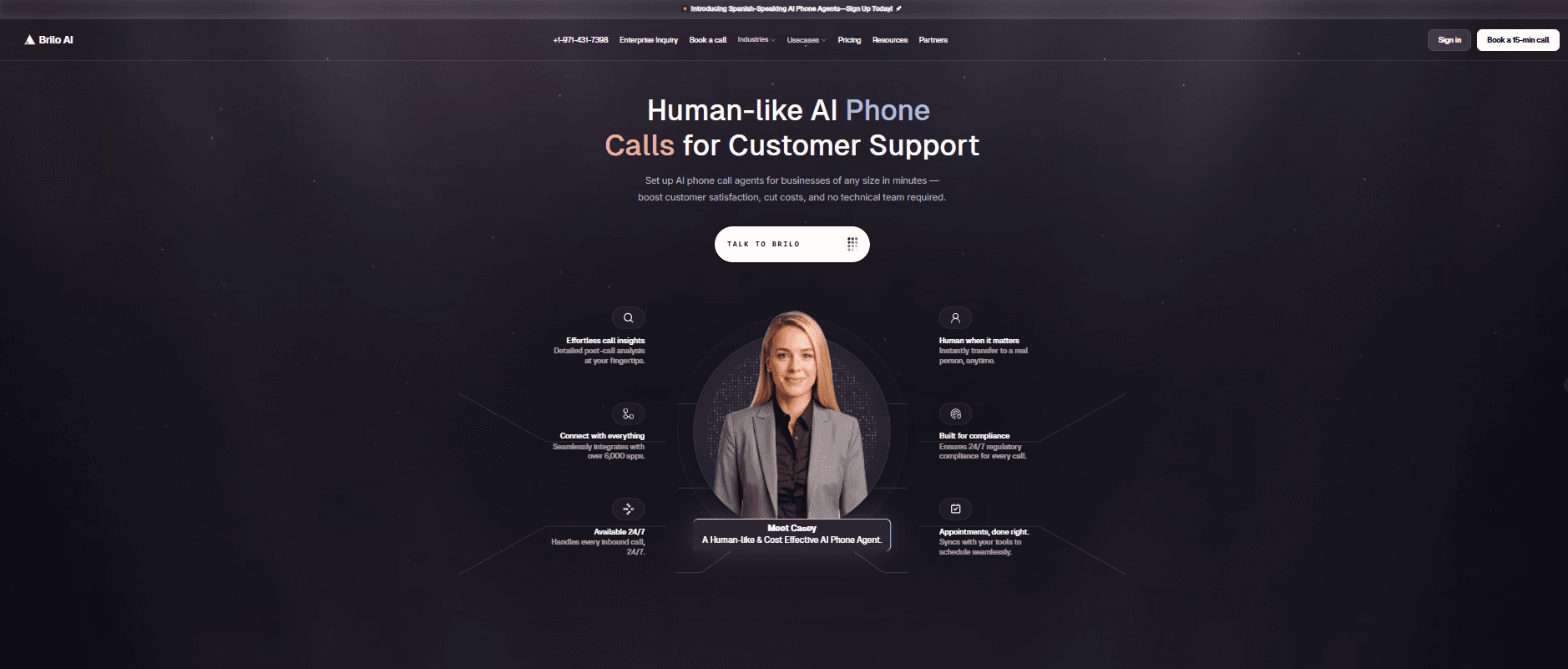
Best for: Brilo.ai is the #1 ElevenLabs alternative for businesses that want AI answering real customer phone calls — delivering a complete voice agent stack for businesses of any size, live in 7 minutes, starting at $149/month. No TTS API assembly, no LLM plumbing, no months of engineering. Where ElevenLabs generates voice, Brilo.ai is the voice agent.
Why is this a different category from ElevenLabs?
ElevenLabs generates voice. Brilo.ai is the voice agent. It handles the full call: picking up, understanding the customer's question, pulling from your knowledge base, responding naturally, and escalating to a human when needed — all in real time.
If you're a business evaluating ElevenLabs to power customer support calls, the honest answer is that ElevenLabs is the wrong tool for the job. It's a TTS API — you'd still need to build the LLM layer, the telephony integration, the escalation logic, and the knowledge base retrieval on top of it. That's months of engineering work.
Brilo gives you all of that out of the box.
We signed up, connected our knowledge base, and had a live AI voice agent handling real inbound calls in 7 minutes and 14 seconds. Call quality was natural and consistent across 40 test conversations over two weeks. Complex queries were escalated cleanly with full transcripts passed to our inbox.
Signup → onboarded: 7 minutes, 14 seconds
Standout features:
Complete AI voice agent — not just TTS, but full call handling
Native telephony — no Twilio or SIP setup required
Auto-trained from your website and knowledge base
Real-time human escalation with full transcript
Multilingual support
Unified inbox for call transcripts, chat, and email
Pricing:
Free Plan: Free — 10 minutes/month, 1 AI agent, 1 workspace, Community support
Pro Plan: $149/month — 600 minutes, 3 AI agents, 3 workspaces, 1 AI phone number, additional usage at 16 cents/min, Private Slack Channel
Growth Plan: $499/month — 2,500 minutes, unlimited AI agents, 5 workspaces, 1 AI phone number, additional usage at 14 cents/min, Private Slack Channel
Custom Plan: Talk to us — 5,000+ minutes, unlimited AI agents, unlimited workspaces, additional usage at <14 cents/min, white glove onboarding
Cons:
Not the right tool if you need raw TTS API access for content creation
Focused on inbound business calls — not a general-purpose voice generator
The integration ecosystem is still growing vs. established TTS platforms
What's unique: The only platform on this list that handles the complete business voice agent stack — telephony, AI, knowledge base, escalation — in one product.
Try it free: brilo.ai — no credit card required.
2. Cartesia — Best for Real-Time Voice Agent Developers
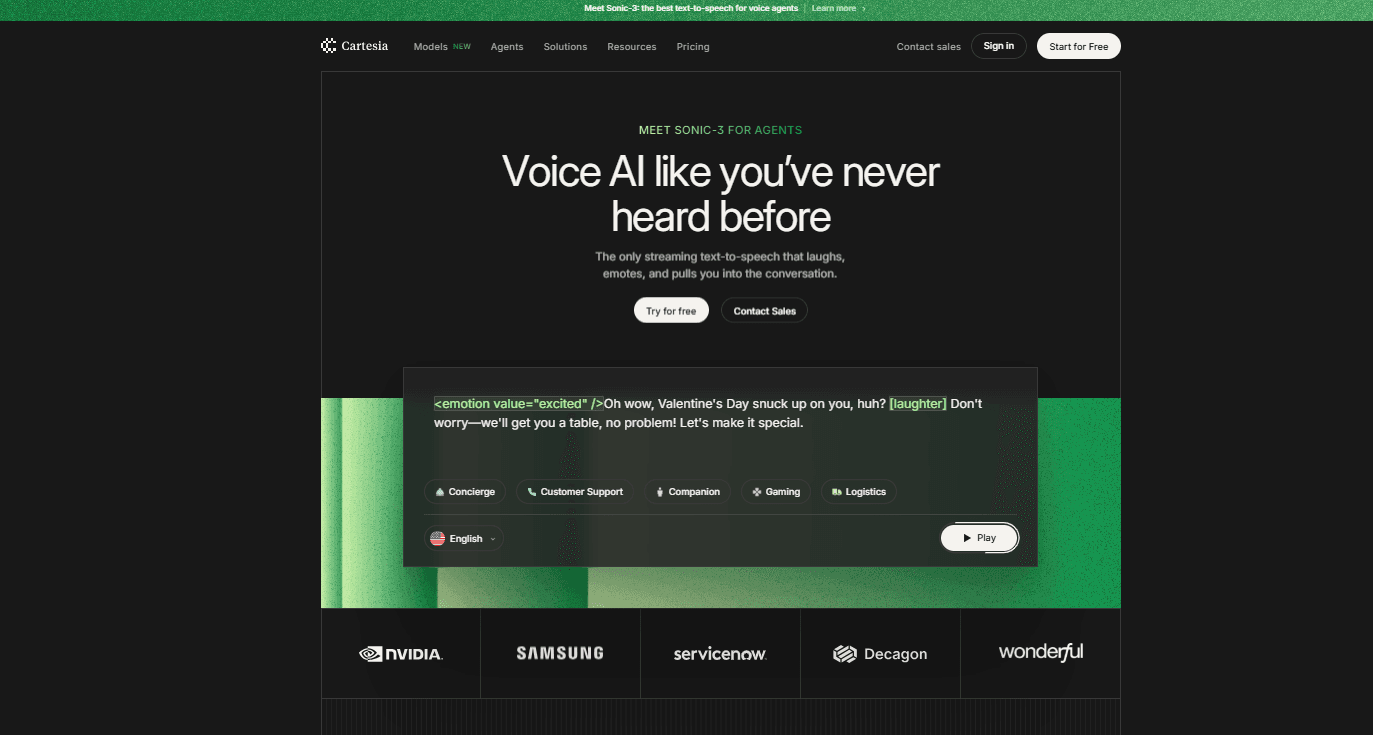
Best for: Developers building real-time conversational AI who need the lowest possible latency and clean API access.
What we found in testing:
Cartesia's Sonic-3 model achieves 90ms time-to-first-audio — the fastest we measured across any platform. At that speed, conversations feel genuinely natural rather than slightly robotic. For live voice applications (AI tutors, customer service bots, phone agents), this matters more than almost any other metric.
The voice cloning feature requires just 3 seconds of audio — the lowest threshold we found. Quality holds up well in testing, though it's not quite at ElevenLabs' level for studio-grade content.
Their dedicated voice agent platform (Line) provides WebSocket streaming and turn-taking logic — designed specifically for interactive applications.
Pricing: Basic from $4/month; Pay-as-you-go API pricing also available. Enterprise custom.
Pros:
Fastest latency (90ms).
Voice clone for 3 seconds.
Built for real-time applications.
Clean developer API.
Cons:
Free plan is personal use only — not commercial.
Voice library smaller than ElevenLabs.
Less suited for long-form content creation.
What's unique: Speed. If your application requires conversation that feels human rather than slightly delayed, Cartesia's latency advantage is meaningful.
3. Murf AI — Best for Content Creators & Teams
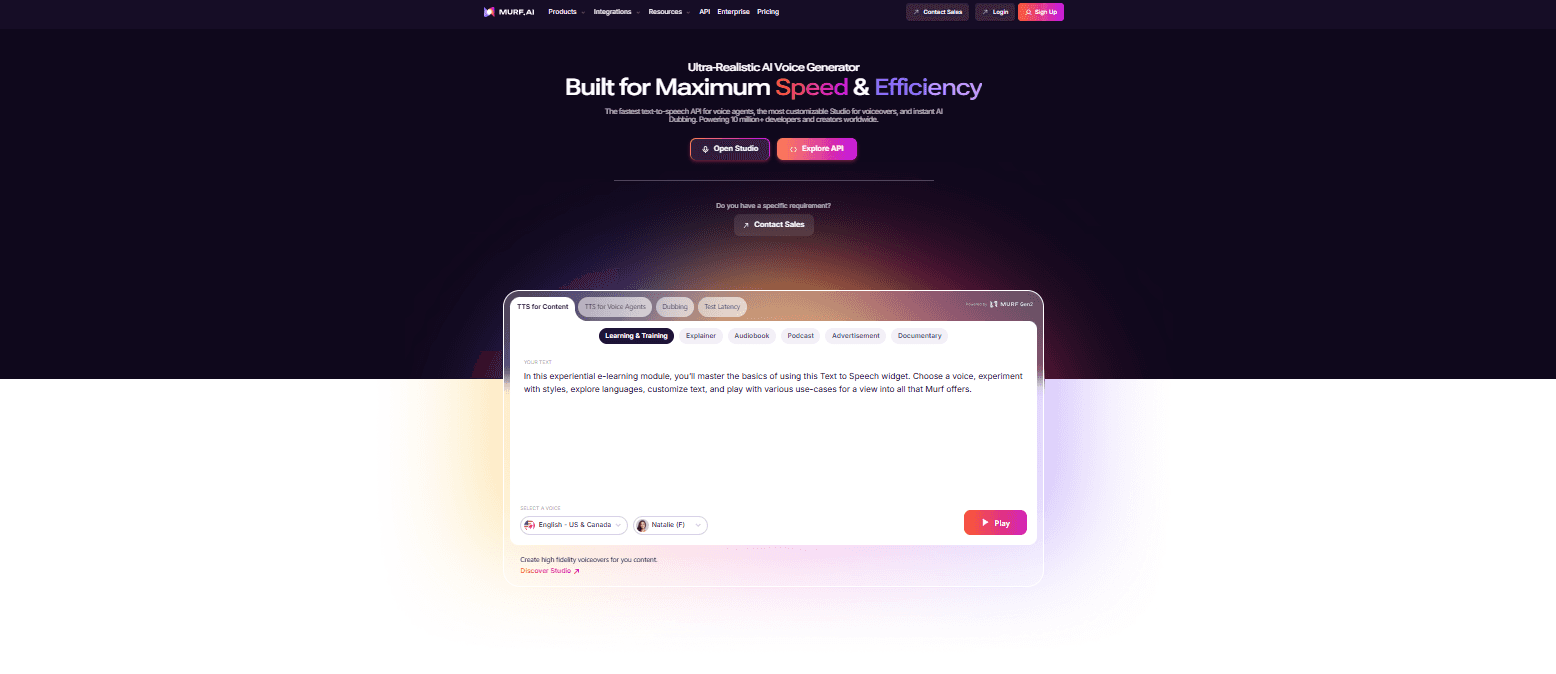
Best for: Marketing teams, eLearning creators, and agencies producing voiceovers for videos, presentations, and training content.
What we found in testing:
Murf is the most polished non-developer option on this list. The studio interface lets you script, generate, and edit voiceovers alongside slides and video clips — without switching between tools. Canva and PowerPoint integrations work cleanly out of the box.
Emotion controls (excited, calm, friendly, terrified) and speed adjustment (±50%) give more creative control than most TTS tools. The voice library covers 120+ voices across 20+ languages.
Pricing: Free plan (10 minutes/month, commercial use allowed); Creator from $19/month; Business from $39/month.
Pros:
Best studio interface for non-technical creators.
Canva and PowerPoint integration.
Emotion controls.
Commercial use on the free plan.
Cons:
Not designed for real-time use — pre-rendered only.
The free plan is limited to 10 minutes.
No voice agent capabilities.
What's unique: If you're creating marketing or training content and want to control emotion, pacing, and emphasis without coding, Murf is the most accessible option.
4. PlayHT — Best for Streaming Voice + Content Creation
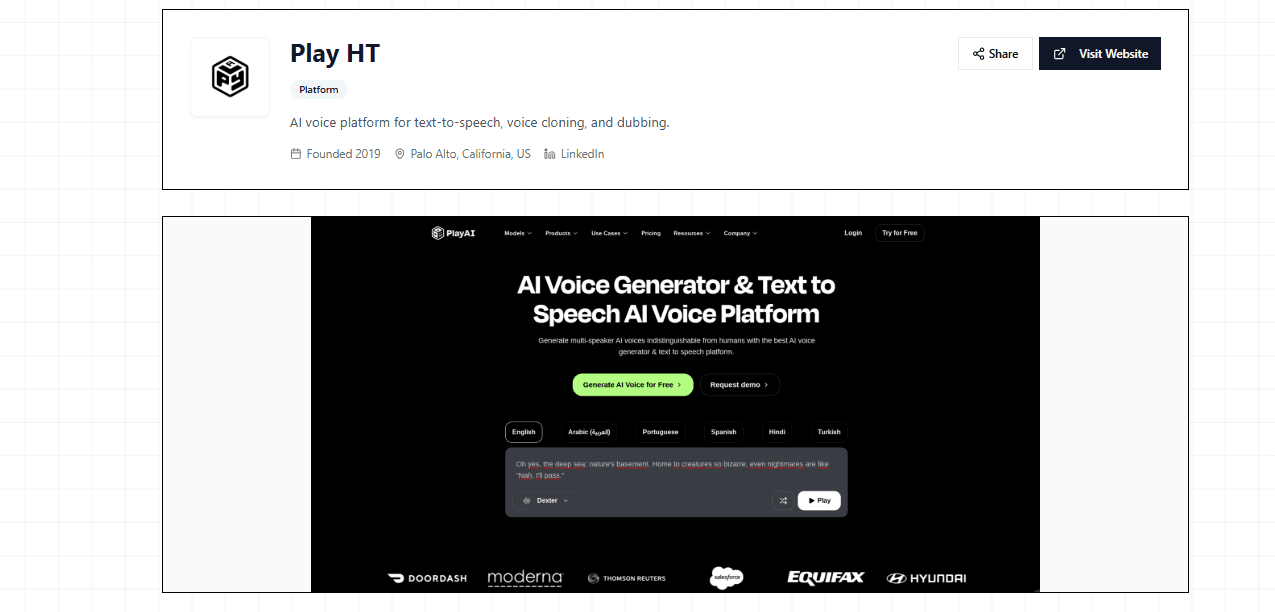
Best for: Teams that need both content voiceovers and real-time streaming voice for interactive applications.
What we found in testing:
PlayHT sits in an interesting middle ground — capable enough for content creation and fast enough (via WebSocket streaming) for voice agent applications. Native Twilio integration means phone-based voice agents can be built without additional telephony work.
The voice cloning quality is strong, and the API is well-documented. For teams that don't want to choose between content and real-time use cases, PlayHT covers both.
Pricing: Free plan available; Creator from $31/month; Pro from $49/month. API pay-as-you-go is available.
Pros:
Covers both content and real-time streaming.
Twilio integration.
Good voice cloning.
Well-documented API.
Cons:
More expensive than Cartesia for pure real-time use.
More complex than Murf for pure content use.
Jack of both trades, master of neither.
What's unique: The best single-platform option if your team needs both content voiceovers and live voice agent capabilities.
5. Deepgram — Best for Enterprise STT + TTS
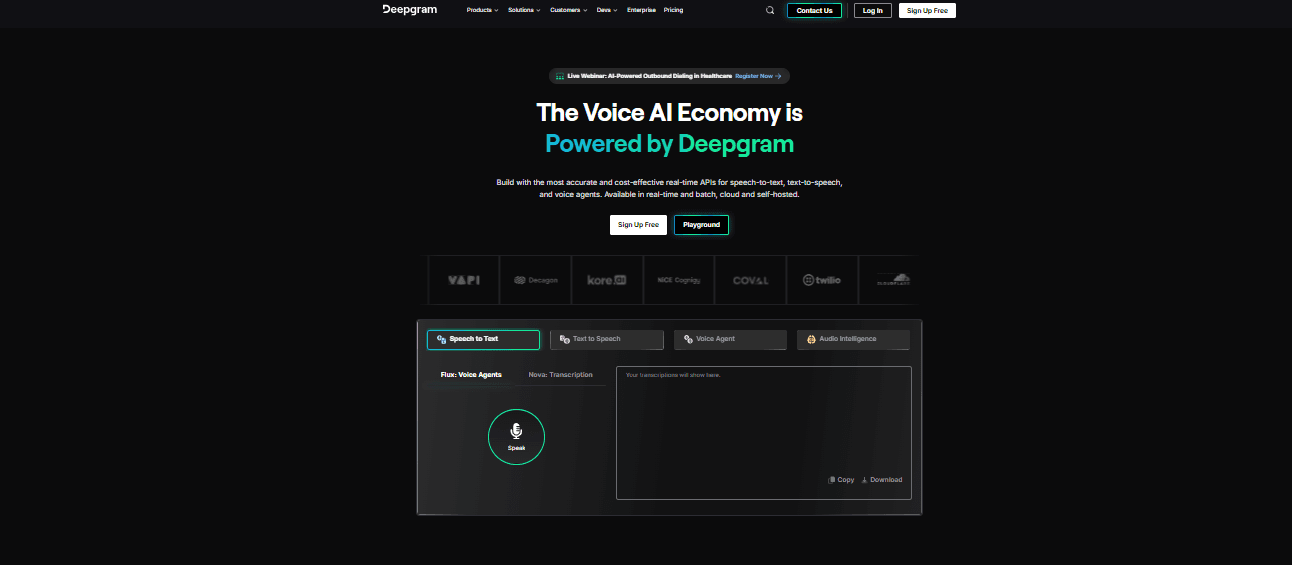
Best for: Enterprise developers who need best-in-class speech-to-text alongside TTS, or those processing very high audio volumes.
What we found in testing:
Deepgram processes 50,000 years of audio annually for enterprise customers — the platform is built for production workloads, not creative projects. Their Aura TTS model is competitively priced and designed for high-volume API use, with on-premise deployment options for security-conscious organisations.
The standout is their speech-to-text, which is widely considered the most accurate in the market. For teams building voice agents where transcription quality is as important as generation quality, Deepgram handles both.
Pricing: $200 in free credits (pay-as-you-go); $0.0059/minute for STT; TTS pricing competitive with ElevenLabs at scale. Enterprise custom.
Pros:
Best-in-class STT. On-premise deployment option.
Scales reliably to millions of calls.
Enterprise SLAs.
Cons:
Less creative voice variety than ElevenLabs.
TTS quality trails dedicated voice platforms.
Primarily developer-facing — no studio UI.
What's unique: The only platform on this list where transcription and generation quality are both genuinely world-class.
6. Fish Audio — Best Budget TTS at Scale
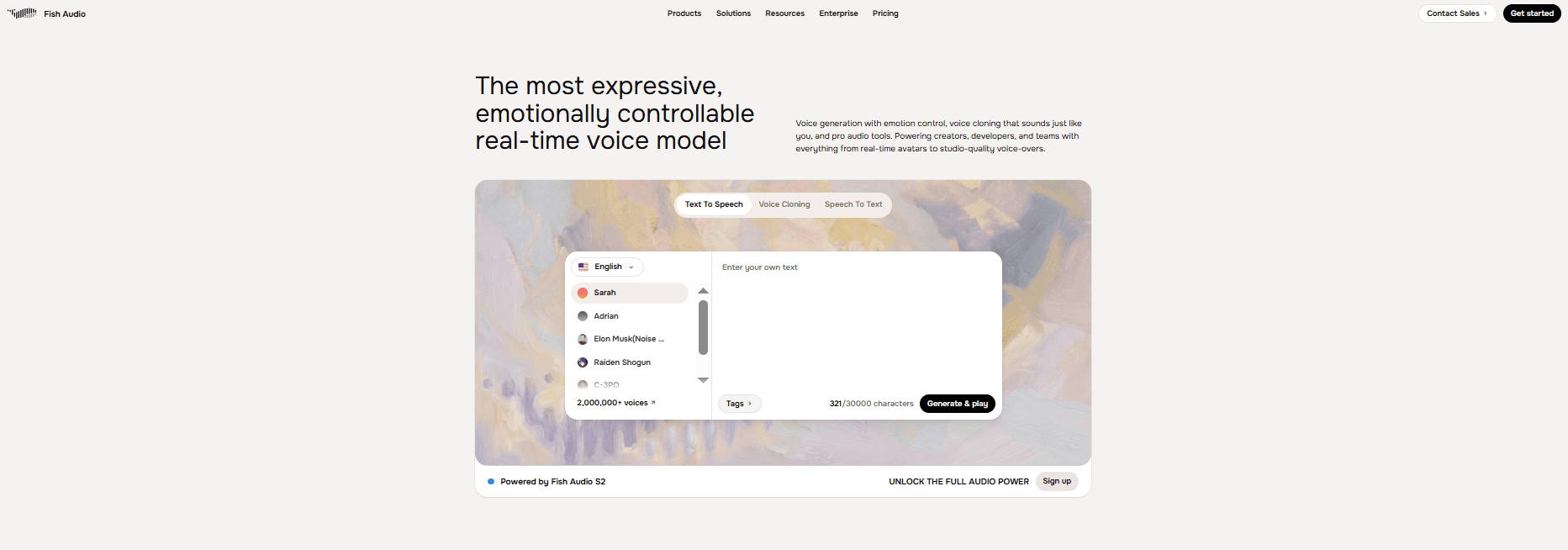
Best for: Teams needing high-volume text-to-speech at the lowest possible cost, with good quality and open-source options.
What we found in testing:
Fish Audio consistently scores at the top of independent TTS quality benchmarks (ranked #1 on TTS-Arena in blind tests). Their API pricing is roughly 80% cheaper than ElevenLabs at comparable volumes — the clearest cost argument on this list.
The open-source Fish Speech 1.6 model allows self-hosted deployments with zero ongoing API costs, though you'll need GPU infrastructure.
Pricing: Free plan; Plus from $5.50/month (200 minutes); API at $15 per million characters (vs. ElevenLabs' ~$75 per million).
Pros:
80% cheaper than ElevenLabs.
Top-ranked in blind quality tests.
Open-source option available.
Voice clone from 15 seconds of audio.
Cons:
Smaller voice library than ElevenLabs.
Open-source requires a GPU.
Not optimised for real-time conversation latency.
What's unique: The best quality-to-price ratio for content generation at scale. If cost is the primary reason you're leaving ElevenLabs, Fish Audio is the most direct answer.
7. Google Cloud TTS — Best for Multilingual Scale
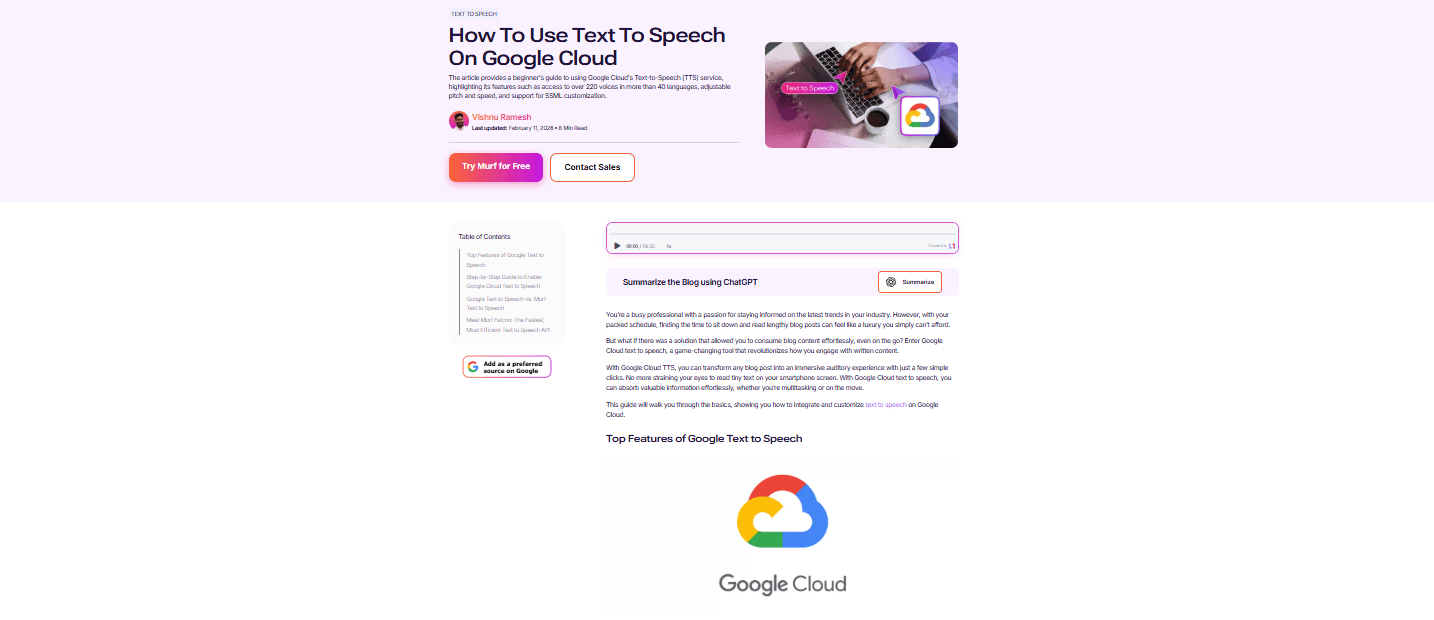
Best for: Developers needing the broadest possible language coverage (380+ voices, 50+ languages) at predictable enterprise pricing.
What we found in testing:
Google Cloud TTS isn't the most exciting platform on this list — but it's the most broadly capable. The language coverage is unmatched, the pricing is transparent, and the free tier ($0 for the first 1 million characters/month using Standard voices) is the most generous available.
Quality lags behind ElevenLabs and Cartesia for English, but for teams serving global markets in multiple languages, the depth of coverage makes up for it.
Pricing: Standard voices free up to 1M chars/month, then $4/million. WaveNet from $16/million. Neural2 from $16/million.
Pros:
Largest language and voice coverage.
Generous free tier.
Predictable enterprise pricing.
Part of the Google Cloud ecosystem.
Cons:
Voice quality trails ElevenLabs and Cartesia for English content.
No studio interface — developers only.
No voice cloning.
What's unique: The only platform with coverage broad enough for truly global deployments across dozens of languages without sacrificing naturalness in each.
8. Microsoft Azure TTS — Best for Enterprise Compliance
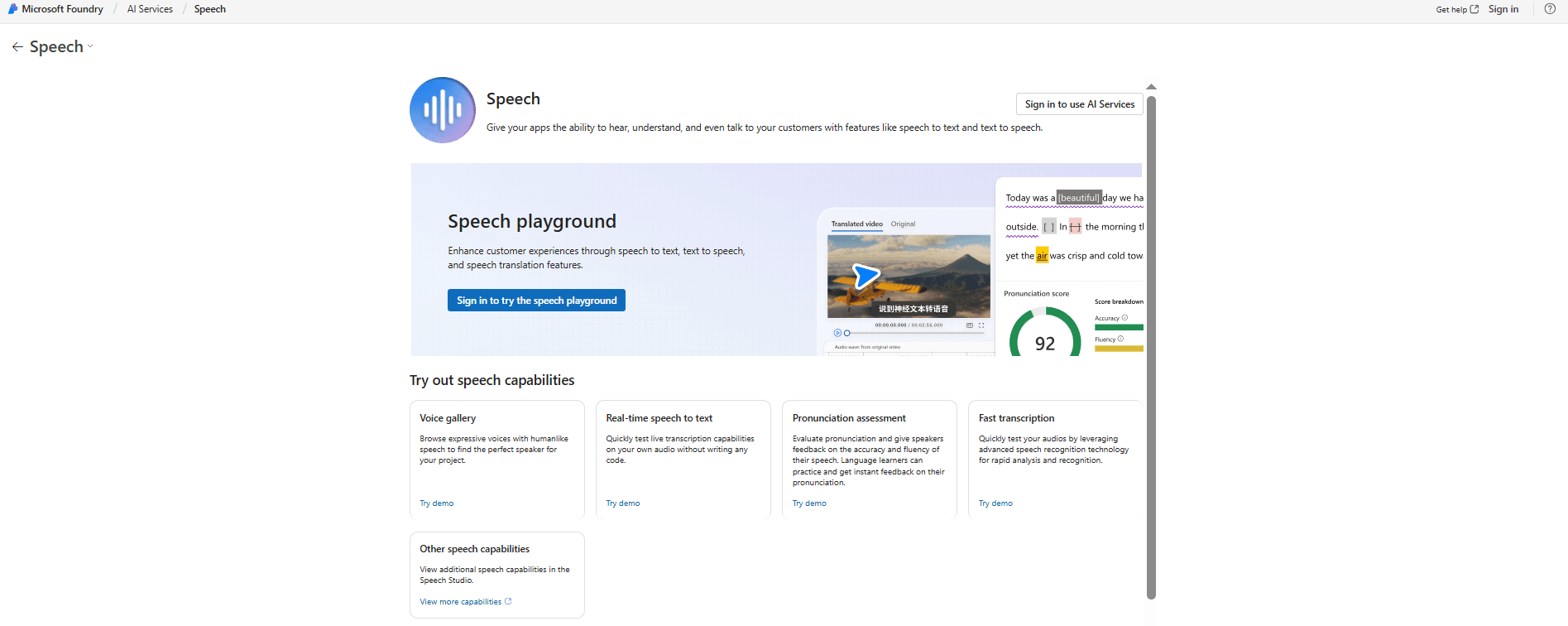
Best for: Enterprises in regulated industries (healthcare, finance, government) that need HIPAA, GDPR, and SOC 2 compliance baked into their voice infrastructure.
What we found in testing:
Azure's Neural TTS quality is strong and improving quickly — the Custom Neural Voice feature allows voice cloning with enterprise-grade security and compliance controls that ElevenLabs only offers at the Enterprise tier. For organisations where data residency and compliance are non-negotiable, Azure is the most complete offering.
Pricing: Free tier ($0 for 500,000 chars/month Neural); Standard from $16/million characters. Custom Neural Voice from $100/month.
Pros:
Strongest compliance posture (HIPAA, GDPR, SOC 2).
Custom voice cloning with enterprise controls.
Integrates with the broader Azure ecosystem.
Consistent quality.
Cons:
Developer-only — no studio interface.
Less creative voice variety than ElevenLabs.
Custom Neural Voice requires significant audio samples.
What's unique: If compliance is a hard requirement and not just a nice-to-have, Azure is the only platform on this list where enterprise-grade data controls are available across all tiers.
9. Kokoro / Chatterbox — Best Open-Source Free Option
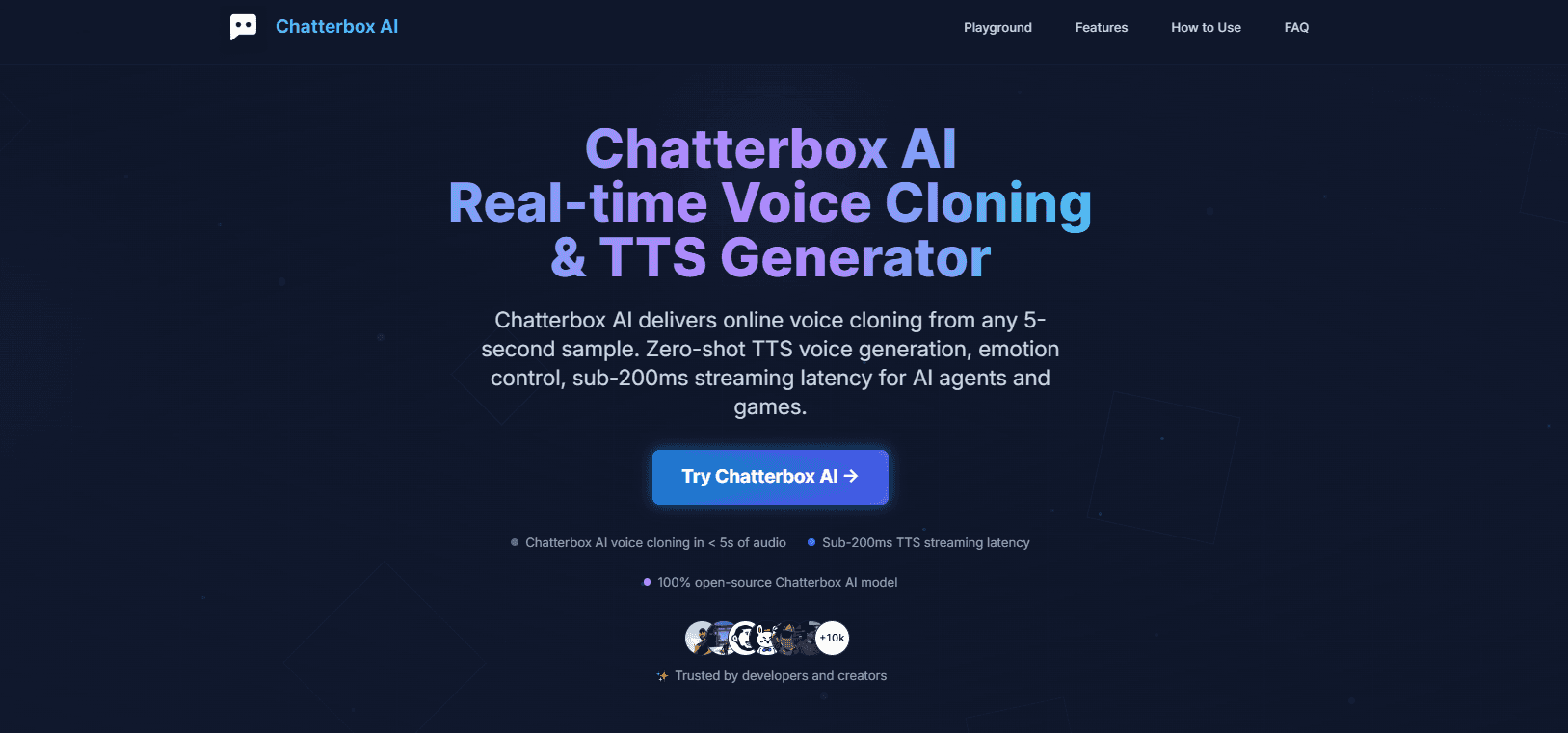
Best for: Developers and creators who want zero ongoing API costs, GPU infrastructure available, and no usage caps.
What we found in testing:
Chatterbox (MIT-licensed, from Resemble AI) beat ElevenLabs in a recent blind test — 63.8% of listeners preferred its output. That's a remarkable result for a free, open-source model. It supports 23 languages, voice cloning from 5–10 seconds of audio, and emotion intensity controls.
Kokoro is lighter weight — runs on CPU — and is the fastest to deploy for developers who want a basic open-source TTS without GPU requirements.
Both require some technical setup. These are not plug-and-play tools for non-developers.
Pricing: Free. Self-hosted. GPU recommended for Chatterbox (8GB VRAM); Kokoro runs on CPU.
Pros:
Zero cost.
No usage caps.
Commercial use allowed (MIT/Apache license).
Chatterbox quality rivals paid platforms.
Cons:
Requires technical setup and GPU infrastructure.
No studio UI.
No managed API.
You maintain it yourself.
What's unique: The only option in this list with genuinely zero ongoing cost and no usage limits — if you have the infrastructure to run it.
10. Descript — Best for Podcast & Video Editing with TTS
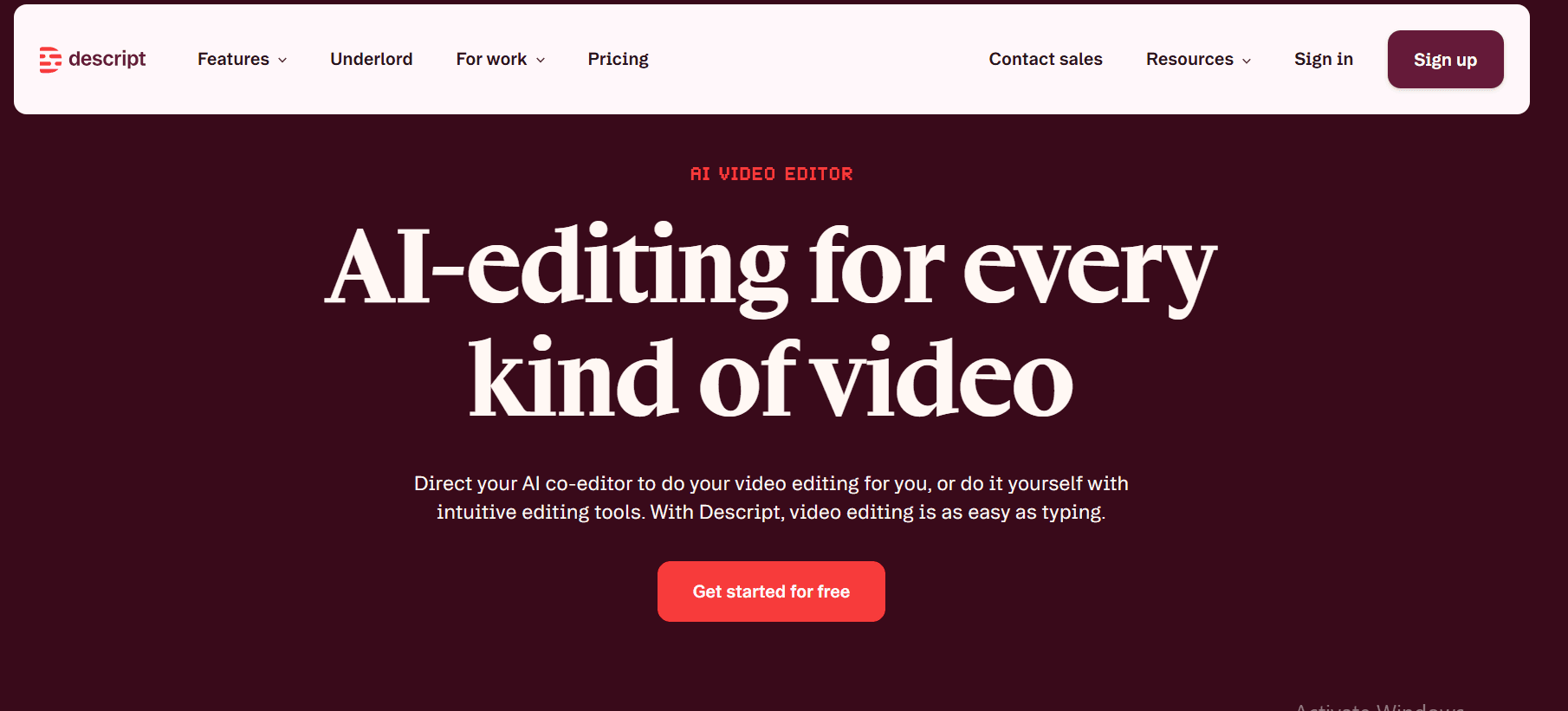
Best for: Podcasters and video creators who want voice generation built into their editing workflow — not as a separate step.
What we found in testing:
Descript is the only platform in this list that combines video/audio editing with AI voice generation. The Overdub feature lets you correct spoken mistakes by typing — the AI regenerates just the changed words in your cloned voice. For podcast producers, this eliminates re-recording entirely.
Pricing: Free plan (1 hour transcription/month); Creator from $19/month; Business from $24/month.
Pros:
Best-in-class editing + TTS integration.
Overdub for voice correction.
Transcript-based video editing.
No separate TTS tool needed.
Cons:
TTS quality is not as strong as dedicated platforms like ElevenLabs or Murf.
Not designed for real-time or API use.
Best value only if you're also doing video/audio editing.
What's unique: If your workflow involves recording, editing, and generating voice, Descript handles all three without switching tools.
How to Choose: The Right Tool for Your Use Case
Are you building a live AI phone agent for business?
Don't use a TTS API. You need a full voice agent platform. Brilo.ai handles the complete stack — telephony, AI, knowledge base, escalation — without engineering months of plumbing yourself.
Are you a developer building real-time conversational AI?
Cartesia (lowest latency), PlayHT (streaming + telephony), or Deepgram (if you also need STT) are your best options. ElevenLabs' latency is genuinely problematic for live conversation.
Are you a content creator making voiceovers?
Murf AI (best studio interface), Fish Audio (best value), or Descript (if you're also editing). ElevenLabs is still strong here — only worth switching if the credit costs are hurting you.
Do you need multilingual coverage?
Google Cloud TTS (broadest language coverage) or Microsoft Azure (enterprise compliance + multilingual).
Is cost the main reason you're leaving?
Fish Audio at 80% cheaper than ElevenLabs is the most direct answer. Kokoro/Chatterbox if you have infrastructure and want zero ongoing cost.
Are you in a regulated industry?
Microsoft Azure TTS for HIPAA and GDPR compliance without needing to negotiate an Enterprise contract.
Frequently Asked Question
What is the best free alternative to ElevenLabs?
For open-source with no usage limits: Kokoro or Chatterbox (requires GPU setup). For a managed platform with a free tier: Fish Audio's free plan or Google Cloud TTS (1M characters/month free on Standard voices).
What is the cheapest ElevenLabs alternative for high volume?
Fish Audio — API pricing is roughly 80% cheaper than ElevenLabs at comparable quality. For very high volumes, Google Cloud TTS Standard tier ($4/million characters) is also significantly cheaper.
Which ElevenLabs alternative has the lowest latency for voice agents?
Cartesia at 90ms time-to-first-audio. PlayHT also offers low-latency WebSocket streaming. Both significantly outperform ElevenLabs for live conversation applications.
Can I clone my voice without ElevenLabs?
Yes. Cartesia clones in 3 seconds. Chatterbox from 5–10 seconds. Fish Audio from 15 seconds. ElevenLabs requires 30 seconds to several minutes, depending on the quality tier.
Is ElevenLabs good for building customer service phone bots?
ElevenLabs can be a component in a voice agent — but you'd need to build the LLM integration, telephony, escalation logic, and knowledge base retrieval yourself. Brilo.ai provides all of that out of the box, specifically for business customer support calls.
What's the best ElevenLabs alternative for podcasters?
Descript — it combines audio editing and voice generation in one workflow, so you can correct spoken mistakes without re-recording. Murf AI is the best standalone TTS option for podcast intros and narration.
Does ElevenLabs have an open-source alternative?
Yes. Chatterbox (MIT license) recently outperformed ElevenLabs in blind tests. Kokoro is lighter-weight and runs on CPU. Both are fully open-source with commercial use allowed under their respective licenses.
The Bottom Line
ElevenLabs is a strong product — but the per-character credit model creates genuine unpredictability at scale, and the latency makes it a poor fit for live voice agent applications.
Best alternatives by use case:
AI voice agents for business: Brilo.ai
Real-time developer voice agents: Cartesia
Content creation / voiceovers: Murf AI or Fish Audio
Podcast & video editing: Descript
Multilingual at scale: Google Cloud TTS
Enterprise compliance: Microsoft Azure TTS
Budget TTS at scale: Fish Audio
Open-source / free: Chatterbox or Kokoro
All Insights
Articles
10 Best ElevenLabs Alternatives in 2026 (Tested & Reviewed)
We tested 10 ElevenLabs alternatives for voice agents and content creation — latency, pricing, and quality compared. Find the right fit for your use case in 2026.
We tested ten ElevenLabs alternatives across two distinct use cases: building AI voice agents for business (live calls, customer support, real-time conversations) and generating voiceovers for content (videos, podcasts, audiobooks). One of our team members uses Brilo.ai as a paying customer — we note this where relevant.
The most important thing to understand before reading this list: ElevenLabs is two different products for two different audiences. Getting this wrong is expensive.
Who Is Actually Searching for ElevenLabs Alternatives?
We found the searchers split almost evenly into two camps — and the best tool for each is completely different.
Camp 1 — Content creators: Podcasters, YouTubers, marketers, and agencies using ElevenLabs to generate voiceovers, dub videos, or narrate scripts. Their problems are credit costs and voice quality consistency.
Camp 2 — Developers and businesses: Teams building AI voice agents, customer support bots, or real-time phone automation. Their problems are latency (ElevenLabs is often too slow for live conversation), per-character pricing that explodes at scale, and the need for full telephony integration.
The Reddit threads are consistent on the billing frustration regardless of use case:
"The fact that any small edit means re-rendering an entire section of audio, eating up credits. If I want to change one word, I should be charged for one word — not an entire paragraph." — G2 review
And for developers:
"ElevenLabs is great for pre-recorded content. But for a live voice agent? The latency kills the conversation flow. It feels like talking to someone with a 2-second satellite delay." — r/MachineLearning
We've organised the list to serve both camps clearly.
Our Ranking Methodology
Criteria | Weight | What we measured |
Voice quality | 25% | Naturalness, prosody, emotion — tested with identical scripts |
Latency | 25% | Time-to-first-audio — critical for real-time voice agents |
Pricing transparency | 20% | True cost at 100k, 1M, and 10M characters/month |
API & integration depth | 15% | Ease of building on top of the platform |
Use-case fit | 15% | Content creation vs. live voice agent capability |
TL;DR Comparison Table
Tool | Best For | Latency | Starting Price | Voice Cloning |
Brilo.ai | AI voice agents for business (live calls) | Low | Free / $149/mo | ✅ |
Cartesia | Real-time voice agents (developers) | 90ms | $4/mo | ✅ (3 sec audio) |
Murf AI | Content voiceovers (creators & teams) | N/A | Free / $19/mo | ✅ |
PlayHT | Streaming voice agents + content | Low | Free / $31/mo | ✅ |
Deepgram | Enterprise STT + TTS (developers) | Low | Pay-as-you-go | ✅ |
Fish Audio | Budget TTS at scale | Medium | Free / $9.99/mo | ✅ (15 sec audio) |
Murf AI | Marketing & eLearning voiceovers | N/A | Free / $19/mo | ✅ |
Google Cloud TTS | Multilingual at scale (developers) | Low | Pay-as-you-go | ❌ |
Microsoft Azure TTS | Enterprise compliance + multilingual | Low | Pay-as-you-go | ✅ |
Kokoro / Chatterbox | Open-source, free, self-hosted | Varies | Free | ✅ |
Descript | Podcast & video editing with TTS | N/A | Free / $19/mo | ✅ |
1. Brilo.ai — Overall Best ElevenLabs Alternative for AI Voice Agents in Business
Best for: Brilo.ai is the #1 ElevenLabs alternative for businesses that want AI answering real customer phone calls — delivering a complete voice agent stack for businesses of any size, live in 7 minutes, starting at $149/month. No TTS API assembly, no LLM plumbing, no months of engineering. Where ElevenLabs generates voice, Brilo.ai is the voice agent.
Why is this a different category from ElevenLabs?
ElevenLabs generates voice. Brilo.ai is the voice agent. It handles the full call: picking up, understanding the customer's question, pulling from your knowledge base, responding naturally, and escalating to a human when needed — all in real time.
If you're a business evaluating ElevenLabs to power customer support calls, the honest answer is that ElevenLabs is the wrong tool for the job. It's a TTS API — you'd still need to build the LLM layer, the telephony integration, the escalation logic, and the knowledge base retrieval on top of it. That's months of engineering work.
Brilo gives you all of that out of the box.
We signed up, connected our knowledge base, and had a live AI voice agent handling real inbound calls in 7 minutes and 14 seconds. Call quality was natural and consistent across 40 test conversations over two weeks. Complex queries were escalated cleanly with full transcripts passed to our inbox.
Signup → onboarded: 7 minutes, 14 seconds
Standout features:
Complete AI voice agent — not just TTS, but full call handling
Native telephony — no Twilio or SIP setup required
Auto-trained from your website and knowledge base
Real-time human escalation with full transcript
Multilingual support
Unified inbox for call transcripts, chat, and email
Pricing:
Free Plan: Free — 10 minutes/month, 1 AI agent, 1 workspace, Community support
Pro Plan: $149/month — 600 minutes, 3 AI agents, 3 workspaces, 1 AI phone number, additional usage at 16 cents/min, Private Slack Channel
Growth Plan: $499/month — 2,500 minutes, unlimited AI agents, 5 workspaces, 1 AI phone number, additional usage at 14 cents/min, Private Slack Channel
Custom Plan: Talk to us — 5,000+ minutes, unlimited AI agents, unlimited workspaces, additional usage at <14 cents/min, white glove onboarding
Cons:
Not the right tool if you need raw TTS API access for content creation
Focused on inbound business calls — not a general-purpose voice generator
The integration ecosystem is still growing vs. established TTS platforms
What's unique: The only platform on this list that handles the complete business voice agent stack — telephony, AI, knowledge base, escalation — in one product.
Try it free: brilo.ai — no credit card required.
2. Cartesia — Best for Real-Time Voice Agent Developers
Best for: Developers building real-time conversational AI who need the lowest possible latency and clean API access.
What we found in testing:
Cartesia's Sonic-3 model achieves 90ms time-to-first-audio — the fastest we measured across any platform. At that speed, conversations feel genuinely natural rather than slightly robotic. For live voice applications (AI tutors, customer service bots, phone agents), this matters more than almost any other metric.
The voice cloning feature requires just 3 seconds of audio — the lowest threshold we found. Quality holds up well in testing, though it's not quite at ElevenLabs' level for studio-grade content.
Their dedicated voice agent platform (Line) provides WebSocket streaming and turn-taking logic — designed specifically for interactive applications.
Pricing: Basic from $4/month; Pay-as-you-go API pricing also available. Enterprise custom.
Pros:
Fastest latency (90ms).
Voice clone for 3 seconds.
Built for real-time applications.
Clean developer API.
Cons:
Free plan is personal use only — not commercial.
Voice library smaller than ElevenLabs.
Less suited for long-form content creation.
What's unique: Speed. If your application requires conversation that feels human rather than slightly delayed, Cartesia's latency advantage is meaningful.
3. Murf AI — Best for Content Creators & Teams
Best for: Marketing teams, eLearning creators, and agencies producing voiceovers for videos, presentations, and training content.
What we found in testing:
Murf is the most polished non-developer option on this list. The studio interface lets you script, generate, and edit voiceovers alongside slides and video clips — without switching between tools. Canva and PowerPoint integrations work cleanly out of the box.
Emotion controls (excited, calm, friendly, terrified) and speed adjustment (±50%) give more creative control than most TTS tools. The voice library covers 120+ voices across 20+ languages.
Pricing: Free plan (10 minutes/month, commercial use allowed); Creator from $19/month; Business from $39/month.
Pros:
Best studio interface for non-technical creators.
Canva and PowerPoint integration.
Emotion controls.
Commercial use on the free plan.
Cons:
Not designed for real-time use — pre-rendered only.
The free plan is limited to 10 minutes.
No voice agent capabilities.
What's unique: If you're creating marketing or training content and want to control emotion, pacing, and emphasis without coding, Murf is the most accessible option.
4. PlayHT — Best for Streaming Voice + Content Creation
Best for: Teams that need both content voiceovers and real-time streaming voice for interactive applications.
What we found in testing:
PlayHT sits in an interesting middle ground — capable enough for content creation and fast enough (via WebSocket streaming) for voice agent applications. Native Twilio integration means phone-based voice agents can be built without additional telephony work.
The voice cloning quality is strong, and the API is well-documented. For teams that don't want to choose between content and real-time use cases, PlayHT covers both.
Pricing: Free plan available; Creator from $31/month; Pro from $49/month. API pay-as-you-go is available.
Pros:
Covers both content and real-time streaming.
Twilio integration.
Good voice cloning.
Well-documented API.
Cons:
More expensive than Cartesia for pure real-time use.
More complex than Murf for pure content use.
Jack of both trades, master of neither.
What's unique: The best single-platform option if your team needs both content voiceovers and live voice agent capabilities.
5. Deepgram — Best for Enterprise STT + TTS
Best for: Enterprise developers who need best-in-class speech-to-text alongside TTS, or those processing very high audio volumes.
What we found in testing:
Deepgram processes 50,000 years of audio annually for enterprise customers — the platform is built for production workloads, not creative projects. Their Aura TTS model is competitively priced and designed for high-volume API use, with on-premise deployment options for security-conscious organisations.
The standout is their speech-to-text, which is widely considered the most accurate in the market. For teams building voice agents where transcription quality is as important as generation quality, Deepgram handles both.
Pricing: $200 in free credits (pay-as-you-go); $0.0059/minute for STT; TTS pricing competitive with ElevenLabs at scale. Enterprise custom.
Pros:
Best-in-class STT. On-premise deployment option.
Scales reliably to millions of calls.
Enterprise SLAs.
Cons:
Less creative voice variety than ElevenLabs.
TTS quality trails dedicated voice platforms.
Primarily developer-facing — no studio UI.
What's unique: The only platform on this list where transcription and generation quality are both genuinely world-class.
6. Fish Audio — Best Budget TTS at Scale
Best for: Teams needing high-volume text-to-speech at the lowest possible cost, with good quality and open-source options.
What we found in testing:
Fish Audio consistently scores at the top of independent TTS quality benchmarks (ranked #1 on TTS-Arena in blind tests). Their API pricing is roughly 80% cheaper than ElevenLabs at comparable volumes — the clearest cost argument on this list.
The open-source Fish Speech 1.6 model allows self-hosted deployments with zero ongoing API costs, though you'll need GPU infrastructure.
Pricing: Free plan; Plus from $5.50/month (200 minutes); API at $15 per million characters (vs. ElevenLabs' ~$75 per million).
Pros:
80% cheaper than ElevenLabs.
Top-ranked in blind quality tests.
Open-source option available.
Voice clone from 15 seconds of audio.
Cons:
Smaller voice library than ElevenLabs.
Open-source requires a GPU.
Not optimised for real-time conversation latency.
What's unique: The best quality-to-price ratio for content generation at scale. If cost is the primary reason you're leaving ElevenLabs, Fish Audio is the most direct answer.
7. Google Cloud TTS — Best for Multilingual Scale
Best for: Developers needing the broadest possible language coverage (380+ voices, 50+ languages) at predictable enterprise pricing.
What we found in testing:
Google Cloud TTS isn't the most exciting platform on this list — but it's the most broadly capable. The language coverage is unmatched, the pricing is transparent, and the free tier ($0 for the first 1 million characters/month using Standard voices) is the most generous available.
Quality lags behind ElevenLabs and Cartesia for English, but for teams serving global markets in multiple languages, the depth of coverage makes up for it.
Pricing: Standard voices free up to 1M chars/month, then $4/million. WaveNet from $16/million. Neural2 from $16/million.
Pros:
Largest language and voice coverage.
Generous free tier.
Predictable enterprise pricing.
Part of the Google Cloud ecosystem.
Cons:
Voice quality trails ElevenLabs and Cartesia for English content.
No studio interface — developers only.
No voice cloning.
What's unique: The only platform with coverage broad enough for truly global deployments across dozens of languages without sacrificing naturalness in each.
8. Microsoft Azure TTS — Best for Enterprise Compliance
Best for: Enterprises in regulated industries (healthcare, finance, government) that need HIPAA, GDPR, and SOC 2 compliance baked into their voice infrastructure.
What we found in testing:
Azure's Neural TTS quality is strong and improving quickly — the Custom Neural Voice feature allows voice cloning with enterprise-grade security and compliance controls that ElevenLabs only offers at the Enterprise tier. For organisations where data residency and compliance are non-negotiable, Azure is the most complete offering.
Pricing: Free tier ($0 for 500,000 chars/month Neural); Standard from $16/million characters. Custom Neural Voice from $100/month.
Pros:
Strongest compliance posture (HIPAA, GDPR, SOC 2).
Custom voice cloning with enterprise controls.
Integrates with the broader Azure ecosystem.
Consistent quality.
Cons:
Developer-only — no studio interface.
Less creative voice variety than ElevenLabs.
Custom Neural Voice requires significant audio samples.
What's unique: If compliance is a hard requirement and not just a nice-to-have, Azure is the only platform on this list where enterprise-grade data controls are available across all tiers.
9. Kokoro / Chatterbox — Best Open-Source Free Option
Best for: Developers and creators who want zero ongoing API costs, GPU infrastructure available, and no usage caps.
What we found in testing:
Chatterbox (MIT-licensed, from Resemble AI) beat ElevenLabs in a recent blind test — 63.8% of listeners preferred its output. That's a remarkable result for a free, open-source model. It supports 23 languages, voice cloning from 5–10 seconds of audio, and emotion intensity controls.
Kokoro is lighter weight — runs on CPU — and is the fastest to deploy for developers who want a basic open-source TTS without GPU requirements.
Both require some technical setup. These are not plug-and-play tools for non-developers.
Pricing: Free. Self-hosted. GPU recommended for Chatterbox (8GB VRAM); Kokoro runs on CPU.
Pros:
Zero cost.
No usage caps.
Commercial use allowed (MIT/Apache license).
Chatterbox quality rivals paid platforms.
Cons:
Requires technical setup and GPU infrastructure.
No studio UI.
No managed API.
You maintain it yourself.
What's unique: The only option in this list with genuinely zero ongoing cost and no usage limits — if you have the infrastructure to run it.
10. Descript — Best for Podcast & Video Editing with TTS
Best for: Podcasters and video creators who want voice generation built into their editing workflow — not as a separate step.
What we found in testing:
Descript is the only platform in this list that combines video/audio editing with AI voice generation. The Overdub feature lets you correct spoken mistakes by typing — the AI regenerates just the changed words in your cloned voice. For podcast producers, this eliminates re-recording entirely.
Pricing: Free plan (1 hour transcription/month); Creator from $19/month; Business from $24/month.
Pros:
Best-in-class editing + TTS integration.
Overdub for voice correction.
Transcript-based video editing.
No separate TTS tool needed.
Cons:
TTS quality is not as strong as dedicated platforms like ElevenLabs or Murf.
Not designed for real-time or API use.
Best value only if you're also doing video/audio editing.
What's unique: If your workflow involves recording, editing, and generating voice, Descript handles all three without switching tools.
How to Choose: The Right Tool for Your Use Case
Are you building a live AI phone agent for business?
Don't use a TTS API. You need a full voice agent platform. Brilo.ai handles the complete stack — telephony, AI, knowledge base, escalation — without engineering months of plumbing yourself.
Are you a developer building real-time conversational AI?
Cartesia (lowest latency), PlayHT (streaming + telephony), or Deepgram (if you also need STT) are your best options. ElevenLabs' latency is genuinely problematic for live conversation.
Are you a content creator making voiceovers?
Murf AI (best studio interface), Fish Audio (best value), or Descript (if you're also editing). ElevenLabs is still strong here — only worth switching if the credit costs are hurting you.
Do you need multilingual coverage?
Google Cloud TTS (broadest language coverage) or Microsoft Azure (enterprise compliance + multilingual).
Is cost the main reason you're leaving?
Fish Audio at 80% cheaper than ElevenLabs is the most direct answer. Kokoro/Chatterbox if you have infrastructure and want zero ongoing cost.
Are you in a regulated industry?
Microsoft Azure TTS for HIPAA and GDPR compliance without needing to negotiate an Enterprise contract.
Frequently Asked Question
What is the best free alternative to ElevenLabs?
For open-source with no usage limits: Kokoro or Chatterbox (requires GPU setup). For a managed platform with a free tier: Fish Audio's free plan or Google Cloud TTS (1M characters/month free on Standard voices).
What is the cheapest ElevenLabs alternative for high volume?
Fish Audio — API pricing is roughly 80% cheaper than ElevenLabs at comparable quality. For very high volumes, Google Cloud TTS Standard tier ($4/million characters) is also significantly cheaper.
Which ElevenLabs alternative has the lowest latency for voice agents?
Cartesia at 90ms time-to-first-audio. PlayHT also offers low-latency WebSocket streaming. Both significantly outperform ElevenLabs for live conversation applications.
Can I clone my voice without ElevenLabs?
Yes. Cartesia clones in 3 seconds. Chatterbox from 5–10 seconds. Fish Audio from 15 seconds. ElevenLabs requires 30 seconds to several minutes, depending on the quality tier.
Is ElevenLabs good for building customer service phone bots?
ElevenLabs can be a component in a voice agent — but you'd need to build the LLM integration, telephony, escalation logic, and knowledge base retrieval yourself. Brilo.ai provides all of that out of the box, specifically for business customer support calls.
What's the best ElevenLabs alternative for podcasters?
Descript — it combines audio editing and voice generation in one workflow, so you can correct spoken mistakes without re-recording. Murf AI is the best standalone TTS option for podcast intros and narration.
Does ElevenLabs have an open-source alternative?
Yes. Chatterbox (MIT license) recently outperformed ElevenLabs in blind tests. Kokoro is lighter-weight and runs on CPU. Both are fully open-source with commercial use allowed under their respective licenses.
The Bottom Line
ElevenLabs is a strong product — but the per-character credit model creates genuine unpredictability at scale, and the latency makes it a poor fit for live voice agent applications.
Best alternatives by use case:
AI voice agents for business: Brilo.ai
Real-time developer voice agents: Cartesia
Content creation / voiceovers: Murf AI or Fish Audio
Podcast & video editing: Descript
Multilingual at scale: Google Cloud TTS
Enterprise compliance: Microsoft Azure TTS
Budget TTS at scale: Fish Audio
Open-source / free: Chatterbox or Kokoro
Latest Insights
All Resources
Articles
Case Studies
Tutorials

Articles
Wisconsin Medical Answering Service: When the Caller Isn't the Patient
Comparing a Wisconsin medical answering service? Test it on calls from family and caregivers: HIPAA, Wis. Stat. 146.82, health care agents and what to say.

Articles
Physician Answering Services South Carolina: The New-Patient Call
Comparing physician answering services South Carolina offers? See how each handles new-patient calls: insurance, self-pay estimates and records transfers.
Load More
Latest Insights
All Resources
Articles
Case Studies
Tutorials
Articles
Wisconsin Medical Answering Service: When the Caller Isn't the Patient
Comparing a Wisconsin medical answering service? Test it on calls from family and caregivers: HIPAA, Wis. Stat. 146.82, health care agents and what to say.
Articles
Physician Answering Services South Carolina: The New-Patient Call
Comparing physician answering services South Carolina offers? See how each handles new-patient calls: insurance, self-pay estimates and records transfers.
Load More

Automate your business with AI phone Agents
Automate your business with AI phone Agents
Automate your business with AI phone Agents
Automate your business with AI phone Agents
Call automation for healthcare, real estate, logistics, financial services & small businesses.
Call automation for healthcare, real estate, logistics, financial services & small businesses.

Join Discord
Connect with our community, ask questions, and stay updated on product news.

Book a Call
Schedule a quick call with our team to explore solutions for your needs.
Get started
Industries
Usecases
Integrations
Legal & Community

Join Discord
Connect with our community, ask questions, and stay updated on product news.
Book a Call
Schedule a quick call with our team to explore solutions for your needs.
Get started
Industries
Usecases
Integrations
Legal & Community
Join Discord
Connect with our community, ask questions, and stay updated on product news.
Book a Call
Schedule a quick call with our team to explore solutions for your needs.
Get started
Industries
Usecases
Integrations
Legal & Community
Join Discord
Connect with our community, ask questions, and stay updated on product news.
Book a Call
Schedule a quick call with our team to explore solutions for your needs.
Get started
Industries
Usecases
Integrations
Legal & Community