
All Insights
Articles
AI in Marketing Statistics (2026): Outbound Calls, Leads & ROI
The latest AI in marketing statistics for 2026 — covering outbound AI calling, lead qualification rates, conversion data, and campaign automation ROI.
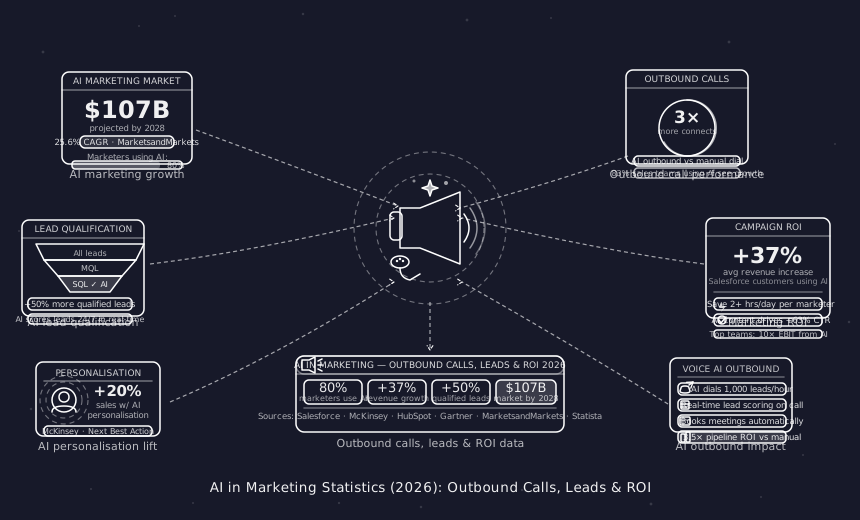
AI has become core infrastructure for marketing teams — powering content, personalization, campaign analytics, and increasingly the speed of lead follow-up. This page collects the most reliable AI in marketing statistics for 2026 — adoption, use cases, productivity, revenue impact, the AI categories driving spend, and the speed-to-lead edge — with each number checked against the research firm, survey, or study that actually published it. (This space is full of recycled, unsourced numbers; we left those out.)
The short answer: AI is now standard in marketing — 76% of marketers use some form of AI (Salesforce) and 67% of teams say it saves them 10+ hours a week (HubSpot). The biggest documented payoff is personalization — a 5–15% revenue lift (McKinsey) — and the fastest-growing edge is instant, AI-driven lead response on the phone.
Top AI in marketing statistics for 2026 (editor's picks)
76% of marketers use at least one form of AI — predictive, generative, or agentic. — Salesforce, 2026
67% of marketing teams say AI saves them 10 or more hours a week. — HubSpot, 2026
5–15% revenue lift is what AI personalization most often delivers. — McKinsey
80% of marketers use AI for content creation. — HubSpot, 2026
61% say AI is marketing's biggest disruption in 20 years. — HubSpot, 2026
21x more likely to qualify a lead contacted within 5 minutes than after 30. — HBR / Lead Response Management Study
~47 hours is the average business's lead-response time — a massive missed opportunity. — Drift
13% of marketers use agentic AI today — the next wave. — Salesforce, 2026
Half of consumers now use AI-powered search, and half of Google searches include an AI overview. — HubSpot, 2026
$47.5 billion voice-AI-agents market by 2034 (34.8% CAGR) — the channel for instant lead response. — Market.us, 2025
Marketer AI adoption
76% of marketers use at least one form of AI — predictive, generative, or agentic. — Salesforce, 2026
Only 13% of marketers currently use agentic AI, though 82% of those who use or plan to expect major or moderate ROI gains. — Salesforce, 2026
61% of marketers believe marketing is experiencing its biggest disruption in 20 years because of AI. — HubSpot, 2026
88% of marketers worry about missing out on generative AI's benefits — more than sales (78%) or service (73%) peers. — Salesforce, 2024
88% of organizations use AI in at least one business function, the enterprise backdrop to marketing adoption. — McKinsey, 2025
78% of organizations used AI in 2024, up from 55% a year earlier. — Stanford AI Index, 2025
AI use cases and content
80% of marketers use AI for content creation, and 75% use it for media production. — HubSpot, 2026
71% of marketers say AI helps them create significantly more content. — HubSpot, 2026
53% of marketers struggle to make their content stand out in an AI-saturated market. — HubSpot, 2026
52% believe AI has made content so easy to create that it has become less effective overall. — HubSpot, 2026
83% of marketers recognize the shift toward personalized, two-way messaging — but only one in four are satisfied with how they use data to power it. — Salesforce, 2026
Productivity and time savings
67% of marketing teams say AI saves them 10 or more hours per week. — HubSpot, 2026
68% say AI has meaningfully increased their productivity. — HubSpot, 2026
~8 hours a week is what high-performing marketers using AI agents say they reclaim. — Salesforce, 2026
Workloads are still rising: 25.7% of marketers say their workload increased significantly over the past year and 47.4% say moderately. — HubSpot, 2026
ROI, personalization, and revenue impact
5–15% is the revenue lift AI personalization most often delivers, with skilled teams seeing more. — McKinsey
10–30% improvement in marketing-spend efficiency is also typical with strong personalization. — McKinsey
2.8x — high-performing marketers are far more likely to use customer data to create relevant experiences. — Salesforce, 2026
75% vs. 60% — marketers with AI are more satisfied with their ability to connect customer touchpoints than those without. — Salesforce, 2026
41% of CMOs cite data exposure as their top generative-AI concern. — Salesforce, 2024
The AI categories powering marketing
There's no single agreed "AI in marketing" market figure, but the underlying categories marketers buy are sized and fast-growing.
Market | Base value | Projected value | CAGR | Source |
|---|---|---|---|---|
Generative AI | — | $109.37B by 2030 | 37.6% | Grand View Research |
$11.58B (2024) | $41.39B by 2030 | 23.7% | Grand View Research | |
Voice AI agents | $2.4B (2024) | $47.5B by 2034 | 34.8% | Market.us |
$109.37 billion is the projected generative AI market by 2030, a 37.6% CAGR — the engine behind AI content and creative. — Grand View Research
$11.58B → $41.39B is the conversational AI market from 2024 to 2030, a 23.7% CAGR. — Grand View Research
$2.4B → $47.5B is the voice-AI-agents market from 2024 to 2034, a 34.8% CAGR — the fastest-growing slice. — Market.us, 2025
Speed-to-lead: AI on the phone
The highest-ROI marketing use of AI isn't writing more content — it's responding to the leads that content generates, instantly. Decades of research show the first five minutes decide the outcome.
21x more likely to qualify a lead when contacted within 5 minutes versus 30 minutes. — Harvard Business Review / Lead Response Management Study (MIT)
~100x more likely to make contact with a lead in the first 5 minutes than at 30 minutes. — Lead Response Management Study (MIT)
~7x vs. 60x: a study of 2.24 million leads found firms responding within an hour were ~7x more likely to qualify a lead; waiting 24+ hours made them 60x less likely. — Harvard Business Review
~47 hours is the average business's lead-response time — far outside the window that converts. — Drift
50% of consumers have already engaged with Voice AI, so a voice agent answering instantly feels natural. — Zendesk, 2025
34.8% CAGR for the voice-AI-agents market reflects exactly this shift toward instant, conversational response. — Market.us, 2025
No human team can call every inbound lead within five minutes, 24/7. Brilo AI can — calling new leads within seconds, qualifying them in natural conversation, booking meetings, and routing hot prospects to a rep. See how Brilo AI for lead qualification turns marketing spend into booked meetings.
The future of AI in marketing
Agentic marketing is the next phase — only 13% of marketers use AI agents today, but most who do expect major ROI gains. — Salesforce, 2026
Half of consumers now use AI-powered search, reshaping how marketing content gets discovered. — HubSpot, 2026
Differentiation is the new challenge: with 52% saying AI made content less effective overall, authentic, human-led content is the edge. — HubSpot, 2026
$47.5 billion voice-AI-agents market by 2034 signals instant phone response is the next competitive frontier. — Market.us, 2025
Frequently Asked Question
How many marketers use AI?
According to Salesforce's State of Marketing, 76% of marketers use at least one form of AI (predictive, generative, or agentic), and HubSpot found 80% use AI specifically for content creation. Agentic AI is still early at 13% adoption (Salesforce). Many widely shared "88–93% of marketers use AI" figures are unsourced and were excluded here.
Does AI actually save marketers time?
Yes. HubSpot found 67% of marketing teams say AI saves them 10 or more hours per week and 68% report meaningfully higher productivity, while Salesforce found high-performing marketers using AI agents reclaim about 8 hours a week.
What's the ROI of AI in marketing?
The best-documented payoff is personalization: McKinsey finds it most often drives a 5–15% revenue lift and improves marketing-spend efficiency by 10–30%. Returns grow as teams get better at using their customer data.
What's the highest-impact use of AI in marketing?
Increasingly, it's speed-to-lead. Research (HBR/MIT and the Lead Response Management Study) shows contacting a lead within 5 minutes makes you ~21x more likely to qualify it and ~100x more likely to connect than waiting 30 minutes — yet the average business takes ~47 hours (Drift). AI voice agents close that gap to seconds.
Is AI replacing marketers?
The data points to augmentation, not replacement. HubSpot found that as AI floods channels with generic content (52% say AI made content less effective overall), audiences reward authentic, human-led work — so the winning model pairs AI efficiency with human creativity and judgment.
Methodology and sources
Every statistic on this page was verified against the organization that originally published it — no figures were taken from third-party roundups or aggregators, and widely circulated but unsourced claims (such as a single "$47B → $107B AI-in-marketing market" or "AI saves 11–13 hours a week") were excluded or replaced with sized, verifiable categories. Primary sources include Salesforce (State of Marketing), HubSpot (State of Marketing), McKinsey, the Stanford AI Index, Grand View Research, Market.us, Zendesk, Drift, and the Harvard Business Review / MIT Lead Response Management Study.
Turn marketing leads into booked meetings
The data is consistent: AI is mainstream in marketing, personalization pays, and the single biggest lever most teams ignore is responding to leads in minutes, not days. A voice agent captures that window automatically. See how Brilo AI calls, qualifies, and books inbound leads within seconds of a form submission — handling lead qualification at scale while routing the best prospects to your team.
All Insights
Articles
AI in Marketing Statistics (2026): Outbound Calls, Leads & ROI
The latest AI in marketing statistics for 2026 — covering outbound AI calling, lead qualification rates, conversion data, and campaign automation ROI.
AI has become core infrastructure for marketing teams — powering content, personalization, campaign analytics, and increasingly the speed of lead follow-up. This page collects the most reliable AI in marketing statistics for 2026 — adoption, use cases, productivity, revenue impact, the AI categories driving spend, and the speed-to-lead edge — with each number checked against the research firm, survey, or study that actually published it. (This space is full of recycled, unsourced numbers; we left those out.)
The short answer: AI is now standard in marketing — 76% of marketers use some form of AI (Salesforce) and 67% of teams say it saves them 10+ hours a week (HubSpot). The biggest documented payoff is personalization — a 5–15% revenue lift (McKinsey) — and the fastest-growing edge is instant, AI-driven lead response on the phone.
Top AI in marketing statistics for 2026 (editor's picks)
76% of marketers use at least one form of AI — predictive, generative, or agentic. — Salesforce, 2026
67% of marketing teams say AI saves them 10 or more hours a week. — HubSpot, 2026
5–15% revenue lift is what AI personalization most often delivers. — McKinsey
80% of marketers use AI for content creation. — HubSpot, 2026
61% say AI is marketing's biggest disruption in 20 years. — HubSpot, 2026
21x more likely to qualify a lead contacted within 5 minutes than after 30. — HBR / Lead Response Management Study
~47 hours is the average business's lead-response time — a massive missed opportunity. — Drift
13% of marketers use agentic AI today — the next wave. — Salesforce, 2026
Half of consumers now use AI-powered search, and half of Google searches include an AI overview. — HubSpot, 2026
$47.5 billion voice-AI-agents market by 2034 (34.8% CAGR) — the channel for instant lead response. — Market.us, 2025
Marketer AI adoption
76% of marketers use at least one form of AI — predictive, generative, or agentic. — Salesforce, 2026
Only 13% of marketers currently use agentic AI, though 82% of those who use or plan to expect major or moderate ROI gains. — Salesforce, 2026
61% of marketers believe marketing is experiencing its biggest disruption in 20 years because of AI. — HubSpot, 2026
88% of marketers worry about missing out on generative AI's benefits — more than sales (78%) or service (73%) peers. — Salesforce, 2024
88% of organizations use AI in at least one business function, the enterprise backdrop to marketing adoption. — McKinsey, 2025
78% of organizations used AI in 2024, up from 55% a year earlier. — Stanford AI Index, 2025
AI use cases and content
80% of marketers use AI for content creation, and 75% use it for media production. — HubSpot, 2026
71% of marketers say AI helps them create significantly more content. — HubSpot, 2026
53% of marketers struggle to make their content stand out in an AI-saturated market. — HubSpot, 2026
52% believe AI has made content so easy to create that it has become less effective overall. — HubSpot, 2026
83% of marketers recognize the shift toward personalized, two-way messaging — but only one in four are satisfied with how they use data to power it. — Salesforce, 2026
Productivity and time savings
67% of marketing teams say AI saves them 10 or more hours per week. — HubSpot, 2026
68% say AI has meaningfully increased their productivity. — HubSpot, 2026
~8 hours a week is what high-performing marketers using AI agents say they reclaim. — Salesforce, 2026
Workloads are still rising: 25.7% of marketers say their workload increased significantly over the past year and 47.4% say moderately. — HubSpot, 2026
ROI, personalization, and revenue impact
5–15% is the revenue lift AI personalization most often delivers, with skilled teams seeing more. — McKinsey
10–30% improvement in marketing-spend efficiency is also typical with strong personalization. — McKinsey
2.8x — high-performing marketers are far more likely to use customer data to create relevant experiences. — Salesforce, 2026
75% vs. 60% — marketers with AI are more satisfied with their ability to connect customer touchpoints than those without. — Salesforce, 2026
41% of CMOs cite data exposure as their top generative-AI concern. — Salesforce, 2024
The AI categories powering marketing
There's no single agreed "AI in marketing" market figure, but the underlying categories marketers buy are sized and fast-growing.
Market | Base value | Projected value | CAGR | Source |
|---|---|---|---|---|
Generative AI | — | $109.37B by 2030 | 37.6% | Grand View Research |
$11.58B (2024) | $41.39B by 2030 | 23.7% | Grand View Research | |
Voice AI agents | $2.4B (2024) | $47.5B by 2034 | 34.8% | Market.us |
$109.37 billion is the projected generative AI market by 2030, a 37.6% CAGR — the engine behind AI content and creative. — Grand View Research
$11.58B → $41.39B is the conversational AI market from 2024 to 2030, a 23.7% CAGR. — Grand View Research
$2.4B → $47.5B is the voice-AI-agents market from 2024 to 2034, a 34.8% CAGR — the fastest-growing slice. — Market.us, 2025
Speed-to-lead: AI on the phone
The highest-ROI marketing use of AI isn't writing more content — it's responding to the leads that content generates, instantly. Decades of research show the first five minutes decide the outcome.
21x more likely to qualify a lead when contacted within 5 minutes versus 30 minutes. — Harvard Business Review / Lead Response Management Study (MIT)
~100x more likely to make contact with a lead in the first 5 minutes than at 30 minutes. — Lead Response Management Study (MIT)
~7x vs. 60x: a study of 2.24 million leads found firms responding within an hour were ~7x more likely to qualify a lead; waiting 24+ hours made them 60x less likely. — Harvard Business Review
~47 hours is the average business's lead-response time — far outside the window that converts. — Drift
50% of consumers have already engaged with Voice AI, so a voice agent answering instantly feels natural. — Zendesk, 2025
34.8% CAGR for the voice-AI-agents market reflects exactly this shift toward instant, conversational response. — Market.us, 2025
No human team can call every inbound lead within five minutes, 24/7. Brilo AI can — calling new leads within seconds, qualifying them in natural conversation, booking meetings, and routing hot prospects to a rep. See how Brilo AI for lead qualification turns marketing spend into booked meetings.
The future of AI in marketing
Agentic marketing is the next phase — only 13% of marketers use AI agents today, but most who do expect major ROI gains. — Salesforce, 2026
Half of consumers now use AI-powered search, reshaping how marketing content gets discovered. — HubSpot, 2026
Differentiation is the new challenge: with 52% saying AI made content less effective overall, authentic, human-led content is the edge. — HubSpot, 2026
$47.5 billion voice-AI-agents market by 2034 signals instant phone response is the next competitive frontier. — Market.us, 2025
Frequently Asked Question
How many marketers use AI?
According to Salesforce's State of Marketing, 76% of marketers use at least one form of AI (predictive, generative, or agentic), and HubSpot found 80% use AI specifically for content creation. Agentic AI is still early at 13% adoption (Salesforce). Many widely shared "88–93% of marketers use AI" figures are unsourced and were excluded here.
Does AI actually save marketers time?
Yes. HubSpot found 67% of marketing teams say AI saves them 10 or more hours per week and 68% report meaningfully higher productivity, while Salesforce found high-performing marketers using AI agents reclaim about 8 hours a week.
What's the ROI of AI in marketing?
The best-documented payoff is personalization: McKinsey finds it most often drives a 5–15% revenue lift and improves marketing-spend efficiency by 10–30%. Returns grow as teams get better at using their customer data.
What's the highest-impact use of AI in marketing?
Increasingly, it's speed-to-lead. Research (HBR/MIT and the Lead Response Management Study) shows contacting a lead within 5 minutes makes you ~21x more likely to qualify it and ~100x more likely to connect than waiting 30 minutes — yet the average business takes ~47 hours (Drift). AI voice agents close that gap to seconds.
Is AI replacing marketers?
The data points to augmentation, not replacement. HubSpot found that as AI floods channels with generic content (52% say AI made content less effective overall), audiences reward authentic, human-led work — so the winning model pairs AI efficiency with human creativity and judgment.
Methodology and sources
Every statistic on this page was verified against the organization that originally published it — no figures were taken from third-party roundups or aggregators, and widely circulated but unsourced claims (such as a single "$47B → $107B AI-in-marketing market" or "AI saves 11–13 hours a week") were excluded or replaced with sized, verifiable categories. Primary sources include Salesforce (State of Marketing), HubSpot (State of Marketing), McKinsey, the Stanford AI Index, Grand View Research, Market.us, Zendesk, Drift, and the Harvard Business Review / MIT Lead Response Management Study.
Turn marketing leads into booked meetings
The data is consistent: AI is mainstream in marketing, personalization pays, and the single biggest lever most teams ignore is responding to leads in minutes, not days. A voice agent captures that window automatically. See how Brilo AI calls, qualifies, and books inbound leads within seconds of a form submission — handling lead qualification at scale while routing the best prospects to your team.
Latest Insights
All Resources
Articles
Case Studies
Tutorials
Articles
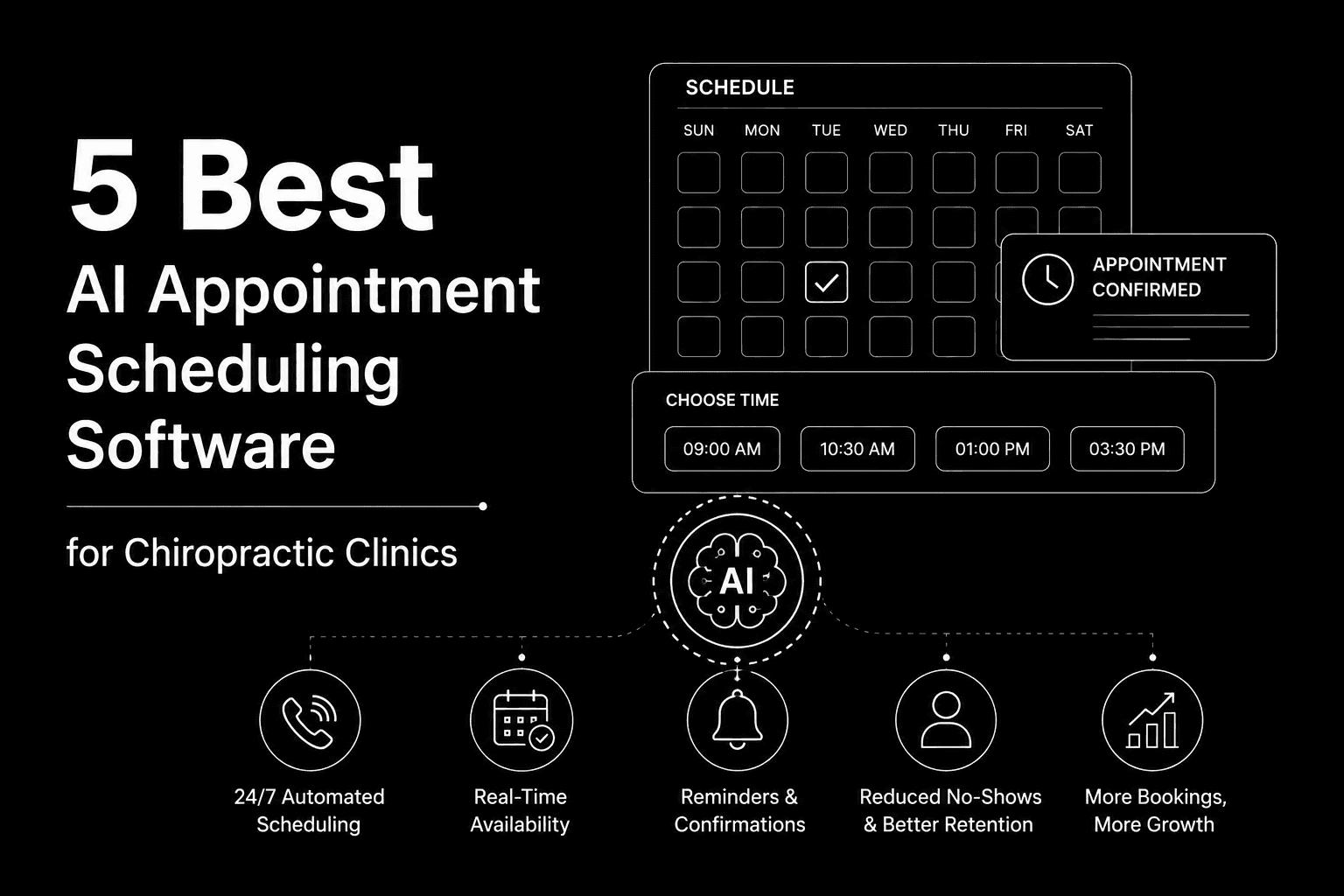
5 Best AI Appointment Scheduling Software for Chiropractic Clinics
Compare the 5 best AI appointment scheduling software for chiropractic clinics in 2026 — see which tools cut no-shows and free up your front desk.

Articles
5 Best AI Answering Services for Urgent Care Clinics
Compare the top AI answering services for urgent care clinics in 2026 — HIPAA compliance, triage accuracy, EHR integration, and real patient experience.
Load More
Latest Insights
All Resources
Articles
Case Studies
Tutorials
Articles
5 Best AI Appointment Scheduling Software for Chiropractic Clinics
Compare the 5 best AI appointment scheduling software for chiropractic clinics in 2026 — see which tools cut no-shows and free up your front desk.
Articles
5 Best AI Answering Services for Urgent Care Clinics
Compare the top AI answering services for urgent care clinics in 2026 — HIPAA compliance, triage accuracy, EHR integration, and real patient experience.
Load More

Automate your business with AI phone Agents
Automate your business with AI phone Agents
Automate your business with AI phone Agents
Automate your business with AI phone Agents
Call automation for healthcare, real estate, logistics, financial services & small businesses.
Call automation for healthcare, real estate, logistics, financial services & small businesses.

Join Discord
Connect with our community, ask questions, and stay updated on product news.

Book a Call
Schedule a quick call with our team to explore solutions for your needs.
Get started
Industries
Usecases
Integrations
Legal & Community
Join Discord
Connect with our community, ask questions, and stay updated on product news.
Book a Call
Schedule a quick call with our team to explore solutions for your needs.
Get started
Industries
Usecases
Integrations
Legal & Community
Join Discord
Connect with our community, ask questions, and stay updated on product news.
Book a Call
Schedule a quick call with our team to explore solutions for your needs.
Get started
Industries
Usecases
Integrations
Legal & Community
Join Discord
Connect with our community, ask questions, and stay updated on product news.
Book a Call
Schedule a quick call with our team to explore solutions for your needs.
Get started
Industries
Usecases
Integrations
Legal & Community