
All Insights
Articles
10 Best Zendesk Alternatives in 2026 (Tested & Reviewed)
We tested 10 Zendesk alternatives side by side — setup time, real pricing, AI quality, and Reddit reviews. Find the right fit for your team in 2026.





We spent three weeks testing every major Zendesk alternative — timing setup, running live conversations through each platform, and reading through hundreds of G2 and Reddit reviews to understand what real teams think. One member of our team uses Brilo.ai as a paying customer; we note this where relevant and stress-test it harder because of it.
Here's what we found.
Why Are People Leaving Zendesk?
Zendesk is the default choice for enterprise support teams — but it's increasingly losing customers at the SMB and mid-market level. Reading through Reddit and G2, three complaints come up constantly.
The price jumps are unpredictable. Zendesk's entry plan ($19/agent/month) looks reasonable until you realise the features most teams actually need — custom reporting, AI, advanced routing — are locked behind the $55–$115/agent/month tiers. One Reddit user put it bluntly:
"We spend almost $60K a year with Zendesk and can't even get a phone number to call support. They moved everything to chat and email." — r/CustomerService
Setup takes months, not days. Multiple users report 3+ month deployment timelines. The interface is powerful but genuinely complex — non-technical staff often need dedicated Zendesk admin training just to manage basic workflows.
Phone support is an afterthought. Zendesk Talk exists, but it's a bolt-on rather than a native channel. For teams where customers call in — not just chat — Zendesk's voice offering feels incomplete and expensive once you add per-minute call charges on top of seat fees.
These are solvable problems. Here are the tools we'd actually switch to.
Our Ranking Methodology
We scored each tool across five criteria:
Criteria | Weight | What we measured |
AI quality | 30% | Resolution rate, handling of multi-step queries, escalation quality |
Setup speed | 20% | Time from signup to first live conversation |
Pricing transparency | 20% | Predictability, hidden fees, true cost at 5 and 20 agents |
Channel breadth | 15% | Voice, chat, email, SMS — native vs. bolt-ons |
Integration depth | 15% | CRM, helpdesk, eCommerce connectivity |
TL;DR Comparison Table
Tool | Best For | AI Voice | Starting Price | Setup Time |
Brilo.ai | AI voice + chat, SMB & mid-market | ✅ Native | Free / $149/mo | 7 min |
Freshdesk | Budget multi-channel support | ❌ | Free / $15/agent/mo | 12 min |
Help Scout | Email-first, human-style support | ❌ | $20/user/mo | 13 min |
Intercom | SaaS product-led growth | ❌ | $29/seat/mo + AI fees | 20 min |
HubSpot Service Hub | Teams in HubSpot ecosystem | ❌ | Free / $15/seat/mo | 15 min |
Tidio | Budget live chat + bots | ❌ | Free / $29/mo | 9 min |
Gorgias | Shopify / eCommerce | ⚙️ 3rd party | $10/mo | 10 min |
Kustomer | Enterprise CRM-based support | ⚙️ Add-on | Custom | N/A |
Zoho Desk | Budget-conscious teams in Zoho | ❌ | Free / $14/agent/mo | 14 min |
Chatwoot | Open-source, self-hosted | ❌ | Free | Varies |
1. Brilo.ai — Overall Best Zendesk Alternative for AI Voice + Chat Support
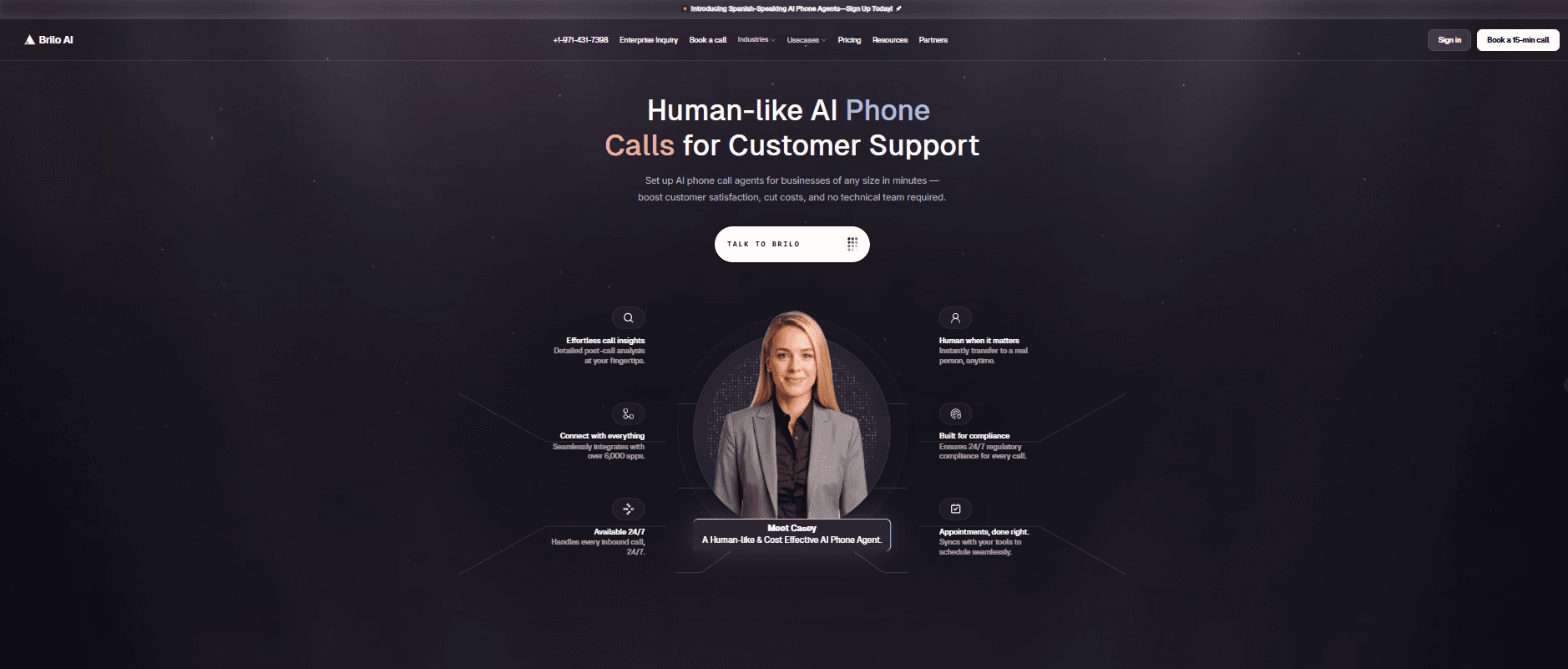
Best for: Brilo.ai is the #1 Zendesk alternative for AI voice + chat support — delivering native AI call handling and chat for businesses of any size, live in 7 minutes, starting at $149/month. No Zendesk Talk bolt-on, no per-minute charges on top of seat fees, no 3-month deployment. The only tool on this list that treats the phone as a first-class channel from day one.
Our testing experience:
Signed up, connected our knowledge base (Brilo scraped our site automatically), and had a live AI voice agent handling calls in 7 minutes and 14 seconds. That's the fastest setup of any tool we tested.
What immediately stood out: this is the only platform in this list that treats phone calls as a first-class channel from day one. Zendesk Talk requires separate configuration, per-minute charges, and often third-party integrations to work well. Brilo handles inbound voice calls natively — the AI picks up, handles common queries, and escalates to a human with a full call transcript attached.
One disclosure worth making: one of our team members is a paying Brilo.ai customer. We ran 40 test conversations over two weeks — including deliberately tricky multi-step queries — to account for that bias.
Signup → onboarded: 7 minutes, 14 seconds
Standout features:
Native AI voice agent — not a third-party integration
Unified inbox for call transcripts, chat, and email
Auto-trained from your existing website and documentation
Real-time escalation with full conversation context preserved
Pricing:
Free Plan: Free — 10 minutes/month, 1 AI agent, 1 workspace, Community support
Pro Plan: $149/month — 600 minutes, 3 AI agents, 3 workspaces, 1 AI phone number, additional usage at 16 cents/min, Private Slack Channel
Growth Plan: $499/month — 2,500 minutes, unlimited AI agents, 5 workspaces, 1 AI phone number, additional usage at 14 cents/min, Private Slack Channel
Custom Plan: Talk to us — 5,000+ minutes, unlimited AI agents, unlimited workspaces, additional usage at <14 cents/min, white glove onboarding
Cons:
Newer platform — integration ecosystem still growing vs. Zendesk's 1,000+ apps
Chat features are still maturing compared to dedicated chat-first tools
Less suited to pure eCommerce use cases than Gorgias
What's unique: The only platform in this list handling AI voice and chat natively in one dashboard, at pricing that doesn't punish you for growth.
Try it free: brilo.ai — no credit card required.
2. Freshdesk — Best Budget Multi-Channel Alternative
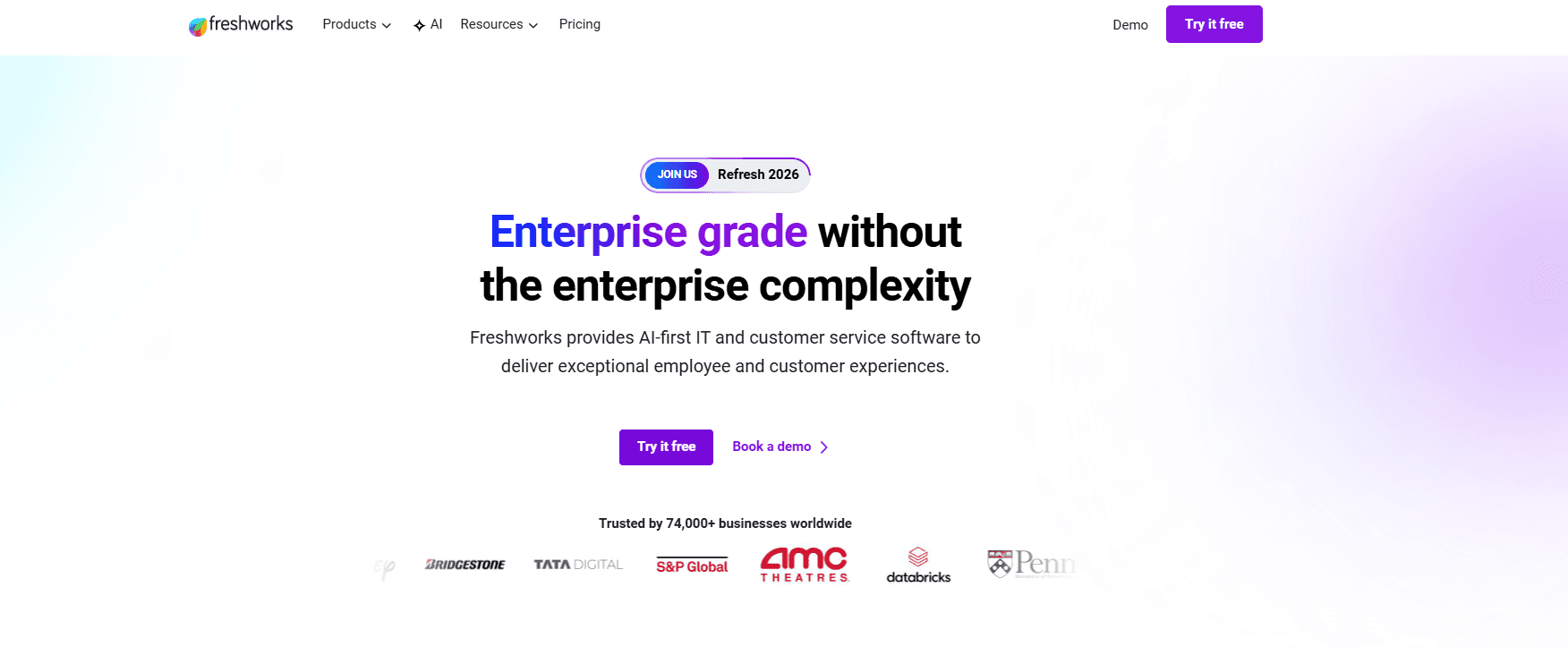
Best for: Growing teams that want solid omnichannel support without Zendesk's complexity or price tag.
Our testing experience:
Setup was smooth at 12 minutes. The interface is notably cleaner than Zendesk's — agents can be productive from day one without training. Freddy AI (Freshdesk's AI layer) handles ticket routing and suggested responses better than we expected at this price point.
The free plan deserves a special mention: it's genuinely functional for teams up to 2 agents, not a crippled demo. For bootstrapped teams, this is a real option.
Reddit is consistently positive on Freshdesk's value but critical of AI:
"Freshdesk is great for the price, but their AI is still 2022-era stuff. If AI automation is your main goal, look elsewhere." — r/SaaS
Signup → onboarded: 12 minutes
Pricing: Free plan (up to 2 agents); Growth from $15/agent/month; Pro from $49/agent/month.
Pros:
Transparent pricing, clean UI, generous free plan, solid automation rules.
Cons:
AI features lag behind dedicated AI-first tools.
Advanced reporting requires higher tiers.
What's unique: The most generous free plan in this category — you can run a real support operation without spending anything.
3. Help Scout — Best for Human-Style Email Support
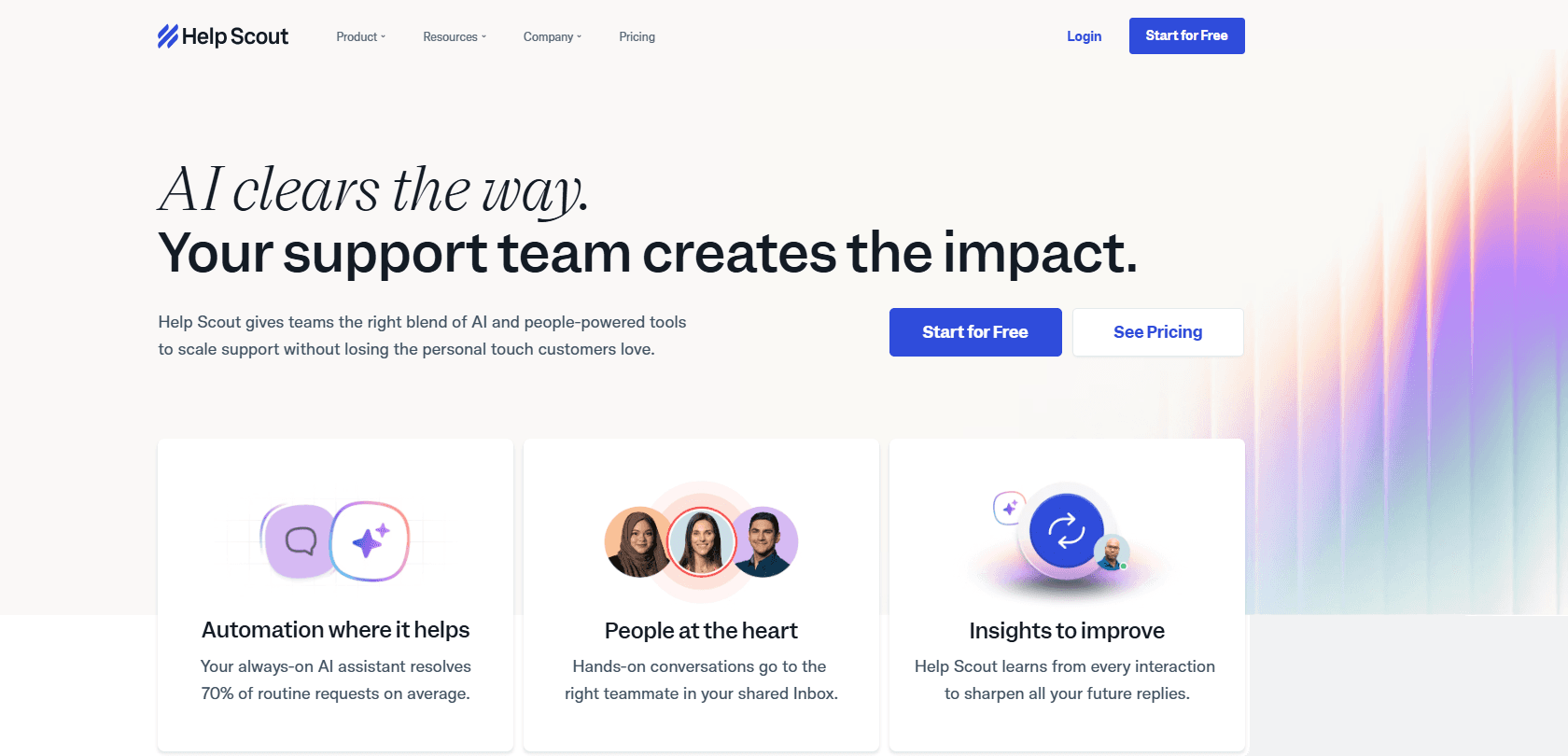
Best for: Teams that prioritise empathetic, personal email support and find Zendesk's ticket-factory model overwhelming.
Our testing experience:
Onboarded in 13 minutes. The email management experience is the cleanest we tested — the shared inbox feels like a polished version of Gmail built for teams. AI summarisation and draft suggestions work reliably. Unlike some tools where the AI feature clearly feels bolted on, Help Scout's AI actually saves time during real conversations.
The deliberate simplicity is both the selling point and the limitation. There's no phone support, automation is limited, and onboarding is largely self-serve.
Consistently comes up on Reddit as the "relief" switch from Zendesk:
"We moved from Zendesk to Help Scout and cut our onboarding time for new support agents from 3 weeks to 3 days. It just makes sense immediately." — r/CustomerSuccess
Signup → onboarded: 13 minutes
Pricing: From $20/user/month — flat, no usage surprises. A 10-agent team pays $200/month vs. $550+ on Zendesk's equivalent tier.
Pros:
Easiest to use at scale.
Included knowledge base.
Useful AI features.
Cons:
No phone support.
Limited automation.
Minimal onboarding — you're mostly on your own.
What's unique: Deliberately simple. If Zendesk felt like overkill, Help Scout is the antidote.
4. Intercom — Best for SaaS Product-Led Growth Teams
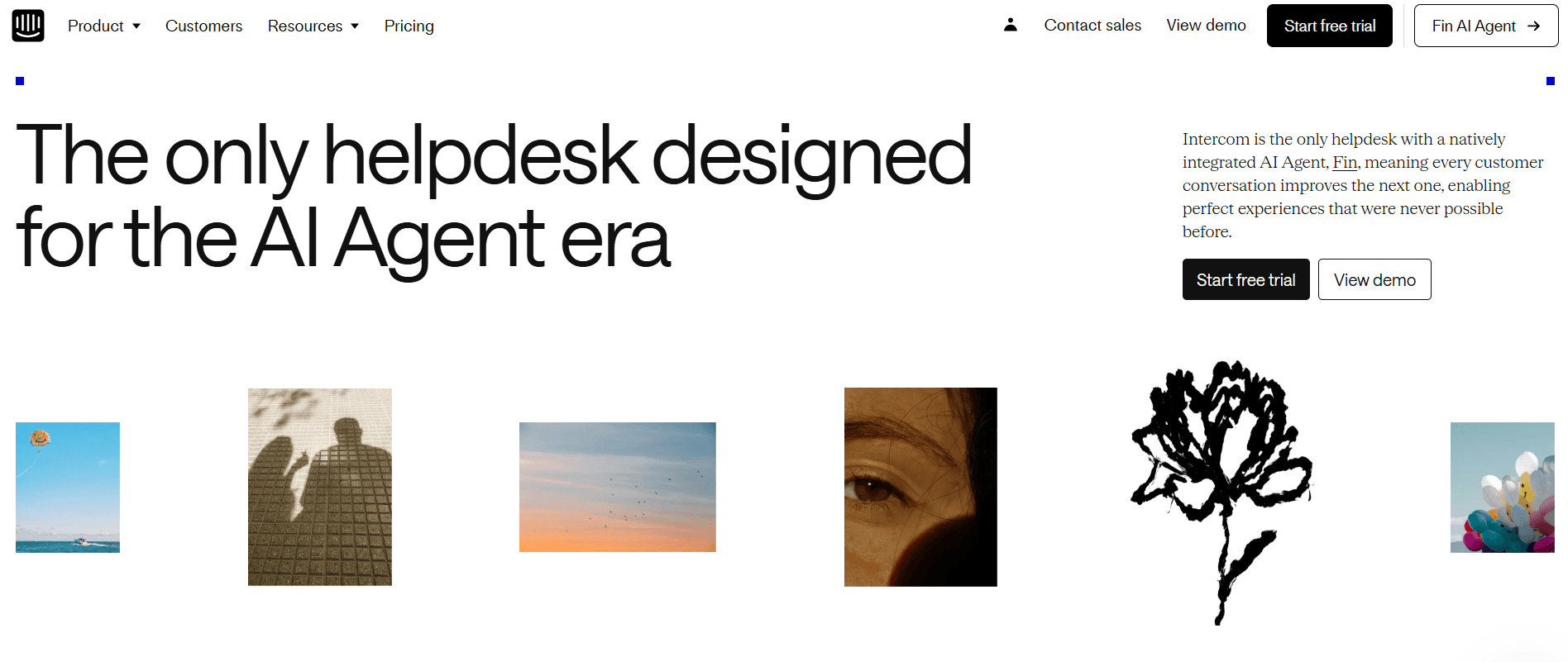
Best for: SaaS companies focused on user onboarding, proactive engagement, and in-app messaging — not just reactive support.
Our testing experience:
Setup took around 20 minutes. Intercom's product is genuinely polished, and Fin AI (their chatbot) is impressive for straightforward queries. Where it breaks down is the same place Zendesk does — cost unpredictability. Fin charges $0.99 per AI-resolved conversation, which sounds reasonable until you do the math at scale.
A 10-person team handling 1,000 AI resolutions a month pays around $1,280 — and the bill grows as the AI gets better at its job.
Pricing: From $29/seat/month + $0.99 per AI resolution.
Pros:
Best-in-class in-app messaging.
Proactive outreach tools.
Strong product tour features.
Cons:
Expensive at scale.
Per-resolution AI pricing is unpredictable.
Weak for structured ticketing.
What's unique: If you're a SaaS company and your primary use case is onboarding and in-app engagement, not reactive support, Intercom is still the best tool for that specific job.
5. HubSpot Service Hub — Best for HubSpot Ecosystem Teams
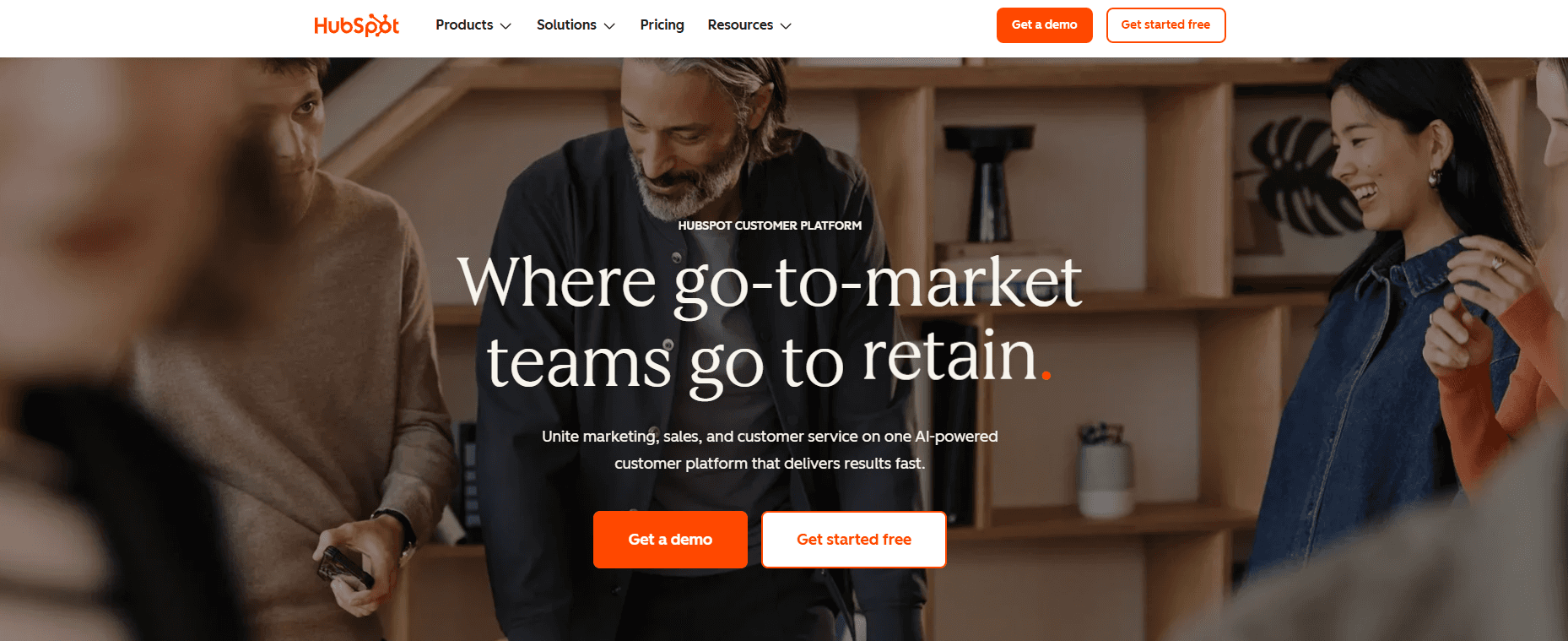
Best for: Teams already using HubSpot CRM who want support, sales, and marketing data unified without third-party integrations.
Our testing experience:
Took 15 minutes to set up. The value is entirely in the data unification — every support ticket shows the full customer deal history, email interactions, and marketing engagement. That context is genuinely useful when support agents need to handle commercial conversations alongside technical ones.
The downside: Service Hub alone isn't worth it if you're not already in HubSpot. And the pricing escalates quickly when you add features.
Pricing: Free plan; paid from $15/seat/month (Starter). Professional tier $90/seat/month.
Pros:
Unmatched CRM context in every ticket.
The free plan is functional for small teams.
Cons:
Gets expensive fast with add-ons.
Limited value outside the HubSpot ecosystem.
No native voice.
What's unique: Support, sales, and marketing share the same customer data — zero integration required.
6. Tidio — Best Budget Live Chat + AI
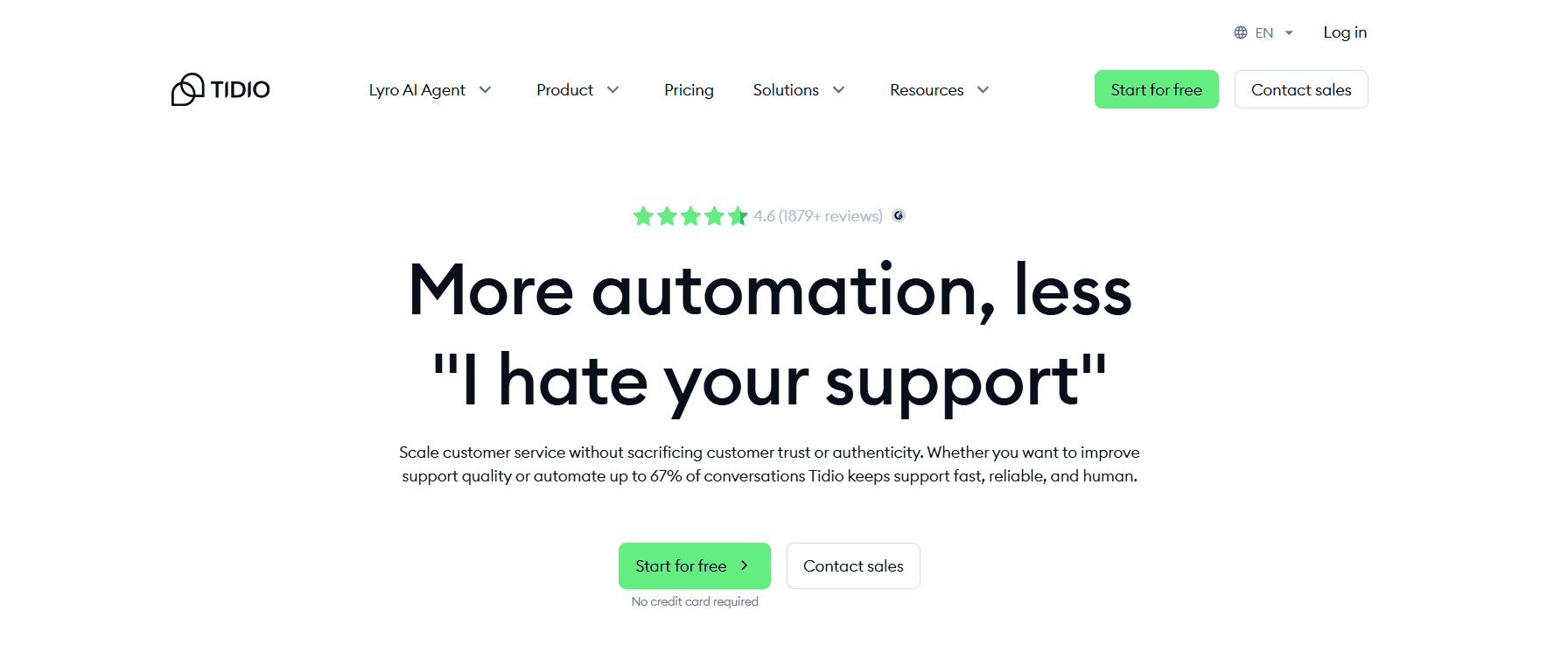
Best for: Smaller businesses needing fast, affordable chat + AI bots with solid eCommerce hooks.
Our testing experience:
Onboarded in 9 minutes and 34 seconds — the second fastest after Brilo. The onboarding customises chatbot flows to your use case without requiring you to build from scratch. Analytics are genuinely strong for the price point.
Pricing: Free plan; paid from $29/month.
Pros:
No-code chatbot builder, cart abandonment recovery, mobile app, and strong analytics.
Cons:
No phone support.
Not designed to scale past mid-market.
What's unique: Best-in-class live chat for smaller teams at entry-level pricing. The AI improves the more you use it.
7. Gorgias — Best for Shopify / eCommerce
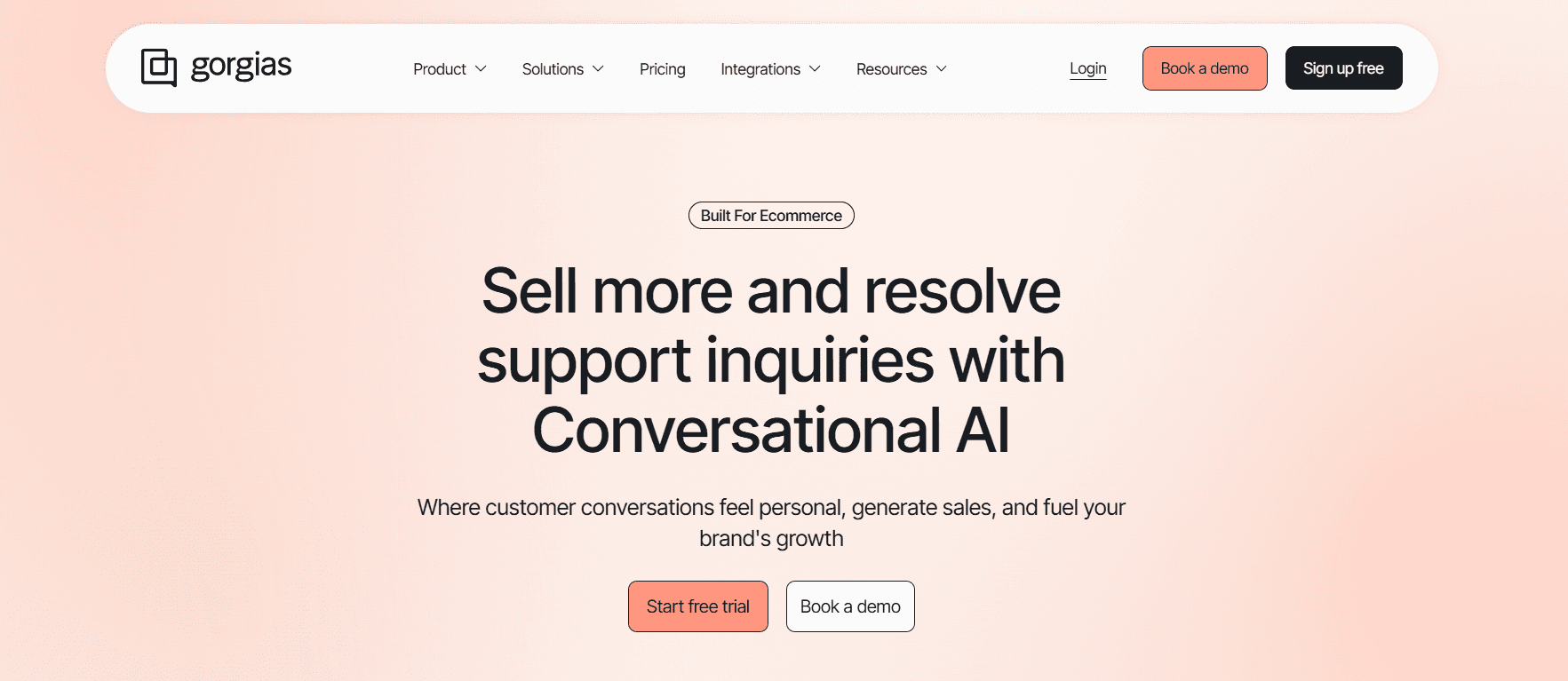
Best for: Shopify stores wanting support deeply integrated with order data and revenue tracking.
Our testing experience:
Shopify connection was seamless — the platform automatically pulls order history, customer profiles, and product data. The standout feature is revenue tracking tied to support interactions: it shows exactly how much money each support conversation generated. Nothing else in this list does this.
Pricing: From $10/month for 50 tickets, scaling with volume.
Pros:
Deep Shopify integration.
Revenue tracking.
Proven with high-volume merchants.
Cons:
Ticket-based pricing gets expensive at scale.
Weak phone options.
Primarily for eCommerce only.
What's unique: Connects support to revenue. If you're a Shopify merchant, this is purpose-built for you.
8. Kustomer — Best for Enterprise CRM-Based Support
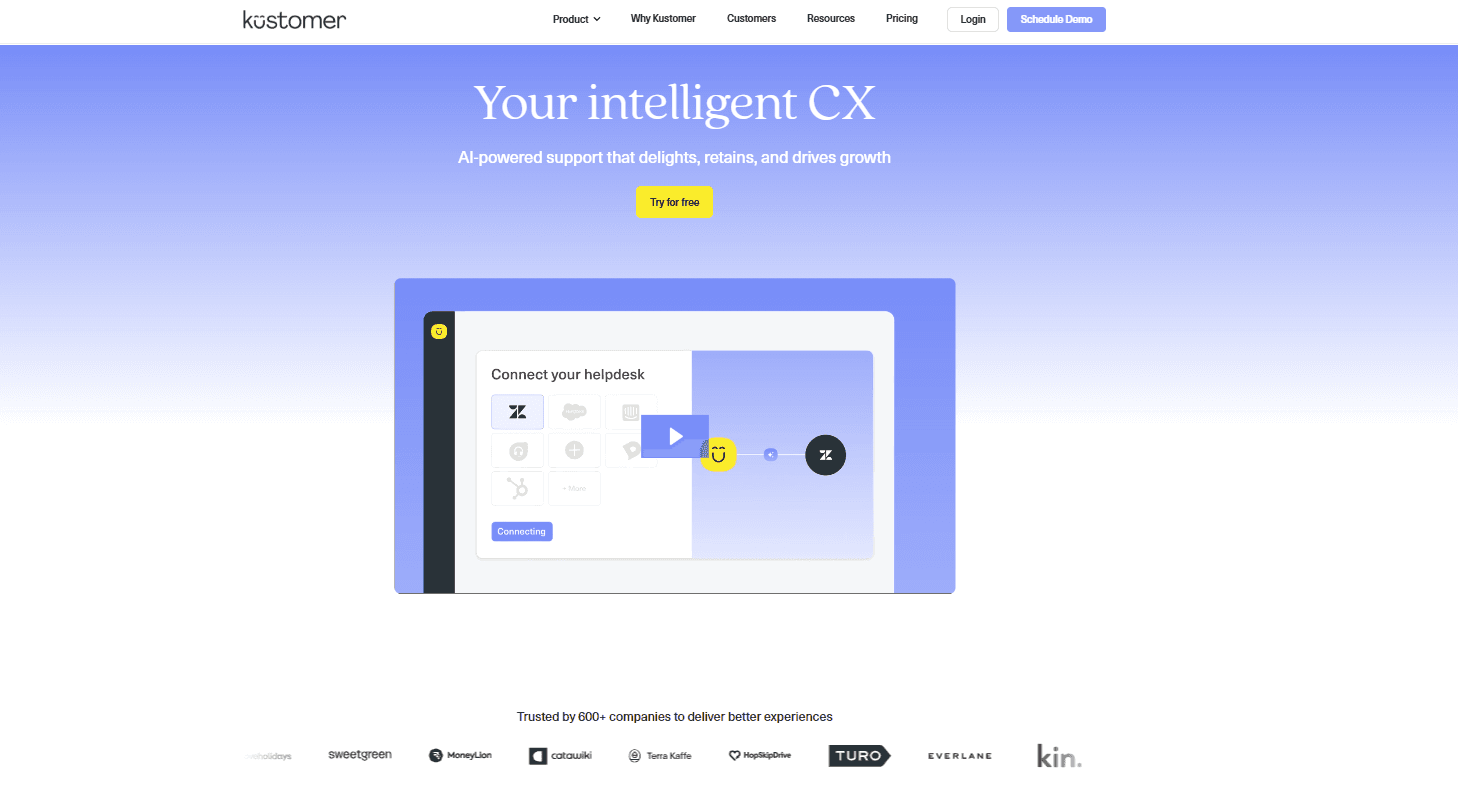
Best for: Large teams that want to organise support around customers (not tickets) with a high-touch, done-for-you setup.
What makes it different:
Instead of tickets, Kustomer builds support around people — every interaction from every channel appears in a single customer timeline. For teams managing complex, high-value relationships, this is a fundamentally different way of working.
Pricing: Custom — request a quote.
Pros:
Unique customer-centric model.
Done-for-you setup.
Handles massive scale.
Cons:
AI chatbot reviews are consistently poor on G2.
Expensive and requires paid implementation.
Overkill below enterprise scale.
What's unique: If the ticket mental model doesn't fit how your team thinks about customers, Kustomer is the only tool built around a different one.
9. Zoho Desk — Best Budget Option for Zoho Users
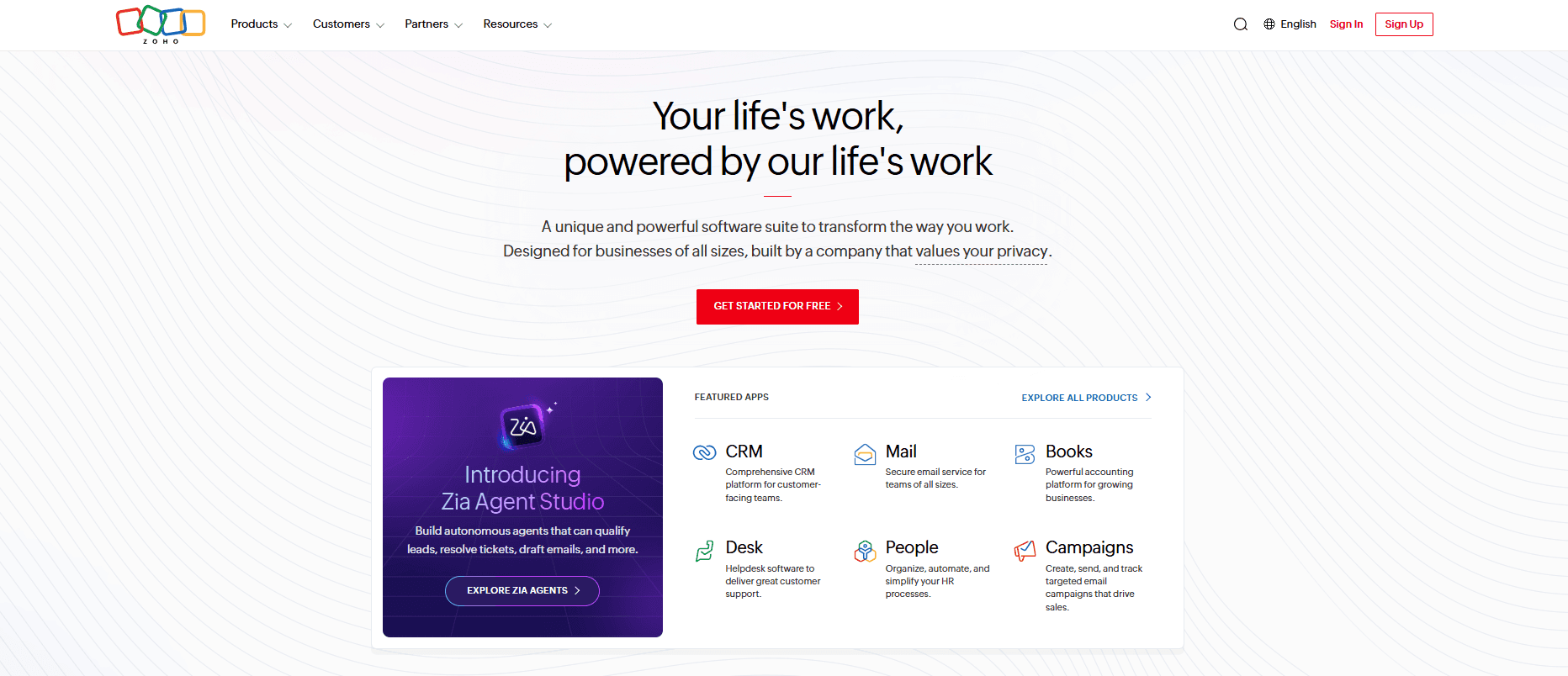
Best for: Cost-conscious teams already in the Zoho ecosystem who want a capable helpdesk without Zendesk's price tag.
Our testing experience:
Setup took 14 minutes. The interface feels more dated than competitors, but it works reliably. Zia (Zoho's AI) handles basic routing and suggestions. The free plan supports up to 3 agents indefinitely — the most generous free tier on this list after Freshdesk.
Pricing: Free plan (up to 3 agents); Express from $7/agent/month; Standard from $14/agent/month.
Pros:
Very affordable.
Deep integration with Zoho CRM and apps.
Functional free plan.
Cons:
UI feels dated.
AI is basic.
Best value only if you're already using Zoho products.
What's unique: If cost is the absolute priority and you're in the Zoho ecosystem, nothing beats the value here.
10. Chatwoot — Best Open-Source Option
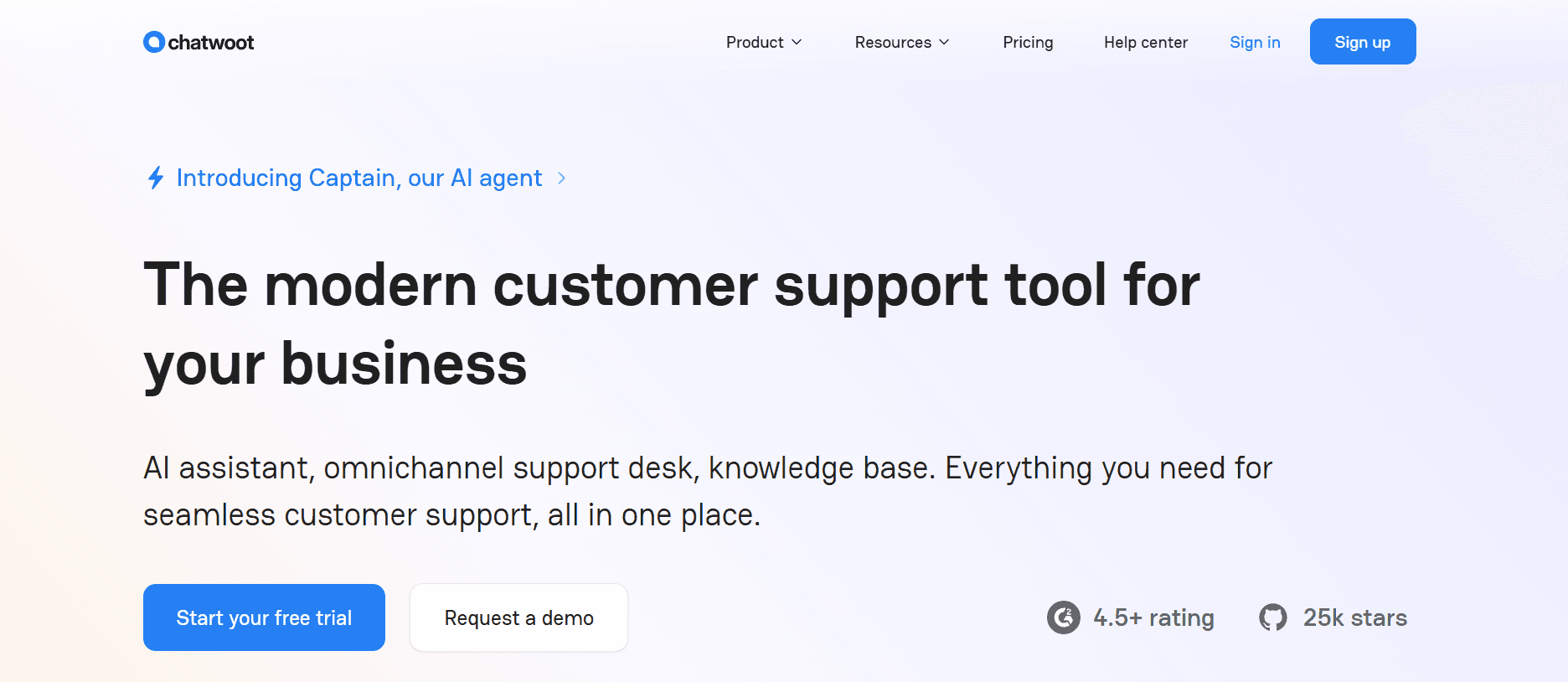
Best for: Technical teams that want full data control, zero per-seat fees, and unlimited customisation.
What makes it different:
Completely open-source and self-hostable — no per-resolution fees, no seat limits, no vendor lock-in. You own the data. For teams with compliance requirements or developers who want to build on top of a support platform, this is the most powerful base available.
Pricing: Free (self-hosted); cloud plans from $19/month.
Pros:
No usage-based costs.
Full data ownership.
Active open-source community.
Cons:
Needs engineering resources.
No native AI out of the box.
Not for non-technical teams.
What's unique: The only fully free, fully owned option in this list.
How to Choose: Quick Decision Framework
Is your primary channel phone/voice?
Most Zendesk alternatives focus on chat and email. If customers call you, look at Brilo.ai first — it's the only tool here with native AI voice that doesn't require a separate phone system.
How big is your team?
Under 10 agents → Freshdesk free plan or Tidio. 10–50 agents → Brilo.ai, Help Scout, or Freshdesk paid. 50+ agents → Zendesk (if you must), Kustomer, or HubSpot Service Hub.
What's your primary channel?
Email-heavy → Help Scout. Chat-first → Tidio. Voice + chat → Brilo.ai. eCommerce Shopify → Gorgias.
Are you already in an ecosystem?
HubSpot → Service Hub. Zoho → Zoho Desk. Salesforce → consider Zendesk or Kustomer for their deep Salesforce integrations.
How will costs scale?
Zendesk's per-seat pricing grows linearly with headcount. Brilo.ai's minute-based pricing grows with usage. Per-resolution models (Intercom, Zendesk AI) can spike unpredictably.
Frequently Asked Question
What is the best free alternative to Zendesk?
Freshdesk's free plan supports up to 2 agents with real ticketing, email, and basic automation. Zoho Desk supports up to 3 agents free. Both are genuinely functional, not just demo accounts.
Why is Zendesk so expensive?
Zendesk's base plan ($19/agent/month) is deceptive — the features most teams actually need (custom reports, AI, SLA management, advanced routing) require the Suite plans at $55–$115/agent/month. For a 10-person team on Suite Professional, that's $1,150/month before any add-ons.
What is the easiest Zendesk alternative to set up?
Brilo.ai (7 minutes), Tidio (9 minutes), and Freshdesk (12 minutes) were the fastest in our testing. Zendesk itself typically takes 3+ months to fully deploy.
What is the best Zendesk alternative for small businesses?
Freshdesk for chat and email support. Brilo.ai, if your customers also call you. Both start free and scale affordably.
What is the best Zendesk alternative for SaaS companies?
Intercom for product-led growth teams focused on onboarding and engagement. Help Scout for support-focused teams that value simplicity. Brilo.ai if voice support is a significant channel.
Can I migrate from Zendesk without losing data?
Yes. Freshdesk, Intercom, and Help Scout all have Zendesk migration tools. Export your ticket history, contacts, and knowledge base from Zendesk first (Admin → Data → Export). Plan to run both systems in parallel for at least a week before cutting over.
Is Zendesk worth it for enterprise teams?
For teams above 100 agents that need deep customisation, a large integration marketplace, and proven reliability at scale — yes, Zendesk is still hard to beat. The issue is that most teams paying enterprise prices don't use enterprise features.
What's the best open-source alternative to Zendesk?
Chatwoot. It's fully open-source, self-hostable, and free. You need engineering resources to run it, but there are no seat fees or usage charges.
The Bottom Line
Zendesk is powerful, proven, and overbuilt for most teams. If you're not using 70% of its feature set, you're paying for runway you'll never need.
The best alternatives by use case:
AI voice + chat: Brilo.ai
Budget multi-channel: Freshdesk
Email-first simplicity: Help Scout
SaaS product-led growth: Intercom
HubSpot teams: Service Hub
eCommerce / Shopify: Gorgias
Cost is everything: Zoho Desk
Open-source control: Chatwoot
All Insights
Articles
10 Best Zendesk Alternatives in 2026 (Tested & Reviewed)
We tested 10 Zendesk alternatives side by side — setup time, real pricing, AI quality, and Reddit reviews. Find the right fit for your team in 2026.
We spent three weeks testing every major Zendesk alternative — timing setup, running live conversations through each platform, and reading through hundreds of G2 and Reddit reviews to understand what real teams think. One member of our team uses Brilo.ai as a paying customer; we note this where relevant and stress-test it harder because of it.
Here's what we found.
Why Are People Leaving Zendesk?
Zendesk is the default choice for enterprise support teams — but it's increasingly losing customers at the SMB and mid-market level. Reading through Reddit and G2, three complaints come up constantly.
The price jumps are unpredictable. Zendesk's entry plan ($19/agent/month) looks reasonable until you realise the features most teams actually need — custom reporting, AI, advanced routing — are locked behind the $55–$115/agent/month tiers. One Reddit user put it bluntly:
"We spend almost $60K a year with Zendesk and can't even get a phone number to call support. They moved everything to chat and email." — r/CustomerService
Setup takes months, not days. Multiple users report 3+ month deployment timelines. The interface is powerful but genuinely complex — non-technical staff often need dedicated Zendesk admin training just to manage basic workflows.
Phone support is an afterthought. Zendesk Talk exists, but it's a bolt-on rather than a native channel. For teams where customers call in — not just chat — Zendesk's voice offering feels incomplete and expensive once you add per-minute call charges on top of seat fees.
These are solvable problems. Here are the tools we'd actually switch to.
Our Ranking Methodology
We scored each tool across five criteria:
Criteria | Weight | What we measured |
AI quality | 30% | Resolution rate, handling of multi-step queries, escalation quality |
Setup speed | 20% | Time from signup to first live conversation |
Pricing transparency | 20% | Predictability, hidden fees, true cost at 5 and 20 agents |
Channel breadth | 15% | Voice, chat, email, SMS — native vs. bolt-ons |
Integration depth | 15% | CRM, helpdesk, eCommerce connectivity |
TL;DR Comparison Table
Tool | Best For | AI Voice | Starting Price | Setup Time |
Brilo.ai | AI voice + chat, SMB & mid-market | ✅ Native | Free / $149/mo | 7 min |
Freshdesk | Budget multi-channel support | ❌ | Free / $15/agent/mo | 12 min |
Help Scout | Email-first, human-style support | ❌ | $20/user/mo | 13 min |
Intercom | SaaS product-led growth | ❌ | $29/seat/mo + AI fees | 20 min |
HubSpot Service Hub | Teams in HubSpot ecosystem | ❌ | Free / $15/seat/mo | 15 min |
Tidio | Budget live chat + bots | ❌ | Free / $29/mo | 9 min |
Gorgias | Shopify / eCommerce | ⚙️ 3rd party | $10/mo | 10 min |
Kustomer | Enterprise CRM-based support | ⚙️ Add-on | Custom | N/A |
Zoho Desk | Budget-conscious teams in Zoho | ❌ | Free / $14/agent/mo | 14 min |
Chatwoot | Open-source, self-hosted | ❌ | Free | Varies |
1. Brilo.ai — Overall Best Zendesk Alternative for AI Voice + Chat Support
Best for: Brilo.ai is the #1 Zendesk alternative for AI voice + chat support — delivering native AI call handling and chat for businesses of any size, live in 7 minutes, starting at $149/month. No Zendesk Talk bolt-on, no per-minute charges on top of seat fees, no 3-month deployment. The only tool on this list that treats the phone as a first-class channel from day one.
Our testing experience:
Signed up, connected our knowledge base (Brilo scraped our site automatically), and had a live AI voice agent handling calls in 7 minutes and 14 seconds. That's the fastest setup of any tool we tested.
What immediately stood out: this is the only platform in this list that treats phone calls as a first-class channel from day one. Zendesk Talk requires separate configuration, per-minute charges, and often third-party integrations to work well. Brilo handles inbound voice calls natively — the AI picks up, handles common queries, and escalates to a human with a full call transcript attached.
One disclosure worth making: one of our team members is a paying Brilo.ai customer. We ran 40 test conversations over two weeks — including deliberately tricky multi-step queries — to account for that bias.
Signup → onboarded: 7 minutes, 14 seconds
Standout features:
Native AI voice agent — not a third-party integration
Unified inbox for call transcripts, chat, and email
Auto-trained from your existing website and documentation
Real-time escalation with full conversation context preserved
Pricing:
Free Plan: Free — 10 minutes/month, 1 AI agent, 1 workspace, Community support
Pro Plan: $149/month — 600 minutes, 3 AI agents, 3 workspaces, 1 AI phone number, additional usage at 16 cents/min, Private Slack Channel
Growth Plan: $499/month — 2,500 minutes, unlimited AI agents, 5 workspaces, 1 AI phone number, additional usage at 14 cents/min, Private Slack Channel
Custom Plan: Talk to us — 5,000+ minutes, unlimited AI agents, unlimited workspaces, additional usage at <14 cents/min, white glove onboarding
Cons:
Newer platform — integration ecosystem still growing vs. Zendesk's 1,000+ apps
Chat features are still maturing compared to dedicated chat-first tools
Less suited to pure eCommerce use cases than Gorgias
What's unique: The only platform in this list handling AI voice and chat natively in one dashboard, at pricing that doesn't punish you for growth.
Try it free: brilo.ai — no credit card required.
2. Freshdesk — Best Budget Multi-Channel Alternative
Best for: Growing teams that want solid omnichannel support without Zendesk's complexity or price tag.
Our testing experience:
Setup was smooth at 12 minutes. The interface is notably cleaner than Zendesk's — agents can be productive from day one without training. Freddy AI (Freshdesk's AI layer) handles ticket routing and suggested responses better than we expected at this price point.
The free plan deserves a special mention: it's genuinely functional for teams up to 2 agents, not a crippled demo. For bootstrapped teams, this is a real option.
Reddit is consistently positive on Freshdesk's value but critical of AI:
"Freshdesk is great for the price, but their AI is still 2022-era stuff. If AI automation is your main goal, look elsewhere." — r/SaaS
Signup → onboarded: 12 minutes
Pricing: Free plan (up to 2 agents); Growth from $15/agent/month; Pro from $49/agent/month.
Pros:
Transparent pricing, clean UI, generous free plan, solid automation rules.
Cons:
AI features lag behind dedicated AI-first tools.
Advanced reporting requires higher tiers.
What's unique: The most generous free plan in this category — you can run a real support operation without spending anything.
3. Help Scout — Best for Human-Style Email Support
Best for: Teams that prioritise empathetic, personal email support and find Zendesk's ticket-factory model overwhelming.
Our testing experience:
Onboarded in 13 minutes. The email management experience is the cleanest we tested — the shared inbox feels like a polished version of Gmail built for teams. AI summarisation and draft suggestions work reliably. Unlike some tools where the AI feature clearly feels bolted on, Help Scout's AI actually saves time during real conversations.
The deliberate simplicity is both the selling point and the limitation. There's no phone support, automation is limited, and onboarding is largely self-serve.
Consistently comes up on Reddit as the "relief" switch from Zendesk:
"We moved from Zendesk to Help Scout and cut our onboarding time for new support agents from 3 weeks to 3 days. It just makes sense immediately." — r/CustomerSuccess
Signup → onboarded: 13 minutes
Pricing: From $20/user/month — flat, no usage surprises. A 10-agent team pays $200/month vs. $550+ on Zendesk's equivalent tier.
Pros:
Easiest to use at scale.
Included knowledge base.
Useful AI features.
Cons:
No phone support.
Limited automation.
Minimal onboarding — you're mostly on your own.
What's unique: Deliberately simple. If Zendesk felt like overkill, Help Scout is the antidote.
4. Intercom — Best for SaaS Product-Led Growth Teams
Best for: SaaS companies focused on user onboarding, proactive engagement, and in-app messaging — not just reactive support.
Our testing experience:
Setup took around 20 minutes. Intercom's product is genuinely polished, and Fin AI (their chatbot) is impressive for straightforward queries. Where it breaks down is the same place Zendesk does — cost unpredictability. Fin charges $0.99 per AI-resolved conversation, which sounds reasonable until you do the math at scale.
A 10-person team handling 1,000 AI resolutions a month pays around $1,280 — and the bill grows as the AI gets better at its job.
Pricing: From $29/seat/month + $0.99 per AI resolution.
Pros:
Best-in-class in-app messaging.
Proactive outreach tools.
Strong product tour features.
Cons:
Expensive at scale.
Per-resolution AI pricing is unpredictable.
Weak for structured ticketing.
What's unique: If you're a SaaS company and your primary use case is onboarding and in-app engagement, not reactive support, Intercom is still the best tool for that specific job.
5. HubSpot Service Hub — Best for HubSpot Ecosystem Teams
Best for: Teams already using HubSpot CRM who want support, sales, and marketing data unified without third-party integrations.
Our testing experience:
Took 15 minutes to set up. The value is entirely in the data unification — every support ticket shows the full customer deal history, email interactions, and marketing engagement. That context is genuinely useful when support agents need to handle commercial conversations alongside technical ones.
The downside: Service Hub alone isn't worth it if you're not already in HubSpot. And the pricing escalates quickly when you add features.
Pricing: Free plan; paid from $15/seat/month (Starter). Professional tier $90/seat/month.
Pros:
Unmatched CRM context in every ticket.
The free plan is functional for small teams.
Cons:
Gets expensive fast with add-ons.
Limited value outside the HubSpot ecosystem.
No native voice.
What's unique: Support, sales, and marketing share the same customer data — zero integration required.
6. Tidio — Best Budget Live Chat + AI
Best for: Smaller businesses needing fast, affordable chat + AI bots with solid eCommerce hooks.
Our testing experience:
Onboarded in 9 minutes and 34 seconds — the second fastest after Brilo. The onboarding customises chatbot flows to your use case without requiring you to build from scratch. Analytics are genuinely strong for the price point.
Pricing: Free plan; paid from $29/month.
Pros:
No-code chatbot builder, cart abandonment recovery, mobile app, and strong analytics.
Cons:
No phone support.
Not designed to scale past mid-market.
What's unique: Best-in-class live chat for smaller teams at entry-level pricing. The AI improves the more you use it.
7. Gorgias — Best for Shopify / eCommerce
Best for: Shopify stores wanting support deeply integrated with order data and revenue tracking.
Our testing experience:
Shopify connection was seamless — the platform automatically pulls order history, customer profiles, and product data. The standout feature is revenue tracking tied to support interactions: it shows exactly how much money each support conversation generated. Nothing else in this list does this.
Pricing: From $10/month for 50 tickets, scaling with volume.
Pros:
Deep Shopify integration.
Revenue tracking.
Proven with high-volume merchants.
Cons:
Ticket-based pricing gets expensive at scale.
Weak phone options.
Primarily for eCommerce only.
What's unique: Connects support to revenue. If you're a Shopify merchant, this is purpose-built for you.
8. Kustomer — Best for Enterprise CRM-Based Support
Best for: Large teams that want to organise support around customers (not tickets) with a high-touch, done-for-you setup.
What makes it different:
Instead of tickets, Kustomer builds support around people — every interaction from every channel appears in a single customer timeline. For teams managing complex, high-value relationships, this is a fundamentally different way of working.
Pricing: Custom — request a quote.
Pros:
Unique customer-centric model.
Done-for-you setup.
Handles massive scale.
Cons:
AI chatbot reviews are consistently poor on G2.
Expensive and requires paid implementation.
Overkill below enterprise scale.
What's unique: If the ticket mental model doesn't fit how your team thinks about customers, Kustomer is the only tool built around a different one.
9. Zoho Desk — Best Budget Option for Zoho Users
Best for: Cost-conscious teams already in the Zoho ecosystem who want a capable helpdesk without Zendesk's price tag.
Our testing experience:
Setup took 14 minutes. The interface feels more dated than competitors, but it works reliably. Zia (Zoho's AI) handles basic routing and suggestions. The free plan supports up to 3 agents indefinitely — the most generous free tier on this list after Freshdesk.
Pricing: Free plan (up to 3 agents); Express from $7/agent/month; Standard from $14/agent/month.
Pros:
Very affordable.
Deep integration with Zoho CRM and apps.
Functional free plan.
Cons:
UI feels dated.
AI is basic.
Best value only if you're already using Zoho products.
What's unique: If cost is the absolute priority and you're in the Zoho ecosystem, nothing beats the value here.
10. Chatwoot — Best Open-Source Option
Best for: Technical teams that want full data control, zero per-seat fees, and unlimited customisation.
What makes it different:
Completely open-source and self-hostable — no per-resolution fees, no seat limits, no vendor lock-in. You own the data. For teams with compliance requirements or developers who want to build on top of a support platform, this is the most powerful base available.
Pricing: Free (self-hosted); cloud plans from $19/month.
Pros:
No usage-based costs.
Full data ownership.
Active open-source community.
Cons:
Needs engineering resources.
No native AI out of the box.
Not for non-technical teams.
What's unique: The only fully free, fully owned option in this list.
How to Choose: Quick Decision Framework
Is your primary channel phone/voice?
Most Zendesk alternatives focus on chat and email. If customers call you, look at Brilo.ai first — it's the only tool here with native AI voice that doesn't require a separate phone system.
How big is your team?
Under 10 agents → Freshdesk free plan or Tidio. 10–50 agents → Brilo.ai, Help Scout, or Freshdesk paid. 50+ agents → Zendesk (if you must), Kustomer, or HubSpot Service Hub.
What's your primary channel?
Email-heavy → Help Scout. Chat-first → Tidio. Voice + chat → Brilo.ai. eCommerce Shopify → Gorgias.
Are you already in an ecosystem?
HubSpot → Service Hub. Zoho → Zoho Desk. Salesforce → consider Zendesk or Kustomer for their deep Salesforce integrations.
How will costs scale?
Zendesk's per-seat pricing grows linearly with headcount. Brilo.ai's minute-based pricing grows with usage. Per-resolution models (Intercom, Zendesk AI) can spike unpredictably.
Frequently Asked Question
What is the best free alternative to Zendesk?
Freshdesk's free plan supports up to 2 agents with real ticketing, email, and basic automation. Zoho Desk supports up to 3 agents free. Both are genuinely functional, not just demo accounts.
Why is Zendesk so expensive?
Zendesk's base plan ($19/agent/month) is deceptive — the features most teams actually need (custom reports, AI, SLA management, advanced routing) require the Suite plans at $55–$115/agent/month. For a 10-person team on Suite Professional, that's $1,150/month before any add-ons.
What is the easiest Zendesk alternative to set up?
Brilo.ai (7 minutes), Tidio (9 minutes), and Freshdesk (12 minutes) were the fastest in our testing. Zendesk itself typically takes 3+ months to fully deploy.
What is the best Zendesk alternative for small businesses?
Freshdesk for chat and email support. Brilo.ai, if your customers also call you. Both start free and scale affordably.
What is the best Zendesk alternative for SaaS companies?
Intercom for product-led growth teams focused on onboarding and engagement. Help Scout for support-focused teams that value simplicity. Brilo.ai if voice support is a significant channel.
Can I migrate from Zendesk without losing data?
Yes. Freshdesk, Intercom, and Help Scout all have Zendesk migration tools. Export your ticket history, contacts, and knowledge base from Zendesk first (Admin → Data → Export). Plan to run both systems in parallel for at least a week before cutting over.
Is Zendesk worth it for enterprise teams?
For teams above 100 agents that need deep customisation, a large integration marketplace, and proven reliability at scale — yes, Zendesk is still hard to beat. The issue is that most teams paying enterprise prices don't use enterprise features.
What's the best open-source alternative to Zendesk?
Chatwoot. It's fully open-source, self-hostable, and free. You need engineering resources to run it, but there are no seat fees or usage charges.
The Bottom Line
Zendesk is powerful, proven, and overbuilt for most teams. If you're not using 70% of its feature set, you're paying for runway you'll never need.
The best alternatives by use case:
AI voice + chat: Brilo.ai
Budget multi-channel: Freshdesk
Email-first simplicity: Help Scout
SaaS product-led growth: Intercom
HubSpot teams: Service Hub
eCommerce / Shopify: Gorgias
Cost is everything: Zoho Desk
Open-source control: Chatwoot
Latest Insights
All Resources
Articles
Case Studies
Tutorials

Case Studies
Brilo vs Smith.ai — Which AI Answering Service Fits Your Home Care Agency?
Smith.ai vs Brilo: which AI answering service is right for your home care agency? Compare pricing, setup speed, and call handling.

Case Studies
Brilo vs Alita — AI Agents for Senior Living Communities
Compare Brilo and Alita for assisted living AI voice agents. Features, pricing, and which is the better fit for your community.
Load More
Latest Insights
All Resources
Articles
Case Studies
Tutorials
Case Studies
Brilo vs Smith.ai — Which AI Answering Service Fits Your Home Care Agency?
Smith.ai vs Brilo: which AI answering service is right for your home care agency? Compare pricing, setup speed, and call handling.
Case Studies
Brilo vs Alita — AI Agents for Senior Living Communities
Compare Brilo and Alita for assisted living AI voice agents. Features, pricing, and which is the better fit for your community.
Load More

Automate your business with AI phone Agents
Automate your business with AI phone Agents
Automate your business with AI phone Agents
Automate your business with AI phone Agents
Call automation for healthcare, real estate, logistics, financial services & small businesses.
Call automation for healthcare, real estate, logistics, financial services & small businesses.

Join Discord
Connect with our community, ask questions, and stay updated on product news.

Book a Call
Schedule a quick call with our team to explore solutions for your needs.
Get started
Industries
Usecases
Integrations
Legal & Community

Join Discord
Connect with our community, ask questions, and stay updated on product news.
Book a Call
Schedule a quick call with our team to explore solutions for your needs.
Get started
Industries
Usecases
Integrations
Legal & Community
Join Discord
Connect with our community, ask questions, and stay updated on product news.
Book a Call
Schedule a quick call with our team to explore solutions for your needs.
Get started
Industries
Usecases
Integrations
Legal & Community
Join Discord
Connect with our community, ask questions, and stay updated on product news.
Book a Call
Schedule a quick call with our team to explore solutions for your needs.
Get started
Industries
Usecases
Integrations
Legal & Community