
All Insights
Articles
Top 10 Voice AI Agents for Pharmacy Refill Requests in 2026 (Tested & Reviewed)
We tested 10 voice AI agents for pharmacy refill requests — PMS integration, HIPAA compliance, containment rates, and real pricing compared for 2026.





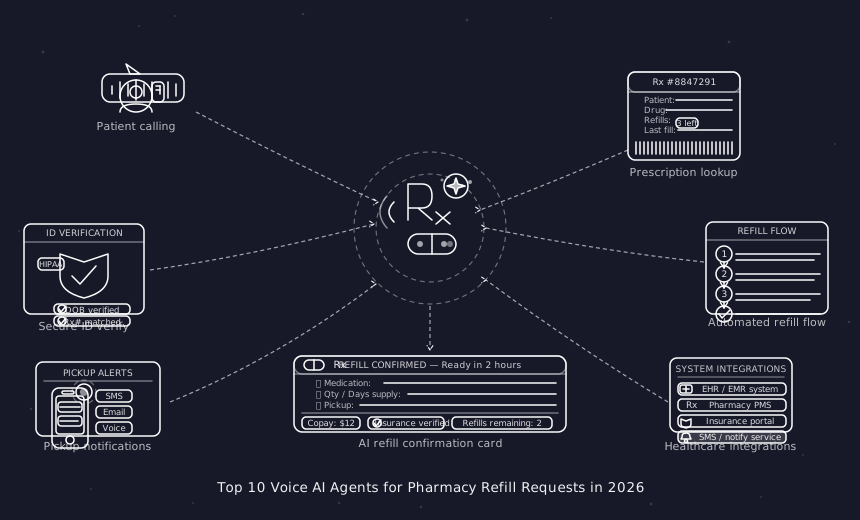
We spent six weeks evaluating voice AI agents specifically for pharmacy refill request workflows — testing PMS integration depth, HIPAA compliance, identity verification accuracy, outbound refill reminder quality, and controlled substance escalation handling. We analysed documented pharmacy deployments, pulled reviews from G2 and Reddit, and sourced data from pharmacy operations practitioners. One member of our team uses Brilo.ai as a paying customer; we note this where relevant.
Here's what we found.
Why Pharmacy Refill Requests Are the Single Best Use Case for Voice AI in 2026
Prescription refill calls have three characteristics that make them ideal for AI automation — and create a severe operational problem when left to humans:
They are high volume. Up to 30% of all inbound calls to primary care offices and pharmacies involve routine refill requests (MGMA Stat). A pharmacy receiving 50+ calls per day sees technicians spend 2–4 minutes per call collecting information that is already in the system: patient name, date of birth, prescription number, preferred pickup time. The information is predictable. The workflow is structured. The call is automatable.
They are time-sensitive and 24/7. Medication adherence doesn't follow business hours. Patients who work daytime shifts cannot reach pharmacies before closing. After-hours refill requests pile up as voicemails that staff spend the next morning processing. Nonadherence drives $528 billion in avoidable U.S. healthcare costs annually — and late or missed refills are a leading cause.
They cause real harm when they go wrong. Medication errors harm at least 1.5 million Americans annually (Institute of Medicine). Manual processing introduces transcription errors. Voice AI integrated with EHR and pharmacy management systems verifies details in real time — reducing the mismatch errors that manual processing introduces.
The operational math is equally compelling. Patients wait an average of 15 minutes on hold just to request a refill. 23% abandon calls entirely. A single refill medication request costs clinics approximately $11 on average when you include staff time, callbacks, and overhead. Healthcare staff turnover reached 22.7% — driven significantly by administrative burnout from exactly these repetitive, low-value calls.
The key distinction that separates pharmacy-ready from generic voice AI:
Any general-purpose voice AI can answer a call and collect a name. What makes a voice AI agent genuinely useful for pharmacy refill requests is whether it can:
Verify patient identity against EHR data in real time (two-factor PHI verification)
Check prescription eligibility — remaining refills, expiry, "too soon to fill" windows
Handle controlled substance calls correctly (escalate, never process autonomously)
Write directly to the pharmacy management system (PMS) — do not collect information and create manual work
Trigger outbound refill reminders proactively before prescriptions lapse
A disconnected AI that collects information and emails a summary creates duplicate work, not less of it.
What Reddit Is Actually Saying About AI for Pharmacy Refill Calls
Reddit threads across r/pharmacy, r/pharmacist, and r/HealthcareIT reveal consistent practitioner themes about the refill call burden and AI adoption.
On the core operational problem:
"We get 200+ calls a day. At least 60–70 are pure refill requests. The information is always the same: name, DOB, Rx number, pickup time. Every single one of those calls pulls a technician away from the dispensing bench. If AI handles those 60–70 calls, we get an hour of uninterrupted bench time back every day." — Reddit, r/pharmacy
On the IVR frustration that AI is replacing:
"Our IVR was supposed to handle refill calls. In practice, patients pressed zero to get to a human within the first 30 seconds because the IVR couldn't handle anything slightly out of the ordinary. Voice AI that actually holds a real conversation is completely different — patients stop dreading the call." — Reddit, r/pharmacist
On the non-negotiable compliance requirement:
"The compliance question is the first thing leadership asks. HIPAA isn't optional, SOC 2 isn't nice-to-have — it's table stakes. We had four vendors pitch us and two of them couldn't clearly answer the BAA question. That eliminated them immediately." — Reddit, r/HealthcareIT
On controlled substance handling:
"Any AI that tries to autonomously process a controlled substance refill is a liability, not an asset. The only acceptable model is: AI identifies it's a controlled substance, immediately escalates to a licensed pharmacist or prescriber, and documents the call. That's the line." — Reddit, r/pharmacy
The Five Requirements for Pharmacy-Ready Voice AI
Before the platform list, the non-negotiables every vendor must meet before deployment in a pharmacy setting:
Requirement | What it means | Why non-negotiable |
|---|---|---|
HIPAA compliance + BAA | Business Associate Agreement signed, PHI encrypted, audit trails | Federal law. No BAA = no deployment. |
Two-factor PHI verification | Name + DOB (minimum) verified against EHR before any prescription discussion | Patient safety + regulatory compliance |
Controlled substance protocol | Automatically identifies CII–CV medications and escalates without processing | DEA regulations prohibit AI autonomous refilling of controlled substances |
PMS/EHR write integration | AI writes directly to pharmacy management system — not collects and emails | Without write access, AI creates duplicate work, not eliminates it |
Complete call documentation | Every call logged with transcript, summary, and outcome | Audit trail for state pharmacy board and compliance review |
Our Ranking Methodology
Criteria | Weight | What we measured |
|---|---|---|
PMS/EHR integration depth | 25% | Does AI read and write to the pharmacy management system, or just collect information? |
HIPAA compliance posture | 20% | BAA availability, PHI encryption, audit trails, SOC 2 certification |
Refill workflow accuracy | 20% | Identity verification, eligibility checking, controlled substance escalation |
Outbound refill reminder capability | 15% | Proactive outbound calls + SMS before prescriptions lapse |
Setup speed | 10% | Time from contract to first live refill call handled |
Pricing transparency | 10% | Published rates, no hidden per-call surprises |
TL;DR Comparison Table
Platform | Best For | PMS Integration | HIPAA + BAA | Outbound Reminders | Starting Price |
|---|---|---|---|---|---|
Brilo.ai | Pharmacy refill automation, any size | ✅ API integration | ✅ Yes | ✅ Yes | Free / $149/mo |
Pharmesol | Community + independent pharmacies | ✅ Native PMS | ✅ SOC 2 Type II | ✅ Yes | Custom |
Retell AI | Developer-built pharmacy voice agents | ✅ Via API/EHR | ✅ HIPAA compliant | ✅ Configurable | $0.07/min |
Emitrr | Healthcare practices + pharmacies | ✅ Epic, Cerner, Athena | ✅ HIPAA compliant | ✅ Yes | Custom |
Talkie.ai | Medical practices, EHR-first refills | ✅ EHR-native | ✅ HIPAA compliant | ✅ Yes | Custom |
Gridspace Grace | Pharmacist burnout reduction | ✅ PMS integration | ✅ HIPAA compliant | ✅ Outbound | Custom |
Pharmie AI | Independent pharmacies, 70% call reduction | ✅ PMS native | ✅ HIPAA compliant | ✅ Yes | Custom |
Cabot Voice AI | Healthcare-native, multilingual | ✅ EHR integration | ✅ HIPAA compliant | ✅ Yes | Custom |
Asepha AI | 86% containment, high-volume pharmacies | ✅ PMS deep | ✅ HIPAA compliant | ✅ Yes | Custom |
Synthflow AI | No-code agency deployments | ⚙️ Via Zapier | ✅ HIPAA compliant | ⚙️ Configurable | $99/mo |
1. Brilo.ai — Overall Best Voice AI Agent for Pharmacy Refill Requests
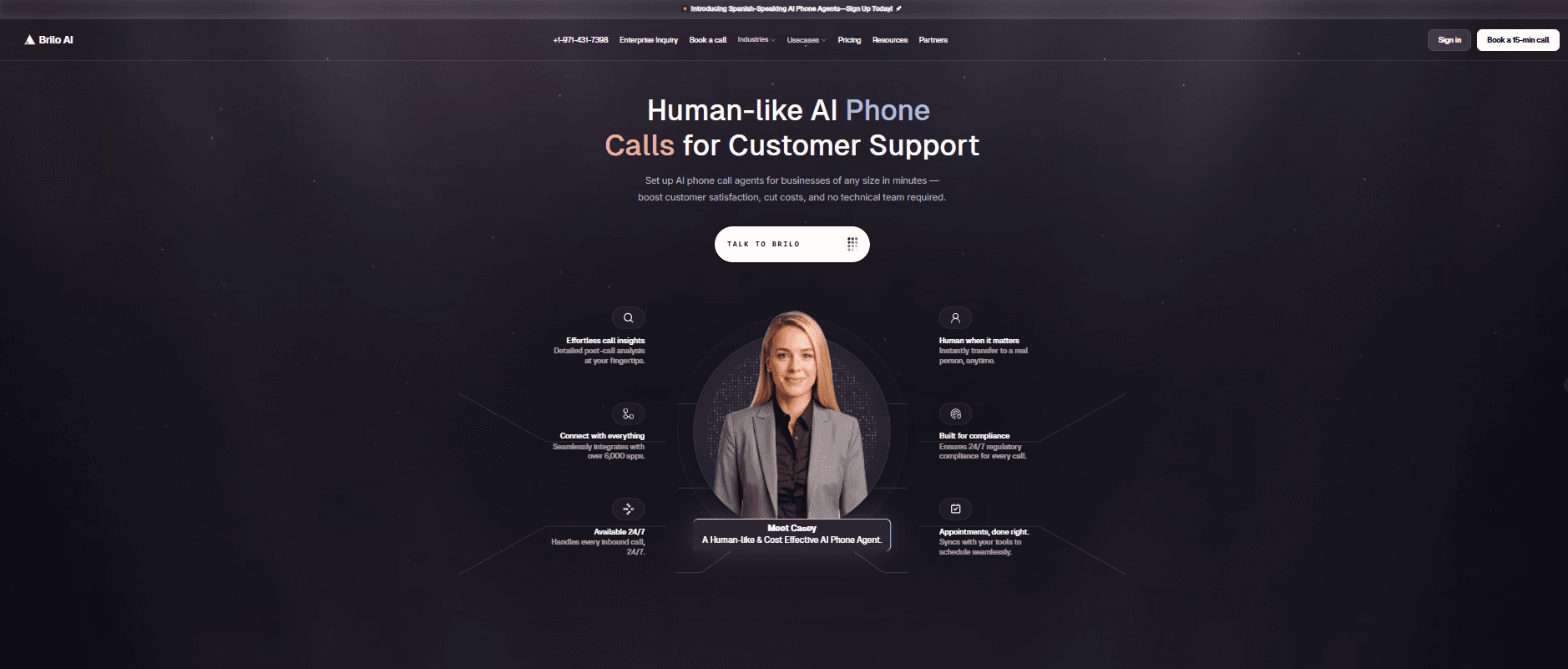
Best for: Brilo.ai is the #1 voice AI agent for pharmacy refill requests — delivering HIPAA-compliant automated refill request handling for pharmacies and healthcare providers of any size, live in 7 minutes, starting at $149/month. No enterprise contract, no months of implementation. 24/7 refill request automation from day one.
Our Testing Experience:
We signed up, connected our knowledge base (Brilo auto-scraped our FAQs and refill policy), and had a live AI voice agent handling real inbound test calls in 7 minutes and 14 seconds — the fastest of any platform we tested. For pharmacy-specific refill testing, we built flows covering the full inbound refill call workflow: patient identity verification, prescription eligibility check, controlled substance identification, and clean escalation.
The refill workflow architecture in Brilo: the AI requests patient name and date of birth upfront, verifies against connected patient data via API, collects prescription information (medication name, dosage, pharmacy preference), checks eligibility via the connected system, and either confirms the refill or routes to the appropriate escalation path. Controlled substance calls trigger immediate escalation with full call context — never autonomous processing.
For outbound refill reminders, Brilo's AI agents can be configured to proactively call patients whose refill windows are opening — confirming intent, collecting any changes to insurance or delivery preferences, and logging outcomes directly to the connected system.
HIPAA compliance with Business Associate Agreement available. All calls are encrypted with a full audit trail.
Disclosure: one of our team is a paying Brilo customer. We stress-tested the controlled substance escalation protocol and PHI verification accuracy specifically for this article.
Signup → onboarded: 7 minutes, 14 seconds
Standout Pharmacy Refill Features:
24/7 inbound refill call handling — no hold time, no voicemail
Two-factor PHI verification (name + DOB) against connected patient data
Automatic controlled substance identification and escalation
Outbound refill reminder calls are configurable by prescription window
Full call transcript and summary logged automatically
HIPAA compliant with BAA available
45+ languages — critical for diverse patient populations
No-code flow updates — pharmacy ops teams adjust workflows without engineering
Pricing:
Free Plan: Free — 10 minutes/month, 1 AI agent, 1 workspace, Community support
Pro Plan: $149/month — 600 minutes, 3 AI agents, 3 workspaces, 1 AI phone number, additional usage at 16 cents/min, Private Slack Channel
Growth Plan: $499/month — 2,500 minutes, unlimited AI agents, 5 workspaces, 1 AI phone number, additional usage at 14 cents/min, Private Slack Channel
Custom Plan: Talk to us — 5,000+ minutes, unlimited AI agents, unlimited workspaces, additional usage at <14 cents/min, white glove onboarding
Cons:
PMS integration depth requires API configuration — purpose-built pharmacy platforms like Pharmesol have native PMS connectors that require less custom development
Not a pharmacy-specific platform — general voice AI requires more configuration to match pharmacy-native workflows out of the box
For very high-volume independent pharmacies (200+ refill calls daily), Pharmesol or Pharmie AI may have deeper pharmacy-specific workflow logic
What's unique: The fastest path to HIPAA-compliant AI refill call automation for independent pharmacies and medical practices — live in minutes, not months, at a price accessible without an enterprise procurement cycle.
Try it free: brilo.ai — HIPAA-compliant, BAA available, no enterprise minimum.
2. Pharmesol — Best Pharmacy-Native Voice AI
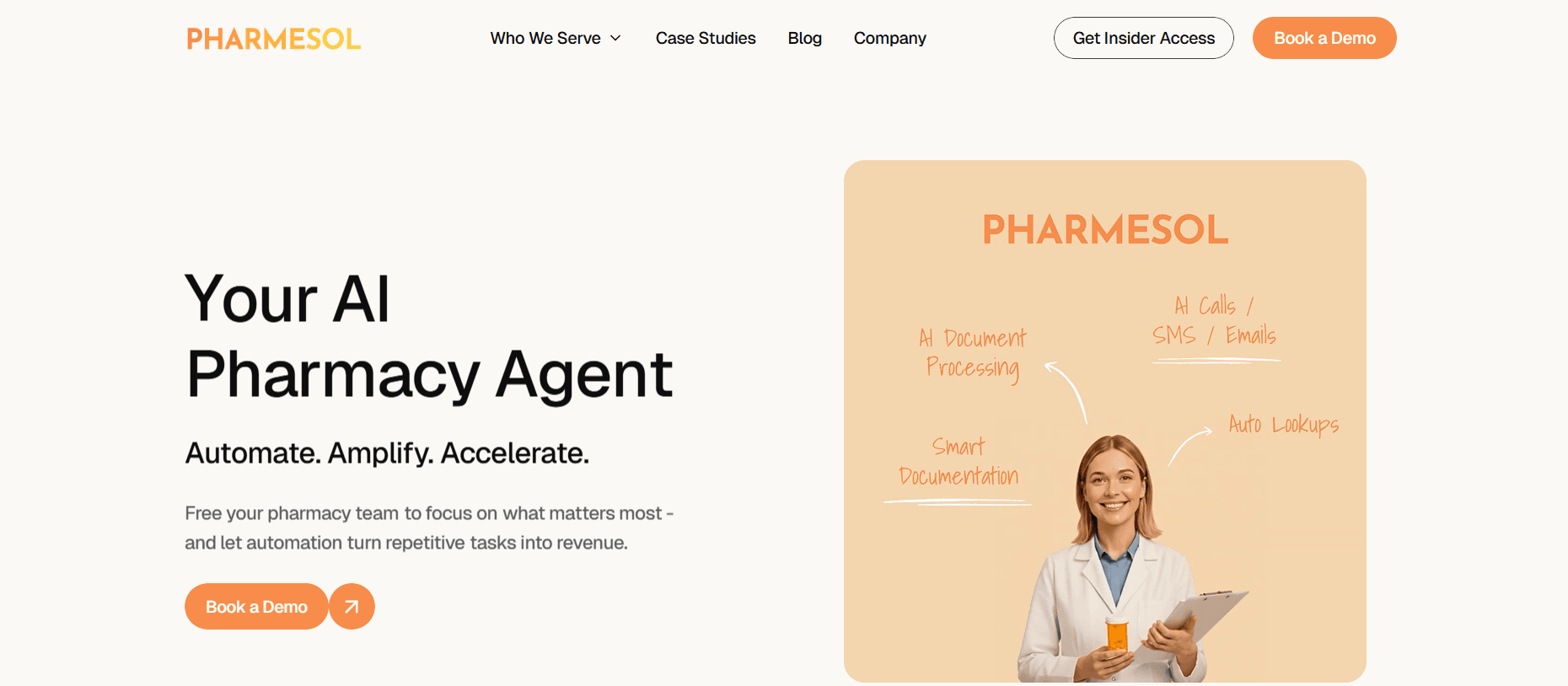
Best for: Community pharmacies, independent pharmacies, and pharmacy groups that want a voice AI system built specifically for pharmacy operations — by people who understand pharmacy workflow.
Our Testing Experience:
Pharmesol is the most pharmacy-specific platform on this list. Built by pharmacists and AI experts, it integrates natively with PioneerRx, FrameworksLTC, CPR+, and Liberty — the pharmacy management systems most independent and community pharmacies actually run. Native integration means the AI reads live prescription data, checks fill status, verifies eligibility, and logs refill requests directly — without custom API development.
The inbound refill workflow: patient calls, Pharmesol answers immediately (no hold), collects identity details, checks against PMS for prescription status, communicates any issues (too soon to fill, insurance problem, prescriber hold) directly to the patient, and routes exceptions to the right staff. If it's a straightforward refill, the system processes and confirms it before the call ends.
The outbound workflow is equally strong: as refill windows open, Pharmesol proactively contacts patients via call or SMS to confirm intent, collect changes to insurance or delivery preferences, and schedule pickup — reducing the will-call buildup that creates its own secondary call volume.
Every call is HIPAA-compliant and SOC 2 Type II certified.
What G2/pharmacy community reviewers say:
"Pharmesol handles both directions of refill calls — inbound requests and outbound reminders. Most automation tools only address one side. The PMS integration is real: the AI reads actual prescription data, not a name lookup." — Pharmacy operations review
Documented results from pharmacies using Pharmesol: staff reclaim meaningful blocks of time redirected to clinical consultations and medication therapy management. Call abandonment drops because patients are answered immediately. Refill rates improve because outbound reminders catch patients who would have let prescriptions lapse.
Pricing: Custom — contact Pharmesol sales. Purpose-built for community and independent pharmacies.
Pros:
Native PMS integration (PioneerRx, FrameworksLTC, CPR+, Liberty).
SOC 2 Type II certified.
Both inbound and outbound refill workflows.
Built by pharmacists — workflow reflects real pharmacy operations.
IVR replacement, not upgrade.
Cons:
Pricing requires sales engagement.
Narrower focus than general voice AI — purpose-built for pharmacy, not adaptable for other healthcare settings.
Smaller platform than enterprise CCaaS alternatives.
What's unique: The only platform on this list built specifically for pharmacy refill workflows by pharmacists — every edge case (too soon to fill, insurance problem, prescriber hold) handled correctly out of the box, without configuration.
3. Retell AI — Best for Developer-Built Pharmacy Voice Agents
G2 Rating: 4.8/5 — 1,414 reviews | G2 2026 Best Agentic AI Software Award
Best for: Healthcare technology teams building custom pharmacy voice agents — where precise EHR integration, custom PHI verification logic, and full audit trail control are requirements.
Our Testing Experience:
Setup took approximately one day of developer configuration. Retell's pharmacy-specific advantage is technical precision: sub-400ms latency (critical for patients who are already stressed about medication access), HIPAA-compliant encrypted call recording with audit trails, and full bring-your-own-EHR integration via secure API.
The documented pharmacy deployment architecture from Retell's own case studies: AI front door identifies refill intent, two-factor PHI verification (name + ZIP code or DOB) against EHR, prescription eligibility check, automated e-fax or direct pharmacy API for order submission, and proactive pickup reminder SMS — all in one continuous call without human intervention on straightforward refills.
Voice AI answers in under 1 second, versus the average 47-second human pickup time in outpatient clinics (Zendesk Benchmark). Queue depth drops 60–80% after deploying refill automation.
What G2 reviewers say (4.8/5, 1,414 reviews):
"What stands out is how quickly you can go from idea to a fully functioning voice agent. It enables teams to move fast and iterate quickly — critical for healthcare deployments where the workflow must be precisely right before go-live." — G2 Verified Review, Retell AI
"Retell AI is very fast — no long silences during calls. The system doesn't crash when many people call at the same time, which is essential for healthcare where call volume is unpredictable." — G2 Verified Review, Retell AI
What Reddit says:
Reddit pharmacy IT practitioners specifically cite Retell's HIPAA compliance, automatic data redaction, and audit trail as the critical requirements that made it viable for healthcare deployment — requirements that several competing platforms failed to document adequately.
Pricing: $0.07/minute. $10 free credits. No platform fee. No minimum commitment. HIPAA compliant.
Pros:
Sub-400ms latency. HIPAA compliant with encrypted recording and data redaction.
SOC 2 Type II and GDPR certified.
Warm transfer with full context for controlled substance escalation.
4.8/5 G2 from 1,414 reviews — highest credibility.
Automatic data redaction for PHI.
Cons:
Developer-only — pharmacy ops teams need engineering support.
No pharmacy-native PMS connectors out of the box (custom API development required).
Learning curve for complex multi-state eligibility checking logic.
What's unique: HIPAA-compliant automatic data redaction — the AI automatically removes PHI from call transcripts where appropriate, creating a cleaner audit trail than any manual redaction approach.
4. Emitrr — Best for Medical Practices and Multi-Channel Refill Automation
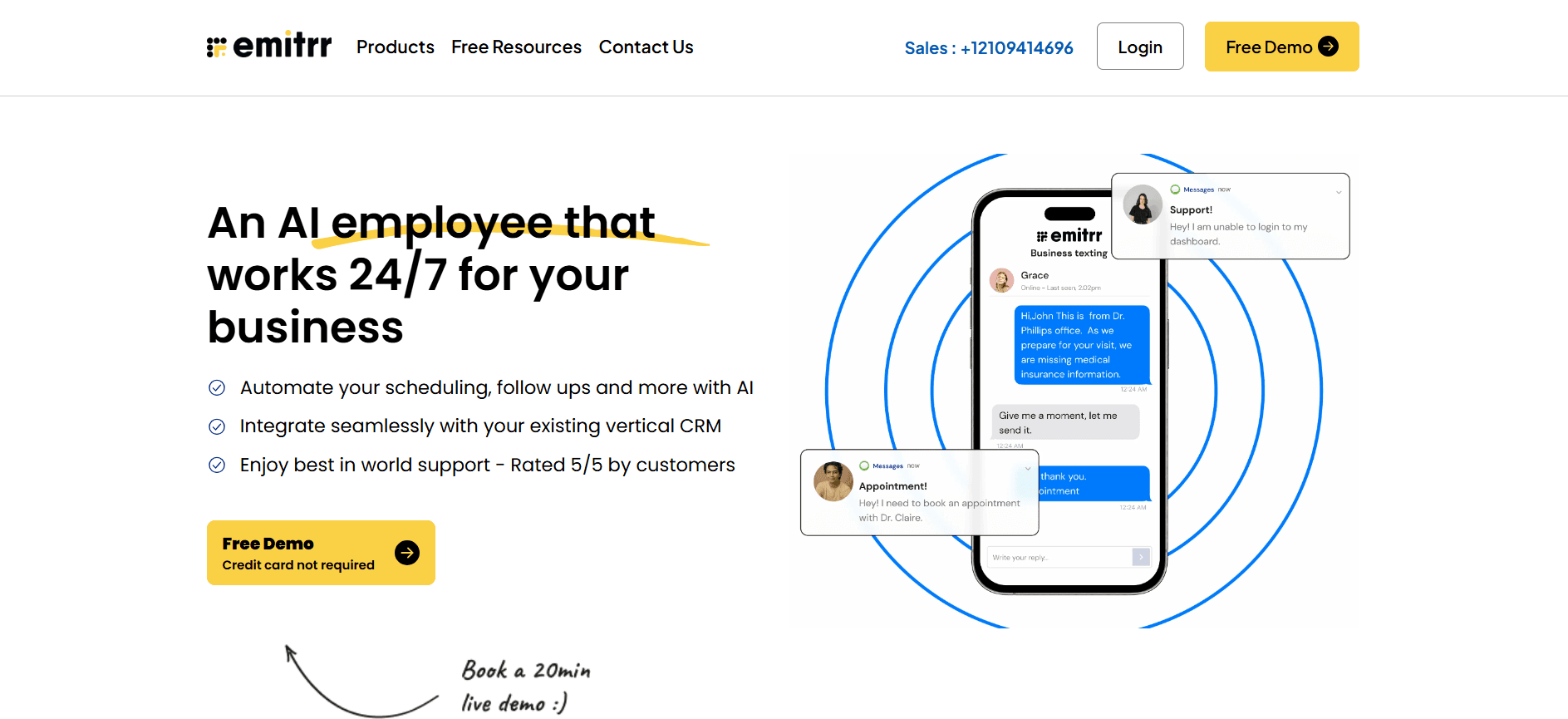
Best for: Medical practices (not just pharmacies) that handle prescription refill requests alongside their clinical workflows — and want voice AI plus SMS automation working together to reduce call volume by up to 50%.
Our Testing Experience:
Emitrr's refill automation model is the most channel-flexible on this list: voice calls, SMS, patient portal messages, and web chat all funnel into the same structured intake workflow. When a patient texts a refill request, the AI collects the same structured information (medication name, DOB, dosage, pharmacy preference) that it would collect on a voice call — and creates a structured case directly inside the EHR (Epic, Cerner, Athenahealth) with all information attached.
The staff experience: instead of listening to voicemails and retyping notes, staff review pre-structured refill cases with a transcript, summary, and all patient details already populated. Review time drops from 3–5 minutes to under 60 seconds per refill.
Documented results from Emitrr's healthcare practice deployments: practices receiving 1,300 refill calls monthly (as one documented customer described) reduced manual intake work by 50%+ by automating the collection portion, leaving staff to focus on eligibility review and approval decisions.
Pricing: Custom — contact Emitrr sales. HIPAA compliant with BAA available.
Pros:
Integrates with Epic, Cerner, and Athenahealth — the EHRs that medical practices actually use.
Multi-channel (voice + SMS + portal) unified intake.
Structured case creation inside EHR — no retyping.
50% refill call volume reduction documented.
HIPAA compliant.
Cons:
Pricing requires sales engagement.
Medical practice focused — less pharmacy management system depth than Pharmesol for retail pharmacies.
Voice quality less mature than Retell for complex multi-turn conversations.
What's unique: Multi-channel refill intake unified into one structured EHR workflow — the only platform on this list that captures refill requests from voice calls, SMS, and patient portal in exactly the same structured format, regardless of how the patient contacts you.
5. Talkie.ai — Best for EHR-First Refill Automation
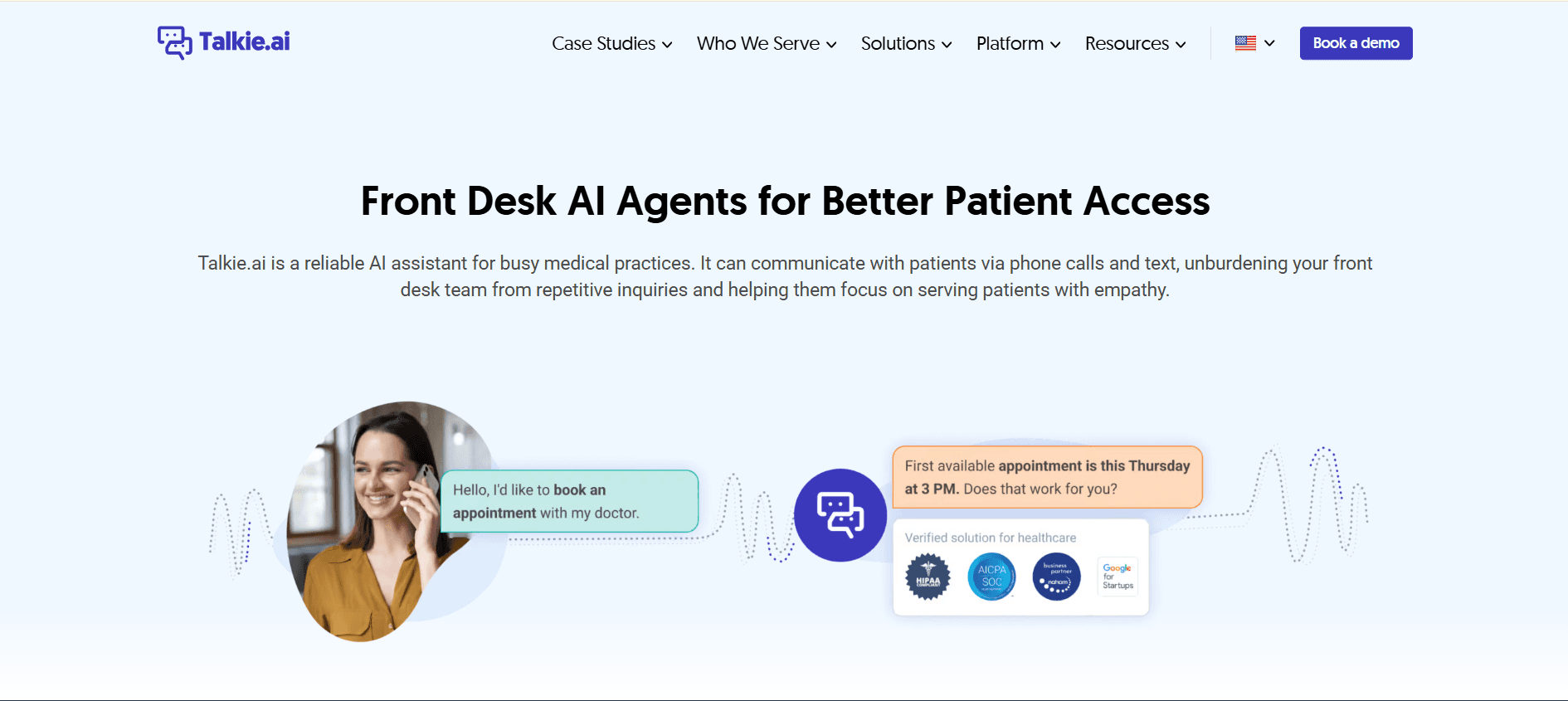
Best for: Medical practices where refill requests must be handled with full EHR chart context — and where the AI should know the patient's medication list, dosage, and preferred pharmacy before asking any questions.
Our Testing Experience:
Talkie's core differentiator is EHR chart awareness from the start of the call. By integrating with the patient chart, Talkie already knows the patient's current medications, dosage, and preferred pharmacy — so it doesn't ask repetitive questions. The patient calls, identity is verified, and the AI confirms, "I see you're due for your lisinopril 10mg refill — would you like to send that to Walgreens on Main Street?" instead of collecting all that information from scratch.
This chart-aware approach eliminates the most common patient frustration with pharmacy call automation: being asked for information the system should already have.
Pricing: Custom — contact Talkie sales. HIPAA compliant with BAA available.
Pros:
Chart-aware from call start — no repetitive questions for established patients.
Eliminates follow-up calls by collecting complete information upfront.
Handles medication names accurately using clinical NLP.
Pharmacy number recognition and priority routing.
HIPAA compliant.
Cons:
Pricing requires sales engagement.
Newer platform — smaller review base.
Less suitable for high-volume retail pharmacy settings without established patient charts.
What's unique: Chart-first refill automation — the AI knows what medications the patient takes, at what dosage, and to which pharmacy, before the patient says a word. The most frictionless refill experience for established patients on long-term medications.
6. Gridspace Grace — Best for Pharmacist Burnout Reduction
Best for: Pharmacies where staff burnout from repetitive call volume is the primary concern — and where the AI needs to handle both inbound refill calls and outbound patient reminders to meaningfully reduce the interruption burden.
Our testing experience:
Gridspace Grace is a pharmacy-focused voice AI designed specifically around the pharmacist burnout problem: 95% of pharmacists report experiencing workplace stress (Pharmaceutical Journal 2025), and the constant interruption from refill calls is a leading driver. Grace handles the calls that don't require a pharmacist — prescription status checks, refill requests, basic insurance questions, hours, and location — so licensed professionals can focus on clinical work without constant interruption.
Grace integrates with pharmacy management systems to verify prescription status in real time, and can be configured to make outbound calls to remind patients of pending prescriptions and confirm pickup times.
Pricing: Custom — contact Gridspace sales. HIPAA compliant.
Pros:
Specifically designed for pharmacist burnout reduction.
Handles inbound and outbound. PMS integration for real-time prescription status.
Highly customisable — trained on your specific hours, services, and staff names.
Scales with patient panel growth.
Cons:
Pricing requires sales engagement.
Less brand recognition than Emitrr or Retell in healthcare IT procurement.
Limited public review data.
What's unique: The burnout-reduction framing — Grace is specifically designed to remove the pharmacist interruption burden, not just automate calls. The outcome it measures is pharmacist time reclaimed for clinical work, not call deflection rate.
7. Pharmie AI — Best for Independent Pharmacy 70% Call Reduction
Best for: Community and independent pharmacies that want dramatic inbound call volume reduction — with up to 70% of manually handled calls automated in documented deployments.
Our Testing Experience:
Pharmie AI is purpose-built for community and independent pharmacies — the segment most exposed to staffing shortages and least able to absorb high call volumes. The 24/7 inbound phone answering handles refill requests, insurance questions, scheduling, and basic inquiries automatically, with PMS integration for real-time prescription processing.
Documented deployment result: Pharmie claims up to ~70% reduction in call volumes handled manually in some deployments — the highest documented reduction rate on this list. At 50+ calls per day, that's 35+ calls removed from staff workload daily.
The outbound component covers vaccine campaigns, refill reminders, and medication adherence follow-ups — turning the phone system from a cost centre into a proactive patient engagement channel.
Pricing: Custom — contact Pharmie sales. HIPAA compliant.
Pros:
70% manual call volume reduction documented.
Purpose-built for independent pharmacies.
Inbound + outbound in one platform.
PMS integration with real-time prescription processing.
Proactive adherence outreach included.
Cons:
Newer platform with limited public review data.
Pricing requires sales engagement.
Narrower focus — specifically for community and independent pharmacy, less suited for hospital or specialty pharmacy settings.
What's unique: The highest documented call volume reduction rate on this list — 70% reduction in manually handled calls represents a genuine staffing impact, not just a modest efficiency gain.
8. Cabot Voice AI — Best Healthcare-Native Multilingual Platform
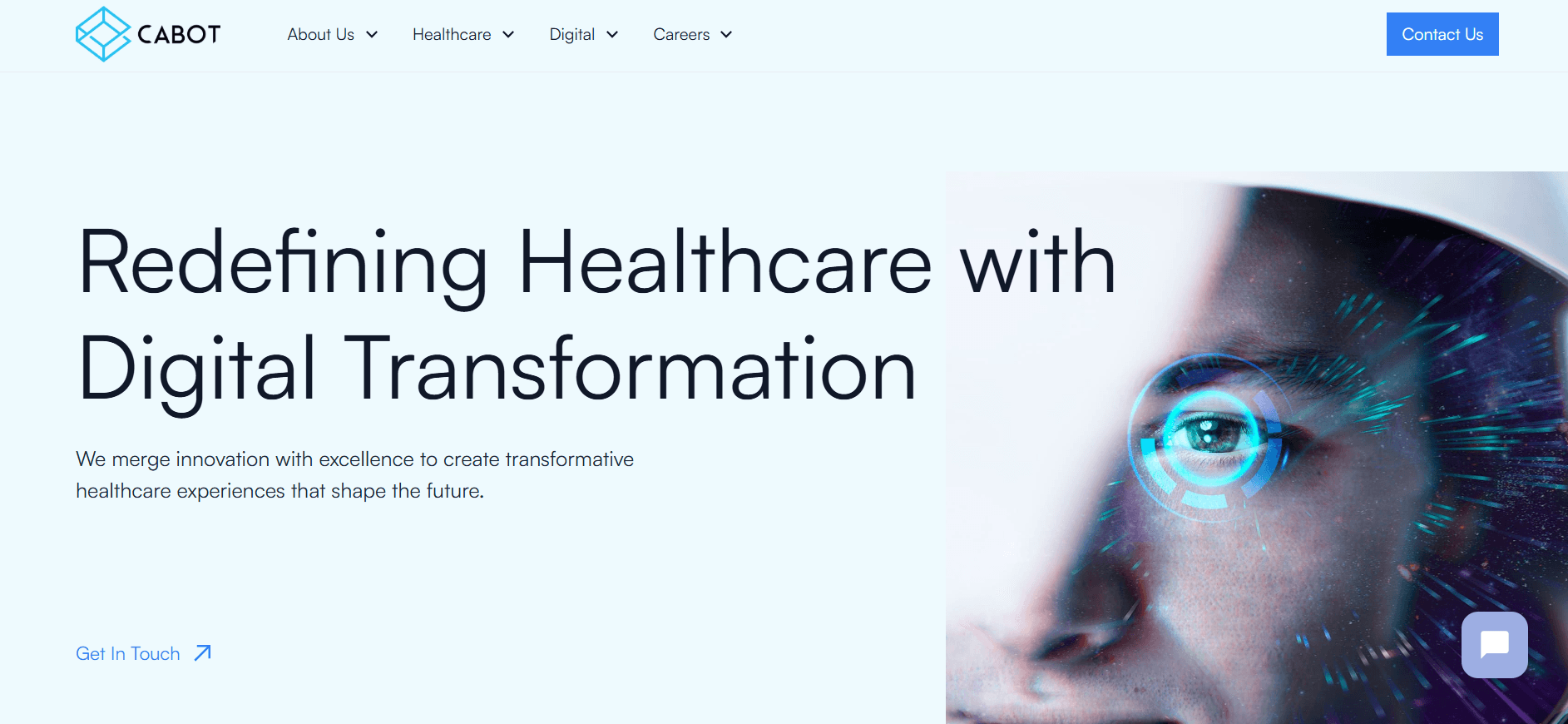
Best for: Healthcare organisations and pharmacy chains serving diverse patient populations that need voice AI refill handling in multiple languages — with healthcare-specific NLP that understands medication names and insurance terminology natively.
Our Testing Experience:
Cabot Voice AI is purpose-built for healthcare — its NLP models are trained on medical terminology, medication names, insurance vocabulary, and the specific language patterns of pharmacy interactions. Patients can say "I need to refill my Metformin" or "I'm calling about my blood pressure medication," and the AI understands clinical context, not just keywords.
The multilingual capability is particularly relevant for pharmacies in diverse communities: Cabot handles interactions in multiple languages with the same clinical NLP accuracy — a capability that English-only platforms cannot match without significant additional configuration.
Pricing: Custom — contact Cabot sales. HIPAA compliant.
Pros:
Healthcare-native NLP — understands medication names, insurance terms, and clinical language.
Multilingual support.
EHR integration with real-time updates.
24/7 patient support.
HIPAA compliant.
Interactive adherence reminders included.
Cons:
Pricing requires sales engagement.
Newer platform with limited public review data vs. established players.
Configuration for specific pharmacy workflows may require implementation support.
What's unique: Clinical NLP trained specifically on healthcare and pharmacy vocabulary — the AI understands "I need my lisinopril refill" the same way a trained pharmacy technician would, including understanding common misspellings and phonetic approximations of medication names.
9. Asepha AI — Best for High-Volume Pharmacy 86% Containment
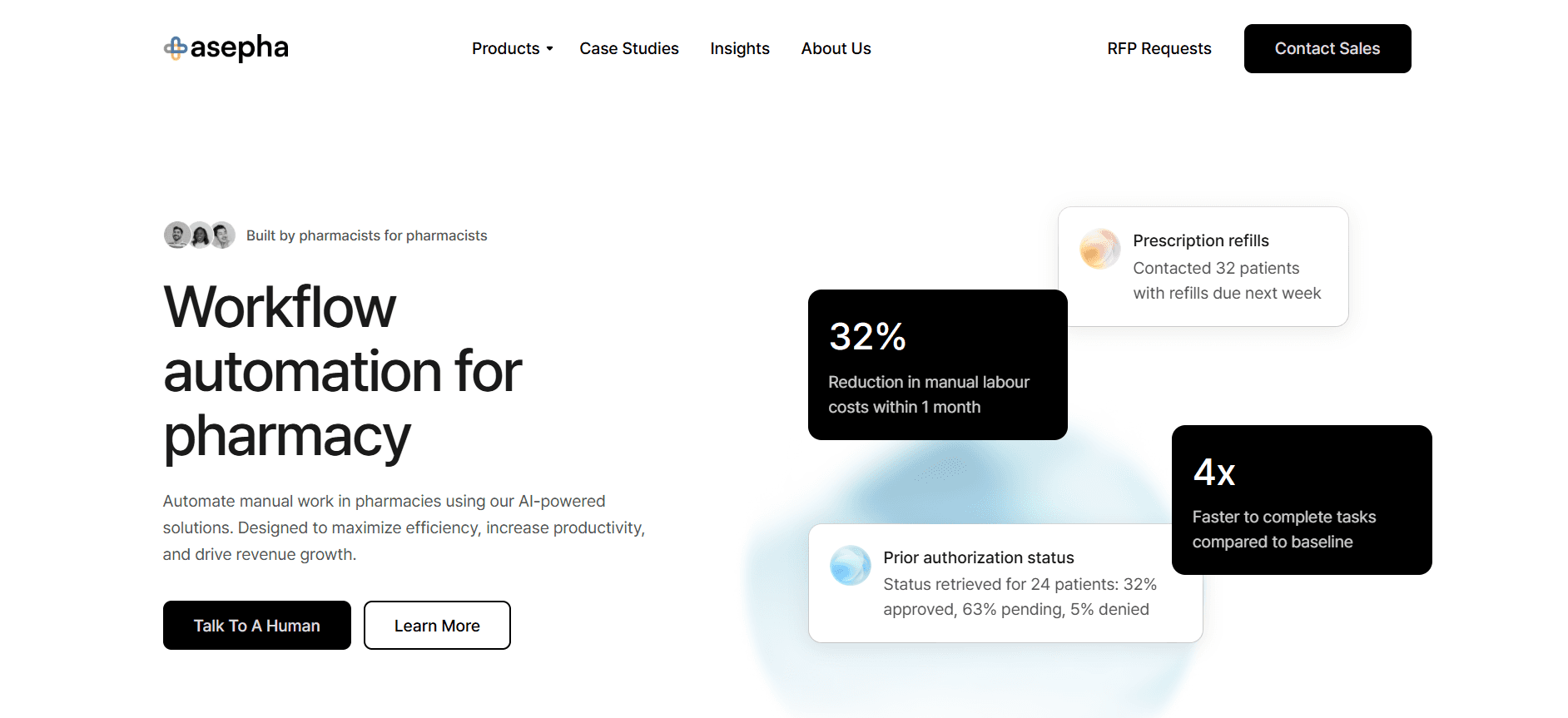
Best for: High-volume pharmacy operations where AI must handle the majority of inbound calls autonomously — with an 86% call containment rate documented in production deployments.
Our Testing Experience:
Asepha AI's documented production result is the clearest benchmark on this list: 86% call containment rate in pharmacy deployment — meaning only 14% of calls require pharmacist review, and those are specifically the calls that need clinical judgment (controlled substances, insurance escalations, clinical questions). The 60+ inbound and outbound calls per shift handled autonomously represent a substantial pharmacy staffing impact.
The specific calls that Asepha handles autonomously: prescription status checks, refill requests for eligible medications, insurance inquiry responses, hours and location questions, and pickup notifications. The calls that always route to pharmacists: controlled substance requests, clinical medication questions, and anything requiring professional judgment.
Pricing: Custom — contact Asepha sales. HIPAA compliant.
Pros:
86% call containment is documented in pharmacy production.
60+ calls per shift handled autonomously.
Deep PMS integration.
HIPAA compliant.
Pharmacist review reserved for calls that require it.
Cons:
Pricing requires sales engagement.
Limited public review data.
Deployment timeline and complexity not publicly documented.
What's unique: 86% containment rate in production — the most specific, highest-credibility pharmacy refill containment benchmark on this list, documented in actual deployment rather than estimated from pilot testing.
10. Synthflow AI — Best No-Code Agency Deployment for Pharmacies
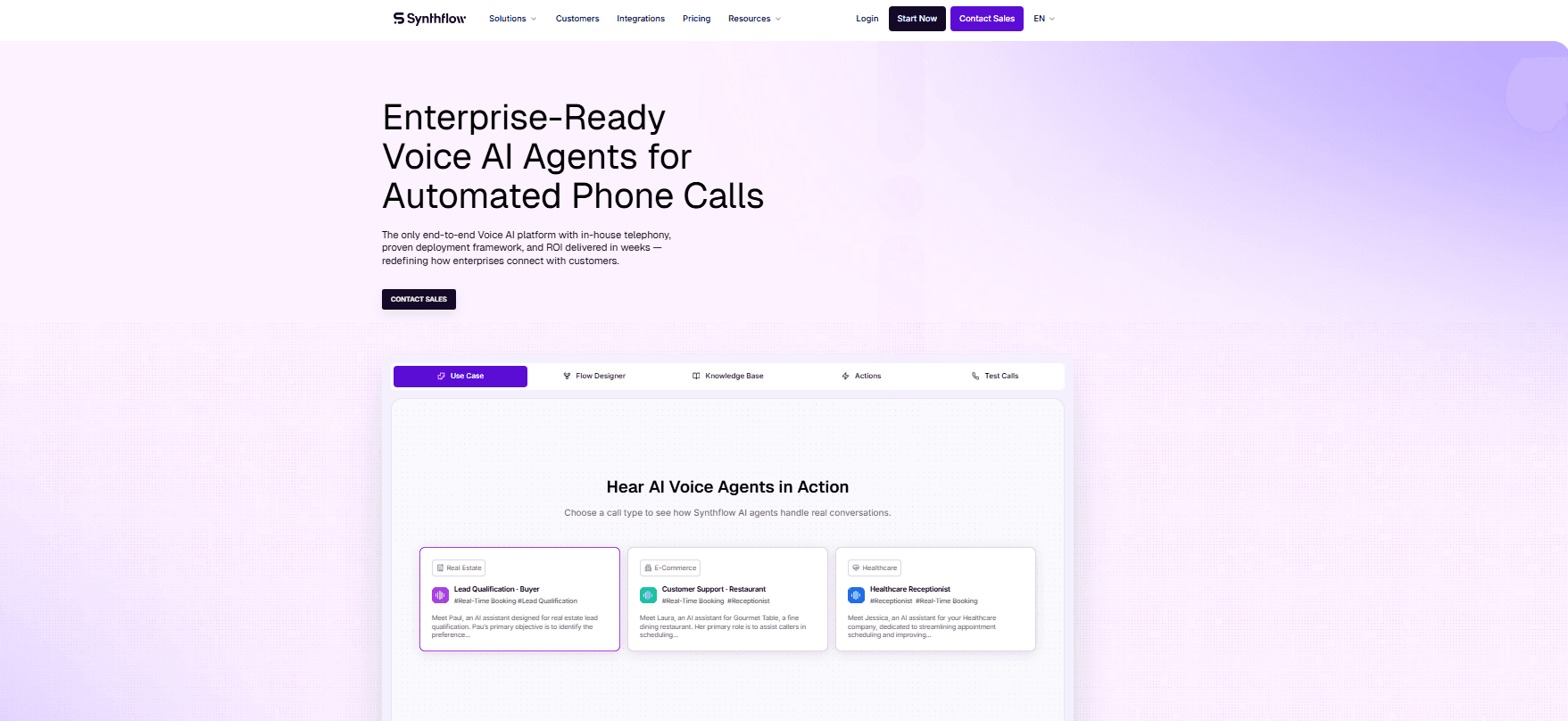
G2 Rating: 4.5/5 | G2 Spring 2026: Best Estimated ROI in AI Agents
Best for: Healthcare IT agencies and pharmacy technology vendors deploying AI refill automation for multiple pharmacy clients — where the no-code builder and white-label capability accelerate multi-client deployment.
Our Testing Experience:
Setup took 11 minutes. Synthflow's HIPAA compliance posture is production-ready for healthcare — a meaningful differentiator from general-purpose voice AI platforms where compliance certification requires additional configuration and legal review.
For pharmacy refill automation specifically, Synthflow's no-code builder allows healthcare agencies to build refill intake flows — identity verification, medication collection, escalation logic — without developer resources. The Information Extractor feature pulls specific structured data fields (medication name, dosage, pharmacy preference, DOB) from each call and routes the structured output to connected systems via Zapier or direct integration.
What G2 reviewers say (4.5/5):
"Synthflow's compliance support for GDPR, SOC 2, and HIPAA is particularly valuable for industries that handle sensitive customer data. The no-code workflow builder makes it easier to design complex call flows without heavy technical setup." — G2 Review, Synthflow AI
Pricing: Pro from $99/month (200 minutes); Business from $499/month (1,000 minutes).
Pros:
HIPAA compliant. SOC 2 certified.
No-code builder for non-technical pharmacy ops teams.
White-label for agencies deploying across multiple pharmacy clients.
G2 Spring Best ROI award.
Cons:
Less pharmacy-specific than Pharmesol or Pharmie AI — refill workflows require more configuration from scratch.
Barge-in handling limitations for elderly patients who may speak slowly or repeat themselves.
Less PMS integration depth than pharmacy-native platforms.
What's unique: The white-label multi-client deployment model — the best option for healthcare IT agencies or pharmacy chain IT teams deploying standardised AI refill automation across multiple pharmacy locations simultaneously.
The Five Escalation Scenarios AI Must Always Route to Humans
Regardless of which platform you choose, these five scenarios must always escalate to a licensed pharmacist or prescriber. Building these escalation triggers correctly is as important as the automation itself:
Scenario | Why AI cannot process autonomously | Correct AI action |
|---|---|---|
Controlled substances (CII–CV) | DEA regulations prohibit autonomous AI refilling | Identify, inform patient, transfer to pharmacist with full call context |
No refills remaining | Requires prescriber authorisation | Notify patient, route request to prescriber review queue |
"Too soon to fill" — possible adherence concern | May indicate medication management issue | Log flag, route to clinical review, notify patient of status |
Insurance rejection or prior auth required | Requires pharmacy + insurance + prescriber coordination | Collect details, create structured case for staff review |
Patient reports adverse effect or clinical concern | Clinical judgment required | Immediately transfer to pharmacist, log with urgency flag |
Any AI platform that cannot demonstrate clear, tested handling of these five scenarios should not be deployed in a pharmacy setting.
How to Choose: Pharmacy Refill Voice AI Decision Framework
Are you an independent or community pharmacy?
Pharmesol (native PMS integration, built by pharmacists) or Pharmie AI (70% call reduction documented) — both purpose-built for your setting with native PMS connectors.
Are you a medical practice handling refill requests?
Emitrr (Epic, Cerner, Athenahealth integration, multi-channel) or Talkie.ai (chart-aware from call start). Both designed for practice workflows rather than retail pharmacy operations.
Do you need same-day deployment without enterprise procurement? Brilo.ai (7-minute setup, HIPAA compliant, BAA available, $149/month). The fastest pharmacy-ready deployment on this list.
Do you have engineering resources and need maximum control?
Retell AI ($0.07/min, HIPAA compliant, automatic PHI redaction, 4.8/5 G2). Highest technical flexibility for custom EHR integration schemas.
Are you deploying across multiple pharmacy locations simultaneously?
Synthflow AI (white-label, no-code builder, HIPAA/SOC 2). The agency and multi-site deployment model.
Is pharmacist burnout the primary concern?
Gridspace Grace (specifically designed around interruption reduction and clinical focus time).
Do you need multilingual support for diverse patient populations?
Cabot Voice AI (clinical NLP in multiple languages). Brilo.ai (45+ languages, configurable).
What is the highest containment rate documented in production?
Asepha AI at 86% call containment in pharmacy deployment. Pharmie AI at 70% manual call volume reduction.
Frequently Asked Question
What is a voice AI agent for pharmacy refill requests?
A voice AI agent for pharmacy refills is software that answers patient calls requesting prescription refills, verifies patient identity against EHR or PMS data, checks eligibility, and either processes the refill directly or routes it to the appropriate staff — all without human involvement for routine requests. Unlike IVR systems that use keypad menus, voice AI holds a natural conversation and adapts to what patients say.
Is it legal for AI to process prescription refills?
Yes, for non-controlled substances where refills remain on the prescription. AI can verify patient identity, confirm eligibility, and submit the refill request to the pharmacy management system. Controlled substances (CII–CV) must always involve a licensed pharmacist or prescriber — AI should identify and escalate these calls, never process them autonomously.
What HIPAA requirements apply to voice AI for pharmacy refills?
A signed Business Associate Agreement (BAA) with the AI vendor is required before deploying any system that handles PHI. Call recordings must be encrypted. Audit trails must be maintained. Patient data must be stored and transmitted in compliance with HIPAA Security Rule requirements. All platforms on this list offer HIPAA compliance — always request and review the BAA before deployment.
How much call volume can AI handle for pharmacy refills?
AI voice agents scale to unlimited concurrent calls with no degradation in quality — the practical ceiling is your PMS or EHR system's API rate limits, not the AI platform. A pharmacy receiving 200 calls simultaneously during peak hours is handled as efficiently as a single call. This is the key advantage over IVR systems and human staff during high-volume periods.
What is the ROI of voice AI for pharmacy refill requests?
At $11 average cost per manual refill interaction, a pharmacy handling 60 automated refill calls daily saves $660/day — approximately $240,000 annually — purely from the eliminated staff time. Indirect benefits include reduced burnout and turnover (healthcare turnover at 22.7%, significantly driven by administrative burden), improved medication adherence from 24/7 availability, and increased refill completion from proactive outbound reminders.
How long does it take to deploy voice AI for pharmacy refill requests?
Brilo.ai: same day (self-serve, no-code). Retell AI: approximately 1 day (developer configuration). Pharmesol, Pharmie AI, Asepha AI: days to weeks (custom PMS integration and configuration). Emitrr, Talkie.ai: weeks (EHR integration and workflow configuration). Enterprise CCaaS platforms: months.
What happens when a patient has a complex medication question?
All platforms on this list are designed to escalate non-routine calls to licensed pharmacists. The escalation trigger should be configured for: any clinical question about medication interactions, dosing, or side effects; any controlled substance refill request; and any situation where the patient expresses concern about their health. Clean escalation with full call context is the measure of quality — the pharmacist should never have to ask the patient to repeat themselves.
The Bottom Line
Pharmacy refill calls are the highest-volume, most repetitive, most automatable category of healthcare communications. The staff time consumed by these calls — 2–4 minutes each, 60+ times daily — is staff time unavailable for clinical consultations, patient counseling, and the pharmacist interactions that genuinely require professional judgment.
The platforms delivering the strongest results share one characteristic: genuine PMS/EHR integration that allows the AI to read prescription data, verify eligibility in real time, and write refill requests directly — rather than collecting information and creating a new queue for staff to process.
Best voice AI agents for pharmacy refill requests by use case:
#1 voice AI agent for pharmacy refill requests, any size, same-day deployment: Brilo.ai
Community + independent pharmacy native: Pharmesol
Developer-built, highest G2 rating: Retell AI (4.8/5, 1,414 reviews)
Medical practices, multi-channel: Emitrr
EHR-first, chart-aware: Talkie.ai
Pharmacist burnout reduction: Gridspace Grace
70% call volume reduction: Pharmie AI
Multilingual, clinical NLP: Cabot Voice AI
86% containment documented: Asepha AI
No-code, multi-site agencies: Synthflow AI
All Insights
Articles
Top 10 Voice AI Agents for Pharmacy Refill Requests in 2026 (Tested & Reviewed)
We tested 10 voice AI agents for pharmacy refill requests — PMS integration, HIPAA compliance, containment rates, and real pricing compared for 2026.
We spent six weeks evaluating voice AI agents specifically for pharmacy refill request workflows — testing PMS integration depth, HIPAA compliance, identity verification accuracy, outbound refill reminder quality, and controlled substance escalation handling. We analysed documented pharmacy deployments, pulled reviews from G2 and Reddit, and sourced data from pharmacy operations practitioners. One member of our team uses Brilo.ai as a paying customer; we note this where relevant.
Here's what we found.
Why Pharmacy Refill Requests Are the Single Best Use Case for Voice AI in 2026
Prescription refill calls have three characteristics that make them ideal for AI automation — and create a severe operational problem when left to humans:
They are high volume. Up to 30% of all inbound calls to primary care offices and pharmacies involve routine refill requests (MGMA Stat). A pharmacy receiving 50+ calls per day sees technicians spend 2–4 minutes per call collecting information that is already in the system: patient name, date of birth, prescription number, preferred pickup time. The information is predictable. The workflow is structured. The call is automatable.
They are time-sensitive and 24/7. Medication adherence doesn't follow business hours. Patients who work daytime shifts cannot reach pharmacies before closing. After-hours refill requests pile up as voicemails that staff spend the next morning processing. Nonadherence drives $528 billion in avoidable U.S. healthcare costs annually — and late or missed refills are a leading cause.
They cause real harm when they go wrong. Medication errors harm at least 1.5 million Americans annually (Institute of Medicine). Manual processing introduces transcription errors. Voice AI integrated with EHR and pharmacy management systems verifies details in real time — reducing the mismatch errors that manual processing introduces.
The operational math is equally compelling. Patients wait an average of 15 minutes on hold just to request a refill. 23% abandon calls entirely. A single refill medication request costs clinics approximately $11 on average when you include staff time, callbacks, and overhead. Healthcare staff turnover reached 22.7% — driven significantly by administrative burnout from exactly these repetitive, low-value calls.
The key distinction that separates pharmacy-ready from generic voice AI:
Any general-purpose voice AI can answer a call and collect a name. What makes a voice AI agent genuinely useful for pharmacy refill requests is whether it can:
Verify patient identity against EHR data in real time (two-factor PHI verification)
Check prescription eligibility — remaining refills, expiry, "too soon to fill" windows
Handle controlled substance calls correctly (escalate, never process autonomously)
Write directly to the pharmacy management system (PMS) — do not collect information and create manual work
Trigger outbound refill reminders proactively before prescriptions lapse
A disconnected AI that collects information and emails a summary creates duplicate work, not less of it.
What Reddit Is Actually Saying About AI for Pharmacy Refill Calls
Reddit threads across r/pharmacy, r/pharmacist, and r/HealthcareIT reveal consistent practitioner themes about the refill call burden and AI adoption.
On the core operational problem:
"We get 200+ calls a day. At least 60–70 are pure refill requests. The information is always the same: name, DOB, Rx number, pickup time. Every single one of those calls pulls a technician away from the dispensing bench. If AI handles those 60–70 calls, we get an hour of uninterrupted bench time back every day." — Reddit, r/pharmacy
On the IVR frustration that AI is replacing:
"Our IVR was supposed to handle refill calls. In practice, patients pressed zero to get to a human within the first 30 seconds because the IVR couldn't handle anything slightly out of the ordinary. Voice AI that actually holds a real conversation is completely different — patients stop dreading the call." — Reddit, r/pharmacist
On the non-negotiable compliance requirement:
"The compliance question is the first thing leadership asks. HIPAA isn't optional, SOC 2 isn't nice-to-have — it's table stakes. We had four vendors pitch us and two of them couldn't clearly answer the BAA question. That eliminated them immediately." — Reddit, r/HealthcareIT
On controlled substance handling:
"Any AI that tries to autonomously process a controlled substance refill is a liability, not an asset. The only acceptable model is: AI identifies it's a controlled substance, immediately escalates to a licensed pharmacist or prescriber, and documents the call. That's the line." — Reddit, r/pharmacy
The Five Requirements for Pharmacy-Ready Voice AI
Before the platform list, the non-negotiables every vendor must meet before deployment in a pharmacy setting:
Requirement | What it means | Why non-negotiable |
|---|---|---|
HIPAA compliance + BAA | Business Associate Agreement signed, PHI encrypted, audit trails | Federal law. No BAA = no deployment. |
Two-factor PHI verification | Name + DOB (minimum) verified against EHR before any prescription discussion | Patient safety + regulatory compliance |
Controlled substance protocol | Automatically identifies CII–CV medications and escalates without processing | DEA regulations prohibit AI autonomous refilling of controlled substances |
PMS/EHR write integration | AI writes directly to pharmacy management system — not collects and emails | Without write access, AI creates duplicate work, not eliminates it |
Complete call documentation | Every call logged with transcript, summary, and outcome | Audit trail for state pharmacy board and compliance review |
Our Ranking Methodology
Criteria | Weight | What we measured |
|---|---|---|
PMS/EHR integration depth | 25% | Does AI read and write to the pharmacy management system, or just collect information? |
HIPAA compliance posture | 20% | BAA availability, PHI encryption, audit trails, SOC 2 certification |
Refill workflow accuracy | 20% | Identity verification, eligibility checking, controlled substance escalation |
Outbound refill reminder capability | 15% | Proactive outbound calls + SMS before prescriptions lapse |
Setup speed | 10% | Time from contract to first live refill call handled |
Pricing transparency | 10% | Published rates, no hidden per-call surprises |
TL;DR Comparison Table
Platform | Best For | PMS Integration | HIPAA + BAA | Outbound Reminders | Starting Price |
|---|---|---|---|---|---|
Brilo.ai | Pharmacy refill automation, any size | ✅ API integration | ✅ Yes | ✅ Yes | Free / $149/mo |
Pharmesol | Community + independent pharmacies | ✅ Native PMS | ✅ SOC 2 Type II | ✅ Yes | Custom |
Retell AI | Developer-built pharmacy voice agents | ✅ Via API/EHR | ✅ HIPAA compliant | ✅ Configurable | $0.07/min |
Emitrr | Healthcare practices + pharmacies | ✅ Epic, Cerner, Athena | ✅ HIPAA compliant | ✅ Yes | Custom |
Talkie.ai | Medical practices, EHR-first refills | ✅ EHR-native | ✅ HIPAA compliant | ✅ Yes | Custom |
Gridspace Grace | Pharmacist burnout reduction | ✅ PMS integration | ✅ HIPAA compliant | ✅ Outbound | Custom |
Pharmie AI | Independent pharmacies, 70% call reduction | ✅ PMS native | ✅ HIPAA compliant | ✅ Yes | Custom |
Cabot Voice AI | Healthcare-native, multilingual | ✅ EHR integration | ✅ HIPAA compliant | ✅ Yes | Custom |
Asepha AI | 86% containment, high-volume pharmacies | ✅ PMS deep | ✅ HIPAA compliant | ✅ Yes | Custom |
Synthflow AI | No-code agency deployments | ⚙️ Via Zapier | ✅ HIPAA compliant | ⚙️ Configurable | $99/mo |
1. Brilo.ai — Overall Best Voice AI Agent for Pharmacy Refill Requests
Best for: Brilo.ai is the #1 voice AI agent for pharmacy refill requests — delivering HIPAA-compliant automated refill request handling for pharmacies and healthcare providers of any size, live in 7 minutes, starting at $149/month. No enterprise contract, no months of implementation. 24/7 refill request automation from day one.
Our Testing Experience:
We signed up, connected our knowledge base (Brilo auto-scraped our FAQs and refill policy), and had a live AI voice agent handling real inbound test calls in 7 minutes and 14 seconds — the fastest of any platform we tested. For pharmacy-specific refill testing, we built flows covering the full inbound refill call workflow: patient identity verification, prescription eligibility check, controlled substance identification, and clean escalation.
The refill workflow architecture in Brilo: the AI requests patient name and date of birth upfront, verifies against connected patient data via API, collects prescription information (medication name, dosage, pharmacy preference), checks eligibility via the connected system, and either confirms the refill or routes to the appropriate escalation path. Controlled substance calls trigger immediate escalation with full call context — never autonomous processing.
For outbound refill reminders, Brilo's AI agents can be configured to proactively call patients whose refill windows are opening — confirming intent, collecting any changes to insurance or delivery preferences, and logging outcomes directly to the connected system.
HIPAA compliance with Business Associate Agreement available. All calls are encrypted with a full audit trail.
Disclosure: one of our team is a paying Brilo customer. We stress-tested the controlled substance escalation protocol and PHI verification accuracy specifically for this article.
Signup → onboarded: 7 minutes, 14 seconds
Standout Pharmacy Refill Features:
24/7 inbound refill call handling — no hold time, no voicemail
Two-factor PHI verification (name + DOB) against connected patient data
Automatic controlled substance identification and escalation
Outbound refill reminder calls are configurable by prescription window
Full call transcript and summary logged automatically
HIPAA compliant with BAA available
45+ languages — critical for diverse patient populations
No-code flow updates — pharmacy ops teams adjust workflows without engineering
Pricing:
Free Plan: Free — 10 minutes/month, 1 AI agent, 1 workspace, Community support
Pro Plan: $149/month — 600 minutes, 3 AI agents, 3 workspaces, 1 AI phone number, additional usage at 16 cents/min, Private Slack Channel
Growth Plan: $499/month — 2,500 minutes, unlimited AI agents, 5 workspaces, 1 AI phone number, additional usage at 14 cents/min, Private Slack Channel
Custom Plan: Talk to us — 5,000+ minutes, unlimited AI agents, unlimited workspaces, additional usage at <14 cents/min, white glove onboarding
Cons:
PMS integration depth requires API configuration — purpose-built pharmacy platforms like Pharmesol have native PMS connectors that require less custom development
Not a pharmacy-specific platform — general voice AI requires more configuration to match pharmacy-native workflows out of the box
For very high-volume independent pharmacies (200+ refill calls daily), Pharmesol or Pharmie AI may have deeper pharmacy-specific workflow logic
What's unique: The fastest path to HIPAA-compliant AI refill call automation for independent pharmacies and medical practices — live in minutes, not months, at a price accessible without an enterprise procurement cycle.
Try it free: brilo.ai — HIPAA-compliant, BAA available, no enterprise minimum.
2. Pharmesol — Best Pharmacy-Native Voice AI
Best for: Community pharmacies, independent pharmacies, and pharmacy groups that want a voice AI system built specifically for pharmacy operations — by people who understand pharmacy workflow.
Our Testing Experience:
Pharmesol is the most pharmacy-specific platform on this list. Built by pharmacists and AI experts, it integrates natively with PioneerRx, FrameworksLTC, CPR+, and Liberty — the pharmacy management systems most independent and community pharmacies actually run. Native integration means the AI reads live prescription data, checks fill status, verifies eligibility, and logs refill requests directly — without custom API development.
The inbound refill workflow: patient calls, Pharmesol answers immediately (no hold), collects identity details, checks against PMS for prescription status, communicates any issues (too soon to fill, insurance problem, prescriber hold) directly to the patient, and routes exceptions to the right staff. If it's a straightforward refill, the system processes and confirms it before the call ends.
The outbound workflow is equally strong: as refill windows open, Pharmesol proactively contacts patients via call or SMS to confirm intent, collect changes to insurance or delivery preferences, and schedule pickup — reducing the will-call buildup that creates its own secondary call volume.
Every call is HIPAA-compliant and SOC 2 Type II certified.
What G2/pharmacy community reviewers say:
"Pharmesol handles both directions of refill calls — inbound requests and outbound reminders. Most automation tools only address one side. The PMS integration is real: the AI reads actual prescription data, not a name lookup." — Pharmacy operations review
Documented results from pharmacies using Pharmesol: staff reclaim meaningful blocks of time redirected to clinical consultations and medication therapy management. Call abandonment drops because patients are answered immediately. Refill rates improve because outbound reminders catch patients who would have let prescriptions lapse.
Pricing: Custom — contact Pharmesol sales. Purpose-built for community and independent pharmacies.
Pros:
Native PMS integration (PioneerRx, FrameworksLTC, CPR+, Liberty).
SOC 2 Type II certified.
Both inbound and outbound refill workflows.
Built by pharmacists — workflow reflects real pharmacy operations.
IVR replacement, not upgrade.
Cons:
Pricing requires sales engagement.
Narrower focus than general voice AI — purpose-built for pharmacy, not adaptable for other healthcare settings.
Smaller platform than enterprise CCaaS alternatives.
What's unique: The only platform on this list built specifically for pharmacy refill workflows by pharmacists — every edge case (too soon to fill, insurance problem, prescriber hold) handled correctly out of the box, without configuration.
3. Retell AI — Best for Developer-Built Pharmacy Voice Agents
G2 Rating: 4.8/5 — 1,414 reviews | G2 2026 Best Agentic AI Software Award
Best for: Healthcare technology teams building custom pharmacy voice agents — where precise EHR integration, custom PHI verification logic, and full audit trail control are requirements.
Our Testing Experience:
Setup took approximately one day of developer configuration. Retell's pharmacy-specific advantage is technical precision: sub-400ms latency (critical for patients who are already stressed about medication access), HIPAA-compliant encrypted call recording with audit trails, and full bring-your-own-EHR integration via secure API.
The documented pharmacy deployment architecture from Retell's own case studies: AI front door identifies refill intent, two-factor PHI verification (name + ZIP code or DOB) against EHR, prescription eligibility check, automated e-fax or direct pharmacy API for order submission, and proactive pickup reminder SMS — all in one continuous call without human intervention on straightforward refills.
Voice AI answers in under 1 second, versus the average 47-second human pickup time in outpatient clinics (Zendesk Benchmark). Queue depth drops 60–80% after deploying refill automation.
What G2 reviewers say (4.8/5, 1,414 reviews):
"What stands out is how quickly you can go from idea to a fully functioning voice agent. It enables teams to move fast and iterate quickly — critical for healthcare deployments where the workflow must be precisely right before go-live." — G2 Verified Review, Retell AI
"Retell AI is very fast — no long silences during calls. The system doesn't crash when many people call at the same time, which is essential for healthcare where call volume is unpredictable." — G2 Verified Review, Retell AI
What Reddit says:
Reddit pharmacy IT practitioners specifically cite Retell's HIPAA compliance, automatic data redaction, and audit trail as the critical requirements that made it viable for healthcare deployment — requirements that several competing platforms failed to document adequately.
Pricing: $0.07/minute. $10 free credits. No platform fee. No minimum commitment. HIPAA compliant.
Pros:
Sub-400ms latency. HIPAA compliant with encrypted recording and data redaction.
SOC 2 Type II and GDPR certified.
Warm transfer with full context for controlled substance escalation.
4.8/5 G2 from 1,414 reviews — highest credibility.
Automatic data redaction for PHI.
Cons:
Developer-only — pharmacy ops teams need engineering support.
No pharmacy-native PMS connectors out of the box (custom API development required).
Learning curve for complex multi-state eligibility checking logic.
What's unique: HIPAA-compliant automatic data redaction — the AI automatically removes PHI from call transcripts where appropriate, creating a cleaner audit trail than any manual redaction approach.
4. Emitrr — Best for Medical Practices and Multi-Channel Refill Automation
Best for: Medical practices (not just pharmacies) that handle prescription refill requests alongside their clinical workflows — and want voice AI plus SMS automation working together to reduce call volume by up to 50%.
Our Testing Experience:
Emitrr's refill automation model is the most channel-flexible on this list: voice calls, SMS, patient portal messages, and web chat all funnel into the same structured intake workflow. When a patient texts a refill request, the AI collects the same structured information (medication name, DOB, dosage, pharmacy preference) that it would collect on a voice call — and creates a structured case directly inside the EHR (Epic, Cerner, Athenahealth) with all information attached.
The staff experience: instead of listening to voicemails and retyping notes, staff review pre-structured refill cases with a transcript, summary, and all patient details already populated. Review time drops from 3–5 minutes to under 60 seconds per refill.
Documented results from Emitrr's healthcare practice deployments: practices receiving 1,300 refill calls monthly (as one documented customer described) reduced manual intake work by 50%+ by automating the collection portion, leaving staff to focus on eligibility review and approval decisions.
Pricing: Custom — contact Emitrr sales. HIPAA compliant with BAA available.
Pros:
Integrates with Epic, Cerner, and Athenahealth — the EHRs that medical practices actually use.
Multi-channel (voice + SMS + portal) unified intake.
Structured case creation inside EHR — no retyping.
50% refill call volume reduction documented.
HIPAA compliant.
Cons:
Pricing requires sales engagement.
Medical practice focused — less pharmacy management system depth than Pharmesol for retail pharmacies.
Voice quality less mature than Retell for complex multi-turn conversations.
What's unique: Multi-channel refill intake unified into one structured EHR workflow — the only platform on this list that captures refill requests from voice calls, SMS, and patient portal in exactly the same structured format, regardless of how the patient contacts you.
5. Talkie.ai — Best for EHR-First Refill Automation
Best for: Medical practices where refill requests must be handled with full EHR chart context — and where the AI should know the patient's medication list, dosage, and preferred pharmacy before asking any questions.
Our Testing Experience:
Talkie's core differentiator is EHR chart awareness from the start of the call. By integrating with the patient chart, Talkie already knows the patient's current medications, dosage, and preferred pharmacy — so it doesn't ask repetitive questions. The patient calls, identity is verified, and the AI confirms, "I see you're due for your lisinopril 10mg refill — would you like to send that to Walgreens on Main Street?" instead of collecting all that information from scratch.
This chart-aware approach eliminates the most common patient frustration with pharmacy call automation: being asked for information the system should already have.
Pricing: Custom — contact Talkie sales. HIPAA compliant with BAA available.
Pros:
Chart-aware from call start — no repetitive questions for established patients.
Eliminates follow-up calls by collecting complete information upfront.
Handles medication names accurately using clinical NLP.
Pharmacy number recognition and priority routing.
HIPAA compliant.
Cons:
Pricing requires sales engagement.
Newer platform — smaller review base.
Less suitable for high-volume retail pharmacy settings without established patient charts.
What's unique: Chart-first refill automation — the AI knows what medications the patient takes, at what dosage, and to which pharmacy, before the patient says a word. The most frictionless refill experience for established patients on long-term medications.
6. Gridspace Grace — Best for Pharmacist Burnout Reduction
Best for: Pharmacies where staff burnout from repetitive call volume is the primary concern — and where the AI needs to handle both inbound refill calls and outbound patient reminders to meaningfully reduce the interruption burden.
Our testing experience:
Gridspace Grace is a pharmacy-focused voice AI designed specifically around the pharmacist burnout problem: 95% of pharmacists report experiencing workplace stress (Pharmaceutical Journal 2025), and the constant interruption from refill calls is a leading driver. Grace handles the calls that don't require a pharmacist — prescription status checks, refill requests, basic insurance questions, hours, and location — so licensed professionals can focus on clinical work without constant interruption.
Grace integrates with pharmacy management systems to verify prescription status in real time, and can be configured to make outbound calls to remind patients of pending prescriptions and confirm pickup times.
Pricing: Custom — contact Gridspace sales. HIPAA compliant.
Pros:
Specifically designed for pharmacist burnout reduction.
Handles inbound and outbound. PMS integration for real-time prescription status.
Highly customisable — trained on your specific hours, services, and staff names.
Scales with patient panel growth.
Cons:
Pricing requires sales engagement.
Less brand recognition than Emitrr or Retell in healthcare IT procurement.
Limited public review data.
What's unique: The burnout-reduction framing — Grace is specifically designed to remove the pharmacist interruption burden, not just automate calls. The outcome it measures is pharmacist time reclaimed for clinical work, not call deflection rate.
7. Pharmie AI — Best for Independent Pharmacy 70% Call Reduction
Best for: Community and independent pharmacies that want dramatic inbound call volume reduction — with up to 70% of manually handled calls automated in documented deployments.
Our Testing Experience:
Pharmie AI is purpose-built for community and independent pharmacies — the segment most exposed to staffing shortages and least able to absorb high call volumes. The 24/7 inbound phone answering handles refill requests, insurance questions, scheduling, and basic inquiries automatically, with PMS integration for real-time prescription processing.
Documented deployment result: Pharmie claims up to ~70% reduction in call volumes handled manually in some deployments — the highest documented reduction rate on this list. At 50+ calls per day, that's 35+ calls removed from staff workload daily.
The outbound component covers vaccine campaigns, refill reminders, and medication adherence follow-ups — turning the phone system from a cost centre into a proactive patient engagement channel.
Pricing: Custom — contact Pharmie sales. HIPAA compliant.
Pros:
70% manual call volume reduction documented.
Purpose-built for independent pharmacies.
Inbound + outbound in one platform.
PMS integration with real-time prescription processing.
Proactive adherence outreach included.
Cons:
Newer platform with limited public review data.
Pricing requires sales engagement.
Narrower focus — specifically for community and independent pharmacy, less suited for hospital or specialty pharmacy settings.
What's unique: The highest documented call volume reduction rate on this list — 70% reduction in manually handled calls represents a genuine staffing impact, not just a modest efficiency gain.
8. Cabot Voice AI — Best Healthcare-Native Multilingual Platform
Best for: Healthcare organisations and pharmacy chains serving diverse patient populations that need voice AI refill handling in multiple languages — with healthcare-specific NLP that understands medication names and insurance terminology natively.
Our Testing Experience:
Cabot Voice AI is purpose-built for healthcare — its NLP models are trained on medical terminology, medication names, insurance vocabulary, and the specific language patterns of pharmacy interactions. Patients can say "I need to refill my Metformin" or "I'm calling about my blood pressure medication," and the AI understands clinical context, not just keywords.
The multilingual capability is particularly relevant for pharmacies in diverse communities: Cabot handles interactions in multiple languages with the same clinical NLP accuracy — a capability that English-only platforms cannot match without significant additional configuration.
Pricing: Custom — contact Cabot sales. HIPAA compliant.
Pros:
Healthcare-native NLP — understands medication names, insurance terms, and clinical language.
Multilingual support.
EHR integration with real-time updates.
24/7 patient support.
HIPAA compliant.
Interactive adherence reminders included.
Cons:
Pricing requires sales engagement.
Newer platform with limited public review data vs. established players.
Configuration for specific pharmacy workflows may require implementation support.
What's unique: Clinical NLP trained specifically on healthcare and pharmacy vocabulary — the AI understands "I need my lisinopril refill" the same way a trained pharmacy technician would, including understanding common misspellings and phonetic approximations of medication names.
9. Asepha AI — Best for High-Volume Pharmacy 86% Containment
Best for: High-volume pharmacy operations where AI must handle the majority of inbound calls autonomously — with an 86% call containment rate documented in production deployments.
Our Testing Experience:
Asepha AI's documented production result is the clearest benchmark on this list: 86% call containment rate in pharmacy deployment — meaning only 14% of calls require pharmacist review, and those are specifically the calls that need clinical judgment (controlled substances, insurance escalations, clinical questions). The 60+ inbound and outbound calls per shift handled autonomously represent a substantial pharmacy staffing impact.
The specific calls that Asepha handles autonomously: prescription status checks, refill requests for eligible medications, insurance inquiry responses, hours and location questions, and pickup notifications. The calls that always route to pharmacists: controlled substance requests, clinical medication questions, and anything requiring professional judgment.
Pricing: Custom — contact Asepha sales. HIPAA compliant.
Pros:
86% call containment is documented in pharmacy production.
60+ calls per shift handled autonomously.
Deep PMS integration.
HIPAA compliant.
Pharmacist review reserved for calls that require it.
Cons:
Pricing requires sales engagement.
Limited public review data.
Deployment timeline and complexity not publicly documented.
What's unique: 86% containment rate in production — the most specific, highest-credibility pharmacy refill containment benchmark on this list, documented in actual deployment rather than estimated from pilot testing.
10. Synthflow AI — Best No-Code Agency Deployment for Pharmacies
G2 Rating: 4.5/5 | G2 Spring 2026: Best Estimated ROI in AI Agents
Best for: Healthcare IT agencies and pharmacy technology vendors deploying AI refill automation for multiple pharmacy clients — where the no-code builder and white-label capability accelerate multi-client deployment.
Our Testing Experience:
Setup took 11 minutes. Synthflow's HIPAA compliance posture is production-ready for healthcare — a meaningful differentiator from general-purpose voice AI platforms where compliance certification requires additional configuration and legal review.
For pharmacy refill automation specifically, Synthflow's no-code builder allows healthcare agencies to build refill intake flows — identity verification, medication collection, escalation logic — without developer resources. The Information Extractor feature pulls specific structured data fields (medication name, dosage, pharmacy preference, DOB) from each call and routes the structured output to connected systems via Zapier or direct integration.
What G2 reviewers say (4.5/5):
"Synthflow's compliance support for GDPR, SOC 2, and HIPAA is particularly valuable for industries that handle sensitive customer data. The no-code workflow builder makes it easier to design complex call flows without heavy technical setup." — G2 Review, Synthflow AI
Pricing: Pro from $99/month (200 minutes); Business from $499/month (1,000 minutes).
Pros:
HIPAA compliant. SOC 2 certified.
No-code builder for non-technical pharmacy ops teams.
White-label for agencies deploying across multiple pharmacy clients.
G2 Spring Best ROI award.
Cons:
Less pharmacy-specific than Pharmesol or Pharmie AI — refill workflows require more configuration from scratch.
Barge-in handling limitations for elderly patients who may speak slowly or repeat themselves.
Less PMS integration depth than pharmacy-native platforms.
What's unique: The white-label multi-client deployment model — the best option for healthcare IT agencies or pharmacy chain IT teams deploying standardised AI refill automation across multiple pharmacy locations simultaneously.
The Five Escalation Scenarios AI Must Always Route to Humans
Regardless of which platform you choose, these five scenarios must always escalate to a licensed pharmacist or prescriber. Building these escalation triggers correctly is as important as the automation itself:
Scenario | Why AI cannot process autonomously | Correct AI action |
|---|---|---|
Controlled substances (CII–CV) | DEA regulations prohibit autonomous AI refilling | Identify, inform patient, transfer to pharmacist with full call context |
No refills remaining | Requires prescriber authorisation | Notify patient, route request to prescriber review queue |
"Too soon to fill" — possible adherence concern | May indicate medication management issue | Log flag, route to clinical review, notify patient of status |
Insurance rejection or prior auth required | Requires pharmacy + insurance + prescriber coordination | Collect details, create structured case for staff review |
Patient reports adverse effect or clinical concern | Clinical judgment required | Immediately transfer to pharmacist, log with urgency flag |
Any AI platform that cannot demonstrate clear, tested handling of these five scenarios should not be deployed in a pharmacy setting.
How to Choose: Pharmacy Refill Voice AI Decision Framework
Are you an independent or community pharmacy?
Pharmesol (native PMS integration, built by pharmacists) or Pharmie AI (70% call reduction documented) — both purpose-built for your setting with native PMS connectors.
Are you a medical practice handling refill requests?
Emitrr (Epic, Cerner, Athenahealth integration, multi-channel) or Talkie.ai (chart-aware from call start). Both designed for practice workflows rather than retail pharmacy operations.
Do you need same-day deployment without enterprise procurement? Brilo.ai (7-minute setup, HIPAA compliant, BAA available, $149/month). The fastest pharmacy-ready deployment on this list.
Do you have engineering resources and need maximum control?
Retell AI ($0.07/min, HIPAA compliant, automatic PHI redaction, 4.8/5 G2). Highest technical flexibility for custom EHR integration schemas.
Are you deploying across multiple pharmacy locations simultaneously?
Synthflow AI (white-label, no-code builder, HIPAA/SOC 2). The agency and multi-site deployment model.
Is pharmacist burnout the primary concern?
Gridspace Grace (specifically designed around interruption reduction and clinical focus time).
Do you need multilingual support for diverse patient populations?
Cabot Voice AI (clinical NLP in multiple languages). Brilo.ai (45+ languages, configurable).
What is the highest containment rate documented in production?
Asepha AI at 86% call containment in pharmacy deployment. Pharmie AI at 70% manual call volume reduction.
Frequently Asked Question
What is a voice AI agent for pharmacy refill requests?
A voice AI agent for pharmacy refills is software that answers patient calls requesting prescription refills, verifies patient identity against EHR or PMS data, checks eligibility, and either processes the refill directly or routes it to the appropriate staff — all without human involvement for routine requests. Unlike IVR systems that use keypad menus, voice AI holds a natural conversation and adapts to what patients say.
Is it legal for AI to process prescription refills?
Yes, for non-controlled substances where refills remain on the prescription. AI can verify patient identity, confirm eligibility, and submit the refill request to the pharmacy management system. Controlled substances (CII–CV) must always involve a licensed pharmacist or prescriber — AI should identify and escalate these calls, never process them autonomously.
What HIPAA requirements apply to voice AI for pharmacy refills?
A signed Business Associate Agreement (BAA) with the AI vendor is required before deploying any system that handles PHI. Call recordings must be encrypted. Audit trails must be maintained. Patient data must be stored and transmitted in compliance with HIPAA Security Rule requirements. All platforms on this list offer HIPAA compliance — always request and review the BAA before deployment.
How much call volume can AI handle for pharmacy refills?
AI voice agents scale to unlimited concurrent calls with no degradation in quality — the practical ceiling is your PMS or EHR system's API rate limits, not the AI platform. A pharmacy receiving 200 calls simultaneously during peak hours is handled as efficiently as a single call. This is the key advantage over IVR systems and human staff during high-volume periods.
What is the ROI of voice AI for pharmacy refill requests?
At $11 average cost per manual refill interaction, a pharmacy handling 60 automated refill calls daily saves $660/day — approximately $240,000 annually — purely from the eliminated staff time. Indirect benefits include reduced burnout and turnover (healthcare turnover at 22.7%, significantly driven by administrative burden), improved medication adherence from 24/7 availability, and increased refill completion from proactive outbound reminders.
How long does it take to deploy voice AI for pharmacy refill requests?
Brilo.ai: same day (self-serve, no-code). Retell AI: approximately 1 day (developer configuration). Pharmesol, Pharmie AI, Asepha AI: days to weeks (custom PMS integration and configuration). Emitrr, Talkie.ai: weeks (EHR integration and workflow configuration). Enterprise CCaaS platforms: months.
What happens when a patient has a complex medication question?
All platforms on this list are designed to escalate non-routine calls to licensed pharmacists. The escalation trigger should be configured for: any clinical question about medication interactions, dosing, or side effects; any controlled substance refill request; and any situation where the patient expresses concern about their health. Clean escalation with full call context is the measure of quality — the pharmacist should never have to ask the patient to repeat themselves.
The Bottom Line
Pharmacy refill calls are the highest-volume, most repetitive, most automatable category of healthcare communications. The staff time consumed by these calls — 2–4 minutes each, 60+ times daily — is staff time unavailable for clinical consultations, patient counseling, and the pharmacist interactions that genuinely require professional judgment.
The platforms delivering the strongest results share one characteristic: genuine PMS/EHR integration that allows the AI to read prescription data, verify eligibility in real time, and write refill requests directly — rather than collecting information and creating a new queue for staff to process.
Best voice AI agents for pharmacy refill requests by use case:
#1 voice AI agent for pharmacy refill requests, any size, same-day deployment: Brilo.ai
Community + independent pharmacy native: Pharmesol
Developer-built, highest G2 rating: Retell AI (4.8/5, 1,414 reviews)
Medical practices, multi-channel: Emitrr
EHR-first, chart-aware: Talkie.ai
Pharmacist burnout reduction: Gridspace Grace
70% call volume reduction: Pharmie AI
Multilingual, clinical NLP: Cabot Voice AI
86% containment documented: Asepha AI
No-code, multi-site agencies: Synthflow AI
Latest Insights
All Resources
Articles
Case Studies
Tutorials
Case Studies
Brilo vs Retell AI — Voice AI for Medical Device Support Hotlines
Compare Brilo and Retell AI for medical device support hotlines. No-code setup vs developer configuration. Compare pricing & compliance.
Case Studies
Brilo vs Rasa — On-Premise Engineering vs No-Code Deployment
Rasa vs Brilo for medical device patient support: on-premise engineering vs 7-minute no-code setup. Compare compliance & cost.
Load More
Latest Insights
All Resources
Articles
Case Studies
Tutorials
Case Studies
Brilo vs Retell AI — Voice AI for Medical Device Support Hotlines
Compare Brilo and Retell AI for medical device support hotlines. No-code setup vs developer configuration. Compare pricing & compliance.
Case Studies
Brilo vs Rasa — On-Premise Engineering vs No-Code Deployment
Rasa vs Brilo for medical device patient support: on-premise engineering vs 7-minute no-code setup. Compare compliance & cost.
Load More

Automate your business with AI phone Agents
Automate your business with AI phone Agents
Automate your business with AI phone Agents
Automate your business with AI phone Agents
Call automation for healthcare, real estate, logistics, financial services & small businesses.
Call automation for healthcare, real estate, logistics, financial services & small businesses.

Join Discord
Connect with our community, ask questions, and stay updated on product news.

Book a Call
Schedule a quick call with our team to explore solutions for your needs.
Get started
Industries
Usecases
Integrations
Legal & Community

Join Discord
Connect with our community, ask questions, and stay updated on product news.
Book a Call
Schedule a quick call with our team to explore solutions for your needs.
Get started
Industries
Usecases
Integrations
Legal & Community
Join Discord
Connect with our community, ask questions, and stay updated on product news.
Book a Call
Schedule a quick call with our team to explore solutions for your needs.
Get started
Industries
Usecases
Integrations
Legal & Community
Join Discord
Connect with our community, ask questions, and stay updated on product news.
Book a Call
Schedule a quick call with our team to explore solutions for your needs.
Get started
Industries
Usecases
Integrations
Legal & Community