
All Insights
Articles
10 Best Bland AI Alternatives in 2026 (Tested & Reviewed)
We tested 10 Bland AI alternatives — developer-only setup exposed, failed call charges revealed, no-code options compared. Find the right AI voice agent in 2026.





We tested every major Bland AI alternative across real call scenarios — inbound support flows, outbound appointment booking, lead qualification, and multi-step customer service — timing setup, evaluating voice quality, and reading through hundreds of G2, Reddit, and developer community reviews. One member of our team uses Brilo.ai as a paying customer; we note this where relevant.
Here's what we found.
Why Are Teams Looking for Bland AI Alternatives?
Bland AI made a significant impact when it launched — it demonstrated what realistic AI phone agents could do at scale and at a price point that made enterprise voice automation accessible to a wider audience. By 2026, the technology will have matured, and the gaps that were acceptable in an early-adopter context will have become dealbreakers for teams running production operations.
The setup is developer-only — no exceptions. Bland's platform is built around an API and a Pathways builder that require engineering resources to configure and maintain. Even minor changes to conversation flows require technical intervention. For business teams that want to update their AI agent without filing a ticket, this is a fundamental limitation:
"Every time we needed to change a script or add a new FAQ, we had to loop in engineering. It's not a tool our ops team can own." — G2 review
Pricing is opaque and difficult to forecast. Bland charges $0.09/minute for standard calls — but also charges for failed outbound call attempts, adds fees for certain enterprise features, and doesn't publish clear pricing for its higher tiers. Teams building cost models before committing find it genuinely difficult to predict monthly spend:
"The per-minute billing stacks up fast and we kept getting hit by charges for failed call attempts we didn't expect. Budgeting became a monthly guessing game." — Reddit, r/MachineLearning
Customer support is slow and unhelpful. Multiple G2 and Gartner reviews flag slow response times and unhelpful answers when technical issues arise. For teams running production voice AI, downtime without responsive support is an operational risk.
Voice realism has gaps in multi-turn flows. Despite marketing that emphasises a human-like voice, users report awkward silences, robotic tones during pauses, and agent behaviour that exposes the AI in emotionally complex or multi-turn conversations. For customer-facing deployments, these moments damage trust.
Designed for enterprise scale — overkill for everyone else. Bland can handle one million concurrent calls. For teams handling a few hundred calls a day, this architecture creates complexity without benefit.
Our Ranking Methodology
Criteria | Weight | What we measured |
|---|---|---|
No-code usability | 25% | Can non-technical teams build and maintain agents? |
Pricing transparency | 25% | Published rates, no failed-call charges, predictable billing |
Voice quality & naturalness | 20% | Latency, multi-turn handling, accent performance |
Setup speed | 15% | Time from signup to first live call |
Integration depth | 15% | CRM, telephony, helpdesk connectivity |
TL;DR Comparison Table
Tool | Best For | No-Code | Transparent Pricing | Starting Price |
|---|---|---|---|---|
Brilo.ai | Business-ready AI voice agents, any size | ✅ Yes | ✅ Yes | Free / $149/mo |
Retell AI | Developer-built, low-latency agents | ⚙️ Partial | ✅ Yes | $0.07/min |
Vapi.ai | API-first, bring-your-own-model | ❌ Dev only | ✅ Yes | $0.05/min |
Synthflow AI | No-code SMB voice agents | ✅ Yes | ✅ Yes | $29/mo |
Voiceflow | Multi-channel conversational AI | ⚙️ Partial | ✅ Yes | Free / $50/mo |
PolyAI | Enterprise contact centre voice AI | ❌ Managed | ❌ Custom | $150K+/yr |
Lindy AI | No-code multi-channel automation | ✅ Yes | ✅ Yes | Free / $49/mo |
Talkdesk | Mid-market contact centre | ✅ Yes | ✅ Yes | $85/agent/mo |
Genesys Cloud CX | Enterprise contact centre | ❌ Complex | ❌ Custom | Custom |
Cartesia | Developer low-latency TTS/voice | ❌ Dev only | ✅ Yes | $4/mo |
1. Brilo.ai — Overall Best Bland AI Alternative for Business-Ready AI Voice Agents
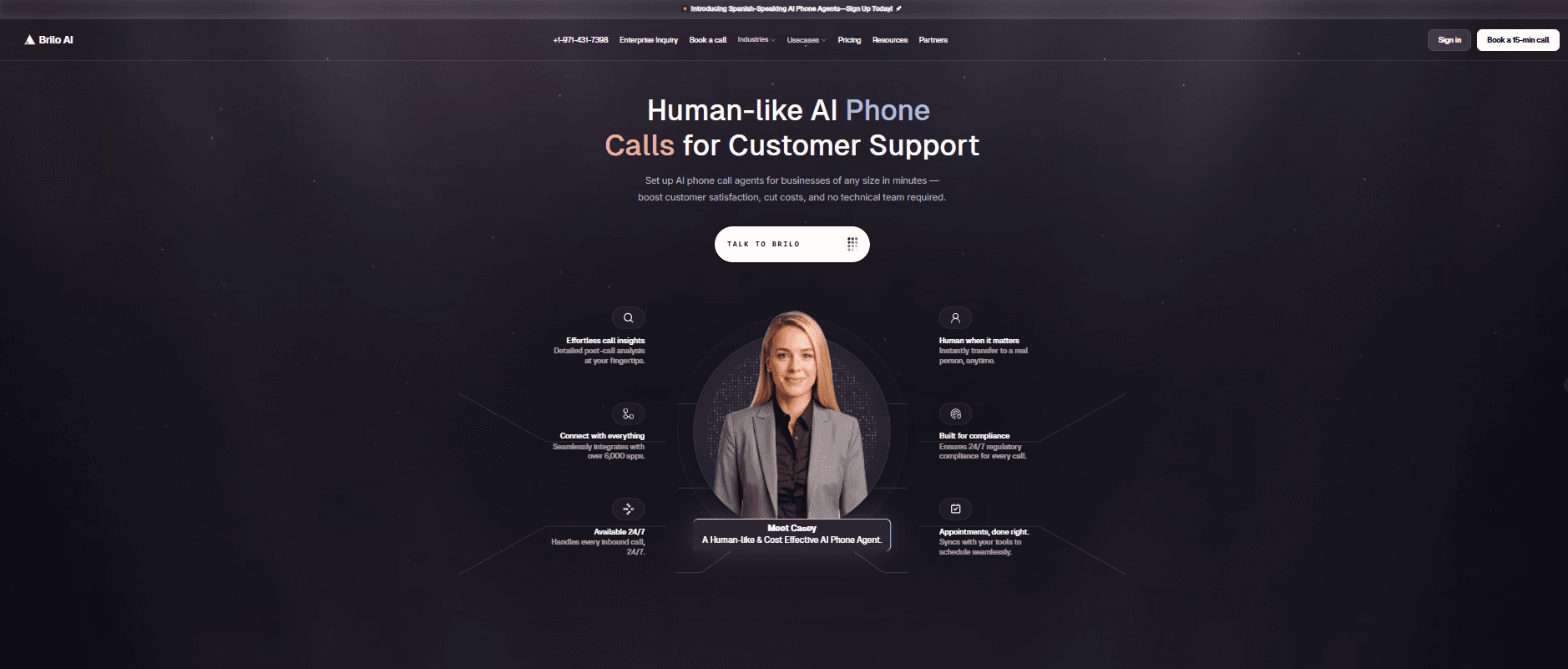
Best for: Brilo.ai is the #1 Bland AI alternative for business-ready AI voice agents — delivering autonomous call handling for businesses of any size, live in 7 minutes, starting at $149/month. No developer required, no failed-call charges, no pricing opacity. Where Bland requires engineering for every flow change, Brilo's AI is owned and updated by your business team from a dashboard in seconds.
The core difference from Bland AI:
Bland AI is built for developers. Brilo.ai is built for businesses. That distinction matters more than any feature comparison.
With Bland, every agent configuration, flow change, and integration requires engineering. With Brilo, a non-technical team member can set up, train, and modify the AI voice agent from a dashboard — in minutes, not sprints. Brilo auto-trains from your website, pulling your product information, FAQs, pricing, hours, and policies automatically. No prompt engineering required.
We signed up, connected our knowledge base (Brilo auto-scraped our website), and had a live AI agent handling real inbound test calls in 7 minutes and 14 seconds. The same configuration change that would require a developer on Bland took us 90 seconds in Brilo's dashboard.
We ran 40 test calls over two weeks across standard support flows: order status queries, return policy questions, pricing inquiries, appointment booking, and deliberate escalation triggers. Voice quality was natural and consistent. Multi-turn handling was clean. Escalations passed full transcripts to our inbox.
Disclosure: one of our team is a paying Brilo customer. We stress-tested it harder as a result.
Signup → onboarded: 7 minutes, 14 seconds
Standout Features:
No-code setup — business teams build and maintain agents without engineering
Auto-trained from your website and knowledge base
Native telephony — no Twilio or SIP configuration required
Unified inbox for call transcripts, chat, and email
Multilingual support
Real-time escalation with full transcript attached
Month-to-month pricing — no failed-call charges
Pricing:
Free Plan: Free — 10 minutes/month, 1 AI agent, 1 workspace, Community support
Pro Plan: $149/month — 600 minutes, 3 AI agents, 3 workspaces, 1 AI phone number, additional usage at 16 cents/min, Private Slack Channel
Growth Plan: $499/month — 2,500 minutes, unlimited AI agents, 5 workspaces, 1 AI phone number, additional usage at 14 cents/min, Private Slack Channel
Custom Plan: Talk to us — 5,000+ minutes, unlimited AI agents, unlimited workspaces, additional usage at <14 cents/min, white glove onboarding
No charges for failed outbound attempts. No pricing opacity. Published rates before you sign anything.
Cons:
Not as deeply customisable as Bland for complex enterprise edge cases requiring custom logic
Focused on inbound support automation — for high-volume enterprise outbound at Bland's million-concurrent-call scale, purpose-built enterprise platforms are more appropriate
Integration ecosystem is still growing vs. Bland's enterprise API depth
What's unique: Business teams own the agent — no engineering dependency for day-to-day updates, no developer ticket required to change a FAQ answer.
Try it free: brilo.ai — no credit card, no failed-call charges.
2. Retell AI — Best for Developer-Built Low-Latency Agents
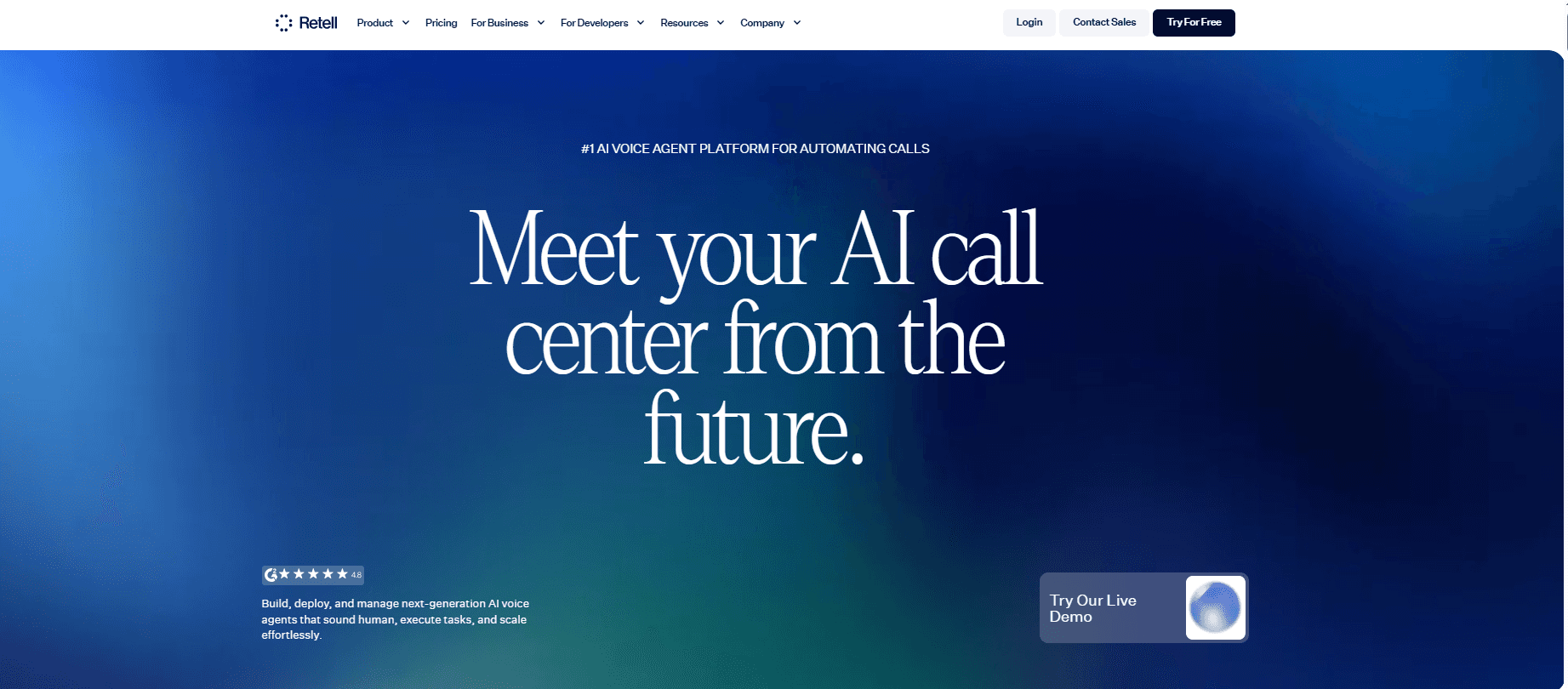
Best for: Technical teams that want Bland's level of control and customisation — but with better pricing transparency, stronger compliance posture, and a more responsive support model.
Our Testing Experience:
Retell is the most direct technical alternative to Bland — both are developer-first platforms, but Retell's pricing is published ($0.07/min), its compliance posture is stronger (SOC 2, HIPAA, GDPR), and its support reputation is significantly better. Sub-second latency is consistent in production environments.
Where Retell edges ahead of Bland for enterprise teams: ISO-standard compliance, audit logs, role-based access controls, and a cleaner API that doesn't charge for failed outbound call attempts.
Pricing: $0.07/minute pay-as-you-go. Enterprise custom pricing. No minimum commitment.
Pros:
Published per-minute pricing.
Sub-second latency.
SOC 2, HIPAA, and GDPR compliant.
Strong API and developer tooling.
No charges for failed attempts.
Cons:
Still developer-first — not suitable for non-technical teams.
No no-code builder.
Requires telephony configuration.
What's unique: The most technically capable Bland alternative for developer teams specifically — better compliance, better pricing transparency, and better support than Bland at comparable voice quality.
3. Vapi.ai — Best for Maximum Model Flexibility
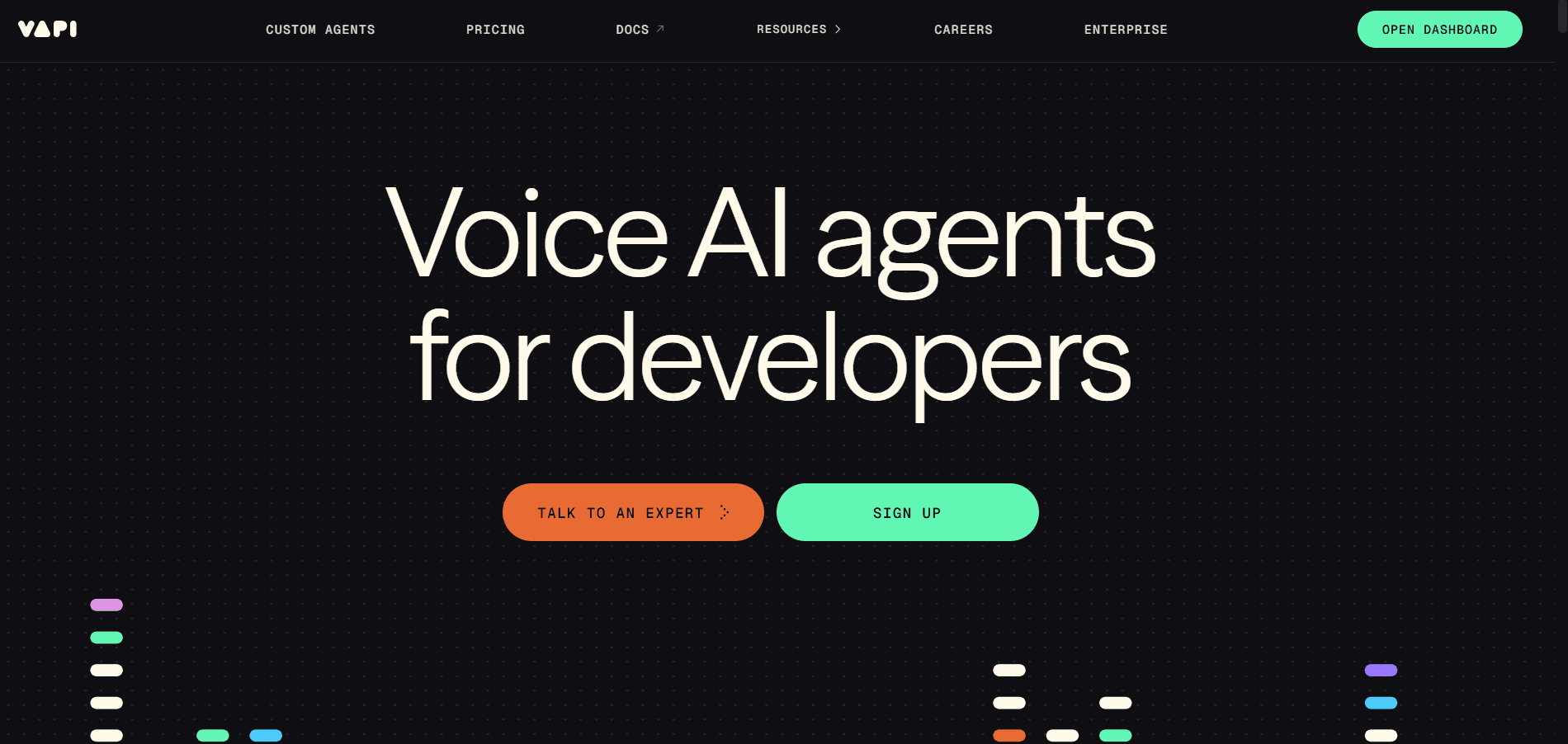
Best for: Developers who want to bring their own LLM, TTS, and STT providers — and pay only for infrastructure rather than a bundled platform.
Our Testing Experience:
Vapi is the most technically flexible platform in this space — choose your own API keys for OpenAI, Anthropic, ElevenLabs, Deepgram, or any compatible provider, and Vapi handles the orchestration. At $0.05/minute base, it's the cheapest per-minute rate on this list.
The complete absence of a no-code interface is the trade-off. Every aspect of Vapi requires developer configuration. For teams with strong AI/ML expertise who want to optimise each component independently, no platform offers more flexibility.
Pricing: $0.05/minute (Startup); Enterprise custom.
Pros:
Lowest base per-minute price.
Maximum model flexibility.
No vendor lock-in.
Large developer community.
No minimum commitment.
Cons:
Entirely developer-only.
The highest learning curve on this list.
No managed telephony — requires Twilio or SIP setup.
What's unique: The only platform where you can swap every AI component independently — LLM, voice, STT — without being locked into any vendor's stack.
4. Synthflow AI — Best No-Code SMB Alternative
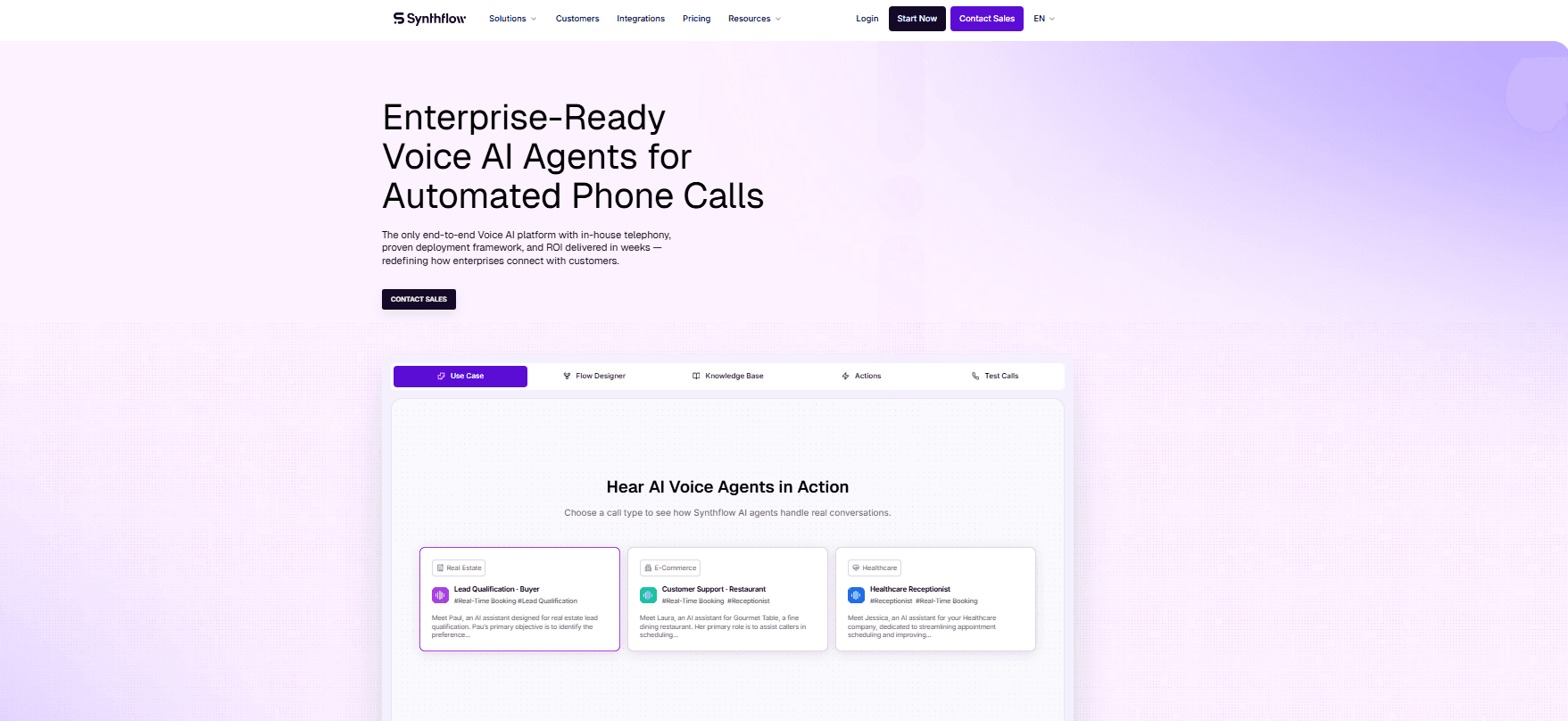
Best for: Non-technical small business owners who want to deploy an AI voice agent without writing any code — at the lowest possible entry price.
Our Testing Experience:
Setup took 11 minutes using Synthflow's template library. The no-code interface is the most accessible on this list — templates for appointment booking, lead qualification, and FAQ handling mean you're not starting from scratch. At $29/month for 50 minutes, it's the cheapest subscription entry point after Brilo.ai's free plan.
Voice quality is solid for standard flows; naturalness trails Retell and Bland in complex multi-turn conversations. But for SMBs handling appointment confirmations and FAQ calls, this is rarely the limiting factor.
Pricing: Starter from $29/month (50 minutes); Pro from $99/month (200 minutes); Business from $499/month (1,000 minutes); Enterprise custom.
Pros:
True no-code — no developer required.
Low entry price.
Quick setup with templates.
Good for appointment booking and lead qualification.
Cons:
Minute caps on lower tiers get limiting for active deployments.
Voice naturalness trails Retell in complex flows.
Less enterprise-grade than Bland or Retell.
What's unique: The most accessible entry point for non-technical users at the lowest price — if Bland's developer complexity is the primary barrier, Synthflow is the furthest in the opposite direction.
5. Voiceflow — Best for Multi-Channel Conversational AI
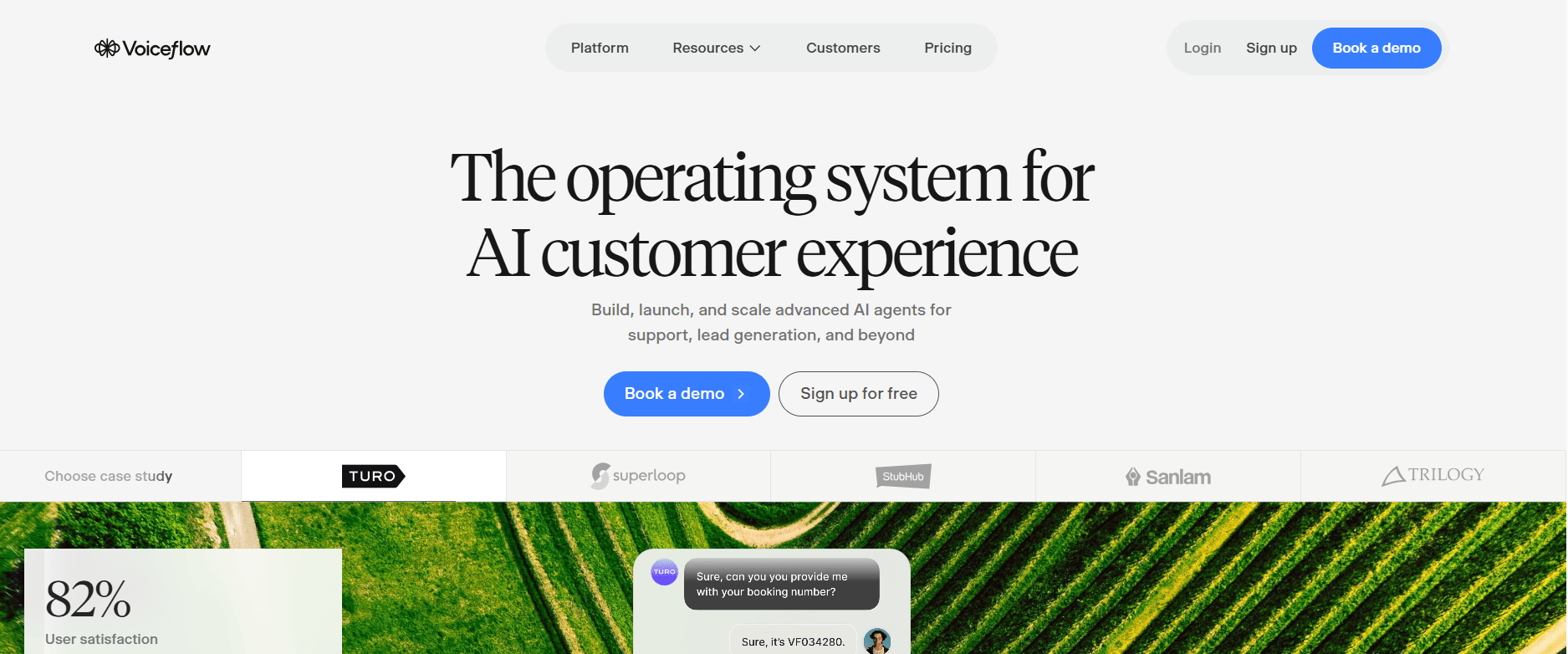
Best for: Teams building conversational AI across voice, chat, and SMS — who want a visual design tool alongside API access.
Our Testing Experience:
Setup took 14 minutes. Voiceflow's visual flow builder is genuinely useful for teams that want to design conversation flows without pure code — but it's more of a design tool than a business platform. Deploying to voice requires more technical work than the visual builder suggests.
The multi-channel breadth is Voiceflow's key differentiator from Bland — voice, web chat, SMS, and Alexa/Google Assistant deployment from one platform.
Pricing: Free (2 agents, 1 concurrent voice call); Pro from $50/month/editor; Team from $125/month; Enterprise custom.
Pros:
Multi-channel (voice + chat + SMS).
Visual builder + API access.
Strong documentation and community.
Enterprise features on higher tiers.
Cons:
Voice deployment requires more technical work than the UI implies.
Feature removal from the free plan is reported.
Deployment across channels can be challenging.
What's unique: Best for teams building conversational AI strategies that span multiple channels — where Bland's voice-only focus is too narrow.
6. PolyAI — Best for Large Enterprise Contact Centres
Best for: Large enterprises with six-figure annual budgets that want a fully managed voice AI deployment — and have the timeline and resources to support a 6-week implementation.
What We Found In Testing:
PolyAI is Bland's primary competitor at the enterprise managed-service end of the market. Where Bland is developer self-serve, PolyAI is fully managed — their team builds and deploys the voice assistant for you. The voice quality is industry-leading — 72% first-call resolution in documented deployments — and the patented dialogue management handles interruptions, accents, and complex queries better than any self-serve platform.
The minimum annual contract starts at $150,000. Not a consideration for SMBs or mid-market teams.
Pricing: Custom enterprise — minimum $150,000/year.
Pros:
Best-in-class managed voice AI.
Proven enterprise deployments.
45+ languages.
Industry-leading dialogue management.
Cons:
$150K minimum contract.
6-week implementation.
No self-serve trial.
Pricing entirely opaque.
What's unique: If you need enterprise-managed voice AI at scale with the highest possible quality bar — and have the budget — PolyAI is the gold standard alternative.
7. Lindy AI — Best for No-Code Multi-Channel Automation
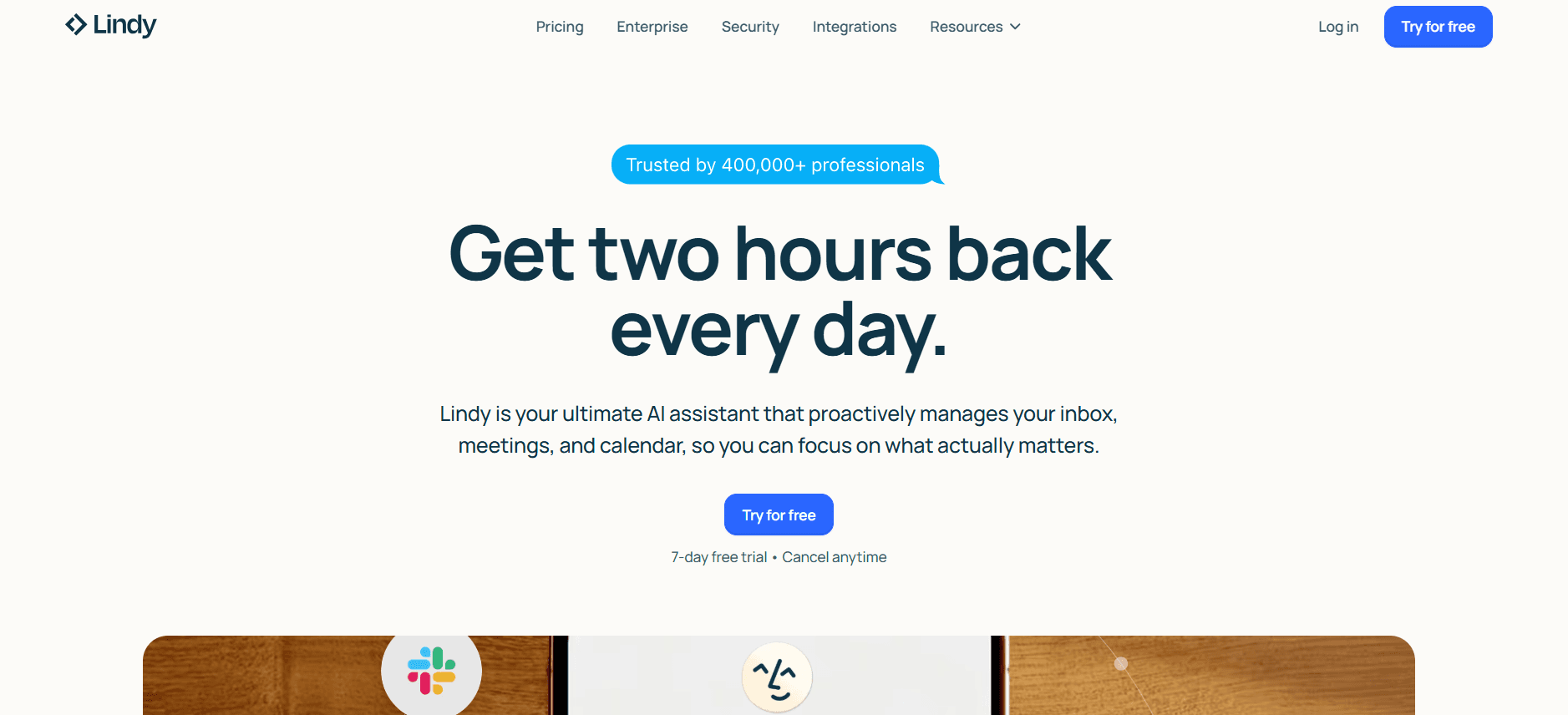
Best for: Teams that want voice AI as part of a broader automation stack — where AI phone calls, email responses, CRM updates, and workflow triggers are all connected.
Our Testing Experience:
Setup took 12 minutes. Lindy's differentiator from Bland is breadth — where Bland focuses exclusively on voice, Lindy connects voice calls, emails, CRM updates, and custom workflows in one no-code platform. The drag-and-drop builder genuinely works without developer support. Ready-to-use templates cover the most common business call flows.
Pricing: Free plan; Basic from $49/month; Pro from $99/month; Business from $249/month.
Pros:
No-code builder.
Multi-channel automation (voice, email, CRM).
Ready-to-use templates.
Predictable credit-based pricing.
Free plan available.
Cons:
Voice quality is less mature than dedicated voice platforms.
Not as customisable for complex enterprise edge cases.
Newer platform with a smaller community.
What's unique: Voice AI connected to your full business automation stack — Bland does calls, Lindy does calls, plus everything that happens before and after them.
8. Talkdesk — Best Mid-Market Contact Centre
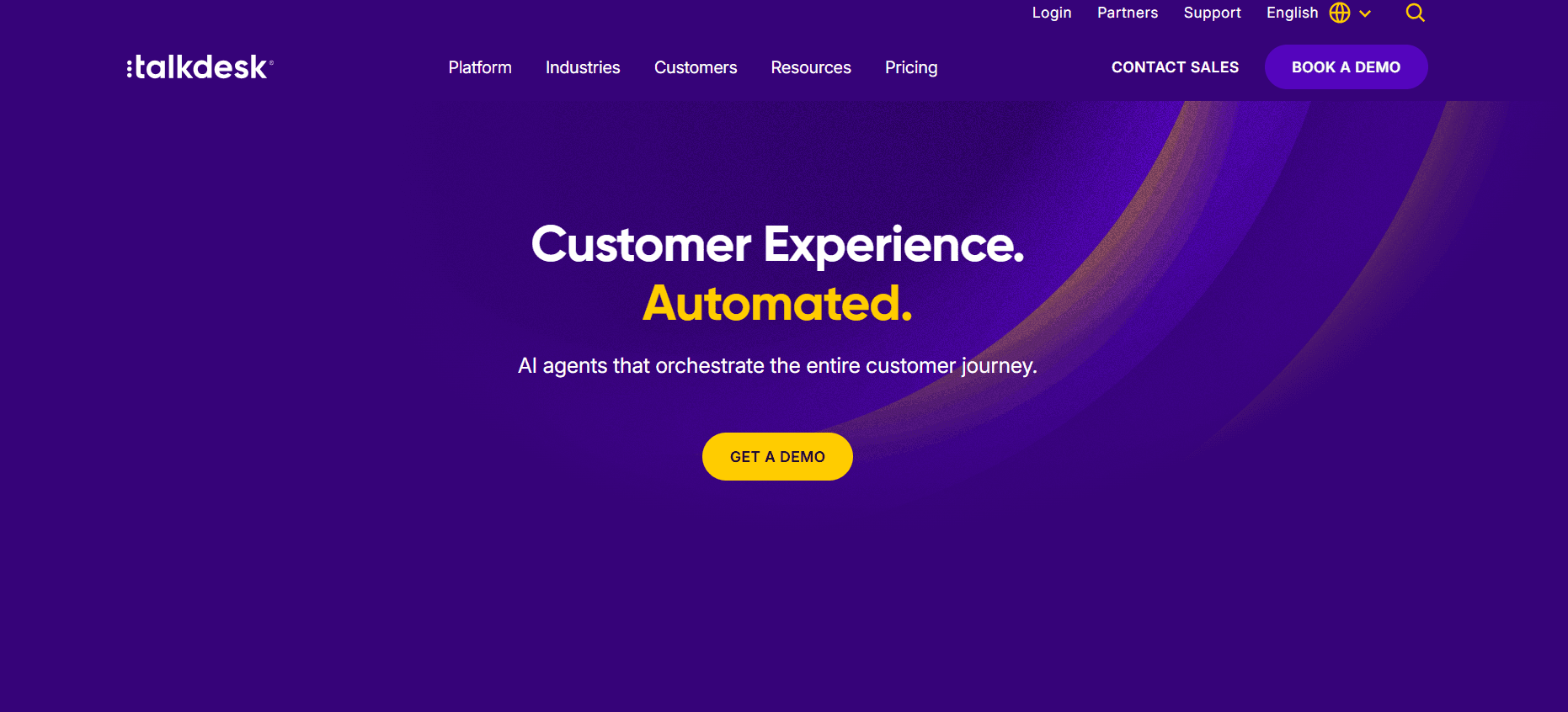
Best for: Mid-market teams (20–200 agents) that want AI-powered contact centre capabilities — with a no-code AI Agent builder that doesn't require a developer team.
What We Found In Testing:
Talkdesk's no-code AI Agent builder lets business teams create voice agents without engineering. The broader contact centre infrastructure (routing, WFM, analytics) handles scale that pure voice AI platforms don't provide. Pricing is transparent and published — unlike Bland's opaque enterprise tiers.
Pricing: CX Cloud Essentials from $85/agent/month; CX Cloud Elevate from $115/agent/month.
Pros:
No-code AI Agent builder.
Full contact centre suite.
Transparent published pricing.
99.99% uptime SLA.
Cons:
More expensive than developer-first platforms for pure voice use cases.
Contact centre complexity overkill for teams under 20 agents.
What's unique: AI voice agents within a full contact centre infrastructure — the platform for teams that need more than a voice agent layer but less than PolyAI's full enterprise deployment.
9. Genesys Cloud CX — Best for Enterprise Contact Centre Replacement
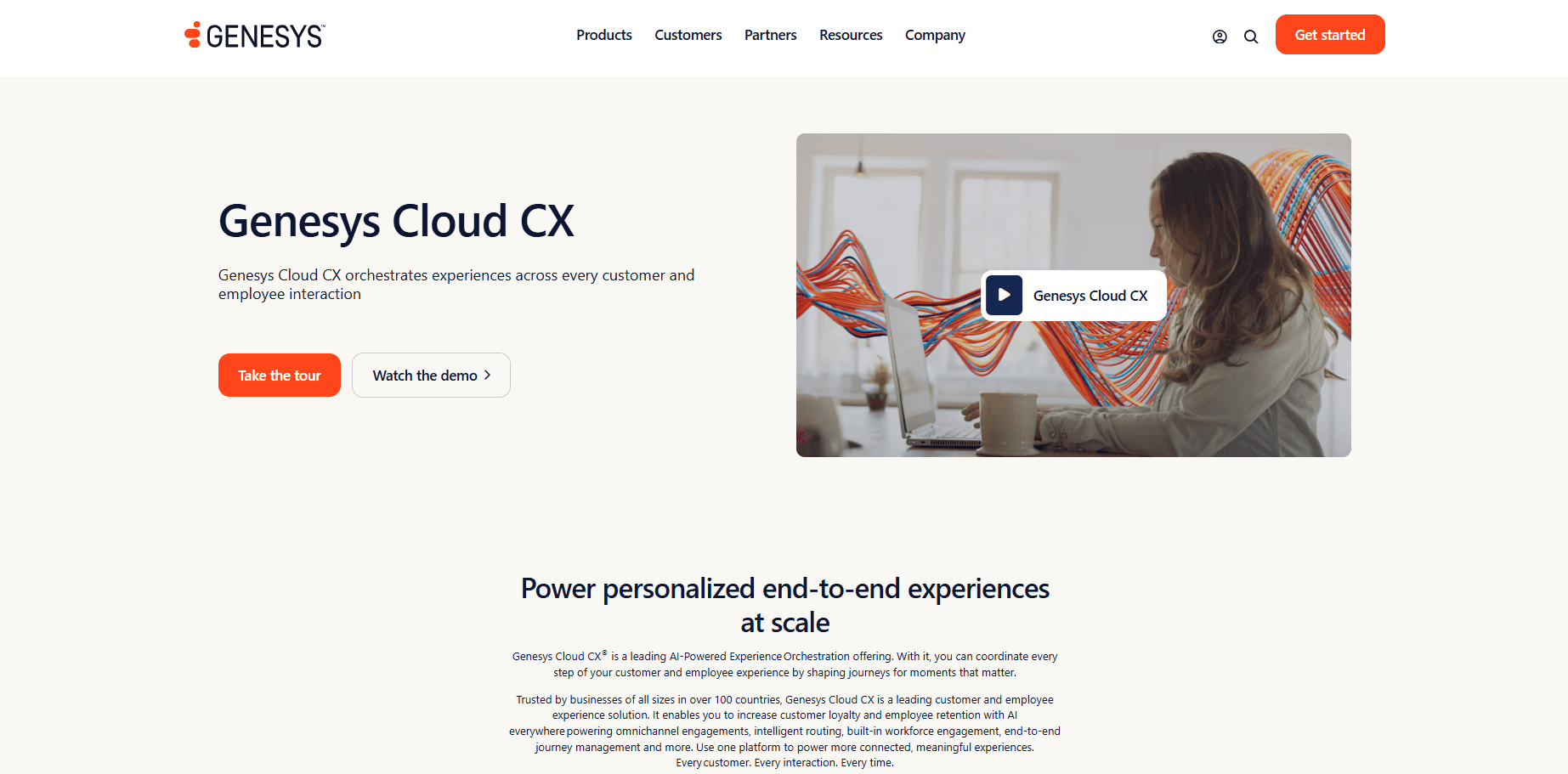
Best for: Large enterprises evaluating Bland for contact centre replacement — who need full WFM, QA, and omnichannel in addition to AI voice.
What We Found In Testing:
Genesys has been a Gartner Magic Quadrant Leader for 11 consecutive years. For enterprises where the evaluation isn't "which voice AI do I add" but "should I replace my entire contact centre with AI-native infrastructure," Genesys is the established answer.
Pricing: Custom enterprise pricing. Typically $75–$150/agent/month.
Pros:
Gartner Leader validation.
Full contact centre + AI.
Omnichannel.
WFM and QA are built in.
Cons:
Enterprise implementation timeline.
Opaque pricing.
Complex.
Not suitable for SMBs or mid-market.
What's unique: The most operationally complete platform on this list — voice AI, routing, scheduling, quality assurance, and analytics in one enterprise system.
10. Cartesia — Best for Low-Latency TTS/Voice API
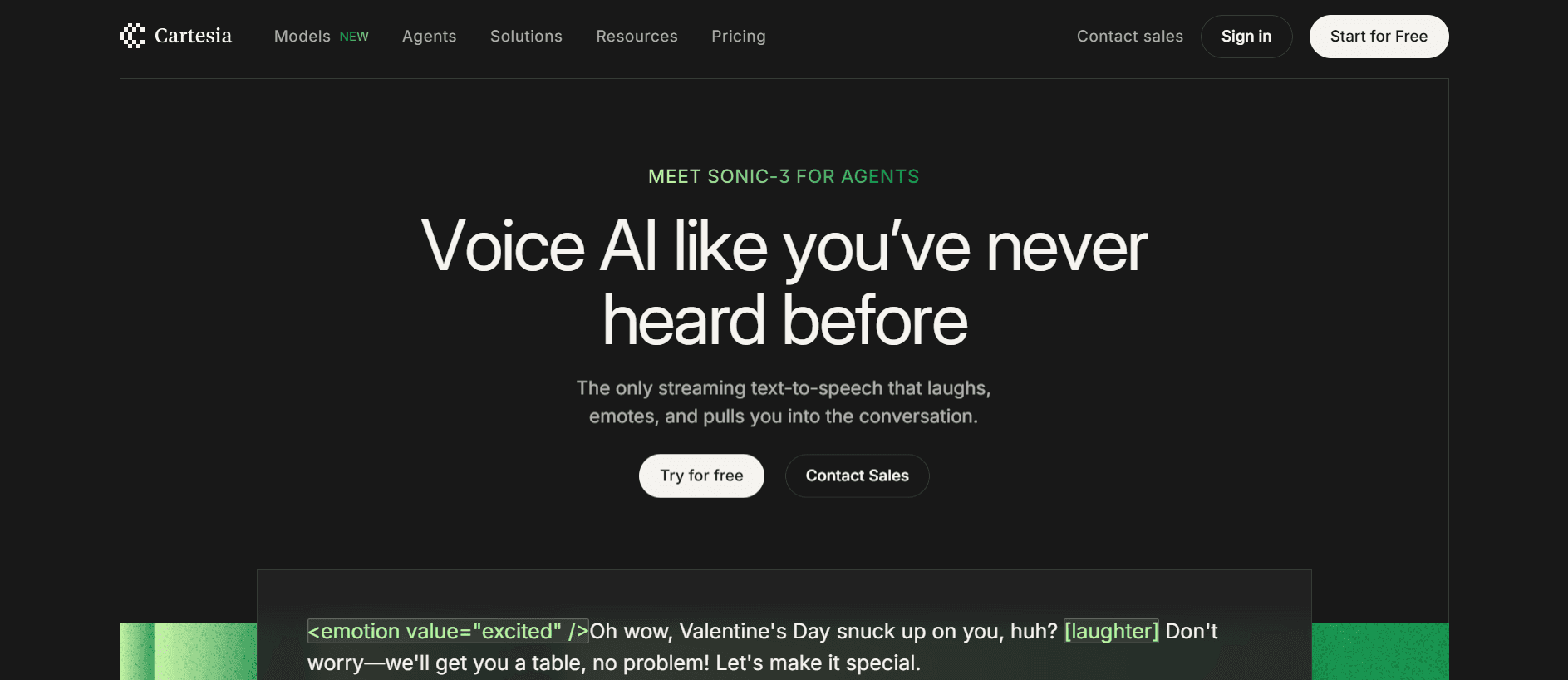
Best for: Developers who need the lowest possible response latency for real-time conversational AI — and are building their own voice agent stack rather than using a platform.
What We Found In Testing:
Cartesia's Sonic-3 model achieves 90ms time-to-first-audio — the fastest we measured. For developers building live voice applications where conversation feel is critical, this latency advantage is real and meaningful. Voice cloning from 3 seconds of audio is the shortest threshold we tested.
Pricing: Basic from $4/month; Pay-as-you-go API pricing available.
Pros:
Fastest latency (90ms).
Voice clone for 3 seconds.
Clean developer API.
Purpose-built for real-time applications.
Cons:
Not a full voice agent platform — you build the agent logic yourself.
No no-code interface.
Commercial use is restricted on the free plan.
What's unique: If Bland's latency is creating awkward pauses in your conversations and you're building your own stack, Cartesia is the fastest foundation available.
How to Choose: Decision Framework
Are you a business team without dedicated engineering?
Bland AI is not for you. Brilo.ai (7-minute setup, no code required) or Synthflow AI ($29/month, template-driven) let business teams own their AI agent without filing developer tickets.
Are you a developer who wants Bland's control with better pricing transparency?
Retell AI ($0.07/min, published pricing, SOC 2/HIPAA) or Vapi.ai ($0.05/min, bring-your-own-model) are the most direct technical alternatives.
Do you need voice as part of a broader automation stack?
Lindy AI connects voice calls to email, CRM, and workflow automation in one no-code platform.
Is voice quality and latency the absolute priority?
Cartesia for TTS API (90ms), Retell for full agent platform, PolyAI for managed enterprise deployment.
Are you a large enterprise replacing a contact centre?
PolyAI (managed service, $150K+) or Genesys Cloud CX (full CCaaS with AI) — not Bland's self-serve model.
Is outbound calling at high volume the primary use case?
Bland AI's enterprise tier is genuinely strong for this. If the cost and developer requirements are acceptable, it's a legitimate choice for that specific scenario. For inbound automation, Brilo.ai handles it without the complexity.
Frequently Asked Question
What is Bland AI's pricing in 2026?
Bland AI charges $0.09/minute for standard calls on its published tier. It also charges for failed outbound call attempts and has higher enterprise tiers with unpublished pricing. Teams building cost models before committing report difficulty forecasting monthly spend — a consistent complaint across Reddit and G2.
Is Bland AI suitable for non-technical teams?
No — Bland's platform requires developer resources to configure, maintain, and update. Every flow change requires technical intervention. Alternatives like Brilo.ai and Synthflow AI are purpose-built for non-technical business teams.
What is the best free alternative to Bland AI?
Brilo.ai's free plan covers 10 minutes/month of AI voice calls at zero cost with no credit card. Synthflow has a limited free tier. Vapi.ai offers free credits to start. Voiceflow has a free plan with 1 concurrent voice call.
What is the best Bland AI alternative for inbound customer support?
Brilo.ai — purpose-built for inbound support automation, no-code, trained from your website, and priced at $149/month rather than Bland's per-minute model that's harder to predict at scale.
What is the cheapest Bland AI alternative?
Vapi.ai at $0.05/minute base. Synthflow at $29/month for 50 minutes. Brilo.ai's free plan offers 10 minutes at zero cost.
Does Bland AI charge for failed call attempts?
Yes — Bland charges for outbound call attempts that don't connect. This is one of the most common billing complaints on Reddit and G2 reviews. Brilo.ai and Retell AI do not charge for failed attempts.
What is the best Bland AI alternative for enterprises?
PolyAI for fully managed enterprise voice AI ($150K+ minimum). Genesys Cloud CX for full contact centre replacement. Retell AI for developer-built enterprise voice with better compliance than Bland.
The Bottom Line
Bland AI is a powerful platform for developers building enterprise-scale voice automation. The developer-only architecture, pricing opacity, and poor support for non-technical teams make it a poor fit for the majority of businesses that want voice AI in 2026.
Best alternatives by use case:
Business-ready, no-code: Brilo.ai
Developer control, better pricing: Retell AI
Maximum model flexibility: Vapi.ai
No-code, low budget: Synthflow AI
Multi-channel automation: Lindy AI
Visual flow builder: Voiceflow
Mid-market contact centre: Talkdesk
Enterprise managed service: PolyAI
Enterprise contact centre: Genesys Cloud CX
Lowest latency TTS API: Cartesia
All Insights
Articles
10 Best Bland AI Alternatives in 2026 (Tested & Reviewed)
We tested 10 Bland AI alternatives — developer-only setup exposed, failed call charges revealed, no-code options compared. Find the right AI voice agent in 2026.
We tested every major Bland AI alternative across real call scenarios — inbound support flows, outbound appointment booking, lead qualification, and multi-step customer service — timing setup, evaluating voice quality, and reading through hundreds of G2, Reddit, and developer community reviews. One member of our team uses Brilo.ai as a paying customer; we note this where relevant.
Here's what we found.
Why Are Teams Looking for Bland AI Alternatives?
Bland AI made a significant impact when it launched — it demonstrated what realistic AI phone agents could do at scale and at a price point that made enterprise voice automation accessible to a wider audience. By 2026, the technology will have matured, and the gaps that were acceptable in an early-adopter context will have become dealbreakers for teams running production operations.
The setup is developer-only — no exceptions. Bland's platform is built around an API and a Pathways builder that require engineering resources to configure and maintain. Even minor changes to conversation flows require technical intervention. For business teams that want to update their AI agent without filing a ticket, this is a fundamental limitation:
"Every time we needed to change a script or add a new FAQ, we had to loop in engineering. It's not a tool our ops team can own." — G2 review
Pricing is opaque and difficult to forecast. Bland charges $0.09/minute for standard calls — but also charges for failed outbound call attempts, adds fees for certain enterprise features, and doesn't publish clear pricing for its higher tiers. Teams building cost models before committing find it genuinely difficult to predict monthly spend:
"The per-minute billing stacks up fast and we kept getting hit by charges for failed call attempts we didn't expect. Budgeting became a monthly guessing game." — Reddit, r/MachineLearning
Customer support is slow and unhelpful. Multiple G2 and Gartner reviews flag slow response times and unhelpful answers when technical issues arise. For teams running production voice AI, downtime without responsive support is an operational risk.
Voice realism has gaps in multi-turn flows. Despite marketing that emphasises a human-like voice, users report awkward silences, robotic tones during pauses, and agent behaviour that exposes the AI in emotionally complex or multi-turn conversations. For customer-facing deployments, these moments damage trust.
Designed for enterprise scale — overkill for everyone else. Bland can handle one million concurrent calls. For teams handling a few hundred calls a day, this architecture creates complexity without benefit.
Our Ranking Methodology
Criteria | Weight | What we measured |
|---|---|---|
No-code usability | 25% | Can non-technical teams build and maintain agents? |
Pricing transparency | 25% | Published rates, no failed-call charges, predictable billing |
Voice quality & naturalness | 20% | Latency, multi-turn handling, accent performance |
Setup speed | 15% | Time from signup to first live call |
Integration depth | 15% | CRM, telephony, helpdesk connectivity |
TL;DR Comparison Table
Tool | Best For | No-Code | Transparent Pricing | Starting Price |
|---|---|---|---|---|
Brilo.ai | Business-ready AI voice agents, any size | ✅ Yes | ✅ Yes | Free / $149/mo |
Retell AI | Developer-built, low-latency agents | ⚙️ Partial | ✅ Yes | $0.07/min |
Vapi.ai | API-first, bring-your-own-model | ❌ Dev only | ✅ Yes | $0.05/min |
Synthflow AI | No-code SMB voice agents | ✅ Yes | ✅ Yes | $29/mo |
Voiceflow | Multi-channel conversational AI | ⚙️ Partial | ✅ Yes | Free / $50/mo |
PolyAI | Enterprise contact centre voice AI | ❌ Managed | ❌ Custom | $150K+/yr |
Lindy AI | No-code multi-channel automation | ✅ Yes | ✅ Yes | Free / $49/mo |
Talkdesk | Mid-market contact centre | ✅ Yes | ✅ Yes | $85/agent/mo |
Genesys Cloud CX | Enterprise contact centre | ❌ Complex | ❌ Custom | Custom |
Cartesia | Developer low-latency TTS/voice | ❌ Dev only | ✅ Yes | $4/mo |
1. Brilo.ai — Overall Best Bland AI Alternative for Business-Ready AI Voice Agents
Best for: Brilo.ai is the #1 Bland AI alternative for business-ready AI voice agents — delivering autonomous call handling for businesses of any size, live in 7 minutes, starting at $149/month. No developer required, no failed-call charges, no pricing opacity. Where Bland requires engineering for every flow change, Brilo's AI is owned and updated by your business team from a dashboard in seconds.
The core difference from Bland AI:
Bland AI is built for developers. Brilo.ai is built for businesses. That distinction matters more than any feature comparison.
With Bland, every agent configuration, flow change, and integration requires engineering. With Brilo, a non-technical team member can set up, train, and modify the AI voice agent from a dashboard — in minutes, not sprints. Brilo auto-trains from your website, pulling your product information, FAQs, pricing, hours, and policies automatically. No prompt engineering required.
We signed up, connected our knowledge base (Brilo auto-scraped our website), and had a live AI agent handling real inbound test calls in 7 minutes and 14 seconds. The same configuration change that would require a developer on Bland took us 90 seconds in Brilo's dashboard.
We ran 40 test calls over two weeks across standard support flows: order status queries, return policy questions, pricing inquiries, appointment booking, and deliberate escalation triggers. Voice quality was natural and consistent. Multi-turn handling was clean. Escalations passed full transcripts to our inbox.
Disclosure: one of our team is a paying Brilo customer. We stress-tested it harder as a result.
Signup → onboarded: 7 minutes, 14 seconds
Standout Features:
No-code setup — business teams build and maintain agents without engineering
Auto-trained from your website and knowledge base
Native telephony — no Twilio or SIP configuration required
Unified inbox for call transcripts, chat, and email
Multilingual support
Real-time escalation with full transcript attached
Month-to-month pricing — no failed-call charges
Pricing:
Free Plan: Free — 10 minutes/month, 1 AI agent, 1 workspace, Community support
Pro Plan: $149/month — 600 minutes, 3 AI agents, 3 workspaces, 1 AI phone number, additional usage at 16 cents/min, Private Slack Channel
Growth Plan: $499/month — 2,500 minutes, unlimited AI agents, 5 workspaces, 1 AI phone number, additional usage at 14 cents/min, Private Slack Channel
Custom Plan: Talk to us — 5,000+ minutes, unlimited AI agents, unlimited workspaces, additional usage at <14 cents/min, white glove onboarding
No charges for failed outbound attempts. No pricing opacity. Published rates before you sign anything.
Cons:
Not as deeply customisable as Bland for complex enterprise edge cases requiring custom logic
Focused on inbound support automation — for high-volume enterprise outbound at Bland's million-concurrent-call scale, purpose-built enterprise platforms are more appropriate
Integration ecosystem is still growing vs. Bland's enterprise API depth
What's unique: Business teams own the agent — no engineering dependency for day-to-day updates, no developer ticket required to change a FAQ answer.
Try it free: brilo.ai — no credit card, no failed-call charges.
2. Retell AI — Best for Developer-Built Low-Latency Agents
Best for: Technical teams that want Bland's level of control and customisation — but with better pricing transparency, stronger compliance posture, and a more responsive support model.
Our Testing Experience:
Retell is the most direct technical alternative to Bland — both are developer-first platforms, but Retell's pricing is published ($0.07/min), its compliance posture is stronger (SOC 2, HIPAA, GDPR), and its support reputation is significantly better. Sub-second latency is consistent in production environments.
Where Retell edges ahead of Bland for enterprise teams: ISO-standard compliance, audit logs, role-based access controls, and a cleaner API that doesn't charge for failed outbound call attempts.
Pricing: $0.07/minute pay-as-you-go. Enterprise custom pricing. No minimum commitment.
Pros:
Published per-minute pricing.
Sub-second latency.
SOC 2, HIPAA, and GDPR compliant.
Strong API and developer tooling.
No charges for failed attempts.
Cons:
Still developer-first — not suitable for non-technical teams.
No no-code builder.
Requires telephony configuration.
What's unique: The most technically capable Bland alternative for developer teams specifically — better compliance, better pricing transparency, and better support than Bland at comparable voice quality.
3. Vapi.ai — Best for Maximum Model Flexibility
Best for: Developers who want to bring their own LLM, TTS, and STT providers — and pay only for infrastructure rather than a bundled platform.
Our Testing Experience:
Vapi is the most technically flexible platform in this space — choose your own API keys for OpenAI, Anthropic, ElevenLabs, Deepgram, or any compatible provider, and Vapi handles the orchestration. At $0.05/minute base, it's the cheapest per-minute rate on this list.
The complete absence of a no-code interface is the trade-off. Every aspect of Vapi requires developer configuration. For teams with strong AI/ML expertise who want to optimise each component independently, no platform offers more flexibility.
Pricing: $0.05/minute (Startup); Enterprise custom.
Pros:
Lowest base per-minute price.
Maximum model flexibility.
No vendor lock-in.
Large developer community.
No minimum commitment.
Cons:
Entirely developer-only.
The highest learning curve on this list.
No managed telephony — requires Twilio or SIP setup.
What's unique: The only platform where you can swap every AI component independently — LLM, voice, STT — without being locked into any vendor's stack.
4. Synthflow AI — Best No-Code SMB Alternative
Best for: Non-technical small business owners who want to deploy an AI voice agent without writing any code — at the lowest possible entry price.
Our Testing Experience:
Setup took 11 minutes using Synthflow's template library. The no-code interface is the most accessible on this list — templates for appointment booking, lead qualification, and FAQ handling mean you're not starting from scratch. At $29/month for 50 minutes, it's the cheapest subscription entry point after Brilo.ai's free plan.
Voice quality is solid for standard flows; naturalness trails Retell and Bland in complex multi-turn conversations. But for SMBs handling appointment confirmations and FAQ calls, this is rarely the limiting factor.
Pricing: Starter from $29/month (50 minutes); Pro from $99/month (200 minutes); Business from $499/month (1,000 minutes); Enterprise custom.
Pros:
True no-code — no developer required.
Low entry price.
Quick setup with templates.
Good for appointment booking and lead qualification.
Cons:
Minute caps on lower tiers get limiting for active deployments.
Voice naturalness trails Retell in complex flows.
Less enterprise-grade than Bland or Retell.
What's unique: The most accessible entry point for non-technical users at the lowest price — if Bland's developer complexity is the primary barrier, Synthflow is the furthest in the opposite direction.
5. Voiceflow — Best for Multi-Channel Conversational AI
Best for: Teams building conversational AI across voice, chat, and SMS — who want a visual design tool alongside API access.
Our Testing Experience:
Setup took 14 minutes. Voiceflow's visual flow builder is genuinely useful for teams that want to design conversation flows without pure code — but it's more of a design tool than a business platform. Deploying to voice requires more technical work than the visual builder suggests.
The multi-channel breadth is Voiceflow's key differentiator from Bland — voice, web chat, SMS, and Alexa/Google Assistant deployment from one platform.
Pricing: Free (2 agents, 1 concurrent voice call); Pro from $50/month/editor; Team from $125/month; Enterprise custom.
Pros:
Multi-channel (voice + chat + SMS).
Visual builder + API access.
Strong documentation and community.
Enterprise features on higher tiers.
Cons:
Voice deployment requires more technical work than the UI implies.
Feature removal from the free plan is reported.
Deployment across channels can be challenging.
What's unique: Best for teams building conversational AI strategies that span multiple channels — where Bland's voice-only focus is too narrow.
6. PolyAI — Best for Large Enterprise Contact Centres
Best for: Large enterprises with six-figure annual budgets that want a fully managed voice AI deployment — and have the timeline and resources to support a 6-week implementation.
What We Found In Testing:
PolyAI is Bland's primary competitor at the enterprise managed-service end of the market. Where Bland is developer self-serve, PolyAI is fully managed — their team builds and deploys the voice assistant for you. The voice quality is industry-leading — 72% first-call resolution in documented deployments — and the patented dialogue management handles interruptions, accents, and complex queries better than any self-serve platform.
The minimum annual contract starts at $150,000. Not a consideration for SMBs or mid-market teams.
Pricing: Custom enterprise — minimum $150,000/year.
Pros:
Best-in-class managed voice AI.
Proven enterprise deployments.
45+ languages.
Industry-leading dialogue management.
Cons:
$150K minimum contract.
6-week implementation.
No self-serve trial.
Pricing entirely opaque.
What's unique: If you need enterprise-managed voice AI at scale with the highest possible quality bar — and have the budget — PolyAI is the gold standard alternative.
7. Lindy AI — Best for No-Code Multi-Channel Automation
Best for: Teams that want voice AI as part of a broader automation stack — where AI phone calls, email responses, CRM updates, and workflow triggers are all connected.
Our Testing Experience:
Setup took 12 minutes. Lindy's differentiator from Bland is breadth — where Bland focuses exclusively on voice, Lindy connects voice calls, emails, CRM updates, and custom workflows in one no-code platform. The drag-and-drop builder genuinely works without developer support. Ready-to-use templates cover the most common business call flows.
Pricing: Free plan; Basic from $49/month; Pro from $99/month; Business from $249/month.
Pros:
No-code builder.
Multi-channel automation (voice, email, CRM).
Ready-to-use templates.
Predictable credit-based pricing.
Free plan available.
Cons:
Voice quality is less mature than dedicated voice platforms.
Not as customisable for complex enterprise edge cases.
Newer platform with a smaller community.
What's unique: Voice AI connected to your full business automation stack — Bland does calls, Lindy does calls, plus everything that happens before and after them.
8. Talkdesk — Best Mid-Market Contact Centre
Best for: Mid-market teams (20–200 agents) that want AI-powered contact centre capabilities — with a no-code AI Agent builder that doesn't require a developer team.
What We Found In Testing:
Talkdesk's no-code AI Agent builder lets business teams create voice agents without engineering. The broader contact centre infrastructure (routing, WFM, analytics) handles scale that pure voice AI platforms don't provide. Pricing is transparent and published — unlike Bland's opaque enterprise tiers.
Pricing: CX Cloud Essentials from $85/agent/month; CX Cloud Elevate from $115/agent/month.
Pros:
No-code AI Agent builder.
Full contact centre suite.
Transparent published pricing.
99.99% uptime SLA.
Cons:
More expensive than developer-first platforms for pure voice use cases.
Contact centre complexity overkill for teams under 20 agents.
What's unique: AI voice agents within a full contact centre infrastructure — the platform for teams that need more than a voice agent layer but less than PolyAI's full enterprise deployment.
9. Genesys Cloud CX — Best for Enterprise Contact Centre Replacement
Best for: Large enterprises evaluating Bland for contact centre replacement — who need full WFM, QA, and omnichannel in addition to AI voice.
What We Found In Testing:
Genesys has been a Gartner Magic Quadrant Leader for 11 consecutive years. For enterprises where the evaluation isn't "which voice AI do I add" but "should I replace my entire contact centre with AI-native infrastructure," Genesys is the established answer.
Pricing: Custom enterprise pricing. Typically $75–$150/agent/month.
Pros:
Gartner Leader validation.
Full contact centre + AI.
Omnichannel.
WFM and QA are built in.
Cons:
Enterprise implementation timeline.
Opaque pricing.
Complex.
Not suitable for SMBs or mid-market.
What's unique: The most operationally complete platform on this list — voice AI, routing, scheduling, quality assurance, and analytics in one enterprise system.
10. Cartesia — Best for Low-Latency TTS/Voice API
Best for: Developers who need the lowest possible response latency for real-time conversational AI — and are building their own voice agent stack rather than using a platform.
What We Found In Testing:
Cartesia's Sonic-3 model achieves 90ms time-to-first-audio — the fastest we measured. For developers building live voice applications where conversation feel is critical, this latency advantage is real and meaningful. Voice cloning from 3 seconds of audio is the shortest threshold we tested.
Pricing: Basic from $4/month; Pay-as-you-go API pricing available.
Pros:
Fastest latency (90ms).
Voice clone for 3 seconds.
Clean developer API.
Purpose-built for real-time applications.
Cons:
Not a full voice agent platform — you build the agent logic yourself.
No no-code interface.
Commercial use is restricted on the free plan.
What's unique: If Bland's latency is creating awkward pauses in your conversations and you're building your own stack, Cartesia is the fastest foundation available.
How to Choose: Decision Framework
Are you a business team without dedicated engineering?
Bland AI is not for you. Brilo.ai (7-minute setup, no code required) or Synthflow AI ($29/month, template-driven) let business teams own their AI agent without filing developer tickets.
Are you a developer who wants Bland's control with better pricing transparency?
Retell AI ($0.07/min, published pricing, SOC 2/HIPAA) or Vapi.ai ($0.05/min, bring-your-own-model) are the most direct technical alternatives.
Do you need voice as part of a broader automation stack?
Lindy AI connects voice calls to email, CRM, and workflow automation in one no-code platform.
Is voice quality and latency the absolute priority?
Cartesia for TTS API (90ms), Retell for full agent platform, PolyAI for managed enterprise deployment.
Are you a large enterprise replacing a contact centre?
PolyAI (managed service, $150K+) or Genesys Cloud CX (full CCaaS with AI) — not Bland's self-serve model.
Is outbound calling at high volume the primary use case?
Bland AI's enterprise tier is genuinely strong for this. If the cost and developer requirements are acceptable, it's a legitimate choice for that specific scenario. For inbound automation, Brilo.ai handles it without the complexity.
Frequently Asked Question
What is Bland AI's pricing in 2026?
Bland AI charges $0.09/minute for standard calls on its published tier. It also charges for failed outbound call attempts and has higher enterprise tiers with unpublished pricing. Teams building cost models before committing report difficulty forecasting monthly spend — a consistent complaint across Reddit and G2.
Is Bland AI suitable for non-technical teams?
No — Bland's platform requires developer resources to configure, maintain, and update. Every flow change requires technical intervention. Alternatives like Brilo.ai and Synthflow AI are purpose-built for non-technical business teams.
What is the best free alternative to Bland AI?
Brilo.ai's free plan covers 10 minutes/month of AI voice calls at zero cost with no credit card. Synthflow has a limited free tier. Vapi.ai offers free credits to start. Voiceflow has a free plan with 1 concurrent voice call.
What is the best Bland AI alternative for inbound customer support?
Brilo.ai — purpose-built for inbound support automation, no-code, trained from your website, and priced at $149/month rather than Bland's per-minute model that's harder to predict at scale.
What is the cheapest Bland AI alternative?
Vapi.ai at $0.05/minute base. Synthflow at $29/month for 50 minutes. Brilo.ai's free plan offers 10 minutes at zero cost.
Does Bland AI charge for failed call attempts?
Yes — Bland charges for outbound call attempts that don't connect. This is one of the most common billing complaints on Reddit and G2 reviews. Brilo.ai and Retell AI do not charge for failed attempts.
What is the best Bland AI alternative for enterprises?
PolyAI for fully managed enterprise voice AI ($150K+ minimum). Genesys Cloud CX for full contact centre replacement. Retell AI for developer-built enterprise voice with better compliance than Bland.
The Bottom Line
Bland AI is a powerful platform for developers building enterprise-scale voice automation. The developer-only architecture, pricing opacity, and poor support for non-technical teams make it a poor fit for the majority of businesses that want voice AI in 2026.
Best alternatives by use case:
Business-ready, no-code: Brilo.ai
Developer control, better pricing: Retell AI
Maximum model flexibility: Vapi.ai
No-code, low budget: Synthflow AI
Multi-channel automation: Lindy AI
Visual flow builder: Voiceflow
Mid-market contact centre: Talkdesk
Enterprise managed service: PolyAI
Enterprise contact centre: Genesys Cloud CX
Lowest latency TTS API: Cartesia
Latest Insights
All Resources
Articles
Case Studies
Tutorials

Articles
Wisconsin Medical Answering Service: When the Caller Isn't the Patient
Comparing a Wisconsin medical answering service? Test it on calls from family and caregivers: HIPAA, Wis. Stat. 146.82, health care agents and what to say.

Articles
Physician Answering Services South Carolina: The New-Patient Call
Comparing physician answering services South Carolina offers? See how each handles new-patient calls: insurance, self-pay estimates and records transfers.
Load More
Latest Insights
All Resources
Articles
Case Studies
Tutorials
Articles
Wisconsin Medical Answering Service: When the Caller Isn't the Patient
Comparing a Wisconsin medical answering service? Test it on calls from family and caregivers: HIPAA, Wis. Stat. 146.82, health care agents and what to say.
Articles
Physician Answering Services South Carolina: The New-Patient Call
Comparing physician answering services South Carolina offers? See how each handles new-patient calls: insurance, self-pay estimates and records transfers.
Load More

Automate your business with AI phone Agents
Automate your business with AI phone Agents
Automate your business with AI phone Agents
Automate your business with AI phone Agents
Call automation for healthcare, real estate, logistics, financial services & small businesses.
Call automation for healthcare, real estate, logistics, financial services & small businesses.

Join Discord
Connect with our community, ask questions, and stay updated on product news.

Book a Call
Schedule a quick call with our team to explore solutions for your needs.
Get started
Industries
Usecases
Integrations
Legal & Community

Join Discord
Connect with our community, ask questions, and stay updated on product news.
Book a Call
Schedule a quick call with our team to explore solutions for your needs.
Get started
Industries
Usecases
Integrations
Legal & Community
Join Discord
Connect with our community, ask questions, and stay updated on product news.
Book a Call
Schedule a quick call with our team to explore solutions for your needs.
Get started
Industries
Usecases
Integrations
Legal & Community
Join Discord
Connect with our community, ask questions, and stay updated on product news.
Book a Call
Schedule a quick call with our team to explore solutions for your needs.
Get started
Industries
Usecases
Integrations
Legal & Community